Starch gelatinization is what causes potatoes to turn from firm and raw into soft, fluffy dishes. As you cook, heat and moisture penetrate the potato cells, causing starch granules to swell and break down, releasing molecules that thicken and soften the potato. Temperature and cooking time are key, especially with different potato varieties. By controlling these factors and water, you can achieve perfect fluffiness—learn more about the science behind this transformation to elevate your cooking skills.
Key Takeaways
- Starch gelatinization occurs during cooking when starch granules swell and soften, transforming raw potatoes into fluffy, tender textures.
- Water penetration weakens cell walls and hydrates starch, enabling granules to swell and contribute to fluffiness.
- Elevated temperatures cause starch granules to rupture, releasing starch molecules that thicken and create a cohesive, airy texture.
- Proper heat, cooking time, and potato variety influence gelatinization, ensuring the potato reaches optimal fluffiness without becoming mushy.
- Gentle boiling or steaming helps achieve even gelatinization, preventing wateriness or gumminess for perfectly fluffy potatoes.
Top picks for "starch gelatinization potato"
Open Amazon search results for this keyword.
As an affiliate, we earn on qualifying purchases.
What Is Starch Gelatinization and Why Does It Matter When Cooking Potatoes?
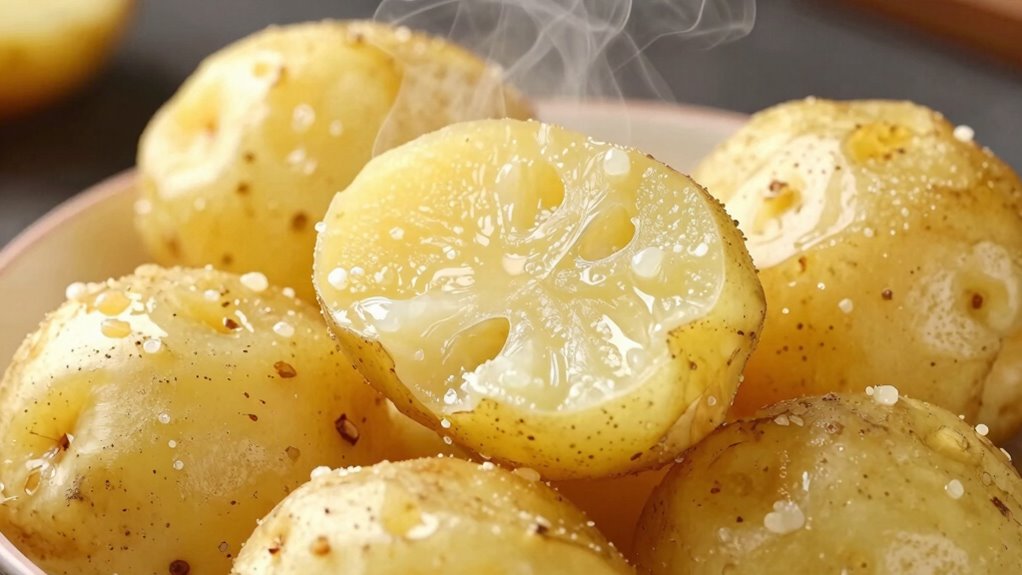
Starch gelatinization is a crucial process that occurs when cooking potatoes, transforming their texture and structure. This process is key to revealing the potato’s culinary potential, giving it that soft, fluffy consistency we love. Understanding starch gelatinization also ties into potato nutrition, as cooking alters the bioavailability of nutrients, making them easier to digest. Throughout culinary history, people have relied on this process to create a variety of dishes, from mashed potatoes to fries. When heat and moisture interact with potato starch, it swells and gelatinizes, changing the cell walls and making the potato tender. Recognizing why starch gelatinization matters helps you appreciate how cooking methods influence both the texture and nutritional value of potatoes.
How Do Heat and Water Affect Potato Cell Structures and Starch?
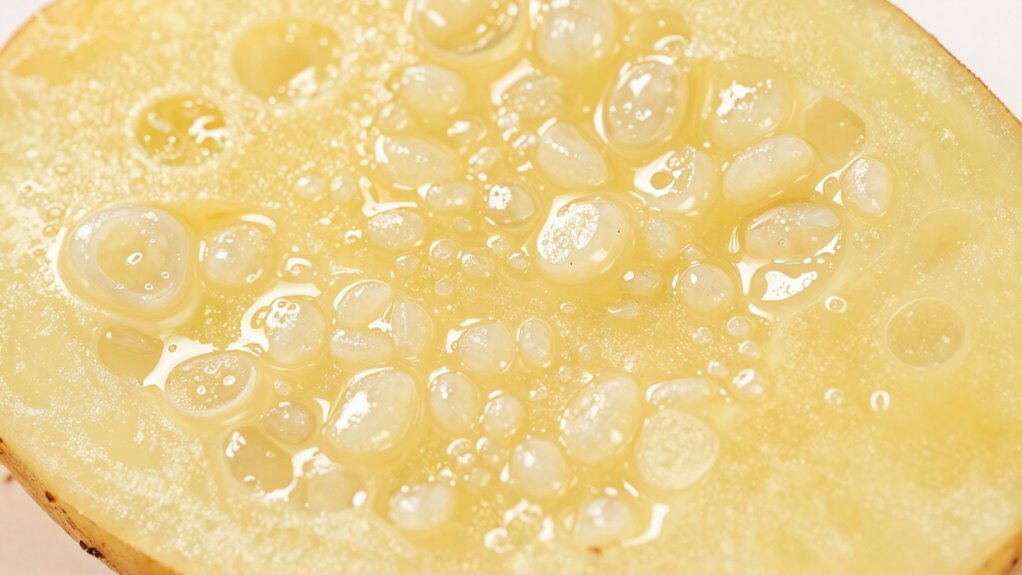
When heat and water interact with potatoes during cooking, they cause significant changes in the potato cell structure and starch interaction. As temperature rises, the cell walls weaken, allowing water to penetrate more easily. This softens the potato by disrupting the cell integrity. Simultaneously, starch granules inside the cells absorb water, swelling and loosening their structure. Here’s how different factors influence this process:
| Factor | Effect on Cell Structure | Effect on Starch Interaction |
|---|---|---|
| Heat | Breaks down cell walls | Causes starch to swell |
| Water | Penetrates cell walls | Facilitates starch gelatinization |
| Temperature | Softens tissue | Accelerates starch swelling |
| Duration | More breakdown, softer texture | More starch absorption |
These changes are essential for transforming raw potatoes into tender, fluffy dishes. Understanding the starch gelatinization process helps explain why potatoes become so much more palatable after cooking. Additionally, cell wall weakening is crucial for achieving the desired texture in cooked potatoes. Recognizing how heat transfer influences these processes can further optimize cooking techniques for perfect results. Furthermore, water absorption plays a vital role in ensuring even cooking and consistent texture throughout the potato. Proper control of cooking time is also important to prevent over-softening or under-cooking, which can affect the final quality.
Why Does Starch Swell and Break Down When You Cook Potatoes?

As you cook potatoes, the heat causes the starch granules inside to swell and eventually break down. This process is key to developing that desirable potato flavor and texture. When heated, water penetrates the starch granules, disrupting their structure and causing them to absorb more water. The swelling results from starch synthesis, where the molecules expand as they hydrate. Once the temperature reaches a certain point, the granules burst, releasing amylose and amylopectin, which thickens the potato. This breakdown makes the potato soft and fluffy. The degree of swelling and breakdown depends on cooking time and temperature. Proper control ensures the starch dissolves evenly, giving you tender potatoes without a gluey texture. Temperature control during cooking is essential to achieve consistent results and prevent over- or under-cooking. Additionally, understanding the gelatinization process can help you fine-tune your cooking technique for perfect results every time. Recognizing the starch gelatinization process can also help in optimizing cooking methods for different types of potatoes.
How Do Temperature and Cooking Time Affect Potato Fluffiness?
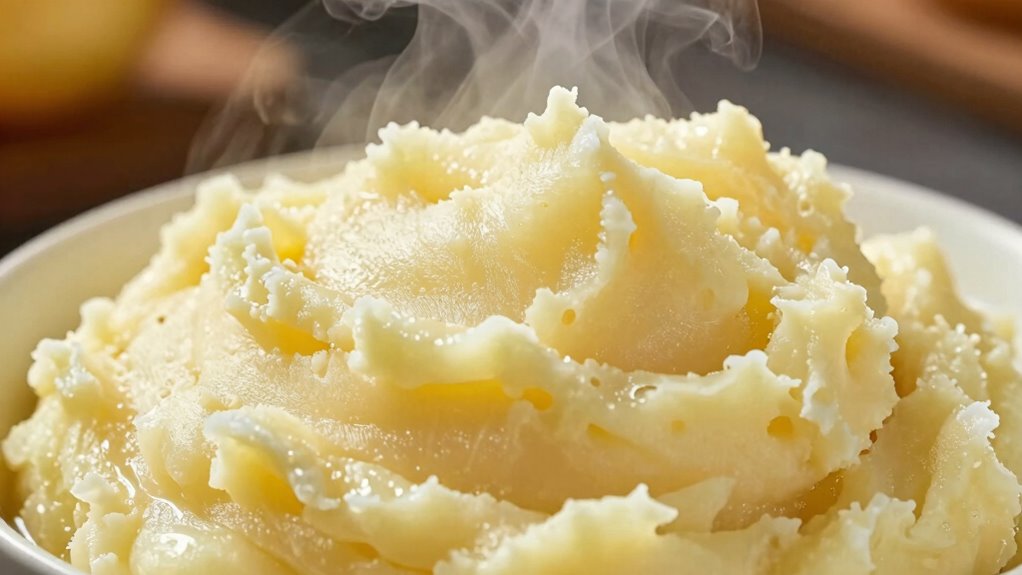
The temperature and cooking time you choose directly influence how fluffy your potatoes turn out. Staying within the ideal temperature range guarantees the starch gelatinizes properly without overcooking. Cooking for the right amount of time helps achieve that light, airy texture you’re aiming for. Proper grooming routines also help maintain potato quality by preventing uneven cooking or texture issues. Additionally, controlling the cooking environment ensures consistent results and prevents undercooked or overly soft potatoes. Maintaining consistent heat levels can further contribute to starch gelatinization, resulting in perfectly fluffy potatoes. Understanding the Free Floating process can also assist in optimizing your cooking technique to achieve the best texture. Proper temperature control is essential because it directly impacts the rate of gelatinization and prevents the breakdown of starches that can lead to a gluey texture.
Optimal Temperature Range
Have you ever wondered how temperature influences the fluffiness of your cooked potatoes? The optimal temperature range for gelatinization varies with potato varieties and their starch properties. Typically, this range is between 140°C and 160°C (284°F to 320°F). Staying within this zone guarantees the starch granules swell properly without overcooking or becoming gluey. Understanding starch behavior is essential for achieving perfect texture in your potatoes. Additionally, monitoring the temperature consistency during cooking helps maintain the ideal gelatinization process. Different potato varieties have unique starch compositions that require precise temperatures for ideal fluffiness. Variety-specific cooking influences how well the starch gelatinizes, affecting overall texture. Variations in starch content among different types of potatoes can significantly impact the gelatinization process and final texture. If the temperature fluctuates outside this range, it can disrupt the starch swelling process and compromise the desired potato texture. Too low a temperature won’t fully gelatinize the starch, resulting in dense potatoes. Excessively high temperatures can break down starch structure, leading to a gluey or sticky texture. Mastering this temperature range unlocks perfectly fluffy, light potatoes every time.
Cooking Duration Impact
Cooking time plays a crucial role in achieving the perfect fluffiness of boiled potatoes, as it directly influences starch gelatinization and moisture retention. Different potato varieties have unique starch compositions, which affect how quickly they cook and how fluffy they become. For example, waxy potatoes with lower starch content require less cooking time to prevent over-softening, while starchy varieties like Russets need longer to break down and absorb water fully. Overcooking can cause potatoes to become mushy, while undercooking leaves them dense and gummy. To optimize fluffiness, monitor cooking duration carefully based on the potato type. Proper timing ensures starch granules gelatinize evenly, resulting in light, airy potatoes that are perfect for mashing or serving as a side dish.
How Water Absorption Turns Potatoes Soft and Fluffy

When you cook potatoes, water seeps into their cell walls, making them swell and soften. This process causes the starch granules inside to expand, creating that fluffy texture you want. As heat breaks down the structure, the potatoes become tender and easy to mash. Understanding starch gelatinization is key to mastering how heat transforms raw potatoes into a light, fluffy dish. Recognizing how water absorption influences this process can help you perfect your cooking technique. Proper temperature control ensures the starch gelatinizes evenly, preventing undercooked or mushy potatoes. Additionally, the age of the potato can affect how well water is absorbed and how the starch behaves during cooking. Being aware of time zones is useful when timing your cooking process to achieve optimal results.
Water Penetrates Cell Walls
Ever wonder how potatoes become so soft and fluffy when cooked? It all starts with water penetrating the cell walls. As you heat the potato, water diffuses through the cell wall integrity, breaking down the barriers that keep cells rigid. This process allows water to move freely inside, softening the structure from the inside out. Glycolic acid can help improve the absorption of topical treatments that may benefit scalp and skin health. Additionally, the type of wood used in furniture can influence the overall cooking environment by affecting heat distribution and retention. – Water molecules squeeze between cellulose fibers, weakening the cell wall – Increased water diffusion causes cells to swell and loosen – The integrity of cell walls diminishes, making the potato tender. This process, known as starch gelatinization, is crucial for achieving that desirable fluffy texture.
Starch Granules Swell Up
As water enters the potato’s cells, it reaches the starch granules, causing them to swell considerably. Different potato varieties have unique starch properties, influencing how much their granules expand. Waxy potatoes, with their lower starch content, tend to have less swelling, resulting in firmer cooked potatoes. In contrast, starchy varieties like Russets absorb more water, causing their starch granules to swell more, which softens the potato’s texture. This swelling occurs because water penetrates the granules’ structure, disrupting their crystalline arrangement. As the starch granules expand, they create a gel-like network that contributes to the potato’s fluffy, tender consistency. Understanding how water absorption impacts different potato varieties helps you achieve perfectly cooked, fluffy potatoes every time.
Heat Breaks Down Structure
Heat causes the swollen starch granules in potatoes to break down their crystalline structures, transforming the gel network into a softer, more tender texture. As the temperature rises, water molecules penetrate deeper, disrupting the starch chemistry within different potato varieties. This process weakens the granules’ internal bonds, leading to softening. You’ll notice that varieties with higher starch content, like Russets, break down faster, resulting in fluffier potatoes. Conversely, waxy varieties, such as red potatoes, resist breakdown longer, maintaining a firmer texture. The heat fundamentally melts the crystalline regions, allowing water to fully hydrate the starches. This breakdown is key to achieving that desired fluffy interior, turning raw potatoes into tender, easily mashable goodness.
The Best Cooking Techniques to Promote Proper Starch Gelatinization
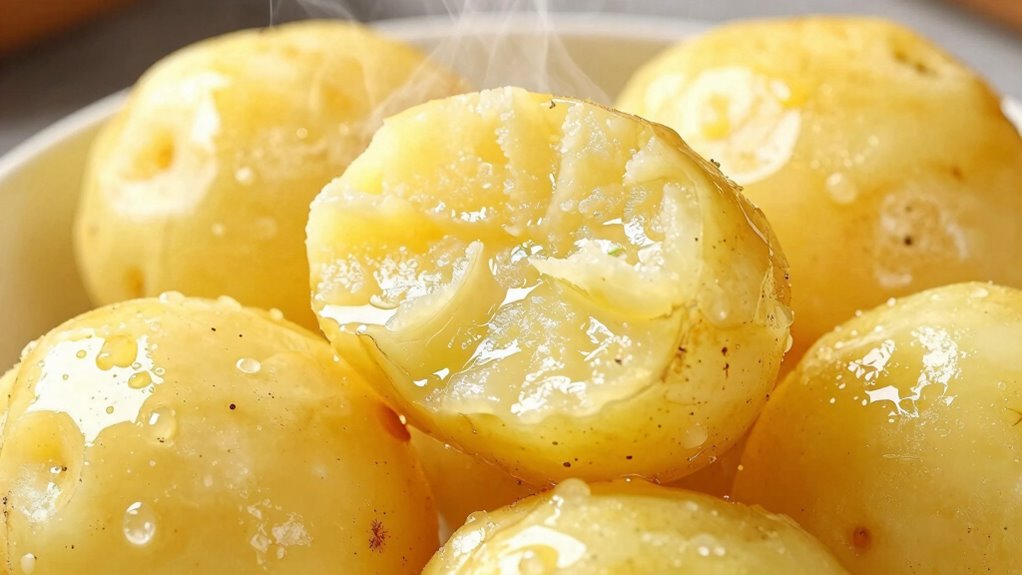
To guarantee proper starch gelatinization, selecting the right cooking techniques is essential. Steaming or boiling potatoes gently heats the starches, ensuring even gelatinization without making them gummy. Use enough water and avoid overcooking to prevent excess water absorption. For added flavor, incorporate seasoning tips like herbs or garlic during cooking, enhancing taste without compromising texture. Additionally, presentation ideas such as mashing or slicing potatoes can highlight their fluffy interior. Here’s a quick guide:
| Technique | Best for |
|---|---|
| Boiling | Soft, fluffy mashed potatoes |
| Steaming | Retaining nutrients, gentle heat |
| Roasting | Crispy exterior, fluffy inside |
| Pan-frying | Crispy, golden surface |
Choose your method based on your desired dish and remember, gentle heat promotes perfect gelatinization.
What Causes Gummy or Watery Potatoes: And How to Fix It?
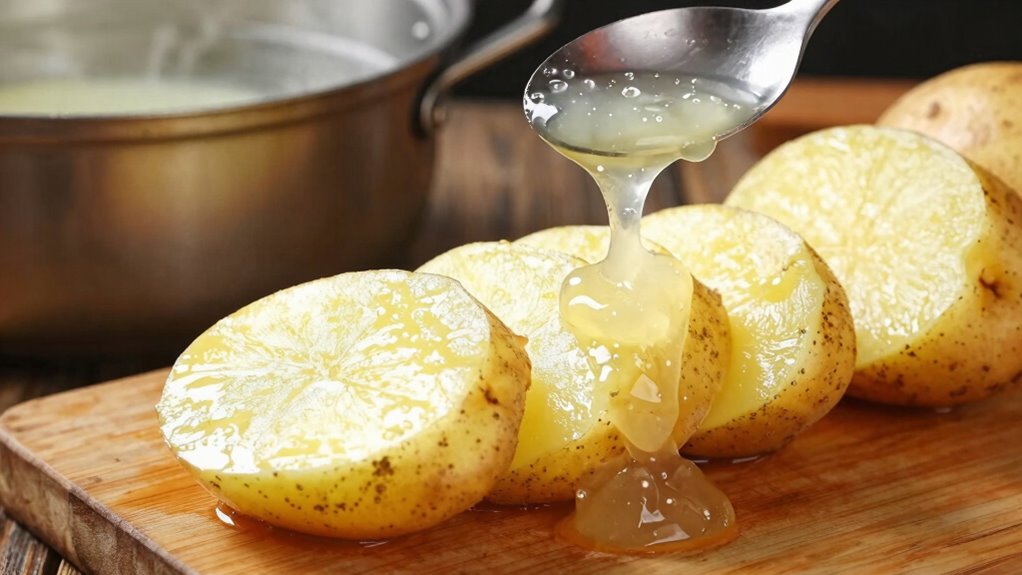
Gummy or watery potatoes often result from overcooking or using too much water during preparation. This interferes with the gelatinization process, causing the potato texture to become overly soft and slimy. To prevent this, monitor cooking time carefully and avoid excessive water, which can dilute starches.
You can also fix watery potatoes by:
- Draining excess water thoroughly after boiling
- Using less water initially to retain the right potato texture
- Incorporating gentle heat to evaporate excess moisture without overcooking
These steps help control the gelatinization process, ensuring the potatoes achieve a fluffy, tender consistency. Avoid overmixing too early, as that can break down starch granules and make potatoes gummy. Proper technique preserves the ideal potato texture.
How to Use Starch Science to Make Fluffy, Perfect Potatoes
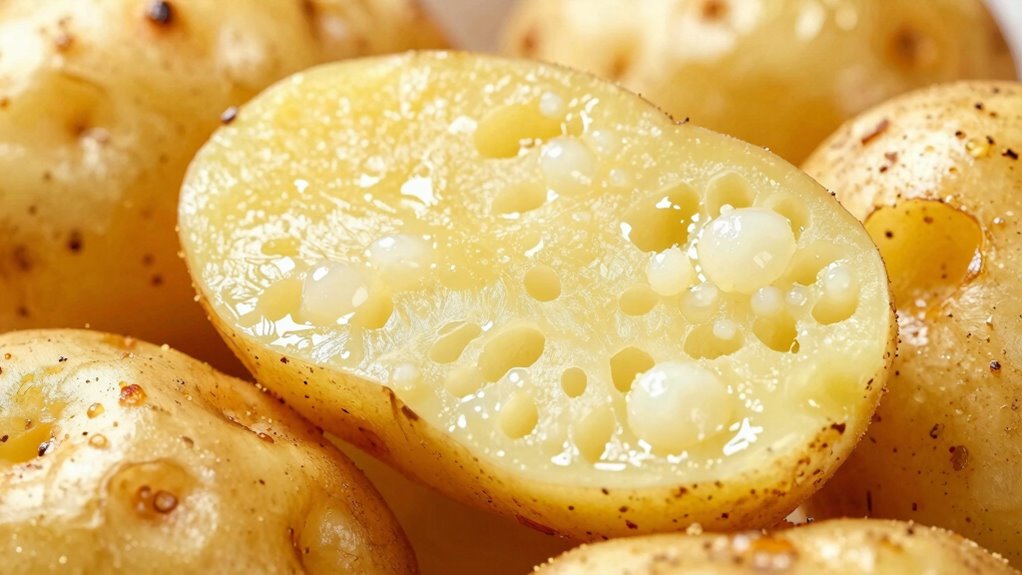
Understanding starch gelatinization is key to achieving perfectly fluffy potatoes. Different potato varieties, such as Russets or Yukon Golds, have unique starch and moisture levels that influence texture. Russets, with high starch content, absorb water quickly, producing a light, airy interior when cooked properly. Yukon Golds contain more moisture and waxy starch, resulting in creamier, less fluffy results if overcooked. To maximize fluffiness, choose starchy potatoes for their ability to gelatinize starch effectively. Also, consider flavor profiles—some potatoes are naturally sweeter or earthier—and select varieties that complement your dish. Properly cooking and mashing these potatoes ensures the gelatinized starch expands, trapping air and moisture, giving you that ideal fluffy texture you’re aiming for.
How Different Potato Types Impact Gelatinization and Texture
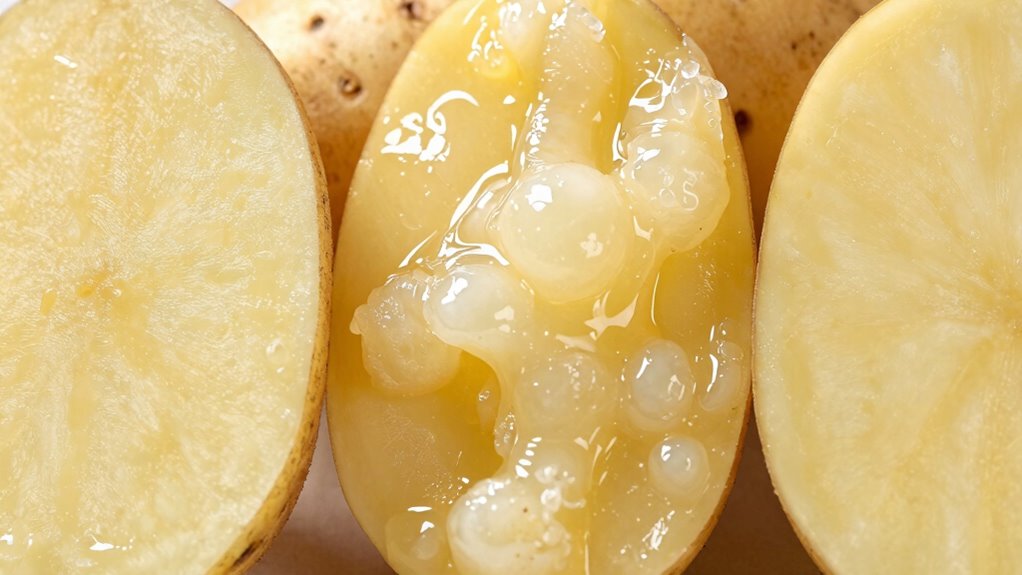
Different potato types respond differently during gelatinization, directly affecting the final texture of your dish. The potato variety and starch content play key roles in this process. High-starch potatoes, like Russets, have more starch and break down easily, resulting in fluffy, creamy textures. Waxy potatoes, such as red or new potatoes, contain less starch and hold their shape better, giving a firmer bite. Medium-starch varieties strike a balance, offering versatility.
- High-starch potatoes produce light, airy textures when cooked.
- Waxy potatoes retain shape, ideal for salads or stews.
- Starch content influences how much the potatoes gelatinize and how soft or firm they become.
Frequently Asked Questions
Can Cold Water Affect the Gelatinization Process of Potatoes?
Yes, cold water can affect the gelatinization process of potatoes. Using cold water slows down the water temperature, which reduces the gelatinization rate. This means it takes longer for the starch granules to swell and soften, resulting in a less fluffy texture. To guarantee proper gelatinization, it’s better to start cooking potatoes in hot or boiling water, which speeds up the process and helps achieve that perfect fluffy interior.
Does Adding Salt Influence Starch Gelatinization During Cooking?
Adding salt during cooking influences starch gelatinization mainly through salt effects on the process. It can slightly raise the boiling point, speeding up gelatinization, and also enhances flavor. You might notice potatoes taste better and have a better texture when you add salt early. While salt doesn’t drastically change the gelatinization temperature, its flavor enhancement makes your cooked potatoes more enjoyable. Just don’t overdo it to avoid overly salty results.
How Does Altitude Impact Potato Gelatinization and Fluffiness?
Sure, altitude effects can turn your fluffy potatoes into a culinary challenge. Higher elevations lower boiling points, so water boils sooner, preventing potatoes from reaching perfect gelatinization. As a result, your potato texture might come out denser or less fluffy than expected. You might think you’re doing everything right, but altitude sneaks in, making your fluffy dreams a tad more elusive. Just embrace the adventure—your taste buds will thank you.
Is Microwave Cooking Suitable for Proper Starch Gelatinization?
Microwave cooking can be suitable for starch gelatinization, but it has limitations. You might find uneven heating, which can affect gelatinization consistency, leading to some parts of the potato not cooking fully or evenly. To improve results, stir frequently and use medium power settings. While faster, microwaving may not always produce the same fluffy texture as traditional methods, so monitor closely to achieve the best gelatinization.
Do Organic or Conventional Potatoes Differ in Gelatinization Properties?
Think of potatoes as a symphony, where organic differences act like subtle variations in instruments, and conventional variations are like different arrangements. Organic potatoes often have slightly different moisture levels and nutrient content, which can influence gelatinization. While these differences may affect texture and cooking time, they generally don’t drastically change the fundamental gelatinization properties. So, you might notice minor variations, but both types will still transform beautifully during cooking.
Conclusion
Think of cooking potatoes like tending a delicate garden—each step influences how lush and fluffy your harvest becomes. When you understand starch gelatinization, you’re nurturing the perfect texture. Master the balance of heat, water, and time, and you’ll turn simple spuds into a cloud of comfort. With a little science and attention, you’ll always produce potatoes that feel like a warm, fluffy hug—delightful and just right every time.