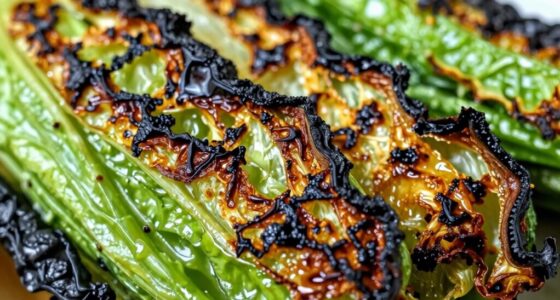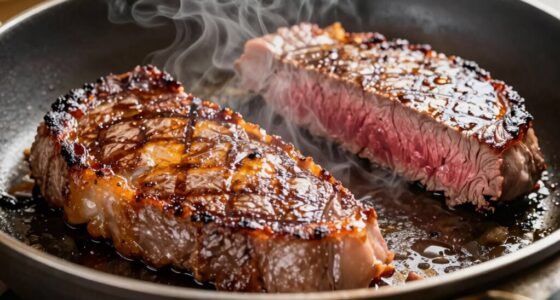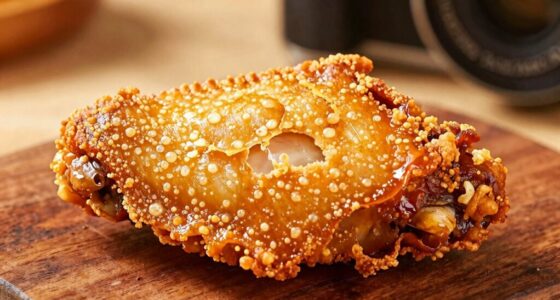
To get better browning through the Maillard reaction, focus on controlling heat and ingredients. Use high heat and dry ingredients, as moisture prevents browning. Select foods rich in sugars and amino acids, and season well to promote caramelization. Preheat your pan or oven for even browning, and avoid overcrowding, which traps moisture. By mastering these tips, you’ll enhance flavor and appearance—keep exploring to learn how to perfect your technique even more.
Key Takeaways
- Use high-sugar and high-protein ingredients to promote the Maillard reaction.
- Preheat your cooking surface to ensure even, high heat for browning.
- Pat dry foods to remove excess moisture that can hinder browning.
- Avoid overcrowding the pan to allow proper heat transfer and caramelization.
- Cook at the right temperature; too low slows browning, too high can burn.
What Is the Maillard Reaction: and Why Is It Important?
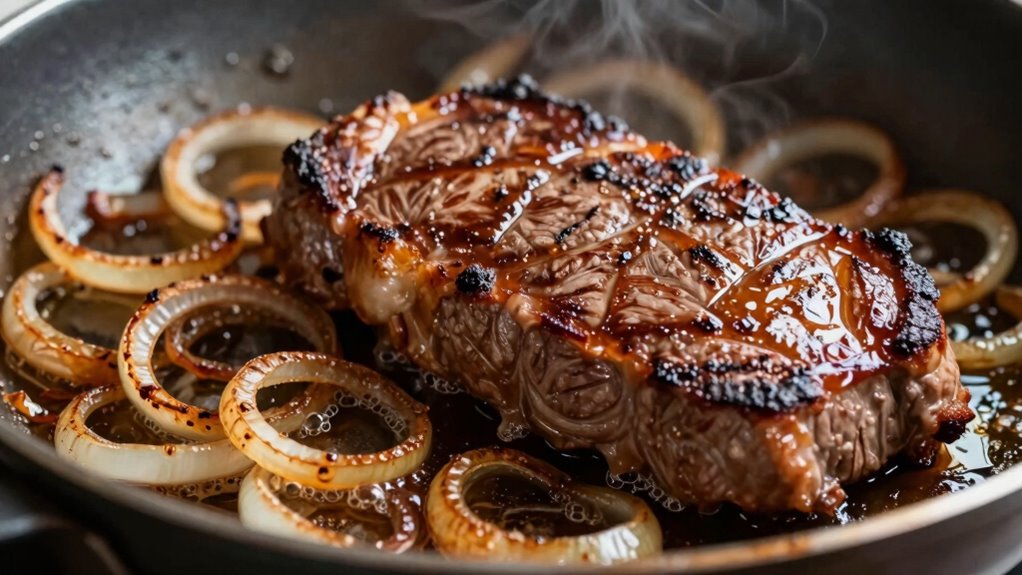
The Maillard reaction is a chemical process that occurs when proteins and sugars in food are heated together, creating the browned, flavorful crust we associate with grilled, roasted, or baked foods. Sugar’s role is vital—it reacts with amino acids, producing complex flavors and the characteristic color. Unlike caramelization, which involves heating sugars alone to produce a deep amber color and sweet taste, the Maillard reaction involves both proteins and sugars, resulting in savory, umami-rich flavors. This reaction is essential for developing the complex tastes and appealing appearance of many cooked foods. Color accuracy impacts how appealing these browned surfaces appear, influencing overall food presentation and appeal. Understanding the difference helps you control browning in your cooking, ensuring your dishes have the right flavor profile and visual appeal. Maillard reaction is also influenced by factors like temperature, pH, and cooking time, which can be adjusted to achieve desired results.
How Do Heat and Ingredients Impact Maillard Browning?
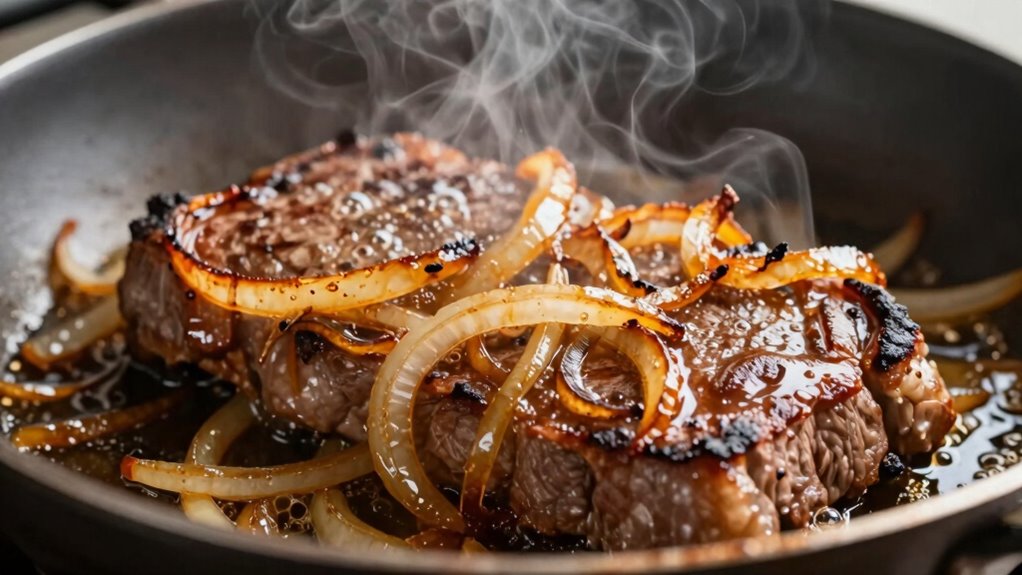
Heat is the primary driver of the Maillard reaction, as it provides the energy needed to initiate complex chemical changes between proteins and sugars. The temperature you maintain plays a vital role in how well browning occurs, with higher heat speeds up ingredient interactions that lead to flavorful, golden crusts. However, too much heat can cause rapid burning, so controlling temperature is indispensable for even browning. The types of ingredients you use also matter; proteins and sugars must be present in correct proportions for ideal Maillard reactions. By managing both heat and ingredient interactions carefully, you can influence the browning process, resulting in more appealing flavors and textures. Proper temperature control ensures the reaction develops fully without overcooking or burning your food.
How Can I Boost Browning in My Cooking?
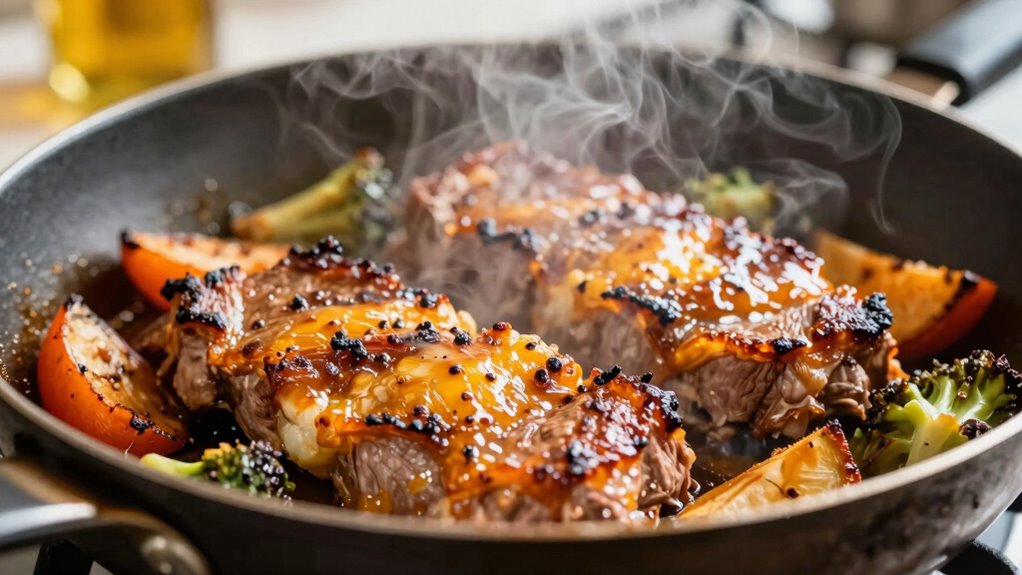
To boost browning in your cooking, focus on optimizing ingredient choices and preparation techniques. Start by selecting ingredients high in natural sugars and amino acids, which are essential for the Maillard reaction. Proper seasoning techniques also enhance browning; seasoning foods with salt before cooking draws out moisture, promoting better caramelization and browning. Additionally, guarantee your ingredients are dry before cooking, as excess water hinders browning. Using a hot pan or oven helps create the ideal environment for Maillard reactions to occur. Marinating foods in acidic or flavorful solutions can also improve browning by altering surface chemistry. Overall, thoughtful ingredient selection combined with effective seasoning techniques maximizes browning and results in richer flavor and more appealing color.
What Mistakes Stop Food From Browning: and How Can I Fix Them?
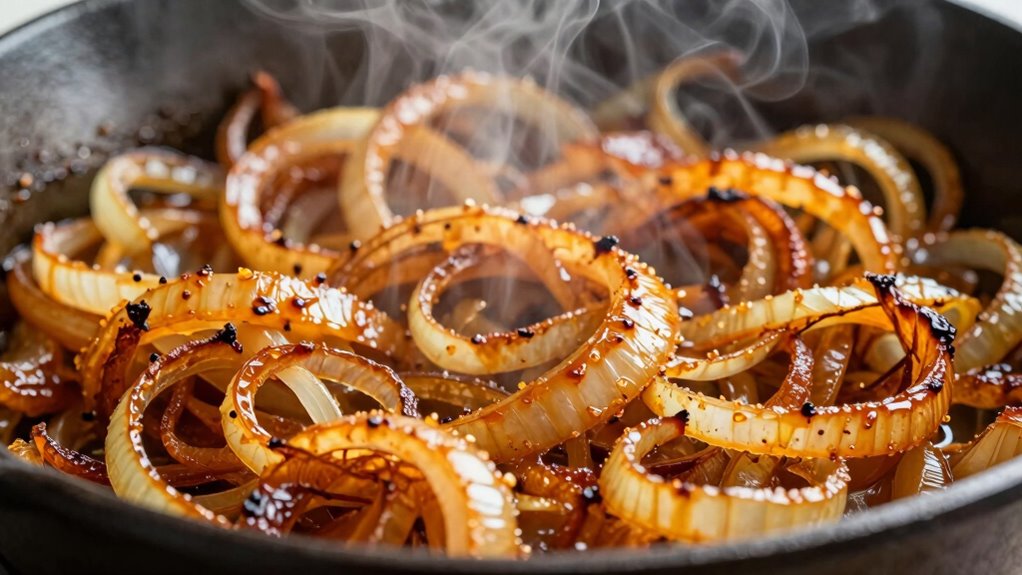
Many common mistakes can prevent your food from browning properly, often due to ingredient moisture, pan temperature, or both. If your ingredients are too wet, they release steam instead of browning, so pat them dry before cooking. Using a pan that’s not hot enough can also hinder browning, as the Maillard reaction requires a high temperature. Conversely, if the pan is too hot, food may burn before browning evenly. Avoid overcrowding the pan, which lowers the temperature and traps moisture. Additionally, adding ingredients with high water content or not preheating your pan can stop browning in its tracks. To fix these issues, verify ingredients are dry, preheat your pan thoroughly, and maintain an appropriate pan temperature for ideal browning. Remember that proper heat management is essential for achieving consistent browning results. Maintaining the correct pan temperature helps ensure even browning and prevents burning or steaming. Ensuring your stove or heat source is stable and accurately controlled can greatly improve browning consistency, especially when using modern cooktops with precise temperature controls. Proper thermal control can make a significant difference in achieving the perfect golden-brown crust on your dishes.
Why Won’t My Food Brown? Troubleshooting Tips
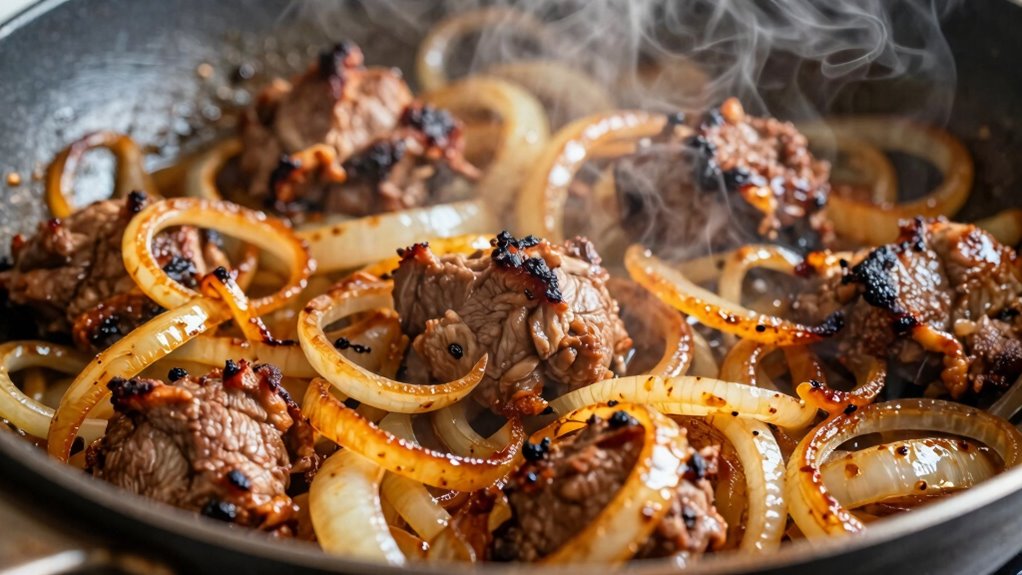
Have you ever wondered why your food refuses to develop that appealing golden-brown crust? One common reason is excess food moisture, which can prevent browning because the Maillard reaction needs dry heat to work effectively. If your ingredients aren’t fresh, they may lack the natural sugars and amino acids necessary for browning, reducing the chance of a nice crust. To troubleshoot, try patting foods dry before cooking and use high heat to evaporate surface moisture quickly. Avoid overcrowding the pan, as it traps steam and adds moisture. Check ingredient freshness—older produce or meat might not brown well. Additionally, understanding the Maillard reaction can help you control cooking conditions for better browning. By controlling moisture and ensuring fresh ingredients, you give your food the best chance to develop that desirable, flavorful browning.
Frequently Asked Questions
Can the Maillard Reaction Occur at Low Temperatures?
Yes, the Maillard reaction can occur at low temperatures, but it happens more slowly. To achieve good browning, you need to control the temperature carefully because higher temperatures speed up the reaction. At lower temperatures, the reaction takes longer, so patience is key. Proper temperature control helps you manage the reaction speed, ensuring even browning without burning, especially when working with delicate foods or gentle cooking methods.
Does pH Level Affect Maillard Browning?
Yes, pH level influences Maillard browning. When the pH is more alkaline, or less acidic, browning accelerates because the reaction occurs more rapidly. Conversely, increased acidity slows down the process, leading to less browning. So, if you want better browning, you should consider adjusting the pH influence by controlling acidity effects, such as adding alkaline ingredients to promote a richer, more developed color in your cooking or baking.
Are There Foods That Resist Browning?
Did you know some foods resist browning due to natural enzymes that slow the Maillard reaction? Fruits like apples and bananas contain these enzymes, which act as natural preservatives, preventing unwanted browning. You can harness this by keeping them cold or using lemon juice. These foods resist browning because their natural enzymes provide preservative effects, ensuring they stay fresh and appealing longer without sacrificing flavor or texture.
How Does Moisture Content Influence Maillard Reaction?
Moisture effects play a vital role in browning control during the Maillard reaction. When moisture levels are high, it slows down the reaction because water needs to evaporate first, delaying browning. To get better browning, you should reduce surface moisture through drying or higher heat. Keep in mind, too much moisture inhibits browning, so managing moisture content optimizes the Maillard reaction and enhances flavor and color.
Can Non-Cooking Processes Induce Maillard Browning?
Yes, non-cooking processes can induce Maillard browning, especially through slow chemical reactions over time. You might see browning in dried or stored foods due to enzyme effects or chemical inhibitors breaking down, facilitating the reaction. Factors like temperature, pH, and moisture play roles, so controlling these can influence browning even without heat. Understanding enzyme effects helps in managing unwanted browning during storage or processing.
Conclusion
Now you know the secrets to sizzling, satisfying browning. By balancing basic ingredients, boosting heat, and avoiding common mistakes, you can master the marvelous Maillard reaction. Remember, patience and practice pave the way to perfect, flavorful finishes. So, stay savvy, experiment enthusiastically, and enjoy every deliciously browned bite. With a little effort, you’ll elevate your cooking and make every meal magnificently more mouthwatering. Happy browning!