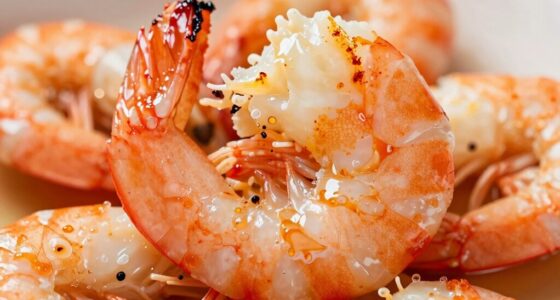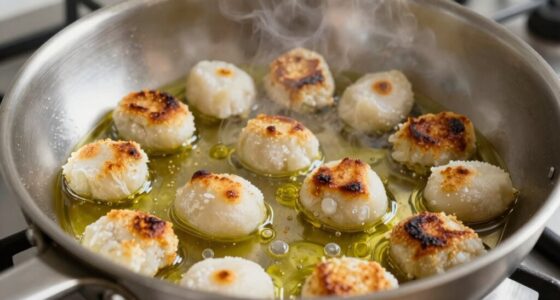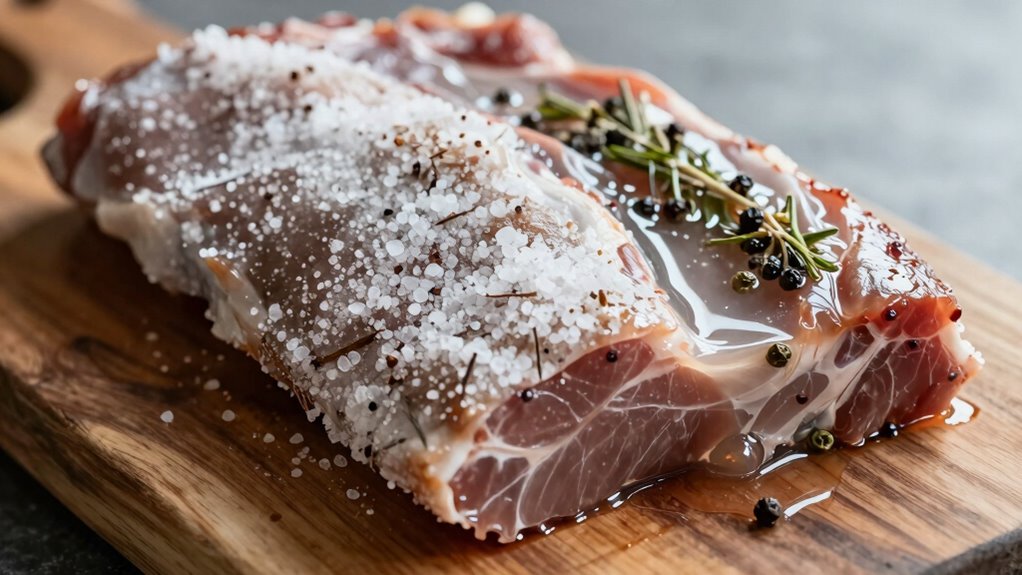

When you dry brine, salt draws moisture from the meat’s surface, then reabsorbs it along with seasonings, improving flavor, moisture, and tenderness; it creates a concentrated, savory crust. Wet brining involves soaking meat in a saltwater solution, allowing salt to penetrate, denature proteins, and increase internal moisture, resulting in juicier, tender meat. Each method affects texture differently, and choosing the best depends on your meat type and goal—if you want to master both, keep exploring.
Key Takeaways
- Dry brining applies salt directly to meat, promoting protein breakdown, moisture reabsorption, and flavor concentration without adding extra liquid.
- Wet brining submerges meat in a saltwater solution, increasing internal salt levels, tenderizing muscle fibers, and enhancing juiciness.
- Dry brining draws out moisture initially, then reabsorbs it with seasonings, locking in flavor and moisture for a tender, flavorful result.
- Wet brining facilitates deeper salt penetration and water infusion, making it ideal for lean, tough, or large cuts needing moisture retention.
- Both methods alter meat proteins to improve tenderness, flavor, and juiciness, but differ in surface moisture and texture outcomes.

Traeger Pellet Grills SPC206 Brine and Rub Kit , 13.00 Ounce (Pack of 1)
13oz package contains packet of brine mixture and packet of rub
As an affiliate, we earn on qualifying purchases.
As an affiliate, we earn on qualifying purchases.
What Is Dry Brining, and How Does It Work?
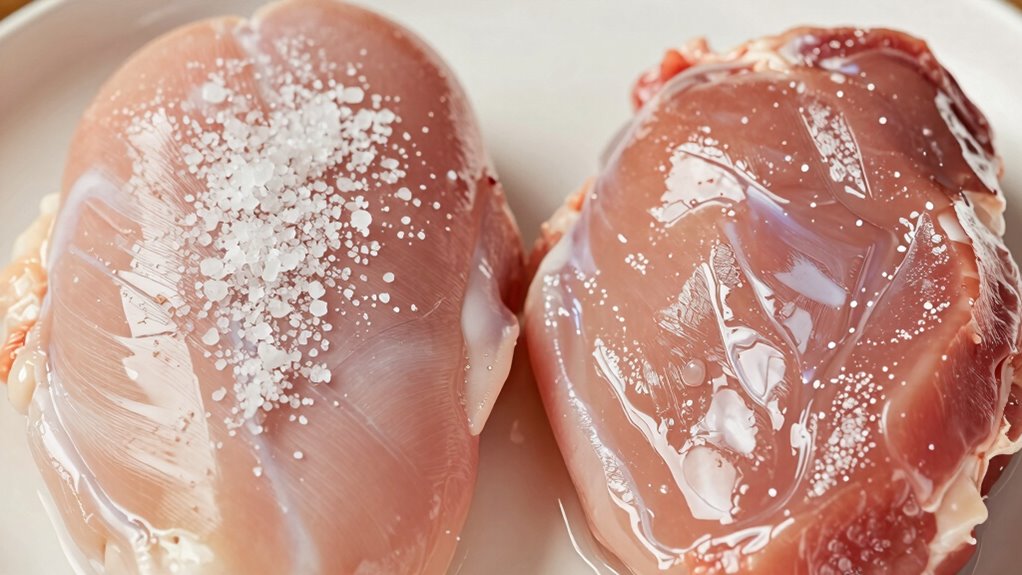
Dry brining is a simple technique that enhances the flavor and moisture of meat by applying salt directly to its surface. As you do this, the salt begins to break down proteins, improving seasoning enhancement across the meat. This process creates a more concentrated, savory taste and helps lock in juices during cooking. Unlike wet brining, dry brining doesn’t add extra liquid, so the meat’s surface becomes dry to the touch, but the interior stays moist. Over time, the salt draws out moisture, then reabsorbs it along with seasonings, leading to better flavor infusion. The result is more evenly seasoned, tender meat with a richer taste. This method is ideal for those seeking a straightforward way to boost flavor without the mess of liquids. Additionally, understanding how salt interacts with proteins can deepen your appreciation of why dry brining works so effectively. Knowing the science behind osmosis and protein denaturation can help you perfect your technique and achieve optimal results, especially when considering meat surface texture and its impact on flavor absorption.

SanPacino Brine Bag,12 Pack 4Mil 20"x30",Turkey Brine Bag with 50lb Wet Load Capacity,Brining Bags for Turkey Food Grade BPA Free,5 Gallon Bucket Liner Extra Heavy Duty Leak Proof
Brining bag made of Food-Grade Low-Density Polyethylene,Passed the food contact material testing,Safe to use.
As an affiliate, we earn on qualifying purchases.
As an affiliate, we earn on qualifying purchases.
What Is Wet Brining, and When Should You Use It?
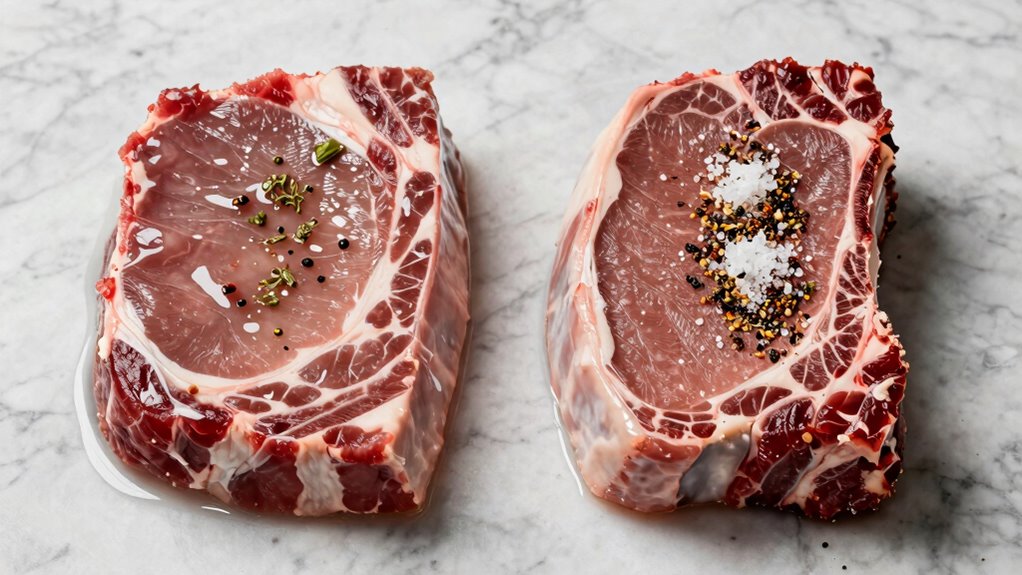
Wet brining involves soaking your meat in a saltwater solution to enhance moisture and flavor. You should use it when cooking lean cuts or poultry to prevent drying out. The salt solution also helps season the meat evenly and can improve tenderness. Adding moisture retention through wet brining aligns with evidence‑based techniques to improve the overall quality of your cooked meat. Additionally, this method facilitates flavor infusion, allowing seasonings to penetrate deeper into the meat for a more flavorful result. Using proper safety precautions ensures the process remains hygienic and effective. Incorporating proper refrigeration during brining is essential to keep the meat safe from bacteria growth. Understanding meat quality improvement techniques can further optimize your results and ensure a safe, delicious meal.
When To Use Wet Brining
Knowing when to use wet brining can make a significant difference in the final flavor and juiciness of your meat. Wet brining is ideal for tougher cuts or lean meats that need extra moisture and tenderness. It enhances marinade absorption, allowing flavors to penetrate deeply into the meat. If you’re preparing poultry, pork, or large roasts, wet brining helps keep the meat moist during cooking. It’s especially useful when cooking methods like roasting or grilling might otherwise dry out lean cuts. Use wet brining when you want to boost flavor infusion and improve tenderness, particularly with meats that benefit from longer resting times. Additionally, understanding the difference between dry and wet brining can help you choose the best method for your specific cut and desired outcome. Recognizing the importance of salt concentration in the brine can further optimize the process for ideal results. Knowing how meat’s moisture content responds to brining can also guide your technique for better results. Furthermore, selecting the appropriate brining duration ensures optimal absorption without compromising texture. Being aware of the effects on meat texture can help prevent over-brining and achieve the perfect balance.
Benefits of Salt Solution
A salt solution, or wet brine, works by infusing meat with moisture and enhancing its natural flavors. This method provides an effective seasoning alternative, allowing salt and other flavorings to penetrate deeply into the meat. As a result, you get a juicier, more tender final product with a richer flavor profile. Wet brining also helps to break down muscle fibers, making tougher cuts more enjoyable. It’s especially useful when working with lean meats or large roasts that tend to dry out during cooking. The flavor infusion process ensures that seasoning is evenly distributed throughout the meat, leading to a consistent taste. Overall, using a salt solution is an excellent way to improve moisture retention and maximize flavor, especially for longer cooking times.

Curing Salt No.1. Quick Cure Premium Prague Powder XL 1.5 Pound Bottle by SPQR Seasonings
XL BOTTLE OF CURING SALT #1: Enough premium Prague Powder to cure hundreds of pounds of meat, in…
As an affiliate, we earn on qualifying purchases.
As an affiliate, we earn on qualifying purchases.
How Does Salt Penetrate and Tenderize Meat During Dry Brining?

When you dry brine meat, salt slowly diffuses into the surface, reaching deeper layers over time. This process changes the protein structure, making the meat more tender. As a result, the meat retains more moisture and stays juicy during cooking. Additionally, the protein modification helps improve the meat’s overall texture and flavor. The salting process also enhances the meat’s ability to self-baste, leading to a more flavorful final product. The natural osmosis involved in dry brining allows the meat to absorb not only salt but also other seasonings, further enhancing taste. Furthermore, the diffusion of salt is a slow but effective method for tenderizing meat without the need for additional tenderizers. This technique leverages the principles of molecular diffusion to achieve even seasoning and tenderness.
Salt Diffuses Into Meat
Salt penetrates meat through a process called diffusion, where it naturally moves from areas of higher concentration on the surface into the interior. During dry brining, you apply salt directly to the meat’s surface, creating a high-concentration zone. Over time, salt molecules diffuse into the meat, gradually increasing salt levels inside. This movement occurs along the meat fiber, as salt penetrates between the protein strands, affecting their structure. As salt enters, it helps to break down some muscle proteins, which can improve tenderness and moisture retention. The key is patience; the longer you allow the salt to diffuse, the deeper it penetrates into the meat. This process ensures an even seasoning and enhances the meat’s overall texture and flavor. Incorporating knowledge of auditory processing can also help in timing the brining process for optimal results. Additionally, understanding molecular diffusion highlights how salt gradually disperses through the meat, ensuring thorough seasoning.
Protein Structure Changes
As salt penetrates the meat during dry brining, it interacts directly with muscle proteins, causing structural changes that tenderize the meat. The salt disrupts the natural arrangement of muscle fibers, prompting protein denaturation—the process where proteins lose their native structure. This denaturation exposes more sites for water binding, which helps keep the meat moist later. The salt also weakens the connections between muscle fibers, making them less tough and more tender when cooked. By changing the protein structure at a microscopic level, dry brining effectively breaks down the toughness of the meat’s muscle fibers. These molecular alterations improve tenderness without sacrificing flavor, resulting in meat that’s more succulent and easier to chew.
Moisture Retention Improves
Ever wondered how dry brining helps meat stay juicy? It all comes down to how salt interacts with your meat during seasoning techniques. When you apply salt, it dissolves on the surface and begins to penetrate the meat over time. This process helps the muscle fibers reabsorb moisture, keeping the meat moist and tender. As the salt draws out moisture initially, it then promotes reabsorption, trapping water inside the meat. This moisture retention results in juicier cooked meat. Plus, dry brining enhances flavor because the salt evenly distributes through the meat, ensuring every bite is seasoned. By allowing salt to work its way in gradually, dry brining improves both moisture retention and flavor enhancement, giving you a more flavorful, juicy, and tender result. Salt penetration is a key factor in how dry brining achieves these effects. Additionally, understanding the chemical interactions during brining can help optimize your technique for perfect results, especially considering how muscle fibers respond to salt and moisture movement. Recognizing the small systems involved in salt diffusion and moisture flow can lead to more consistent and successful brining outcomes.
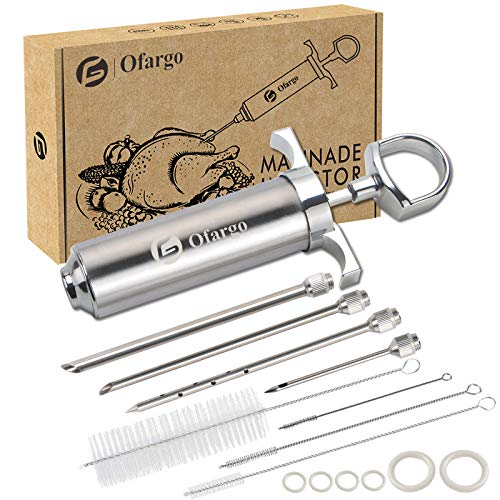
Ofargo Stainless Steel Meat Injector Syringe Kit with 4 Marinade Needles for BBQ Grill Smoker, Easter Day Gifts for Men Dad Husband Him, 2-oz Large Capacity, Both Paper User Manual and E-Book Recipe
Safe Kitchen/BBQ Tool: stainless steel for meat injector barrel/syringe plunger/meat needles; silicone for O-ring seals; food safe for…
As an affiliate, we earn on qualifying purchases.
As an affiliate, we earn on qualifying purchases.
What Changes Occur When Meat Is Soaked in a Wet Brine?
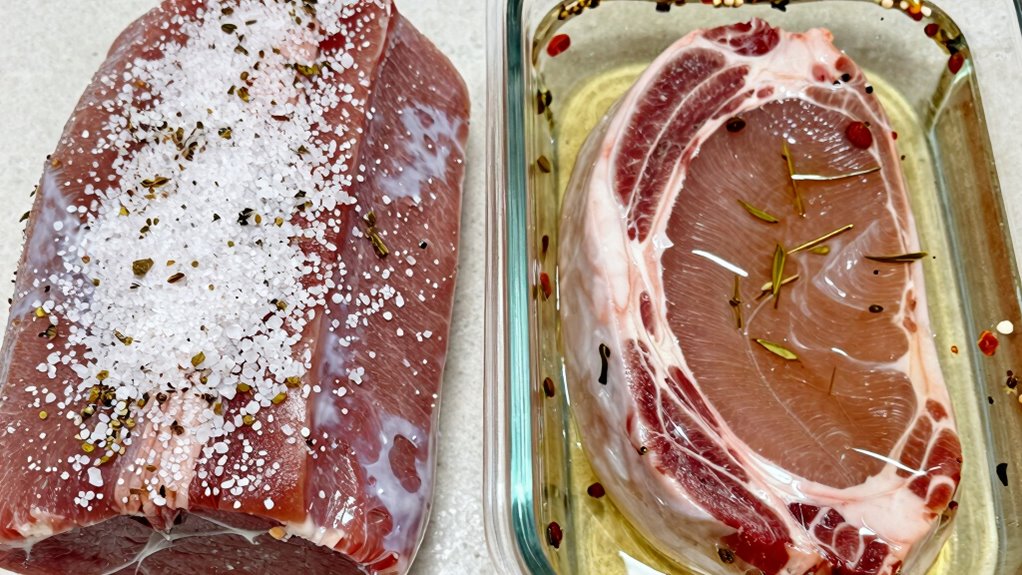
When meat is soaked in a wet brine, the salt solution begins to penetrate the muscle fibers, triggering a series of chemical and physical changes. First, the salt dissolves into the meat, enhancing flavor absorption and making the meat taste more savory. Second, the salt disrupts muscle cell structures, helping retain moisture and improving meat texture. Third, the brine draws in additional water, which can increase juiciness during cooking. Finally, the salt interacts with proteins, leading to tenderization by breaking down some muscle fibers. These combined effects make the meat more flavorful and moist, ensuring a better overall eating experience. Understanding these changes helps you appreciate how wet brining enhances meat quality through fundamental chemical and physical processes.
How Do Dry and Wet Brining Keep Meat Juicy and Flavorful?
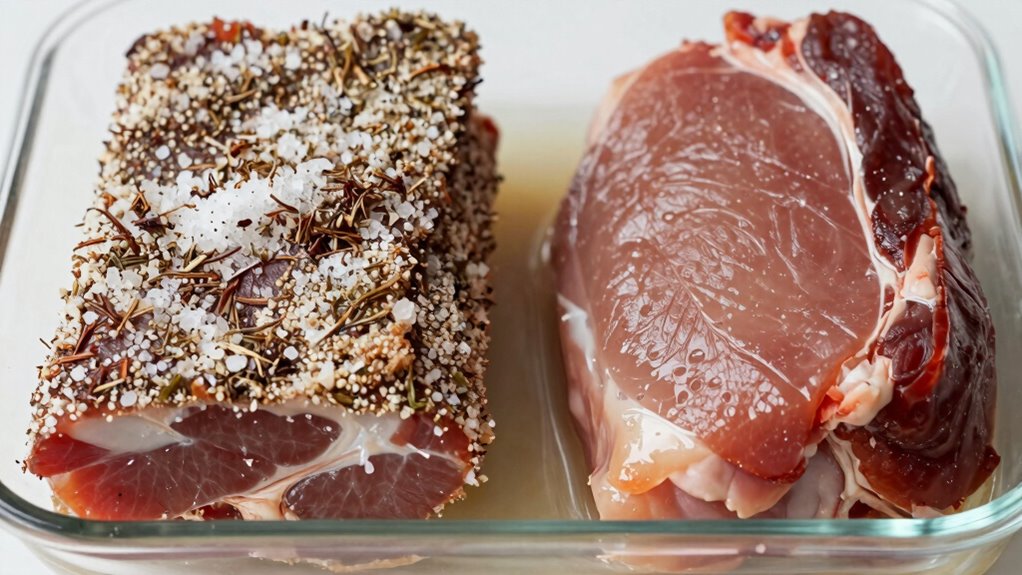
Both dry and wet brining techniques help keep meat juicy and flavorful by enabling the meat to retain moisture and absorb taste-enhancing ingredients. During brining, moisture is locked inside, preventing dehydration during cooking. Wet brining allows the meat to soak in a salty, seasoned solution, which promotes flavor infusion and helps the meat stay moist. Dry brining involves salting the surface, drawing out moisture, then reabsorbing it along with salt and seasonings, enhancing flavor. Additionally, both methods improve texture by breaking down muscle proteins, making the meat more tender. The flavor infusion from the salt and seasonings ensures each bite is richer and more savory. Overall, brining creates a juicier, more flavorful meat with improved texture.
Which Brining Method Is Best for Different Types of Meat?
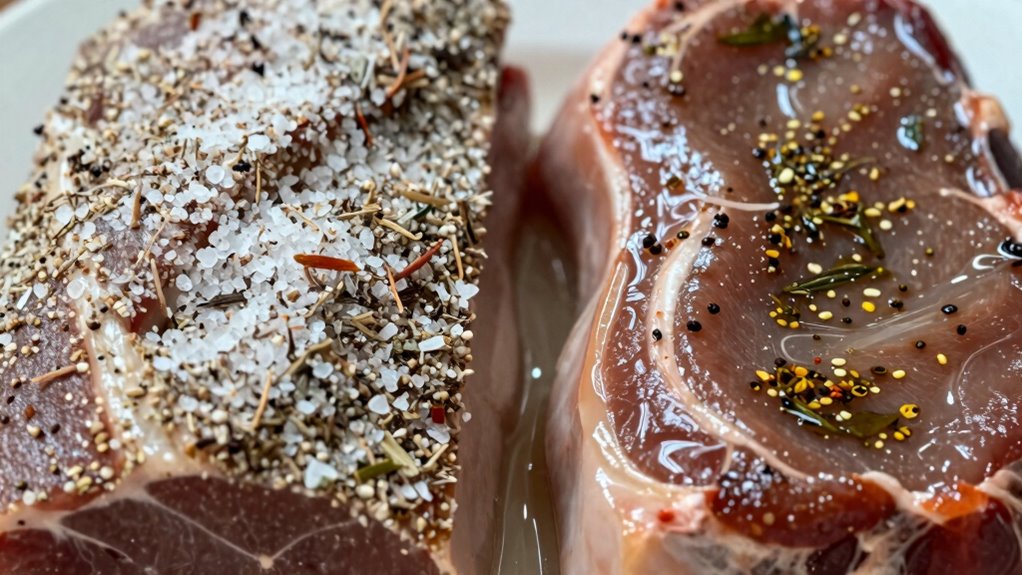
Choosing the right brining method depends on the type of meat you’re preparing. For poultry, wet brining is ideal because it boosts juiciness and enhances flavor infusion, making the meat tender and moist. When dealing with beef steaks, dry brining works best to improve texture and concentrate flavors without adding excess moisture. For pork, both methods can be effective, but dry brining offers a crispier exterior, while wet brining ensures moistness. Fish benefits from wet brining for delicate flavor infusion and subtle texture enhancement. Finally, large roasts or tough cuts respond well to wet brining, which tenderizes and infuses flavors deeply. Choose based on the desired flavor profile and texture outcome to get the best results for each meat type.
What Key Factors Help You Choose Between Dry and Wet Brining?
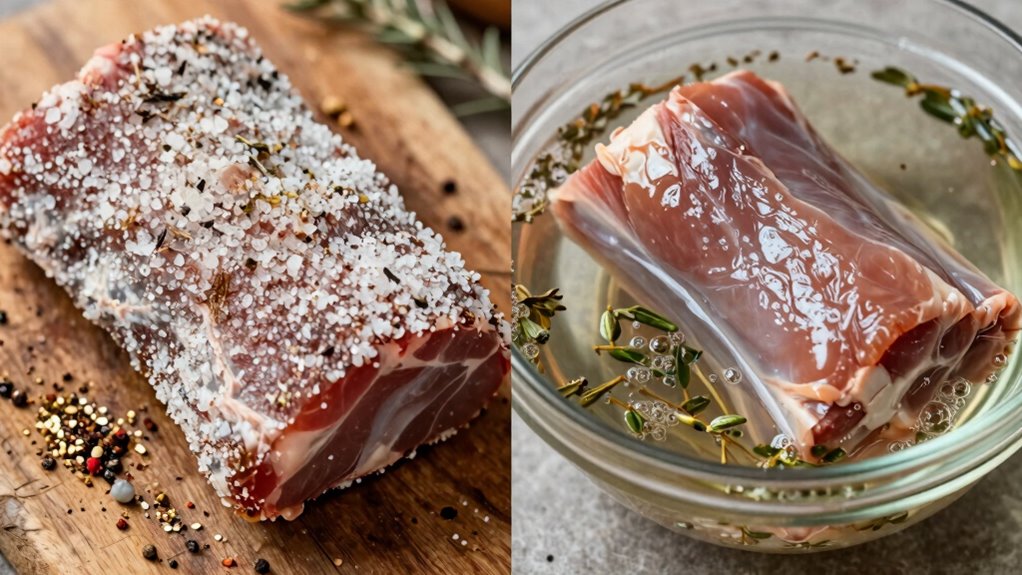
Deciding between dry and wet brining hinges on several key factors, including the type of meat, desired flavor, and texture outcome. If you’re after a more concentrated flavor infusion, dry brining allows the salt to penetrate deeply, enhancing the meat’s natural taste without adding moisture. It also tends to improve texture by creating a crispier skin or crust. Wet brining, however, is better if you want to add moisture and tenderness, especially for lean or tougher cuts. Consider the final dish’s texture—dry brining offers a firmer bite, while wet brining produces juicier results. Your choice depends on whether flavor infusion or texture enhancement is your priority, and the kind of meat you’re preparing.
Tips and Common Mistakes for Perfect Brining at Home
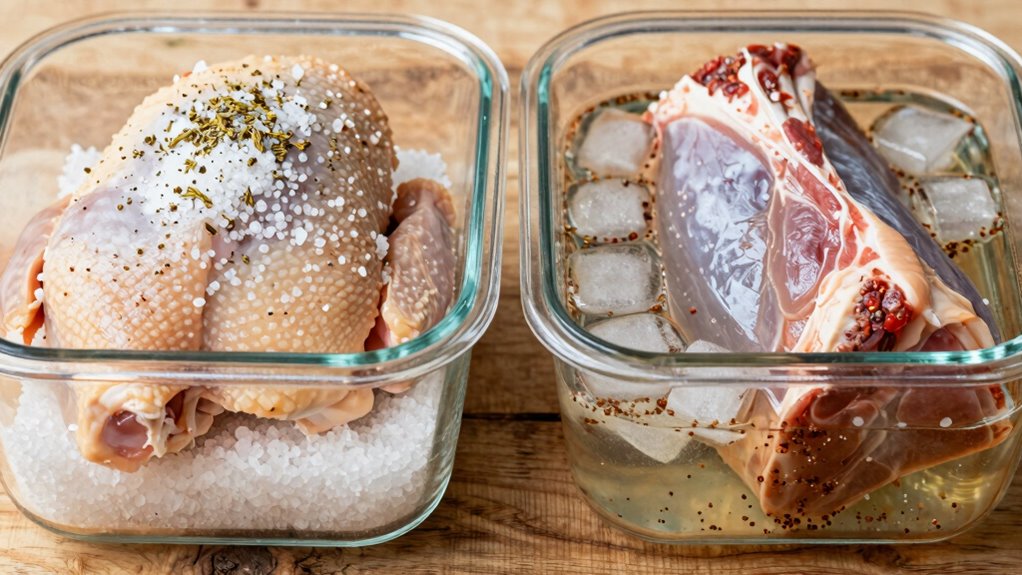
Getting the perfect brine at home requires attention to detail and avoiding common pitfalls. To enhance flavor and manage your time effectively, keep these tips in mind:
- Use the right salt-to-water ratio; too much salt can overpower, too little won’t flavor enough.
- Plan your brining time carefully—over-brining can lead to a salty, mushy texture, so stick to recommended durations.
- Pat your meat dry after brining to ensure proper browning and flavor development during cooking.
- Keep the meat refrigerated during brining to prevent bacterial growth and maintain food safety.
Avoid rushing the process or skipping steps, as these mistakes can compromise flavor and texture. Proper technique guarantees flavorful, perfectly brined meat every time.
Frequently Asked Questions
Can Dry Brining Be Used on All Types of Meat?
You can use dry brining on most types of meat, but meat compatibility varies. For example, it works well on poultry, beef, and pork, enhancing flavor and moisture. However, delicate meats like fish may become too salty or change texture undesirably. Dry brining causes subtle texture changes, often improving tenderness, but always consider the specific meat and its thickness to achieve ideal results.
How Long Should I Dry Brine Versus Wet Brine?
Imagine your meat as a sponge waiting to soak up flavor. For dry brining, give it 24 to 48 hours, allowing salt to penetrate deeply, enhancing moisture and tenderness. Wet brining needs a bit more patience—about 1 to 2 days—so the meat can fully absorb the flavorful solution. The key is balancing brine duration to maximize meat absorption without turning it overly salty or mushy.
Does Brining Affect Cooking Time or Temperature?
Brining can affect cooking time and temperature by making your meat more tender and flavorful, so you might need to adjust your cooking process. Typically, you should watch for faster cooking, especially with wet-brined meats, to prevent overcooking. Keep in mind, brining helps retain flavor and moisture, but it also means you might need to lower your temperature slightly or reduce cooking time to achieve perfect results.
Are There Health Differences Between Dry and Wet Brining?
You might wonder if dry and wet brining differ in health implications. Dry brining generally has fewer concerns because it uses less salt and avoids added liquids, reducing the risk of bacterial growth. Wet brining can introduce more sodium and potential bacterial issues if not handled properly. Nutritional differences are minimal, but you should consider your dietary needs, especially if watching salt intake. Overall, both methods are safe if done correctly.
Can I Combine Dry and Wet Brining Techniques?
Think of combining dry and wet brining as blending two melodies into a symphony. Yes, you can use hybrid techniques to enhance flavor infusion, layering salt, spices, and moisture for a deeper taste. Start with dry brining to concentrate flavors and then follow with a wet brine to add juiciness. This approach maximizes the benefits of both methods, creating a tender, flavorful masterpiece your taste buds will love.
Conclusion
Choosing between dry and wet brining is like selecting the right brush for your masterpiece—you want what brings out the best in your meat. Both methods penetrate flavors and improve tenderness, so pick what suits your cut and taste. With a little practice, you’ll master the art of brining, making every meal a symphony of juicy, flavorful bites. Remember, great meat starts with confident seasoning—your culinary canvas awaits!