In a convection oven, active airflow speeds up heat transfer, so baked goods cook faster and more evenly. This means you need to adjust your timing to prevent overbaking, typically reducing the time by about 25%. The consistent circulation reduces hot spots and hot air buildup, ensuring uniform baking. If you want to understand exactly how to optimize your convection baking, there’s more to explore about best practices and adjustments.
Key Takeaways
- Convection ovens circulate hot air evenly, speeding up heat transfer and reducing baking times compared to traditional ovens.
- Active airflow minimizes hot spots, leading to quicker and more uniform baking, which requires adjusting timing.
- Faster heat distribution in convection ovens means recipes often need approximately 25% less baking time.
- Proper airflow prevents uneven browning or undercooked areas, influencing the precise timing needed for optimal results.
- Convection’s enhanced heat transfer allows for lower temperatures, but necessitates different timing to avoid overbaking.
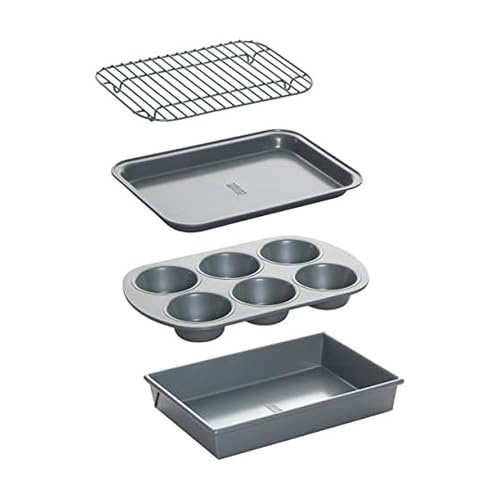
Chicago Metallic Professional 4-Piece Non-Stick Toaster Oven Set
COMPLETE TOASTER OVEN SET: Includes 9.5 x 6.25 inch baking pan, 9.25 x 6 inch cooling rack, 11…
As an affiliate, we earn on qualifying purchases.
As an affiliate, we earn on qualifying purchases.
How Do Convection Ovens Differ From Traditional Ovens for Baking?
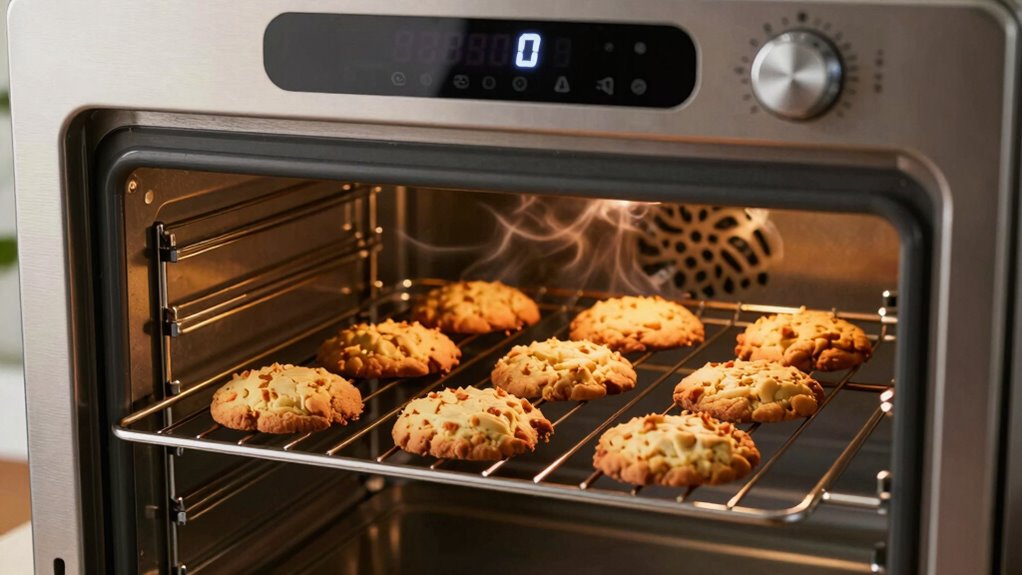
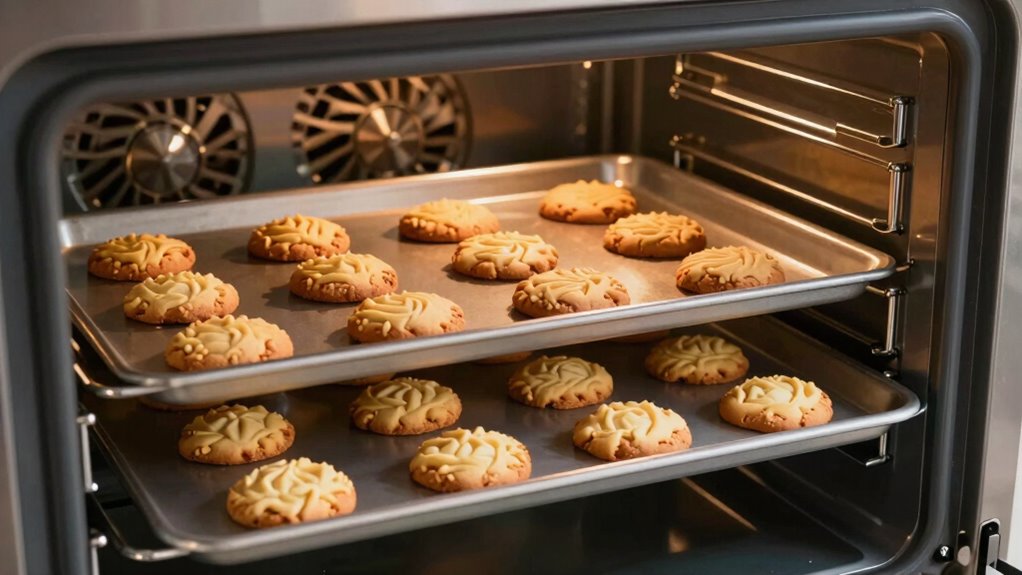
Convection ovens differ from traditional ovens mainly because they use a fan and exhaust system to circulate hot air evenly around the food. This constant movement affects how you should arrange oven racks and baking pans. In a convection oven, placing multiple racks allows hot air to reach all surfaces, so you can bake several trays simultaneously without uneven results. When using baking pans, it’s best to avoid overcrowding, as the circulating air promotes even browning and crisping. Unlike traditional ovens, which rely on radiant heat, convection ovens deliver consistent heat throughout the chamber. This means you can often reduce baking times and temperatures. Properly positioning your oven racks and selecting appropriate baking pans ensures efficient airflow and baking performance.

Stainless Steel Oven Thermometer 50-300°C/100-600°F, Analog Instant Read, Battery-Free Kitchen Cooking Thermometer, Hook & Stand Design Food Thermometer for Oven, Grill, Smoker, Fryer
Clear Dial Display: PECULA's analog oven thermometer delivers precise, instant readings from 50–300°C / 100–600°F. Its dial features…
As an affiliate, we earn on qualifying purchases.
As an affiliate, we earn on qualifying purchases.
Why Does Convection Circulation Accelerate and Even Out Baking?
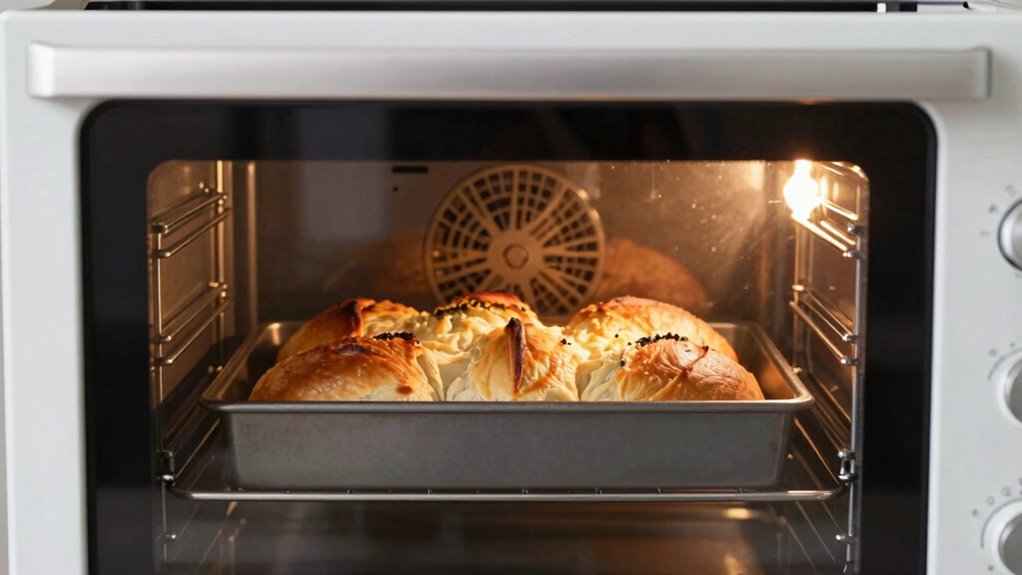
Because hot air is actively circulated around the food, baking is accelerated and becomes more even. Convection ovens create dynamic airflow patterns that promote consistent heat transfer across the surface and interior of your baked goods. This circulation reduces hot spots and guarantees that heat reaches all parts of the food simultaneously. As a result, the baking process speeds up, and the outcome is more uniform. The improved heat transfer from continuous airflow minimizes uneven browning and undercooked sections. You’ll notice that baked items develop a crisp, golden exterior while remaining moist inside. Overall, convection circulation optimizes how heat interacts with your food, leading to faster, more consistent baking results. Understanding airflow is essential to mastering convection baking techniques, particularly because air circulation patterns directly influence heat distribution and baking efficiency. Properly designed airflow also helps in reducing baking time, making the process more energy-efficient and convenient. Recognizing the importance of essential oils for heat exposure can further enhance your baking outcomes by ensuring even heat distribution throughout the process.

2PCS Cooling Racks for Cooking and Baking – 10" x 15"Heavy Duty Stainless Steel Wire Rack for Baking, Grilling, Roasting – Oven & Dishwasher Safe – Fits Jelly Roll Sheet Pan-Silver
QUALITY STAINLESS STEEL CONSTRUCTION: Made from food grade stainless steel instead of metal plating or coating, the grill…
As an affiliate, we earn on qualifying purchases.
As an affiliate, we earn on qualifying purchases.
What Science Explains Baking Time Adjustments in Convection Ovens?
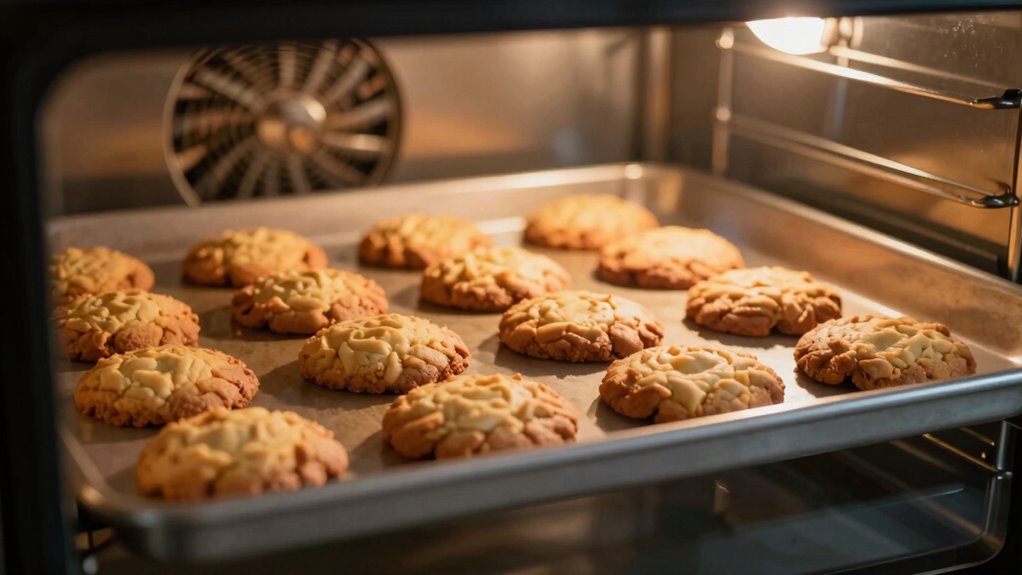
Understanding how heat circulates in a convection oven helps explain why baking times change. When air moves efficiently, heat distributes more evenly and quickly across your baked goods. This improved temperature distribution directly influences how long your recipe needs in the oven. Additionally, knowing the character evolution of baked items can help bakers adjust timing for optimal results. Recognizing the heat transfer mechanisms involved can further clarify why convection ovens often require different baking durations. Furthermore, many professional services leverage technological integration to optimize baking processes and ensure consistency.
Heat Circulation Dynamics
The way heat circulates inside a convection oven considerably influences baking times. You’ll notice that airflow patterns are more dynamic than in traditional ovens, driven by a fan that continuously moves hot air around the food. This enhanced airflow improves heat transfer, ensuring the heat reaches all surfaces more evenly and quickly. Because of this, the heat exchange is more efficient, reducing the time needed to cook or bake your items thoroughly. You’ll find that the constant movement of air prevents hot spots and promotes uniform cooking. Understanding these heat circulation dynamics helps you adjust your baking times properly. By optimizing airflow and heat transfer, convection ovens deliver consistent results, but it also means you should keep a close eye on timing to prevent overbaking.
Temperature Distribution Effects
In convection ovens, temperature distribution plays a critical role in how quickly and evenly your baked goods cook. Airflow patterns determine how heat circulates, influencing the temperature gradients inside the oven cavity. When airflow is uniform, heat spreads evenly, reducing hot spots and ensuring consistent baking times. However, uneven airflow can create temperature gradients, where some areas are hotter than others, leading to uneven browning or undercooked centers. To optimize results, you may need to adjust baking times or reposition items during baking. Understanding how airflow affects temperature distribution helps you achieve better results, as it allows you to control heat flow more precisely, ensuring your baked goods cook thoroughly and evenly every time.

Elite Gourmet ETO490 9L/4 Slice Countertop Toaster Oven with 30-Minute Timer, Adjustable Temperature Control, Includes Baking Pan and Wire Rack, Bake, Broil, Toast, Black
COMPACT & VERSATILE: Compact design fits nicely in smaller spaces & also provides the power needed to cook…
As an affiliate, we earn on qualifying purchases.
As an affiliate, we earn on qualifying purchases.
How Can I Adjust Baking Times When Using a Convection Oven?

To adjust baking times when using a convection oven, you’ll want to reduce the recipe’s recommended time by about 25%. Start by consulting baking time charts specific to convection baking, which help you gauge proper adjustments. Keep in mind that oven calibration plays a crucial role; if your oven isn’t properly calibrated, your timing may be off. Regularly check your oven’s calibration to ensure accurate heat distribution. When in doubt, reduce the suggested baking time gradually and monitor your baked goods closely. This approach helps prevent over-baking or under-baking. Remember, every oven is different, so use baking time charts as a guide and adjust based on your oven’s performance for the best results. Additionally, understanding the principles of sound healing science can help you create a calming environment post-baking, promoting relaxation after your culinary efforts.
How Do I Know If My Convection Baking Is Turning Out Right?

Since convection baking can produce different results than traditional methods, it’s important to look for specific signs that your baked goods are turning out right. First, check that your oven is properly calibrated; inconsistent heat affects outcomes. Use baking timers to ensure you’re not over or underbaking. Look for a golden-brown crust that’s even, not burnt or pale. The texture should be firm yet tender, not soggy or dry. When you insert a toothpick or skewer, it should come out clean. Finally, your baked goods should have risen evenly and maintain their shape. These signs indicate proper heat distribution and correct baking times, confirming your convection oven is performing well and your baking is successful. Proper heat distribution is crucial in achieving consistent baking results.
What Are Common Convection Baking Mistakes and How Can I Avoid Them?
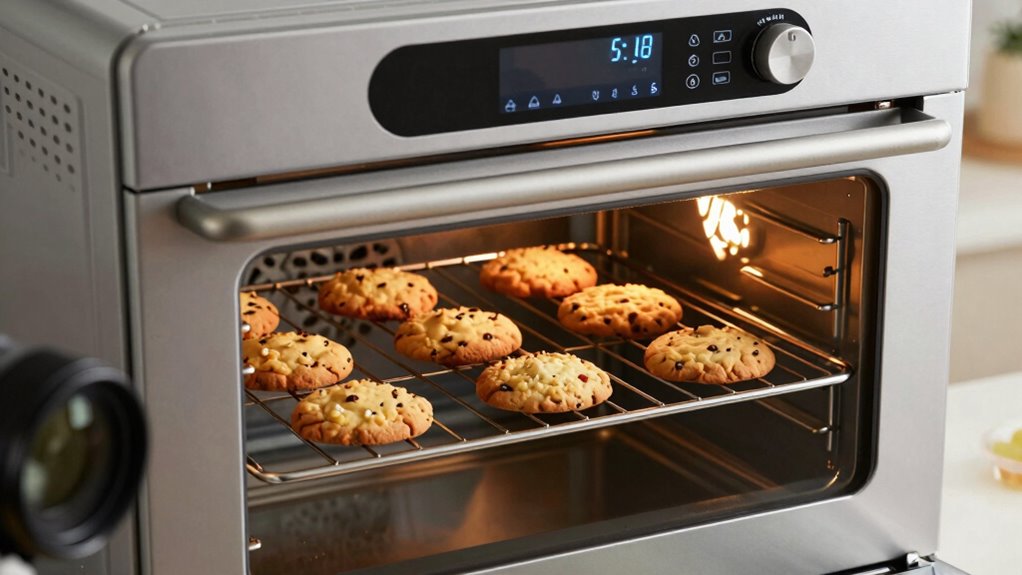
One common mistake is overcrowding the oven, which can block proper air circulation and lead to uneven baking. Ignoring how air moves around your baked goods or setting inconsistent temperatures also causes uneven results. To avoid these issues, give your items enough space and always double-check your oven’s temperature settings. Incorporating proper airflow management and visual and auditory cues can also help monitor and adjust the baking process for better results. Additionally, understanding convection heat principles can help you optimize baking times and temperatures for consistent outcomes.
Overcrowding the Oven
Overcrowding the oven is a common mistake that can considerably affect your convection baking results. When you pack too many items inside, oven overcrowding causes airflow disruption, preventing heat from circulating evenly. This leads to uneven baking, soggy spots, or burned edges. To avoid this, consider these visual cues:
- Piling multiple trays close together, blocking air movement
- Overlapping baked goods, hindering even heat distribution
- Filling every rack space without leaving gaps
- Stacking items too high, restricting airflow from top to bottom
- Ignoring the need for space around each item for proper heat circulation
Maintaining proper spacing ensures consistent convection heat transfer, giving you evenly baked treats every time. Remember, less is more when it comes to oven overcrowding. Proper airflow is essential for free floating heat distribution, so always leave enough space around your baked goods.
Ignoring Air Circulation
Ignoring air circulation is a common mistake that can sabotage your convection baking. Proper airflow patterns are vital for even heat distribution, guaranteeing your baked goods cook uniformly. When you neglect to contemplate airflow, hot spots may develop, leading to uneven browning or undercooked centers. Additionally, oven venting plays a fundamental role in maintaining consistent temperature and airflow. Blocked or poorly vented ovens can disrupt airflow patterns, causing temperature fluctuations that affect your baking results. To avoid this, keep vents clear and avoid overcrowding the oven, which can obstruct air movement. Understanding how air circulates within your oven helps you optimize baking times and achieve consistent, professional-quality results. Proper attention to airflow and venting ensures your convection oven performs at its best.
Inconsistent Temperature Settings
When you overlook setting the correct temperature on your convection oven, your baked goods can turn out unevenly or poorly done. Inconsistent temperature settings often stem from improper oven calibration, leading to inaccurate temperature readings. Without proper calibration, your oven’s temperature accuracy suffers, causing under or over-baking. To avoid this, always verify your oven’s actual temperature with an oven thermometer. Common mistakes include relying solely on the oven’s dial, ignoring preheating time, or adjusting settings without rechecking. Visualize:
- A cake collapsing in the center
- Burnt edges on cookies
- Raw centers in bread
- Uneven browning
- Dry, overcooked pastries
Ensuring precise temperature control helps you achieve consistent, professional results every time. Additionally, regular oven calibration can help maintain accurate temperature readings and improve baking consistency.
How Can I Convert Traditional Recipes for Convection Baking?
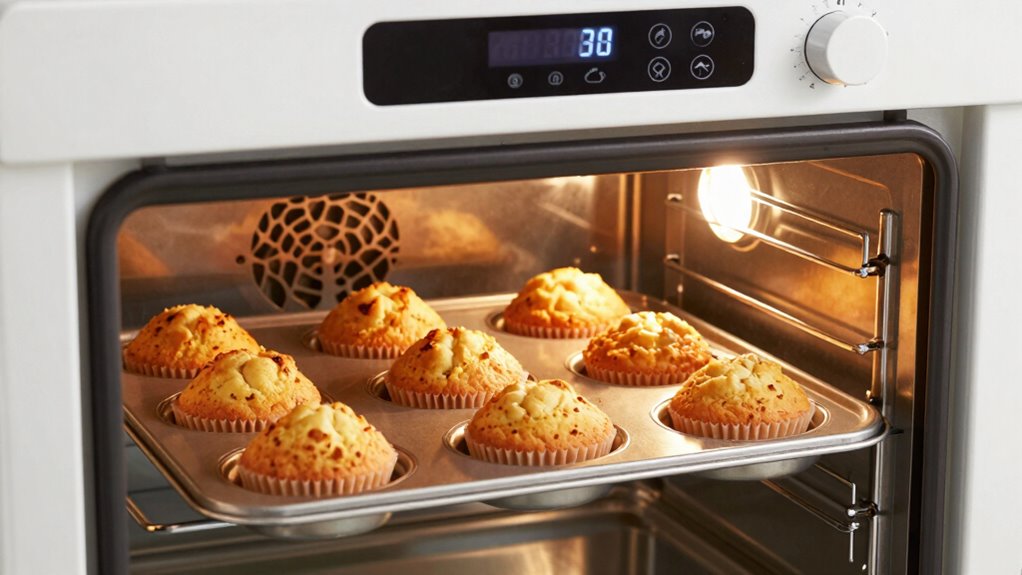
Converting traditional recipes for convection baking is straightforward once you understand how heat circulates more efficiently. To adapt your recipe, start by reducing the oven temperature by about 25°F (14°C) to prevent over-baking or burning. Keep an eye on cooking time, as convection ovens typically bake faster—check for doneness earlier. Ingredient substitution may also be necessary; for example, if the recipe calls for high moisture ingredients, consider reducing liquids slightly to maintain proper texture. Adjustments in rack placement can improve heat exposure, ensuring even baking. Understanding heat circulation can help you optimize baking results and prevent common issues like uneven browning. Being aware of baking fundamentals will further improve your adaptation process. Additionally, knowing how oven efficiency impacts baking times can help you make precise adjustments. Proper recipe adaptation involves observing your oven’s behavior and making incremental changes based on your results. Additionally, understanding the heat circulation process can help you optimize baking results. With these tweaks, you’ll achieve consistent, delicious baked goods using convection heat.
What Are Best Practices for Achieving Perfect Crusts and Textures?

Achieving a perfect crust and ideal texture in baking hinges on controlling moisture and heat exposure. To enhance cookie crispness and ensure proper crust formation, focus on these best practices:
Master baking with controlled heat and moisture for perfect crusts and satisfying crunch.
- Use a preheated oven to jump-start crust development
- Incorporate a baking stone or steel for even heat distribution
- Brush dough with egg wash or steam for a glossy, crisp exterior
- Adjust oven rack position to optimize heat flow and crust formation
- Avoid overcrowding the oven, allowing moisture to escape freely
These steps help regulate moisture loss and expose baked goods to consistent heat, resulting in a satisfying crunch and a well-formed crust. Proper timing and technique in convection baking make all the difference for achieving bakery-quality textures at home.
Troubleshooting Convection Baking Results: Quick Fixes
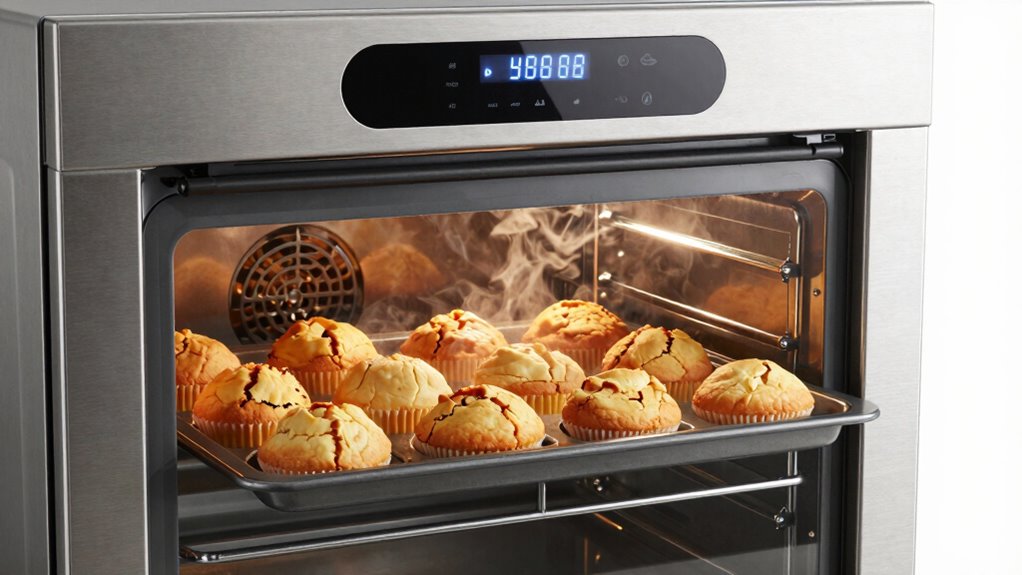
If your convection baked goods aren’t turning out as expected, quick adjustments can often salvage the results. First, check your baking timing—reduce it slightly since convection ovens cook faster. If you notice uneven browning or undercooked centers, your oven might need calibration. Many ovens run hotter or cooler than the set temperature, affecting baking timing. Use an oven thermometer to verify accuracy and recalibrate if necessary. Adjust your baking time by a few minutes based on your observations, but avoid opening the oven door too often, which can disrupt heat circulation. These quick fixes help you adapt your baking process, ensuring better results without extensive trial and error. Correct baking timing and proper oven calibration are key to consistently perfect convection baking. Additionally, understanding your oven’s navigation and mapping features can help optimize heat distribution for more even baking outcomes. Proper heat circulation is essential for uniform baking, and many modern ovens have features that assist in this. Being aware of your oven’s performance variations can also help you make more precise adjustments for consistent results. Regularly monitoring and adjusting oven settings based on your observations can further improve baking consistency.
Frequently Asked Questions
Can I Bake Multiple Trays Simultaneously in a Convection Oven?
Yes, you can bake multiple trays simultaneously in a convection oven. To guarantee even baking, arrange the baking trays with proper oven rack placement, leaving space between them for air circulation. Adjust the baking time slightly shorter if needed, and rotate the trays halfway through. Proper baking tray arrangement helps the hot air circulate evenly, resulting in consistent baking results across all trays.
Does the Type of Baking Dish Affect Convection Baking Times?
Yes, the type of baking dish affects convection baking times. You might worry that all dishes heat evenly, but material and shape matter. Metal pans heat quickly and promote browning, while glass or ceramic dishes retain heat longer, extending baking times. Dish shape also influences airflow—deep or unevenly shaped pans can cause uneven baking. Adjust your timing based on your baking dish’s material and shape for the best results.
How Does Altitude Impact Convection Oven Baking Adjustments?
You need to make altitude adjustments because higher elevations diminish convection efficiency, causing baked goods to cook unevenly or slower. As you ascend, lower air pressure affects boiling points and moisture evaporation, so increase oven temperature slightly or shorten baking times. Keep an eye on your baked items, and consider lowering the rack or reducing liquid content to ensure proper rise and texture at high altitudes.
Are There Specific Recipes That Don’T Benefit From Convection Baking?
Some traditional recipes and delicate baked goods aren’t suited for convection baking, like soufflés or custards. Think of these dishes as fragile butterflies that need gentle airflow to stay aloft. The intense, circulating heat can cause uneven rise or collapse. You’ll want to stick with conventional oven settings to preserve their tender texture and delicate structure, ensuring they come out as perfect as a finely spun web.
How Do I Prevent Over-Browning With Convection Heat?
To prevent over-browning with convection heat, you should lower the oven temperature by about 25°F and keep an eye on the baking time. Use a light-colored or silicone baking sheet to promote even browning and moisture retention. You can also cover your baked goods loosely with foil if they brown too quickly. This helps you achieve even browning while maintaining moisture and preventing over-browning.
Conclusion
Now that you understand how convection ovens circulate heat and speed up baking, you can confidently tweak your recipes. Picture your baked goods emerging golden and perfectly crisp, their aroma filling your kitchen like a warm summer breeze. With a little practice, you’ll master the art of timing and temperature, turning every bake into a delicious masterpiece. Embrace the science behind convection baking, and watch your creations rise to new heights of perfection.