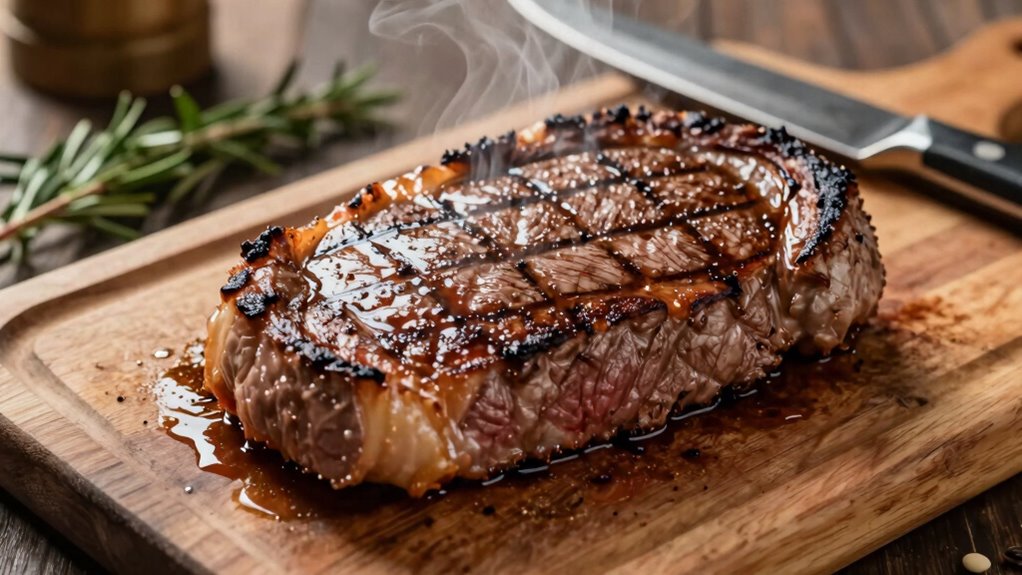

When you finish cooking meat, the carryover heat rule means it keeps cooking from residual warmth, which helps keep it juicy and tender. Resting allows internal temperatures to even out, juices to redistribute, and prevents moisture loss when slicing. Proper rest times vary by meat type, typically 5-10 minutes. If you want to unseal more tips on how to master this process and achieve perfectly juicy meat, keep exploring these techniques.
Key Takeaways
- Resting allows residual heat to continue cooking the meat, ensuring even doneness and preventing dryness.
- Carryover heat causes internal temperatures to rise after removal, which must be accounted for to avoid overcooking.
- Proper resting time helps juices redistribute, enhancing moisture retention and flavor.
- Loosely tenting meat during resting retains heat while preventing moisture loss.
- Understanding heat transfer principles ensures optimal timing for juicier, tender meat.
What Is the Carryover Heat Rule and Why Is It Important?
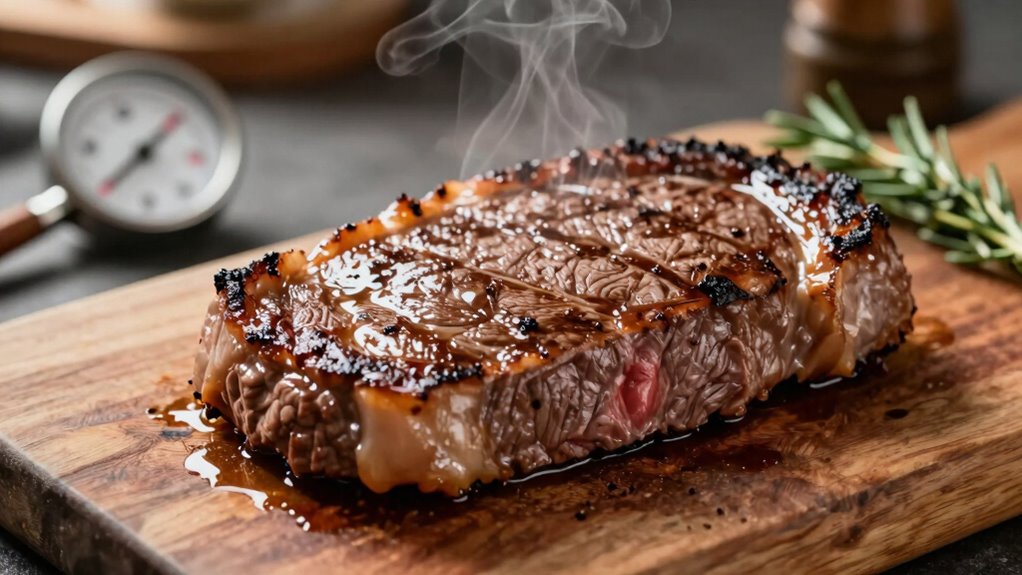
The carryover heat rule explains why food continues to cook even after you remove it from the heat source. When you finish cooking, residual heat inside the meat causes it to undergo carryover cooking, raising the internal temperature. This process happens because heat flows from the hotter outer layers toward the cooler center, aiming for temperature equilibrium. Understanding this helps you avoid overcooking your meat, as the internal temperature can rise several degrees during resting. By knowing when to take your meat off the heat, you ensure it reaches the perfect level of doneness without becoming dry or overdone. Additionally, the temperature gradient within the meat influences how much the internal temperature will increase during resting. Recognizing the heat transfer process involved in carryover cooking can further refine your timing for optimal results. The carryover heat rule is essential for timing your cooking precisely and achieving juicy, tender results. Being aware of residual heat can help you better plan the resting period for perfect doneness.
How Does Residual Heat Keep Your Meat Juicy?
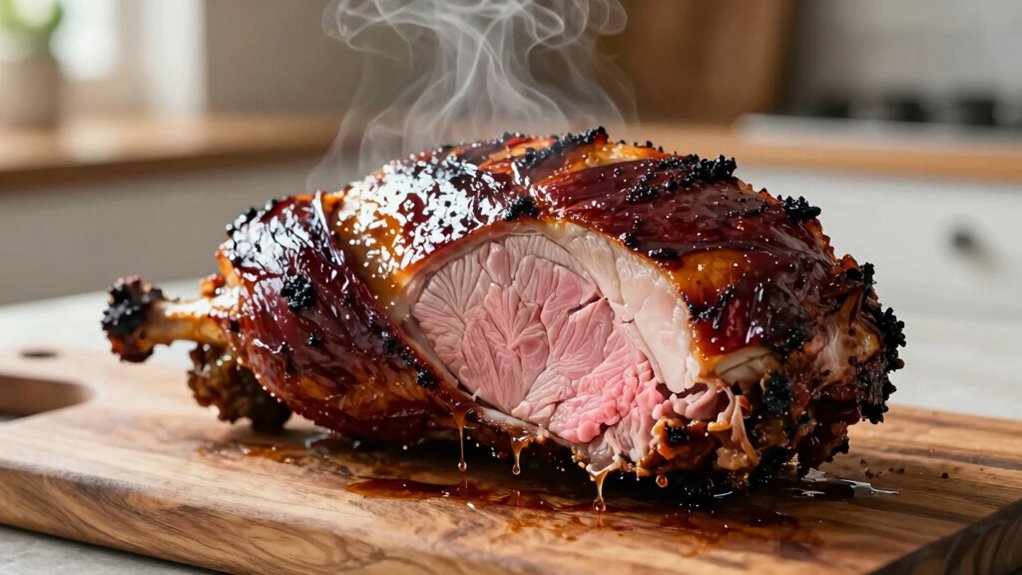
Residual heat plays an essential role in keeping your meat juicy because it gently continues to cook the meat from the inside out after you remove it from the heat source. This process helps with temperature stabilization, preventing rapid drops that could cause moisture loss. As the meat rests, residual heat redistributes internal temperature evenly, reducing the risk of uneven cooking and ensuring the juices stay locked in. This gentle carryover heat also allows the muscle fibers to relax, which improves moisture retention. Additionally, understanding the significance of cultural and traditional practices can enhance your overall approach to cooking and resting meat. Recognizing the thermal carryover effect can help you better anticipate how residual heat influences the final texture and juiciness of your meat. Without this rest period, cutting into hot meat can cause juices to escape, leaving it dry. By understanding how residual heat functions, you can better control moisture retention and achieve a tender, juicy result every time. Additionally, paying attention to cooking techniques can optimize how residual heat benefits your meat and overall dish quality. Recognizing the importance of resting in various culinary traditions can deepen your appreciation for time-tested methods that ensure perfect results. Knowing how to manage resting time effectively allows you to maximize the benefits of residual heat and improve your cooking outcomes.
How Long Should You Rest Different Types of Meat?
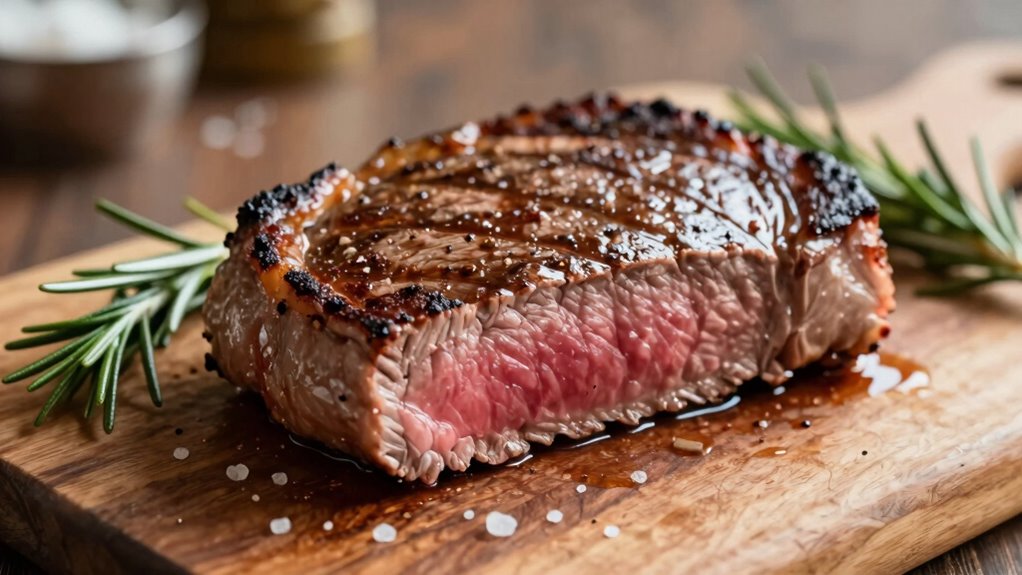
Knowing how long to rest different types of meat is vital to maximizing juiciness and tenderness. Thinner cuts, like steaks, typically need about 5 to 10 minutes of resting in the temperature zones just below boiling point, allowing residual heat to evenly distribute juices. This process helps prevent the juices from escaping when the meat is cut. Resting too briefly can trap juices inside, leading to dryness, while resting too long risks losing moisture if the temperature drops too much. Pay attention to the temperature zones during resting, ensuring the meat stays warm enough to continue tenderizing and retain its moisture without overcooling. Proper resting time is essential for juicy, flavorful results, especially considering carryover heat helps equalize internal temperatures and improve overall tenderness. Additionally, understanding resting guidelines can optimize your cooking results by balancing heat retention and moisture preservation. Being aware of resting duration based on meat thickness ensures you achieve the perfect balance between juiciness and tenderness. Moreover, monitoring the temperature during resting can further enhance the final quality of your meat. To further refine your technique, consider how resting position can influence heat distribution and moisture retention during the process.
Practical Tips for Resting Meat to Maximize Juiciness
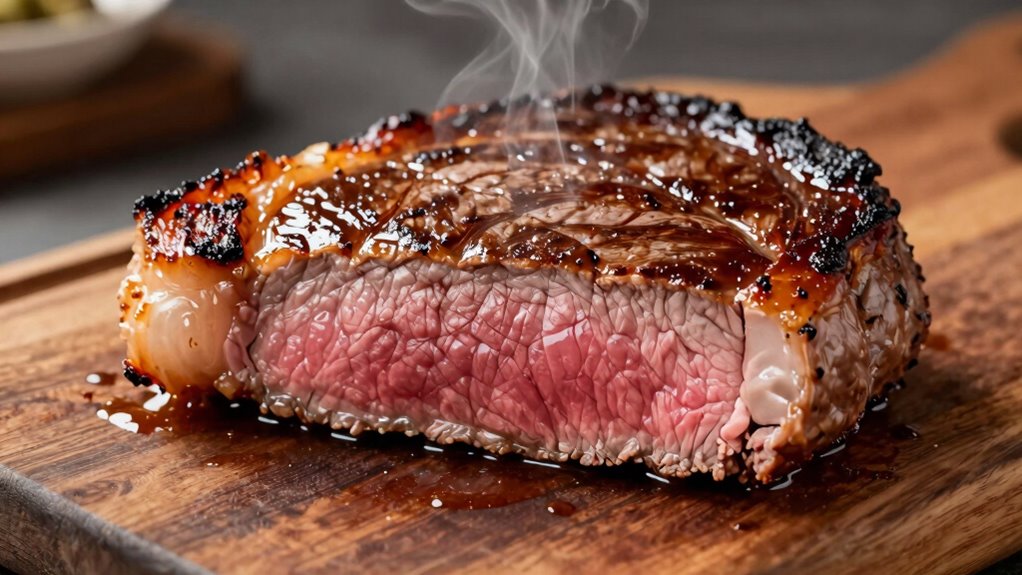
After you’ve cooked your meat to the right temperature, how you handle the resting process can make a big difference in retaining juiciness. To maximize results, follow these practical tips: 1. Use a reliable meat thermometer to monitor the cooking temperature accurately, ensuring you don’t overcook or undercook before resting. 2. Tent the meat loosely with foil to retain heat without trapping moisture, allowing carryover heat to finish the cooking gently. 3. Rest meat for the recommended time based on its type and size; this allows juices to redistribute evenly, preventing them from spilling out when sliced. Proper resting techniques are essential for achieving optimal juiciness and tenderness. Properly managing the resting phase ensures the carryover heat enhances juiciness without overcooking, keeping your meat tender and flavorful. Additionally, understanding safe handling practices can help ensure your meat remains safe to eat during the resting process. Knowing the importance of temperature control can further improve your cooking results.
Common Resting Mistakes and How to Avoid Them
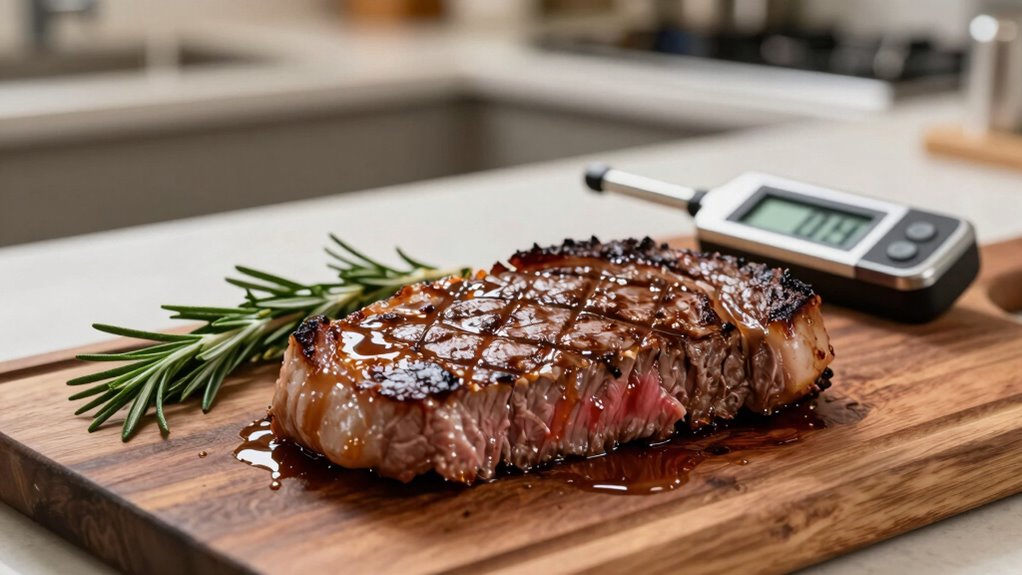
Many cooks cut into meat too soon, causing juices to escape and leaving the meat dry. Ignoring proper rest time can also lead to less flavorful and less tender results. By avoiding these mistakes, you’ll guarantee your meat stays juicy and cooked to perfection. Additionally, understanding the carryover heat effect helps ensure your meat reaches the ideal internal temperature during resting, maximizing juiciness and tenderness. Recognizing the thermal inertia of cooked meat allows for more precise timing and better overall results. Being mindful of cooking residual heat can further improve your ability to judge the perfect rest period for your meat, especially as it relates to temperature regulation during the resting process. Knowing how heat transfer continues even after removal from the heat source can help you avoid common errors in timing.
Cutting Too Early
Cutting into meat too early can ruin its juiciness and flavor because the juices haven’t had enough time to redistribute. When you carve before resting, the juices escape, leaving the meat dry. To avoid this, focus on proper carving techniques and wait until the meat reaches the ideal resting temperature. Here are three tips:
- Use a sharp carving knife to make clean, precise cuts, minimizing juice loss.
- Rest meat for at least 10-15 minutes, allowing juices to redistribute evenly.
- Check the resting temperature with a meat thermometer before carving to ensure the meat has settled, which helps maintain optimal juiciness. Additionally, understanding the carryover heat effect can help you better judge the perfect time to carve.
Ignoring Rest Time
Skipping the rest period can quickly sabotage your efforts to achieve tender, flavorful meat. Many people fall for resting misconceptions, believing it’s unnecessary or a waste of time. These resting myths lead to meat that’s dry and less juicy because the juices haven’t had a chance to redistribute. When you ignore rest time, the meat’s temperature drops abruptly, and the juices remain trapped inside, resulting in a less flavorful bite. Resting allows carryover heat to finish the cooking process gently, improving texture and moisture. To avoid these mistakes, resist the urge to cut into your meat right after cooking. Instead, give it the recommended rest period to maximize juiciness and tenderness, and debunk those resting myths once and for all. Remember, understanding thermal transfer processes can help you better appreciate why resting makes such a difference. Recognizing how heat redistribution works helps you time your rest periods more effectively for optimal results.
Boost Flavor and Tenderness With Proper Resting Techniques

Allowing your meat to rest after cooking is essential for maximizing flavor and tenderness. Proper resting techniques boost flavor enhancement and preserve the meat’s texture. During resting, juices redistribute evenly, preventing loss when cut. To optimize results, consider these methods:
- Cover the meat loosely with foil to retain heat without trapping moisture.
- Rest meat for at least 5 minutes per inch of thickness to ensure even heat distribution.
- Use a wire rack to elevate the meat, allowing airflow and preventing a soggy crust.
Frequently Asked Questions
Can Resting Meat Improve Overall Flavor Besides Juiciness?
Resting meat can definitely improve overall flavor and texture. As you let it rest, the juices redistribute, enhancing flavor enhancement and ensuring each bite is juicy. This process also allows the muscle fibers to relax, leading to better texture improvement. By giving your meat a break, you prevent excess moisture from escaping, resulting in a more flavorful, tender, and satisfying meal that’s worth the wait.
Does the Size of the Meat Affect Resting Time Needed?
Yes, the size of the meat affects the resting time needed. Thicker cuts require longer resting durations because the heat takes more time to evenly distribute and escape, helping the juices settle. For example, a thicker steak might need 5-10 minutes of resting, while a thinner cut only needs 3-5 minutes. Adjust your resting duration based on meat thickness to guarantee maximum juiciness and flavor.
Is It Better to Tent Meat or Leave It Uncovered While Resting?
It’s better to tent meat while resting because tenting benefits help retain moisture and keep the meat warm without overcooking. Tenting allows some steam to escape, preventing sogginess, while still protecting the meat from cooling too quickly. Uncovered resting has advantages too, like forming a crust and allowing excess moisture to evaporate, but for juicier results, tenting strikes the perfect balance by maintaining heat and preventing moisture loss.
How Does Resting Affect the Final Temperature of the Meat?
When you rest meat, it undergoes carryover cooking, which causes the internal temperature to rise slightly. This process helps with temperature stabilization, ensuring the meat reaches its ideal doneness. You’ll notice the final temperature is usually a few degrees higher than right after cooking. Resting allows juices to redistribute, resulting in juicier meat, while the slight temperature increase from carryover cooking enhances flavor and tenderness.
Are There Specific Resting Techniques for Different Cooking Methods?
Yes, different cooking methods call for specific resting techniques. For grilling, you should tent the meat loosely to retain warmth without steaming, while oven-roasted meats benefit from resting uncovered to prevent sweating. For pan-seared steaks, a brief rest with or without foil works best to allow juices to redistribute without losing too much heat. Adjust your resting techniques based on the method used to guarantee juicier, more flavorful results.
Conclusion
Mastering the carryover heat rule transforms your cooking into a juicy, tender masterpiece. By resting your meat properly, you release flavors and tenderness that make every bite unforgettable—like tasting perfection itself. Don’t rush the process or let those precious juices escape; instead, embrace the art of resting. With these simple tips, you’ll turn ordinary meals into culinary legends, proving that patience truly is the secret ingredient for irresistibly juicy meat.