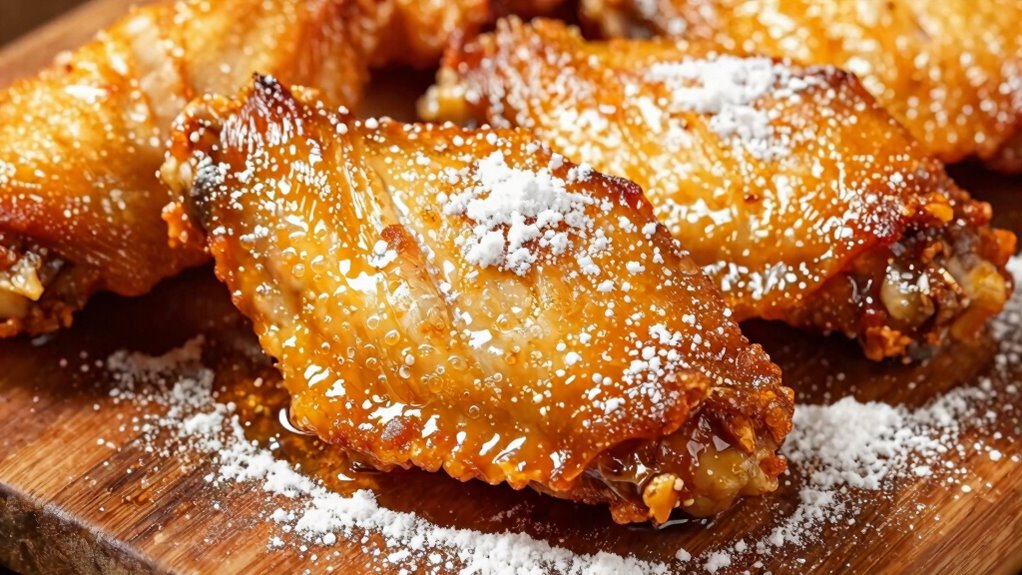

Using baking powder on chicken wings helps make them crispy by releasing carbon dioxide when heated, which creates tiny bubbles for a light, crunchy exterior. It promotes even browning without adding extra ingredients like flour. The ideal amount is about 1 teaspoon per pound of wings for the perfect crunch. Properly applying it guarantees consistent crispiness and a beautiful golden color. Keep going to discover tips for flawless wings and avoid common mistakes.
Key Takeaways
- Baking powder releases carbon dioxide when heated, creating bubbles that contribute to crispy, airy wing coatings.
- The ideal amount is about 1 teaspoon per pound of chicken wings for balanced crispiness and flavor.
- Proper coating involves dry wings, even distribution, and thorough mixing with seasoning to prevent bitterness.
- Baking powder enhances browning and color through chemical reactions, resulting in a golden, crispy exterior.
- Using baking powder simplifies preparation, improves texture, and yields a more attractive, restaurant-quality wing.

Ninja Prestige Smart XL with Pro Cook System 10-in-1 Air Fry Digital Countertop Convection Toaster Oven with Air Fry, Air Roast, Broil & Bake, Pro Cook Thermometer, 1800 Watts, Stainless Steel, DT551
SMART SURROUND CONVECTION: Completely surround food for an all-around crisp.
As an affiliate, we earn on qualifying purchases.
What Is Baking Powder and Why Does It Make Wings Crispy?
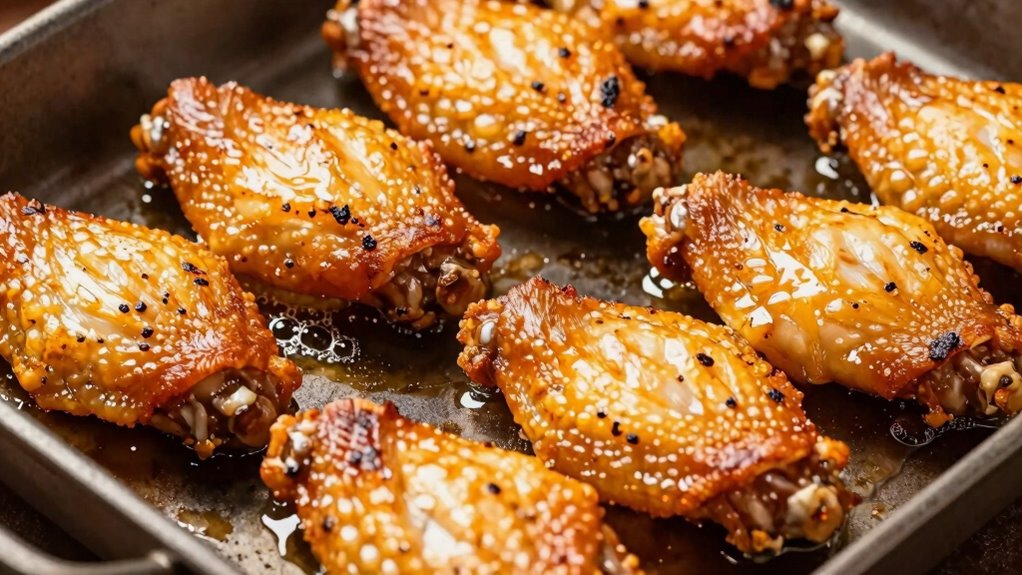
Have you ever wondered why some chicken wings turn out extra crispy? It all comes down to baking chemistry. Baking powder is a key ingredient because it releases carbon dioxide when heated, creating tiny bubbles that help crisp up the skin. Unlike baking soda, baking powder contains acid and base, making it effective without additional ingredients. When considering ingredient substitutions, avoid using baking soda alone, as it can cause bitterness and won’t produce the same crispiness. Baking powder’s unique composition ensures the wings develop a light, crunchy exterior. Chemical reactions in baking powder are essential for achieving perfect texture, and understanding them helps you make smarter ingredient choices, ensuring your wings turn out just right every time. Proper ingredient ratios are crucial in achieving consistent results in crispy wings. Additionally, understanding the baking chemistry involved can help you troubleshoot and improve your recipe for optimal crispiness. Recognizing the reaction process can also guide you in adjusting cooking times and temperatures for the best results. For example, moisture control plays a significant role in achieving maximum crispness without sogginess.
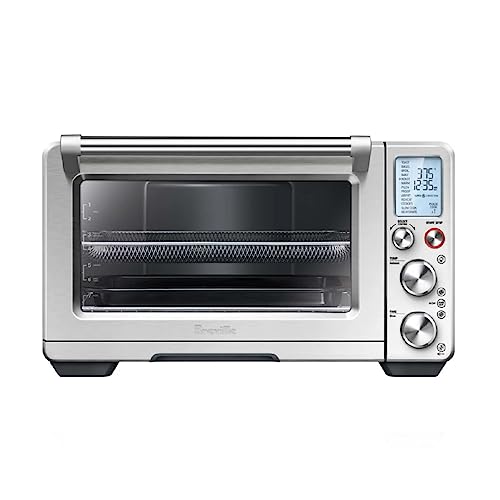
Breville BOV900BSS Smart Oven Air Fryer Pro and Convection Oven, Brushed Stainless Steel
The Breville Smart Oven Air Fryer Pro with Element iQ System is a versatile countertop oven allowing you...
As an affiliate, we earn on qualifying purchases.
Why Use Baking Powder Instead of Flour or Cornstarch?
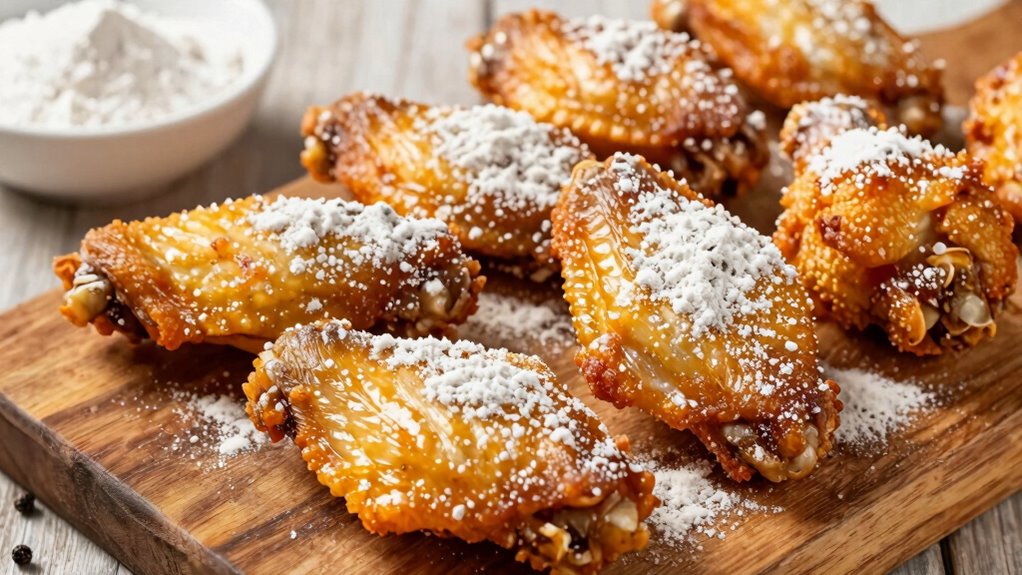
Using baking powder instead of flour or cornstarch gives you a better crispy texture without the mess or waste. It also enhances the flavor and color of your wings, making them look and taste even better. This simple switch can really elevate your chicken wing game. Additionally, understanding cookie categories can help you manage any potential additives or flavorings in your baking powder for optimal results. The presence of high-temperature cooking properties in baking powder ensures a consistent crispiness during frying, and being aware of baking powder composition can help you choose the best product for your cooking needs. Recognizing the chemical leavening process involved can further improve your results. Being familiar with piercing care and hygiene tips can help ensure your cooking tools and surfaces stay clean and safe.
Better Crispy Texture
Baking powder creates a superior crispy coating on chicken wings because it reacts during cooking to produce carbon dioxide, which helps the skin puff up and become light and crunchy. This reaction markedly improves texture, giving your wings a perfectly crisp exterior. Unlike flour or cornstarch, baking powder promotes a more consistent and even puffing, resulting in a better crispy texture you can feel with each bite. Plus, it enhances flavor by encouraging browning and adding subtle savory notes, making your wings more delicious overall. The combination of texture improvement and flavor enhancement makes baking powder the ideal choice for achieving that coveted crispy, restaurant-quality finish at home. Understanding the reaction process involved can help you better control the texture and achieve consistent results. To optimize your cooking process, understanding how smartphone settings can assist in timing and temperature control can help you perfect your wings every time. Additionally, knowing how proper seasoning interacts with baking powder can further elevate your wings’ flavor and crispiness. Using proper technique during application ensures the coating adheres well and crisps evenly, resulting in a more satisfying and flavorful wing. Incorporating consistent application methods can also help maintain the desired texture and appearance of your wings. Thanks to this simple but effective trick, your wings will be more satisfying and flavorful.
Less Mess, Less Waste
Applying baking powder instead of flour or cornstarch simplifies your prep and cleanup. Baking powder clings better to chicken wings, reducing the mess during application. This mess reduction means less flour or cornstarch dust spills onto your counter or floor, making your workspace cleaner. Additionally, using baking powder helps minimize waste because you need less product to coat the wings effectively. Flour and cornstarch often require excess to achieve the desired coating, which can lead to leftover leftovers that get discarded. Baking powder’s efficient adherence ensures you use just enough, cutting down on unnecessary waste. Plus, choosing baking powder aligns with kitchen efficiency trends toward more efficient ingredient use and less kitchen waste. Using baking powder can also contribute to food safety, as it helps prevent contamination from excess dust or uncoated pieces. This method also reduces ingredient waste overall, making it a more sustainable choice. Furthermore, the precise application of baking powder can improve overall culinary results by creating a better crispy coating. Overall, choosing baking powder streamlines your process, keeps your kitchen tidier, and helps you use ingredients more efficiently.
Enhances Flavor and Color
Have you noticed how baking powder gives chicken wings a deeper, more appealing color? It’s because baking powder reacts during cooking, promoting browning and crispness. This reaction enhances the flavor by creating a savory, caramelized crust that complements your seasoning blends and marinade techniques. Unlike flour or cornstarch, which mainly provide texture, baking powder boosts both visual appeal and taste. When you incorporate baking powder into your dry rub or marinade, it encourages even browning and a richer flavor profile. This not only makes your wings look more tempting but also intensifies their savory notes. Using baking powder strategically elevates your wings, making them more flavorful and visually irresistible without adding unnecessary ingredients. Baking powder’s chemical reaction during cooking is what truly sets it apart from other thickeners or coatings. Additionally, understanding how texture enhancement works can help you achieve the perfect crispy exterior every time.

Nuwave Bravo Pro Smart 21QT Toaster Oven Air Fryer Combo, Convection Oven Countertop, 10 functions all in 1, with even & quick crisp technology, 50-450°F, 1800W, Stainless Steel
HIGH SPEED FAN - Achieve irresistibly crisp, golden-brown results with the new 2025 fan and housing design delivering...
As an affiliate, we earn on qualifying purchases.
How Baking Powder Creates Crispy, Golden Skin
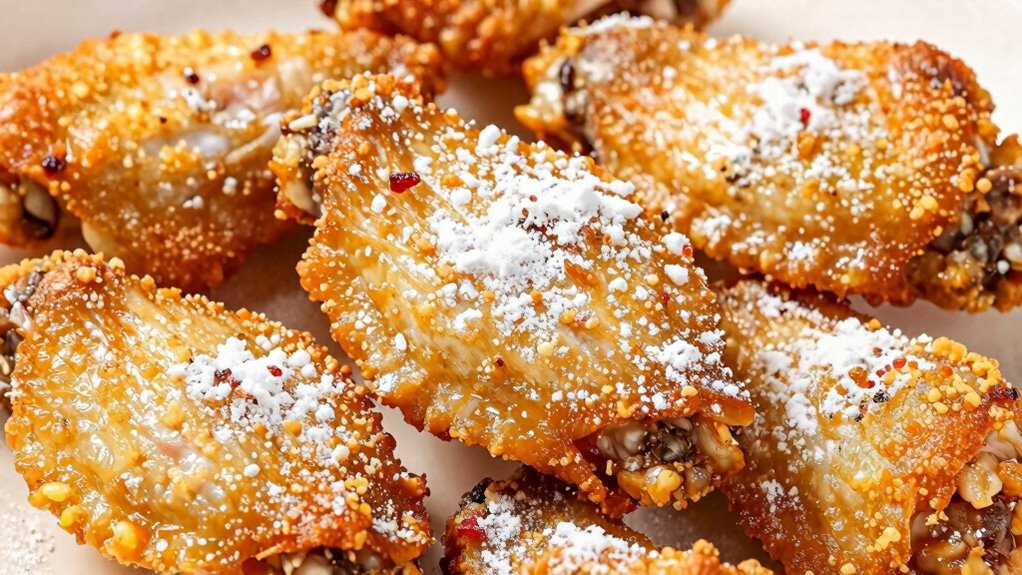
When baking powder is sprinkled onto chicken wings, it reacts with moisture on the skin’s surface, producing carbon dioxide bubbles that help lift the skin and create a crispy texture. This reaction accelerates browning and enhances the golden color, giving your wings that perfect finish. To maximize crispiness, choose seasoning options that complement baking powder, like salt and paprika, and avoid overly moist ingredients. Proper storage tips, such as keeping wings dry before cooking, ensure the baking powder works effectively. The key is to coat the wings evenly so the reaction occurs uniformly. As the wings bake, the baking powder’s alkaline nature breaks down skin proteins, promoting browning and crispiness. Incorporating proper cooking techniques such as air fryers or smart ovens can also help optimize the crisping process for consistent results. Additionally, understanding the chemical reaction involved can help you fine-tune your method for even better texture and color. Recognizing how baking powder interacts with moisture can lead to more predictable and desirable results every time.

Ninja Air Fryer & Toaster Oven | Prestige Smart XL Countertop Oven | Bakes up to 20 Cookies, Fits up to a 12lb Turkey | Pizza, Toast, Bake, Air Fry & Reheat | 1800 Watts | Stainless Steel | DT501
SMART SURROUND CONVECTION: High velocity fan and rear heat source completely surrounding food for all-around crisp.
As an affiliate, we earn on qualifying purchases.
How Much Baking Powder Do You Need for Perfect Wings?
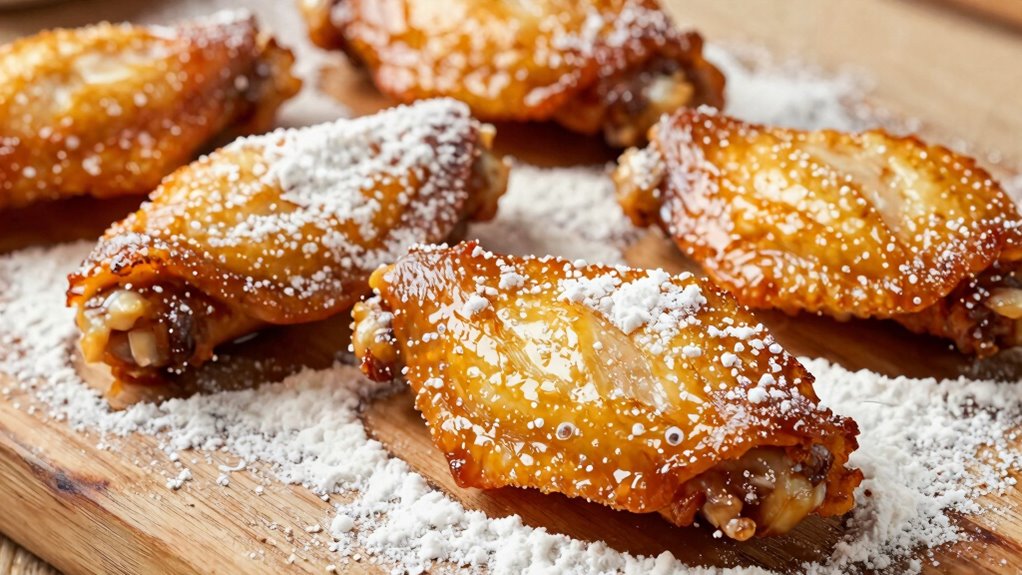
To achieve that perfect crispy coating, using the right amount of baking powder is key. Generally, you’ll want to use about 1 teaspoon of baking powder per pound of chicken wings. This ensures enough leavening to promote crispiness without overpowering the flavor. Mix the baking powder thoroughly with your preferred seasoning blends—salt, pepper, paprika, or garlic powder—and apply evenly to the wings. Keep in mind that higher cooking temperatures, around 425°F, work best for crisping the skin. Too much baking powder can introduce bitterness, so stick to the recommended amount. Using the correct quantity helps balance seasoning, promotes even browning, and guarantees your wings turn out perfectly crispy every time.
How to Apply Baking Powder for Crispy, Juicy Wings

Applying baking powder evenly is essential for achieving crispy, juicy wings. To do this, start by patting your wings dry to remove excess moisture, which helps the coating stick better. Then, toss the wings with your preferred marinade or spice blend, allowing the flavors to penetrate. Once seasoned, sprinkle the baking powder over the wings, ensuring a light, even coating. Use your hands or a spoon to distribute it thoroughly, covering all surfaces. This step is vital because uneven application can lead to inconsistent crispiness. For best results, combine your marinade with a touch of baking powder or apply it separately to boost texture. Focus on even coverage, and you’ll get perfectly crispy, juicy wings every time.
Common Mistakes When Using Baking Powder on Wings (and How to Avoid Them)
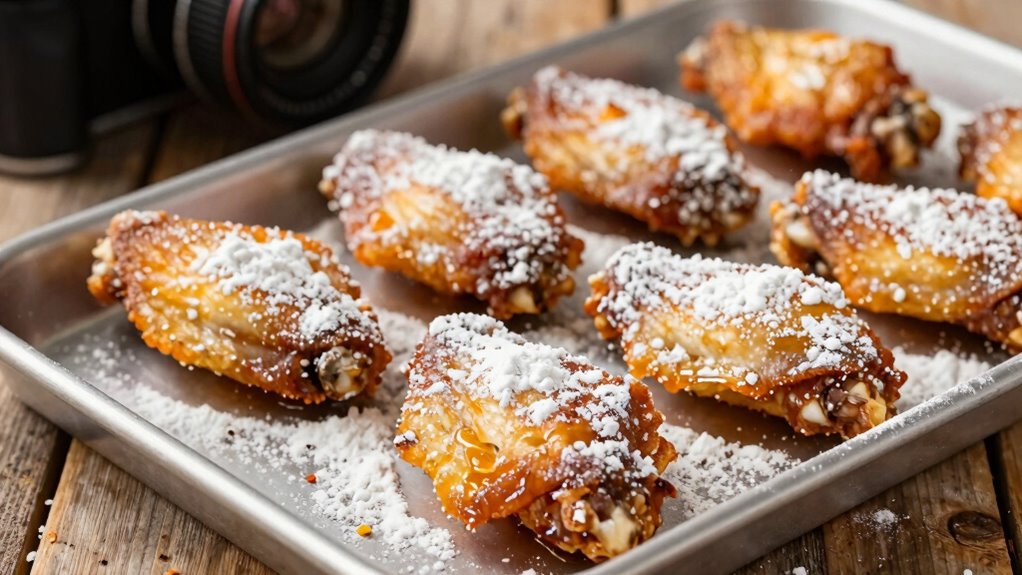
One common mistake people make is applying too much baking powder or unevenly coating the wings. This leads to common pitfalls like overly salty or bitter-tasting wings and inconsistent crispiness. Application errors often involve not mixing the baking powder thoroughly or using excess, which can create a powdery coating that burns during baking. To avoid these issues, measure carefully—about one teaspoon per pound of wings—and toss them evenly so every piece gets a light, uniform coating. Make sure to remove any excess baking powder before baking, as this helps prevent burnt spots and off-flavors. Paying attention to proper application ensures your wings turn out crispy without bitterness, and prevents common pitfalls that compromise texture and taste.
Pro Tips for Extra Crispy, Flavorful Chicken Wings
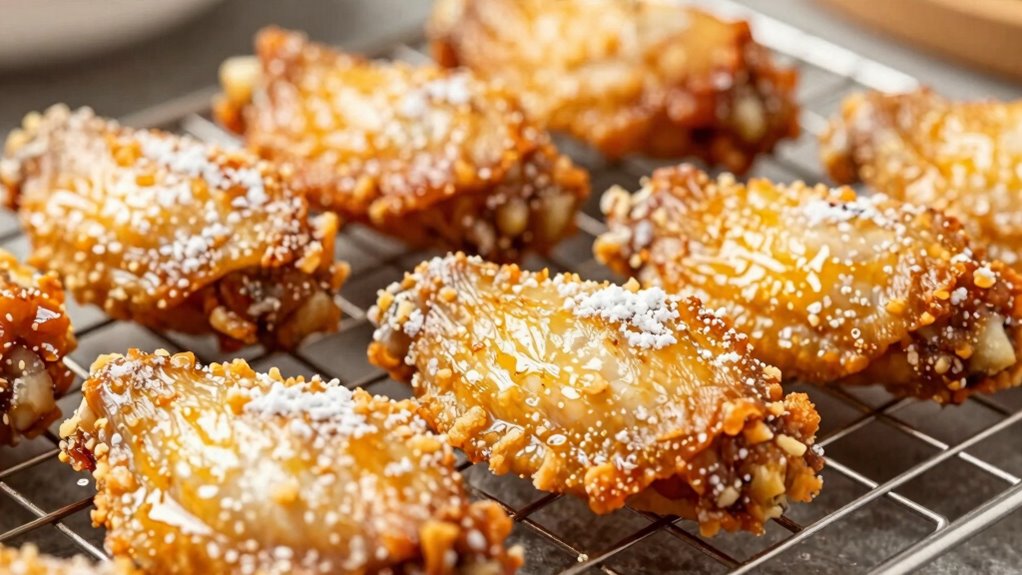
To get wings extra crispy and full of flavor, focus on applying the baking powder evenly and in the right amount. Let the wings rest for a bit after coating so the crust forms properly. Experiment with different baking powder types to find the perfect crunch and taste you prefer.
Proper Powder Application Technique
For your chicken wings to turn out extra crispy and packed with flavor, mastering the proper powder application technique is essential. First, confirm your wings are patted dry before applying baking powder and seasoning blends. Use the right cooking utensils, like a large mixing bowl, to evenly coat the wings. Distribute the baking powder and spices thoroughly, avoiding clumps, so every wing gets a consistent coating. Shake or toss the wings gently but thoroughly to prevent uneven application. Remember, less is more—use just enough baking powder to create crispiness without overwhelming the flavor. For best results, apply the seasoning blends evenly and don’t rush the process. This careful method guarantees crispy, flavorful wings every time.
Optimal Resting Periods
Allowing your chicken wings to rest after seasoning and baking is key to achieving maximum crispiness and flavor. Resting periods help the flavors settle and allow the baking powder to work fully, creating a crisp exterior. If you marinate the wings, give them at least 10-15 minutes before baking to enhance flavor absorption. For best results, use different resting periods based on your preparation steps:
| Resting Step | Duration | Purpose |
|---|---|---|
| Post-seasoning | 10-15 minutes | Flavor development |
| After baking | 5 minutes | Rest allows juices to settle |
| Marinating techniques | 10-30 minutes | Flavor infusion |
| Resting before sauce | 2-3 minutes | Keeps wings crispy |
| Overnight marinate | 8 hours or more | Deep flavor and tenderness |
Baking Powder Variations
Enhancing the crispiness and flavor of your chicken wings often starts with experimenting with different baking powder options. While traditional baking powder works well, you can try baking powder alternatives like aluminum-free versions for a cleaner taste. For extra flavor, consider adding spices such as smoked paprika, garlic powder, or cayenne to your coating. These flavor enhancing tips help elevate your wings beyond basic seasoning. Want even more crunch? Use a mix of baking soda and baking powder or incorporate cornstarch for a lighter, crispier texture. Here are some pro tips for variation:
- Mix in spices or herbs with your baking powder
- Experiment with aluminum-free baking powders for a cleaner flavor
- Combine baking soda and baking powder for extra crispiness
Frequently Asked Questions About Baking Powder and Wings

Are you wondering whether baking powder is really the secret to crispy chicken wings? Many ask if it’s safe and effective across different cooking methods like baking, frying, or air frying. The answer is yes—baking powder helps create a crispy texture regardless of your technique. Some also want to know if it affects flavor; it doesn’t, but it can enhance the overall taste by making the skin crisper. People often ask how much to use; generally, a teaspoon per pound is enough. Others wonder if it’s necessary to rinse off after baking powder coating—it’s not, but a light rinse can reduce any residual taste. Overall, baking powder is a versatile tool for achieving crispy wings and boosting flavor enhancements.
Frequently Asked Questions
Can I Use Baking Soda Instead of Baking Powder for Wings?
You can use baking soda instead of baking powder for wings, but be cautious with substitution alternatives. Baking soda is more potent and can give a bitter taste if used excessively, so use only about a third of the amount called for in baking powder. Keep flavor considerations in mind, as baking soda may alter the taste, so balance it with acid like vinegar or lemon juice to achieve the right flavor.
Does Baking Powder Affect the Flavor of the Chicken?
Yes, baking powder can slightly influence the flavor of your chicken wings, but it mainly enhances flavor through subtle flavor enhancement. It also causes texture alteration, making wings crispier. You might notice a faint, slightly salty or metallic taste if used excessively, but when used properly, the flavor remains balanced. Overall, baking powder improves texture without markedly compromising the flavor, ensuring your wings stay flavorful and crispy.
How Long Should I Let the Wings Sit After Coating?
Think of your wings like a sponge soaking up flavor. You should let them sit for at least 30 minutes, but ideally up to 2 hours, during the resting period. This marination time allows the baking powder and seasonings to penetrate, ensuring crispy skin and juicy meat. Longer resting periods deepen the flavor, so don’t rush the process—your wings will thank you with better texture and taste.
Is It Necessary to Dry the Wings Before Applying Baking Powder?
You should dry the wings before applying baking powder because a thorough drying process helps the coating adhere better. Moisture on the surface can prevent the baking powder from sticking properly, leading to less crispy results. Use paper towels to pat them dry completely, ensuring no excess moisture remains. This step is essential for achieving a crispy, evenly coated exterior, making your wings turn out perfect every time.
Can Baking Powder Be Used on Other Types of Meat?
Like a culinary alchemist, you can definitely use baking powder on other meats, not just chicken wings. It works as an alternative meat preparation, helping to crisp the exterior and tenderize. You might experiment with seasoning variations, adding spices or herbs for unique flavors. Just remember, the key is to apply it evenly and in the right amount, creating that irresistible crunch that elevates any meat dish.
Conclusion
With baking powder, your wings transform from ordinary to extraordinary—crispy outside, juicy inside. It’s a simple trick, yet it elevates your game beyond the usual flour or cornstarch coating. While the process might seem straightforward, attention to detail makes all the difference. So, embrace the science, avoid common pitfalls, and enjoy wings that are both perfectly crispy and irresistibly flavorful—proof that sometimes, the smallest changes produce the most delicious results.