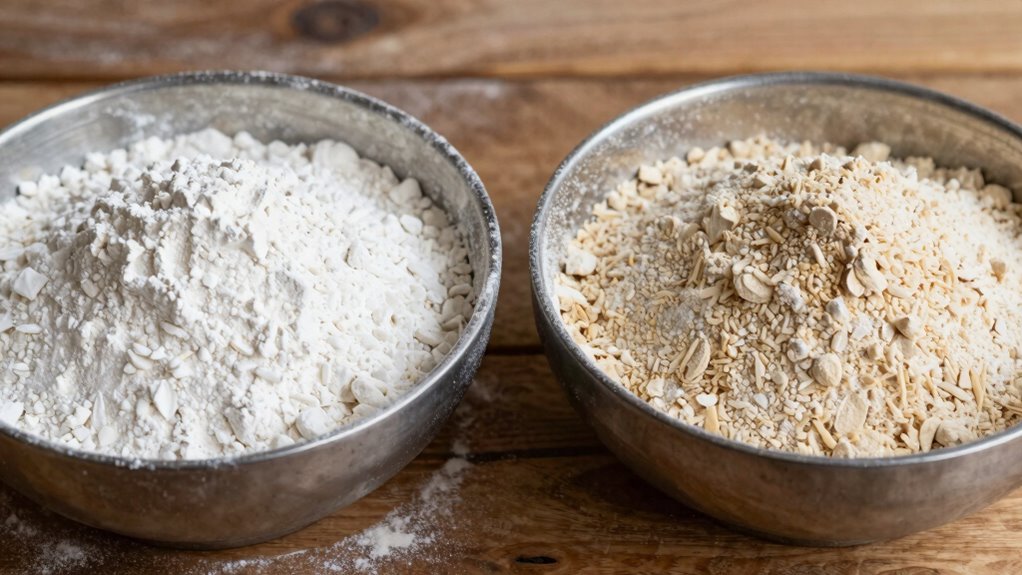

If you’re choosing between rice flour and wheat flour for dusting proofing baskets, rice flour is your best option if you want a smooth, non-elastic coating that prevents sticking without affecting your dough’s structure. It’s gluten-free and resists rancidity, making it ideal for longer storage. Wheat flour, on the other hand, can create a textured surface thanks to its gluten, but might cause sticking if used improperly. To find out how to use each effectively, keep exploring the details.

Get kitchen gear delivered free with Prime
- Fast, free delivery on millions of items
- Prime Video, Amazon Music and more included
- Member-only deals all year
Key Takeaways
- Rice flour prevents sticking without adding elasticity, ideal for dusting proofing baskets.
- Wheat flour can create a textured surface but may cause sticking if overused.
- Rice flour’s fine, smooth coating offers a non-stick, gluten-free dusting option.
- Wheat flour’s gluten can enhance dough structure but risks sticking if not used properly.
- Both require proper storage to maintain effectiveness for proofing and baking.
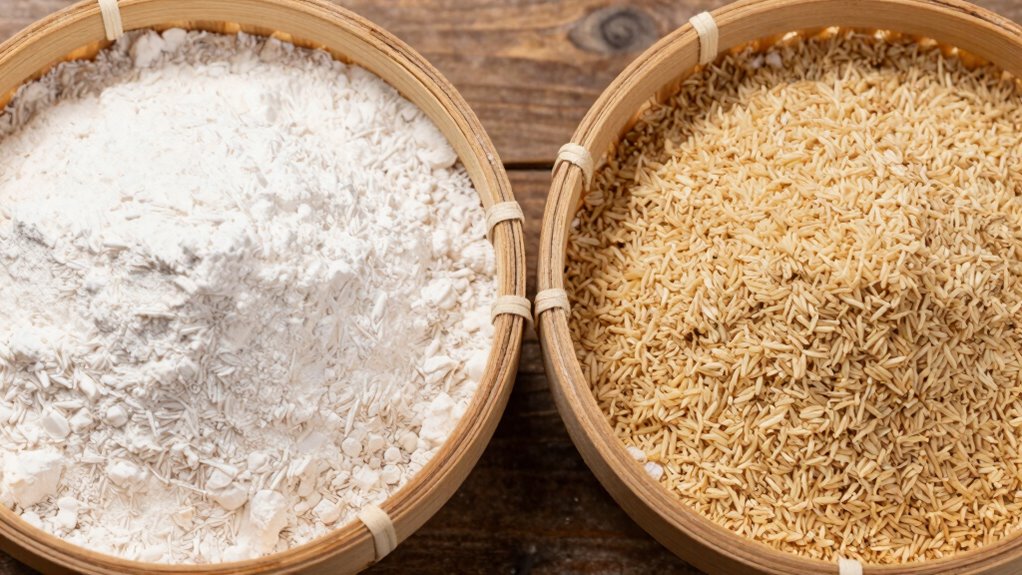
When choosing a flour for proofing baskets, understanding the differences between rice flour and wheat flour can help you achieve better results. Both flours are popular for dusting proofing baskets, but they behave differently due to their unique properties. Rice flour is naturally gluten-free, which means it doesn’t contain the gluten proteins that give wheat flour its elasticity. This makes rice flour a good choice if you’re gluten-sensitive or want to avoid gluten altogether. Wheat flour, on the other hand, has a higher gluten content, which can help create a slightly more structured surface on your dough, preventing sticking while allowing for a bit of grip that can aid in shaping your loaf.
Choosing between rice and wheat flour for proofing baskets depends on gluten needs and storage preferences.
When considering storage longevity, rice flour tends to have a longer shelf life compared to wheat flour. Because it’s gluten-free and less prone to spoilage from gluten degradation, rice flour remains fresh longer if stored in a cool, dry place. Wheat flour, however, contains more oils and proteins that can go rancid over time, especially if exposed to heat or humidity. Proper storage—airtight containers in a cool environment—can extend wheat flour’s shelf life, but it generally won’t last as long as rice flour. If you plan to keep your proofing flour for an extended period, rice flour might be the more reliable option. Additionally, storage conditions play a significant role in preserving the quality and shelf life of both types of flour, affecting their overall shelf stability.
Furthermore, knowing about flour properties can help you select the most suitable type for your baking needs. Using appropriate storage methods can significantly enhance the longevity of your flour, regardless of type. In terms of application, rice flour provides a very fine, smooth coating that helps prevent dough from sticking without adding any elasticity. Its lack of gluten means it won’t interfere with the dough’s structure but might require a little extra flour if you want a more textured surface. Wheat flour, with its gluten content, can sometimes create a slightly rougher surface, which can be advantageous for certain types of bread where a bit of texture is desired. However, because of its gluten, wheat flour can sometimes cause sticking if not used in moderation or if the proofing basket isn’t properly floured.
Ultimately, your choice depends on your dietary needs and storage preferences. If you need a long-lasting, gluten-free option, rice flour is ideal. If you prefer a more traditional approach with wheat flour’s slight elasticity and don’t mind shorter storage, wheat flour can work well. Both types have their place in bread baking, but knowing their differences ensures you pick the right one for your proofing process, helping you achieve the best crust and rise every time.
As an affiliate, we earn on qualifying purchases.
Frequently Asked Questions
Can Rice Flour or Wheat Flour Cause Allergies in Bread Proofing?
Yes, both rice flour and wheat flour can cause allergy symptoms if you have a flour sensitivity or allergy. You might experience symptoms like itching, swelling, or respiratory issues. Wheat flour is more common for allergies, but rice flour can also trigger reactions in sensitive individuals. If you notice allergy symptoms after using either flour, consider switching to hypoallergenic alternatives to avoid adverse effects.
How Does Flour Type Affect the Flavor of the Final Baked Bread?
You’ll notice flour type impacts your bread’s flavor, with wheat flour offering a richer, more complex taste that enhances aroma development. It adds subtle nuttiness and depth, while rice flour provides a milder, more neutral flavor, allowing the bread’s natural ingredients to shine. Choosing wheat flour can elevate flavor enhancement, making your bread more aromatic, whereas rice flour keeps the bread light and delicate, perfect for specific textures.
Are There Substitutes for Rice or Wheat Flour for Proofing Baskets?
You can explore alternative proofing methods like using linen or silicone proofing baskets, which don’t require flour. For gluten-free options, consider rice bran, cornstarch, or potato starch to prevent sticking. These substitutes help you avoid wheat or rice flour while still achieving good proofing results. Just make certain you lightly dust the surfaces to prevent dough from sticking, and experiment to find what works best for your baking style.
What Is the Shelf Life of Rice Flour Compared to Wheat Flour?
Rice flour generally has a longer shelf life than wheat flour, often lasting up to a year if stored properly, while wheat flour typically lasts around 6 to 8 months. Because rice flour is gluten-free and less prone to spoilage, you should store both in airtight containers in a cool, dry place. Proper storage methods help maintain their freshness and prevent spoilage, especially for wheat flour with higher gluten content that can go rancid faster.
Can Rice Flour or Wheat Flour Be Reused After Proofing?
You can definitely reuse rice or wheat flour after proofing, but ensuring proofing basket cleanliness is key. Gently brush off excess flour and avoid any lingering dough to keep it in prime condition. For flour reuse techniques, lightly dust your basket with fresh flour before each use, and store it in a dry, cool spot. This way, you maintain a clean surface and extend the life of your proofing tools, making your baking process smoother and more enjoyable.
As an affiliate, we earn on qualifying purchases.
Conclusion
Choosing between rice flour and wheat flour for proofing baskets ultimately comes down to your baking goals. Rice flour offers a non-stick surface, easy release, and a cleaner finish, while wheat flour provides natural strength and flavor. Both serve their purpose, but the key is understanding your needs. Whether you seek simplicity or tradition, whether you prefer ease or authenticity, the right choice enhances your bread. Because in baking, as in life, the right foundation makes all the difference.
As an affiliate, we earn on qualifying purchases.
As an affiliate, we earn on qualifying purchases.
Fall Picks
fall essentials
As an affiliate, we earn on qualifying purchases.