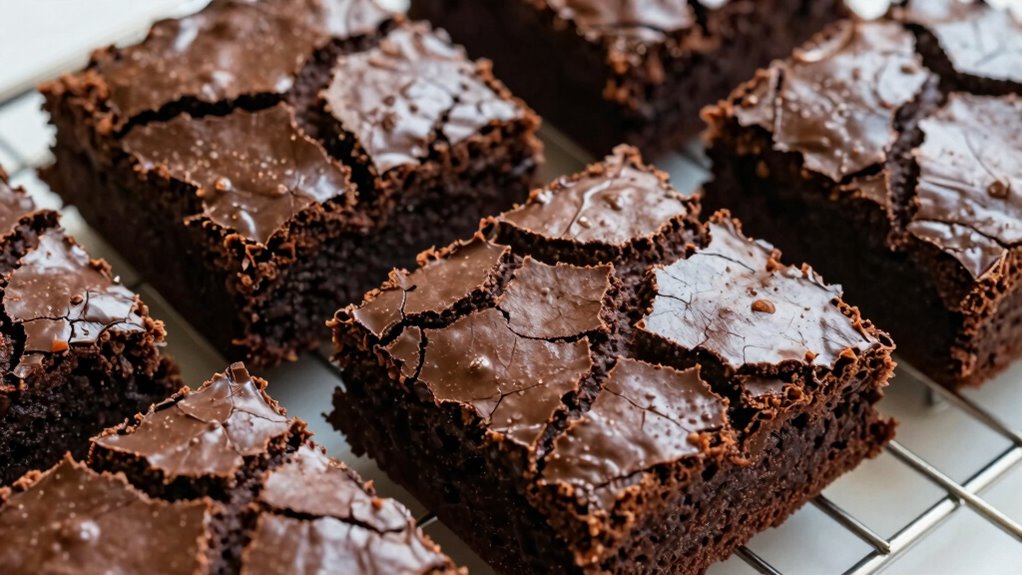
Your brownies crack on top mainly because of baking at too high a temperature or overmixing, which causes rapid expansion and surface tension. Cracks aren’t always bad—they can add a rustic, homemade look or indicate a light, airy texture. Adjusting your oven to a gentler 325°F–350°F and mixing just until combined helps prevent cracks. Want to discover more tips to perfect your brownies and control their appearance? Keep exploring for expert advice.
Key Takeaways
- Cracks result from rapid surface expansion caused by high baking temperatures or overmixing batter.
- Slight cracks can indicate a light, airy texture and are often a sign of proper rising.
- Proper oven temperature and placement help ensure even baking and reduce surface cracking.
- Substituting ingredients or overmixing can weaken batter structure, increasing crack likelihood.
- Cracks can add rustic charm and do not necessarily mean the brownies are undercooked.
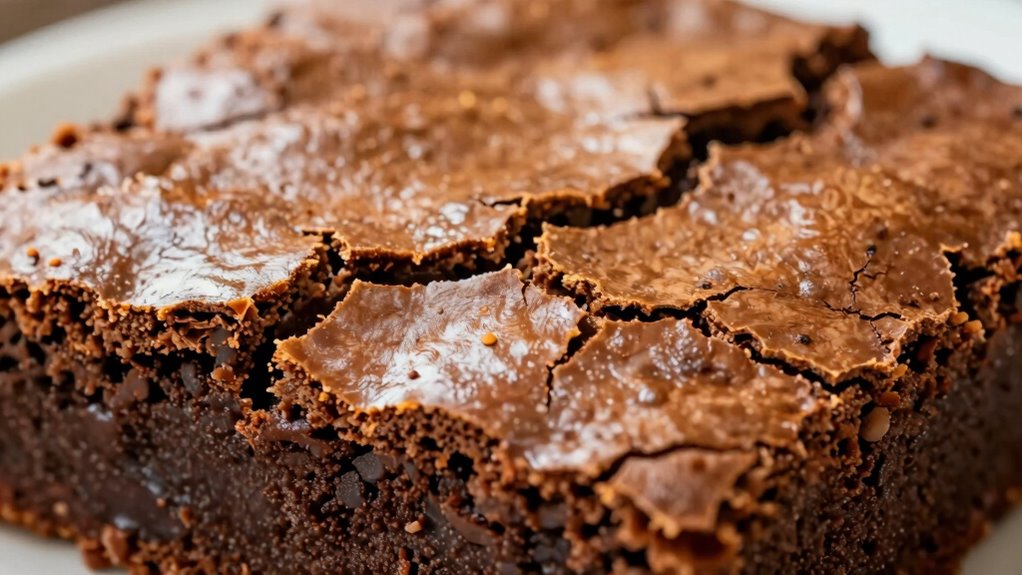
If your brownies tend to crack on top, it’s often because the batter is baking too quickly or unevenly, causing the surface to pull apart as the interior expands. One key factor influencing this is the baking temperature. When you set your oven too high, the exterior of the brownies cooks faster than the inside, creating a crust that hardens prematurely. As the interior continues to cook and expand, the surface can’t stretch smoothly, resulting in cracks. To prevent this, try lowering your oven temperature slightly—around 325°F to 350°F—and give your brownies a more even, gentle bake. This slower baking process allows the batter to set uniformly, reducing the likelihood of cracks forming on top. Additionally, the baking temperature plays a crucial role in how your brownies develop their top crust and cracks. Ingredient substitutions can also play a role in how your brownies crack. For instance, replacing some of the butter with applesauce or yogurt can influence the batter’s moisture content and elasticity. These substitutions can make the batter more delicate and prone to cracking if not balanced correctly, especially if you use less fat than the recipe calls for. Likewise, substituting different types of sugar or flour can affect the batter’s structure. Using bread flour instead of all-purpose flour can make the batter more elastic, which might help prevent cracking, but it can also make the brownies denser. On the other hand, using more sugar than usual can cause the surface to set too quickly, increasing the chance of cracks as the interior continues to expand. Another aspect to deliberate is how evenly you mix your ingredients. Overmixing can incorporate excess air into the batter, leading to uneven expansion during baking. When air pockets expand rapidly, they can cause cracks in the top. Mix just until the ingredients are combined, and avoid beating the batter vigorously. Additionally, baking your brownies in the center of the oven ensures even heat distribution, reducing the risk of hot spots that can cause cracks. Sometimes, cracks aren’t a sign of failure but a natural part of the baking process. They can add a rustic, homemade look and even create extra texture. If you’re okay with some surface cracks, focus on adjusting your baking temperature and ingredient substitutions to control their appearance. Paying attention to baking techniques can also help in achieving a smoother top. Proper oven placement ensures the heat is evenly distributed, which is crucial for consistent results. It’s also helpful to monitor the batter consistency before baking, as a well-balanced batter can significantly reduce cracking. Remember, small cracks don’t necessarily mean your brownies are undercooked or ruined—they can simply be part of a charming, homemade finish. In some cases, cracks in brownies can be a sign of a perfectly baked, airy texture. Just keep an eye on your oven settings, ingredients, and mixing technique, and you’ll find the right balance for crack-free, delicious brownies.
non-stick brownie baking pan
As an affiliate, we earn on qualifying purchases.
As an affiliate, we earn on qualifying purchases.
Frequently Asked Questions
Can Cracking Affect the Taste of Brownies?
Cracking in brownies doesn’t affect their taste; it mainly impacts texture variation and aesthetic appeal. When your brownies crack, they often develop a slightly crisp top, which adds a delightful contrast to the fudgy interior. This visual cue can make your brownies look more homemade and tempting. So, while cracking may change the look and texture, it doesn’t compromise flavor—only enhances your baking’s rustic charm.
How Can I Prevent Excessive Cracking?
To prevent excessive cracking, focus on your mixing techniques and oven temperature. Mix your batter just until combined to avoid incorporating too much air, which causes cracks. Keep your oven at a consistent, moderate temperature—around 350°F (175°C)—to guarantee gentle heat. Avoid opening the oven door too often, as sudden temperature changes can lead to more cracks. These adjustments help your brownies bake evenly and maintain a smooth, crack-free surface.
Does Using Different Baking Pans Change Crack Patterns?
Imagine your brownies as a canvas, and your baking pan as the frame. Different baking pan variations influence the crack patterns, shaping how the brownie rises and cracks. A metal pan might give you crisper edges and a more pronounced crack, while glass creates a softer crust texture difference. So, yes, choosing a different pan impacts both crack patterns and crust, turning each batch into a unique masterpiece.
Are Cracked Brownies Safe to Eat?
Cracked brownies are safe to eat as long as they’re baked properly. The cracks happen due to baking temperature and oven humidity, which cause the batter to rise and then crack as it cools. If your brownies are cooked to the right internal temperature, they’re perfectly safe. Just make certain you don’t overbake or underbake, and keep an eye on oven humidity to prevent unwanted cracks or dryness.
What Ingredients Influence Crack Formation?
Certain ingredients influence crack formation in your brownies. Using more sugar can create texture variations, increasing the likelihood of cracks. Eggs add structure, impacting how the batter rises and cracks as it cools. Ingredient substitutions like replacing butter with oil or altering cocoa content can also affect crack development. These changes can make your brownies more or less prone to cracking, so experiment to find the perfect texture that suits your preference.

Hotloop Digital Oven Thermometer Heat Resistant up to 572°F/300°C, LCD
EASY READING: you can see the actual temperature that your oven is registering with the digital LCD display,…
As an affiliate, we earn on qualifying purchases.
As an affiliate, we earn on qualifying purchases.
Conclusion
So, next time your brownies crack on top, don’t stress—it’s just like a mountain’s rugged peak, adding character and charm. These cracks are a sign that your batter baked just right, creating that delightful contrast of textures. Remember, imperfections make baked goods unique, like a masterpiece painted with bold strokes. Embrace the cracks as part of your baking journey—they’re proof you’re a real baker, crafting delicious treats with love and confidence.
silicone spatula for baking
As an affiliate, we earn on qualifying purchases.
As an affiliate, we earn on qualifying purchases.
brownie mixing bowls
As an affiliate, we earn on qualifying purchases.
As an affiliate, we earn on qualifying purchases.