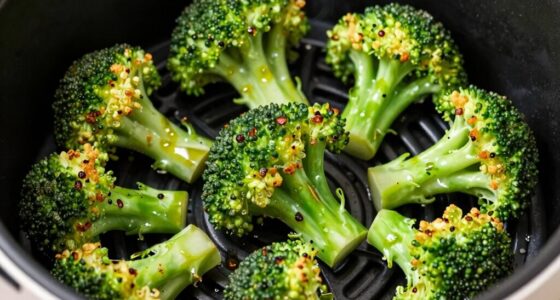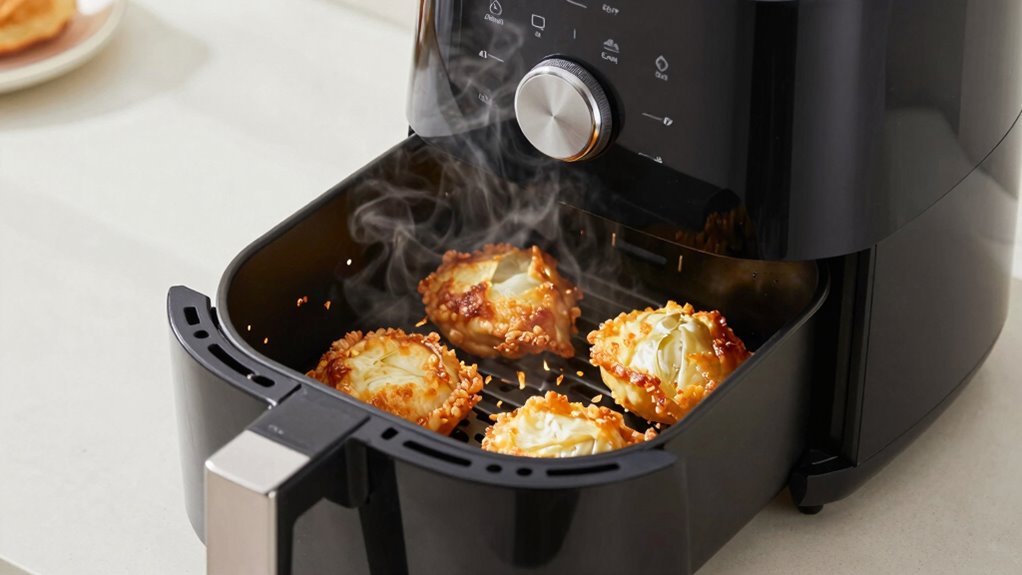

To reheat leftovers without sogginess in the air fryer, spread the food in a single layer using parchment paper or an oven-safe dish to promote airflow. Reheat at 350°F to 375°F for about 3-10 minutes, flipping or stirring as needed. Avoid overcrowding and add a light spray of oil for extra crispiness. Proper technique guarantees crispy, delicious leftovers—you’ll discover all the tips for perfect reheating if you keep exploring.
Key Takeaways
- Store leftovers in airtight, shallow containers and spread them in a single layer to promote even reheating and prevent sogginess.
- Reheat at 350°F to 375°F for 3-10 minutes, flipping or shaking halfway to maintain crispiness.
- Use parchment paper to allow heat circulation while preventing moisture buildup and sogginess.
- Pat leftovers dry before reheating to reduce excess moisture and improve texture.
- Avoid overcrowding the basket and reheat small portions for better airflow and crispy results.
How to Reheat Leftovers in the Air Fryer for Crispy Results
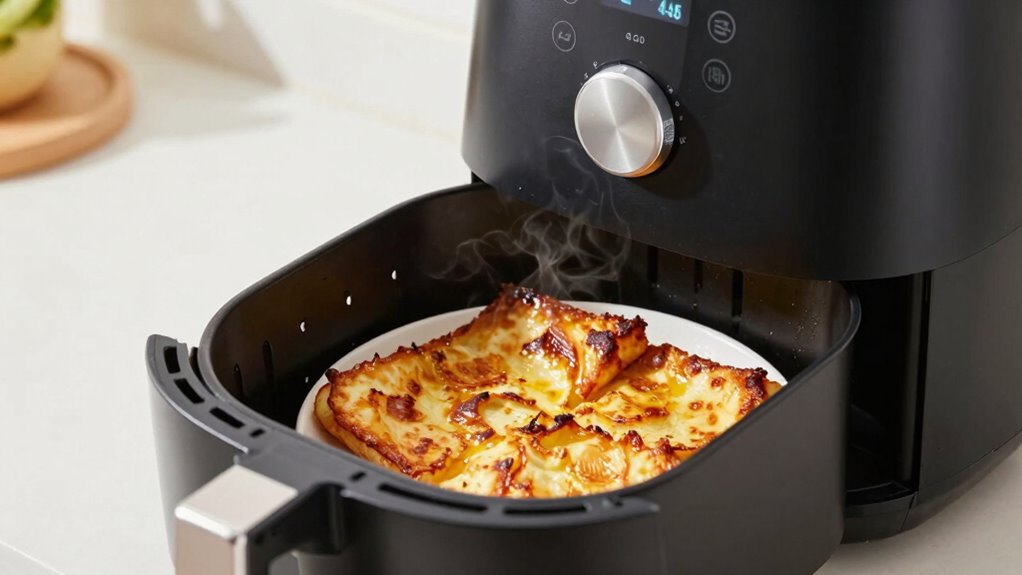
Reheating leftovers in the air fryer is a quick way to restore their crispiness without turning them soggy. To start, guarantee your leftovers are stored properly in airtight storage containers, which help maintain their texture. When reheating, use a light spray of oil or a brush of melted butter to enhance crispness. Pay attention to breading techniques; if your leftovers have breaded coatings, avoid overcrowding the basket, so hot air circulates evenly. Set the air fryer to around 350°F (175°C) and heat for 3-5 minutes, shaking or flipping halfway through. This method helps maintain crunch while warming leftovers thoroughly. Proper storage and handling, combined with precise reheating, ensure your food stays crispy and delicious. Food safety practices are also essential to prevent spoilage and ensure your leftovers are safe to eat. Additionally, understanding home appliance technology can help optimize your reheating process for the best results. For optimal results, selecting the right reheating techniques based on the type of leftovers can further improve texture and flavor. Using the correct temperature control features on your air fryer can also help prevent overcooking or underheating. Learning about reheating methods for different foods can also help you adapt your approach for various leftovers.
Why Reheating Leftovers Properly Matters for Taste and Texture
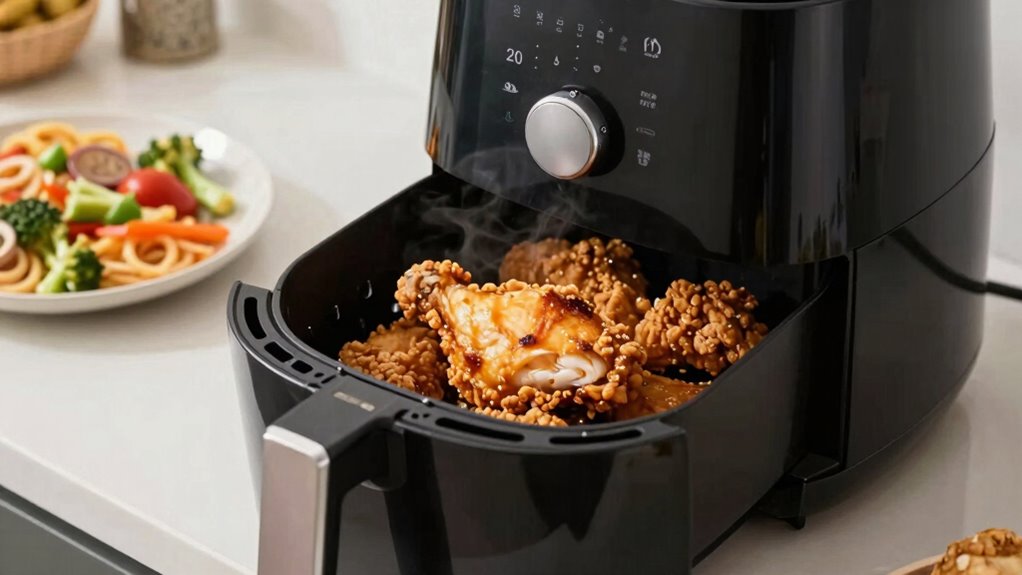
Properly reheating leftovers is essential because it directly affects both their flavor and texture. If not done correctly, you risk losing flavor retention and compromising food safety. Overheating can dry out foods or create sogginess, ruining their original appeal. Ensuring even reheating preserves the authentic taste and maintains the right texture, making leftovers as enjoyable as when first cooked. Proper reheating also minimizes bacterial growth, ensuring food safety. Use the table below to understand the importance of temperature control and reheating techniques:
| Aspect | Impact |
|---|---|
| Food Safety | Prevents bacteria growth, avoids illness |
| Flavor Retention | Maintains original taste and aroma |
| Texture | Keeps foods crispy or tender |
| Temperature | Ensures even heating, avoids sogginess |
| Reheating Method | Preserves quality, enhances taste |
Preparing Your Leftovers for Reheating in the Air Fryer
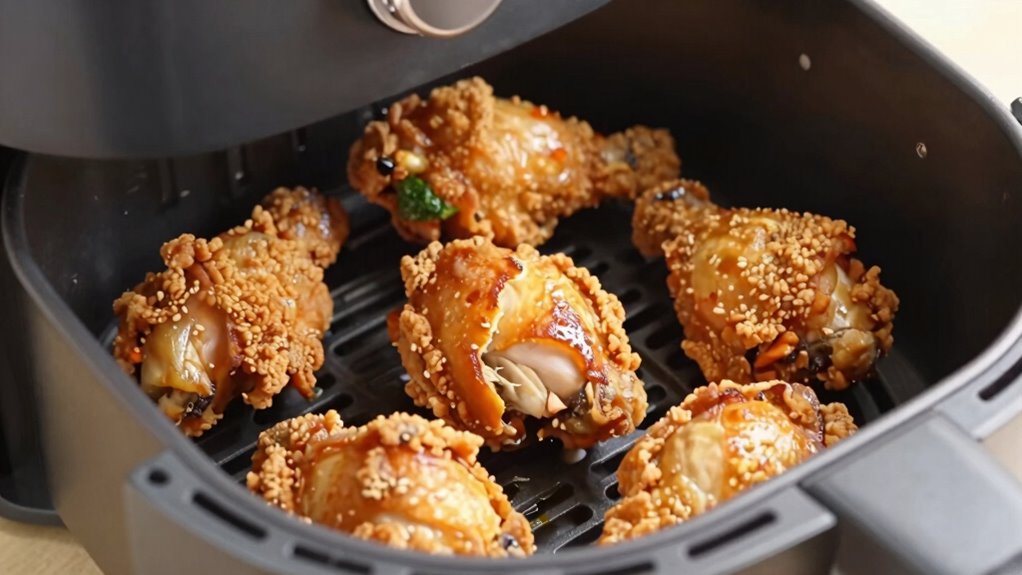
To make certain your leftovers reheat evenly and retain their original texture in the air fryer, start by preparing them properly. Follow storage tips to keep leftovers fresh and prevent spoilage, such as storing them in airtight containers. When choosing containers, opt for shallow, oven-safe options that promote even heat distribution. Before reheating, spread out the leftovers in a single layer, breaking apart clumps if necessary. Remove excess moisture or sauce that could cause sogginess, and avoid overcrowding the basket to ensure proper airflow. Properly stored and thoughtfully prepared leftovers will reheat more efficiently, helping you achieve crispy, delicious results without sacrificing texture. Additionally, selecting the right containers can make a significant difference in how evenly your leftovers reheat. Using proper reheating techniques ensures your leftovers stay flavorful and satisfying after reheating. Taking these steps with air fryer reheating methods will help prevent sogginess and maintain the quality of your leftovers. Ensuring appropriate food safety practices during storage and reheating is also essential to avoid any health risks.
Set the Right Temperature and Time for Perfectly Crispy Leftovers
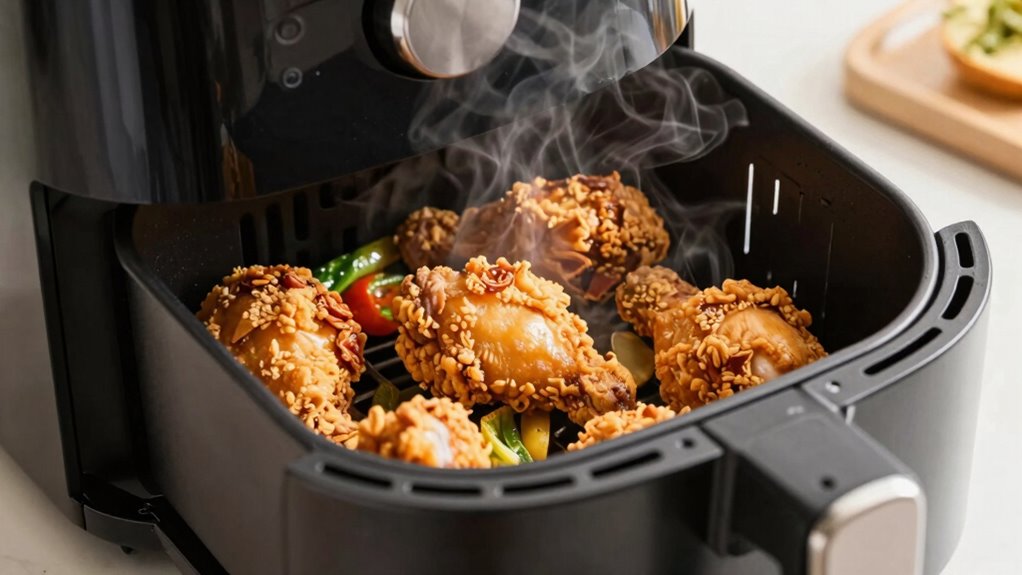
Choosing the right temperature and time is key to restoring your leftovers to crispy perfection. Temperature guidelines vary depending on the food, but generally, reheating techniques call for setting your air fryer between 350°F and 400°F. For most leftovers, start at 375°F and adjust as needed. Too high a temperature can burn the exterior before heating through, while too low may result in sogginess. Keep an eye on the reheating process and check periodically to prevent overcooking. Timing is just as important; typically, 5 to 10 minutes suffices, but thicker or larger portions may need more. Using the correct temperature and time ensures your leftovers regain crispiness without drying out or becoming soggy. Proper airflow in your air fryer helps promote even reheating and crispness, similar to how venting and clearance can help prevent overheating or uneven reheating, especially with certain foods.
How Foil and Parchment Help Keep Leftovers Crispy
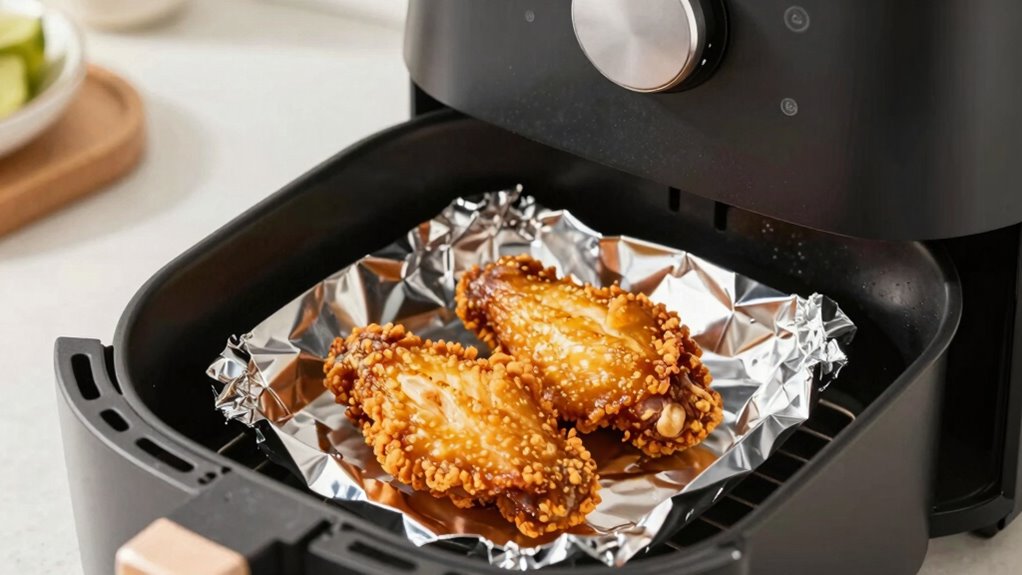
Using foil and parchment paper can make a big difference in keeping your leftovers crispy when reheating. Foil alternatives, like parchment paper, act as parchment barriers, preventing direct contact with heat and moisture that cause sogginess. Parchment creates a protective layer that helps retain crunch without trapping steam, unlike plastic wraps or aluminum foil directly on food. When reheating in the air fryer, placing leftovers on parchment-lined surfaces allows heat to circulate evenly while keeping moisture away from the surface. This prevents sogginess and preserves crispiness. You can also use foil as a barrier, but parchment is often preferred because it’s more breathable. Properly using these materials guarantees your leftovers stay fresh, crispy, and delightful after reheating. Additionally, understanding the importance of air circulation can help optimize reheating results by ensuring even heat distribution and moisture control. Ensuring proper hot air flow around the food enhances the crisping process and prevents uneven reheating.
Layering and Arranging Leftovers for Even Reheating
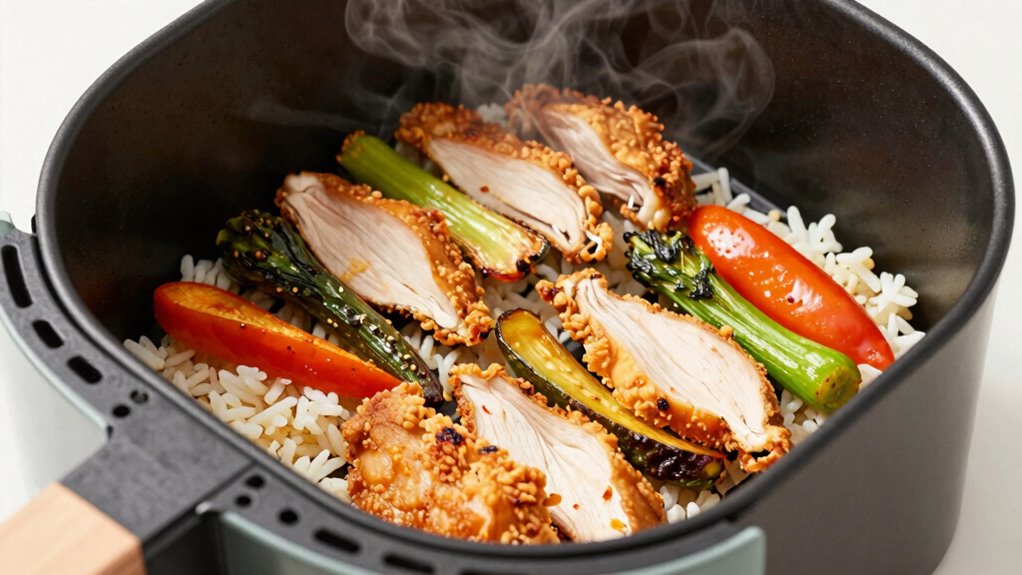
Arranging leftovers properly on your reheating surface guarantees heat distributes evenly, preventing cold spots and sogginess. Use effective layering techniques by placing denser, firmer foods like roasted vegetables or meats at the bottom, with lighter or more delicate items on top. Spread out leftovers in a single, even layer; avoid overcrowding, which traps moisture and hinders airflow. Arrangement tips include keeping slices or pieces separated, so heat reaches all sides uniformly. If reheating multiple items together, create space between them to promote air circulation. Adjust the arrangement based on the type of leftovers, ensuring nothing is stacked too tightly. Proper layering and arrangement are key to achieving consistently crispy, evenly reheated leftovers in your air fryer. Additionally, understanding air circulation principles can help optimize your reheating process for better results. Remember that proper arrangement not only improves heat distribution but also helps prevent overcooking or sogginess. Paying attention to food placement allows the hot air to circulate freely around each piece, enhancing reheating quality.
Common Mistakes That Make Leftovers Soggy and How to Avoid Them
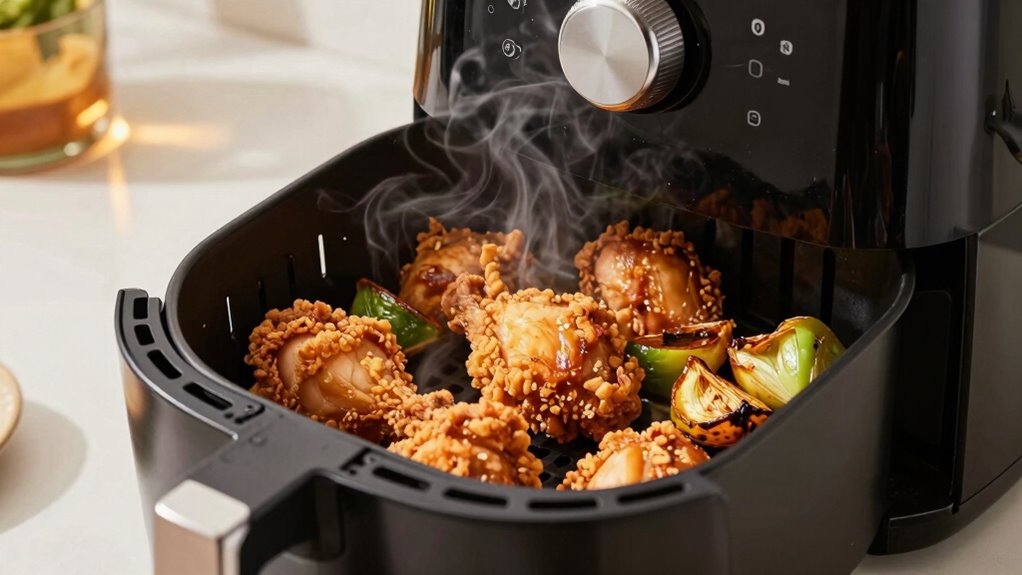
Overcrowding your air fryer can trap moisture, making your leftovers soggy instead of crispy. Using too much oil adds unnecessary moisture and hampers proper reheating. To keep leftovers crisp, avoid these common mistakes and give each piece enough space and minimal oil. Additionally, understanding the air fryer’s airflow can help you optimize reheating techniques for better results. Proper styling techniques and temperature control are also essential to achieving a crispy texture without overcooking.
Overcrowding the Air Fryer
If you pack too many leftovers into your air fryer at once, they won’t reheat evenly. Overcrowding can cause uneven heat distribution, leaving some pieces soggy while others remain cold. Your air fryer size matters—if it’s too small, try to reheat leftovers in batches. Overstuffing hampers proper airflow, making it harder for heat to circulate and dry out excess moisture. Also, consider leftover storage; spreading leftovers in a single layer ensures proper contact with the hot air, preventing sogginess. Avoid stacking or piling food too high. Instead, use multiple layers or smaller portions, so air can reach all sides. Proper portioning and mindful air fryer capacity are key to reheating leftovers that stay crispy rather than soggy.
Using Excess Oil
Using too much oil when reheating leftovers is a common mistake that can quickly turn crispy foods soggy. Excess oil creates unnecessary oil absorption, leaving foods greasy instead of crisp. To avoid this, use just a light spray or a small amount of oil. Be mindful of the type of leftovers—some absorb more oil than others. Additionally, choosing the right essential oils, such as eucalyptus or peppermint, can help maintain freshness and prevent moisture buildup during reheating essential oils for food preservation. Incorporating proper reheating techniques can also make a significant difference in maintaining the texture of leftovers. Being aware of oil absorption rates can further help you achieve perfectly reheated leftovers without sogginess. Paying attention to waterpark amenities can also inspire you to create a relaxing environment at home to enjoy your leftovers in comfort. Understanding upfitting fundamentals can assist in preparing your kitchen setup for effective reheating practices.
Reheating Chicken, Fries, and Vegetables in the Air Fryer
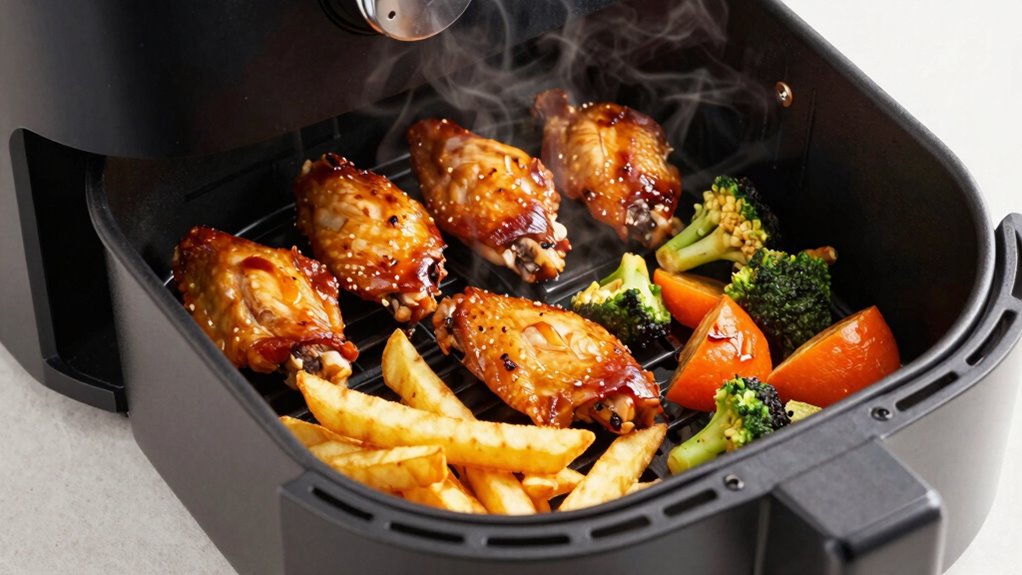
When reheating chicken, fries, and vegetables in your air fryer, setting the right temperature is key to avoiding sogginess. Make sure to use the air fryer basket properly to allow hot air to circulate evenly. Keep an eye on the timing to achieve that perfect crispy texture without overcooking. Additionally, paying attention to visual and auditory cues can help you monitor the reheating process more effectively.
Proper Temperature Settings
To reheat chicken, fries, and vegetables in the air fryer without turning them soggy, setting the right temperature is crucial. Proper temperature control guarantees your leftovers regain crispness without overcooking. Use the appropriate power settings to avoid burning or drying out your food. Usually, a temperature range of 350°F (175°C) works well for most leftovers, but you can adjust based on thickness and moisture content.
Consider these tips:
- Keep temperature between 330°F and 370°F for even reheating.
- Use lower power settings for delicate vegetables to prevent over-drying.
- Increase temperature slightly for dense or chilled meats.
- Monitor the process to prevent overheating and maintain ideal texture.
Use of Air Fryer Basket
The air fryer basket plays a key role in ensuring your leftovers reheat evenly and stay crispy. Its design allows hot air to circulate freely around your food, preventing sogginess. Using a basket with a non-stick coating makes it easy to handle and clean, reducing the risk of food sticking and tearing. When reheating chicken, fries, or vegetables, spread them out in a single layer to maximize airflow. Avoid overcrowding the basket, which can trap moisture and lead to uneven heating. The non-stick surface also helps you flip or shake the leftovers during reheating without sticking, ensuring a crispy, fresh taste. Proper use of the air fryer basket guarantees your leftovers come out evenly heated and deliciously crispy every time.
Timing for Crispy Results
Achieving crispy leftovers in the air fryer depends heavily on timing. To maximize flavor enhancement and maintain texture, follow these steps:
- Reheat thinner items like fries or vegetables at 3-4 minutes at 375°F, shaking halfway to prevent sogginess.
- For thicker foods like chicken, increase time to 5-7 minutes, flipping halfway for even crispness.
- Always preheat your air fryer for consistent results and to avoid sogginess caused by uneven heating.
- Store leftovers properly in airtight containers to retain moisture and prevent freezer burn, which affects crispiness and flavor.
Troubleshooting: Why Are My Leftovers Still Soggy After Reheating?

If your leftovers turn out still soggy after reheating, the problem often lies in moisture retention. Microwave reheating tends to trap steam, making foods soggy instead of crispy. To avoid this, skip microwaving or use it only briefly, then transfer leftovers to the air fryer. Stovetop warming can also add moisture if not done carefully; avoid covering the pan tightly or adding excess liquid. Instead, reheat in a dry skillet over medium heat, stirring occasionally to allow moisture to evaporate. If you notice excess moisture, pat the food dry with paper towels before reheating. These steps help prevent sogginess by promoting moisture escape, ensuring your leftovers regain their crispness rather than turning limp.
Final Tips to Keep Your Leftovers Crispy and Delicious After Reheating
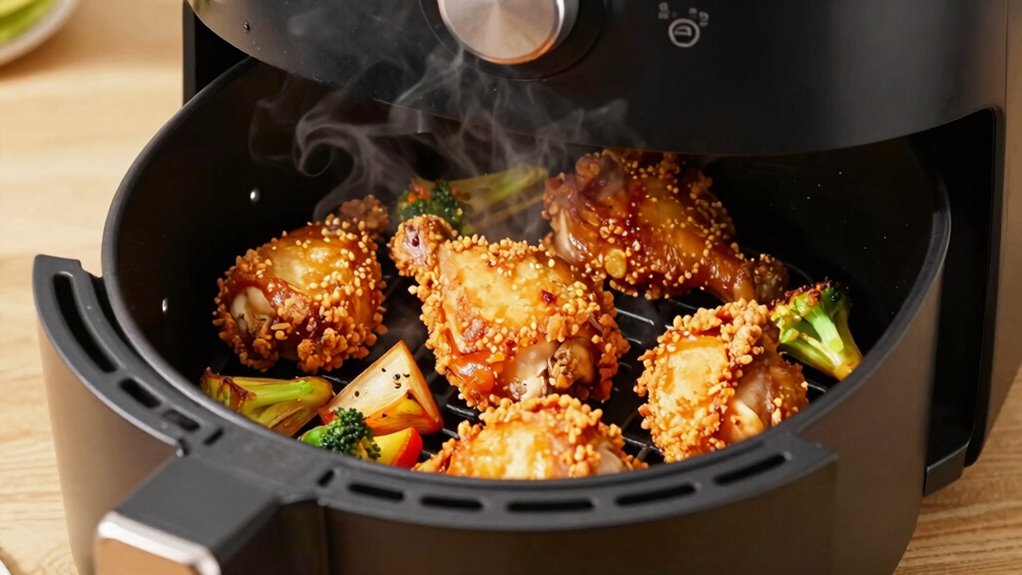
To keep your leftovers crispy and delicious after reheating, focus on proper storage and gentle reheating techniques. This helps prevent soggy leftovers and maintains texture. First, store leftovers in airtight containers to reduce moisture exposure. Second, use reheating techniques that promote even heat without excessive moisture, like an air fryer or oven. Third, avoid microwaving directly from cold; let leftovers reach room temperature first. Fourth, reheat in small portions to ensure quick, even heating. These tips help preserve crispiness and flavor, making leftovers taste freshly cooked. Remember, controlling moisture and applying the right reheating techniques are key to avoiding soggy leftovers and enjoying your meal again.
Frequently Asked Questions
Can I Reheat All Types of Leftovers in an Air Fryer?
Yes, you can reheat most leftovers in an air fryer, making it a great microwave alternative. It works well for reheating vegetables, crispy fries, and even chicken, without sogginess. Just adjust the temperature and time based on the type of food, and remember to shake or flip for even heating. However, some delicate items like bread might not be ideal, so use your judgment for specific leftovers.
How Do I Prevent Sogginess With Saucy Leftovers?
Ever feel like saucy leftovers drown in their own moisture? To prevent sogginess, use the air fryer’s quick heat to evaporate excess sauce absorption, helping retain moisture without turning soggy. Lightly pat leftovers to remove surface moisture before reheating, and consider removing some sauce for better crispness. This way, you keep the perfect balance of flavor and texture, making every bite as delicious as the first.
Is It Safe to Reheat Leftovers Multiple Times in the Air Fryer?
You can reheat leftovers multiple times in the air fryer, but for food safety, it’s best to limit reheating frequency to avoid bacterial growth. Always reheat leftovers thoroughly to an internal temperature of 165°F. Be mindful that each reheating decreases quality and increases risk. To stay safe and maintain taste, reheat only what you plan to consume, and avoid repeated reheating whenever possible.
What Accessories or Tools Can Enhance Reheating Leftovers?
You can enhance reheating leftovers in your air fryer by using accessories like silicone mats and mesh racks. Silicone mats help prevent sticking and make cleanup easier, while mesh racks promote even heat circulation around your food. These tools keep leftovers crispy and prevent sogginess, ensuring your reheated meal tastes fresh. Just place your leftovers on these accessories, set the right temperature, and enjoy perfectly reheated, crispy leftovers every time.
Can I Reheat Leftovers Directly From Frozen in the Air Fryer?
Yes, you can reheat leftovers directly from frozen in the air fryer. Just set the temperature to around 350°F and increase the cooking time. Make sure to check that the internal temperature reaches at least 165°F for safety. Keep an eye on the food to prevent overcooking or burning, and always follow safety precautions to guarantee your leftovers are reheated properly and safely.
Conclusion
Reheating leftovers in the air fryer is like giving your food a second chance to shine, crispy and delicious. Just follow the right temperature, avoid moisture traps, and use foil or parchment when needed. With a little attention, your leftovers will transform from soggy to crispy, turning every bite into a satisfying treat. Think of your air fryer as a magic wand that restores your leftovers to their former glory—crispy, flavorful, and just right.