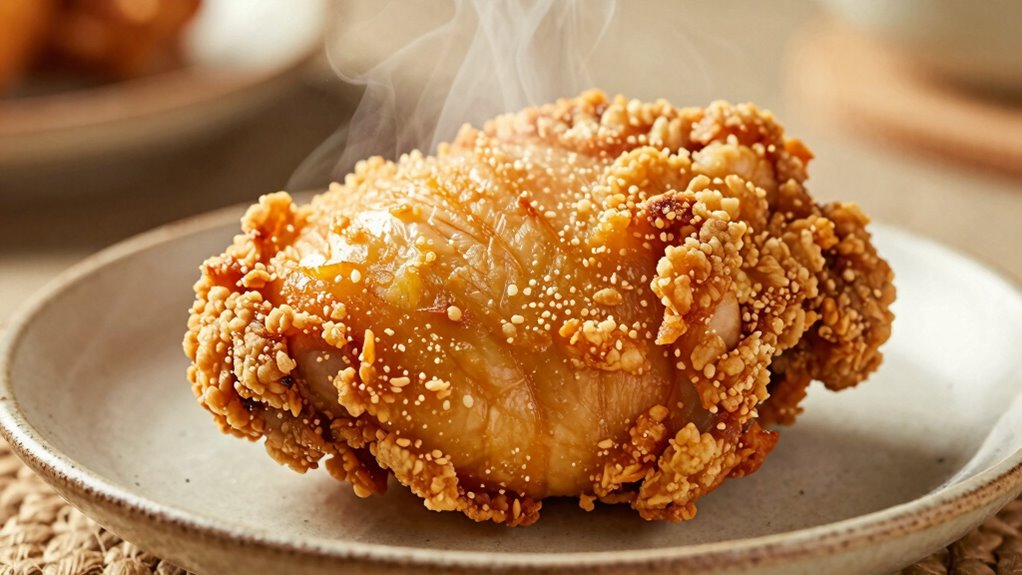

To keep fried chicken crispy when reheating, use a method that allows airflow, like the oven or a toaster oven at 375°F for 15-20 minutes on a wire rack. Avoid covering the chicken fully to let moisture escape, and consider adding a light coat of oil before reheating. Reheating this way restores crunch and keeps the skin deliciously crispy—if you want to learn more tips, keep exploring the best techniques.
Key Takeaways
- Reheat fried chicken in a preheated oven or toaster oven at 375°F on a wire rack for airflow.
- Use a light coat of oil before reheating to help restore moisture and crispness.
- Avoid covering the chicken fully; tent with foil or leave uncovered to allow steam to escape.
- Reheat pieces individually, ensuring proper spacing for even crisping.
- Serve immediately after reheating to enjoy the skin’s maximum crunch.
Why Reheating Fried Chicken Often Ruins Its Crunch
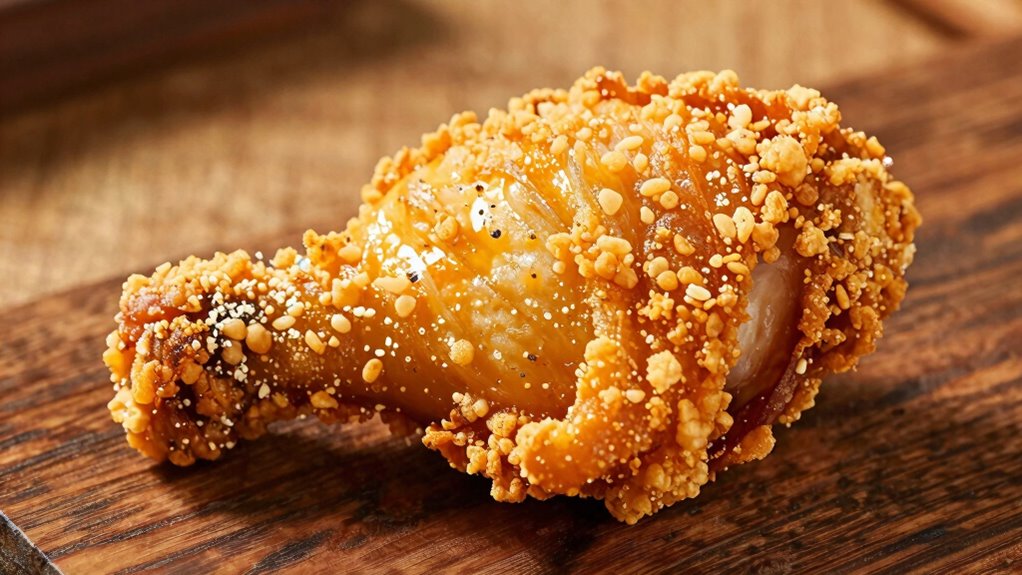
Have you ever wondered why reheated fried chicken often loses its satisfying crunch? It’s mainly because the moisture from marinade flavors and chicken seasoning seeps into the coating, softening the crispy skin. When you reheat, steam and heat cause that moisture to turn into steam, which makes the crust soggy instead of crispy. Even if the chicken was perfectly seasoned, the moisture content can compromise its texture. The structure of breading and coating aren’t designed to withstand reheating without losing their crunch. A moisture barrier can help prevent this problem by reducing moisture absorption during storage. Instead of maintaining that fresh, crispy bite, the chicken becomes limp and dull. To keep that satisfying crunch, you need to understand how moisture and heat interact with the marinade flavors and chicken seasoning. Proper reheating techniques and heat transfer methods can help preserve crispness during reheating. High-quality coating ingredients can also help preserve crispness during reheating.
How to Store Fried Chicken to Keep It Crispy
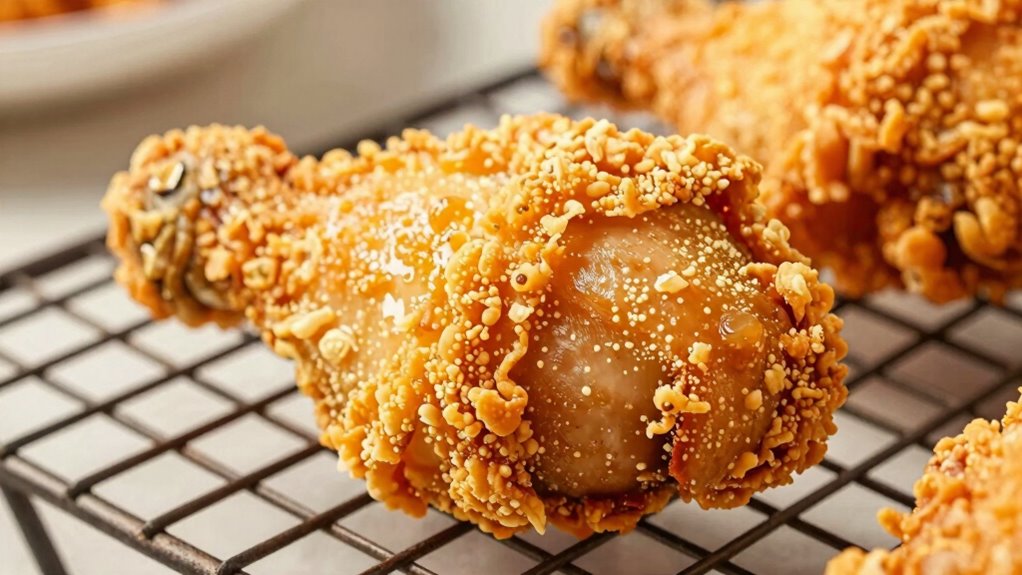
To keep fried chicken crispy after cooking, proper storage is essential. Use airtight storage containers to prevent moisture from making the crust soggy. Place the chicken in a single layer, if possible, to avoid stacking, which can crush the coating. Keep the containers in the fridge if you plan to reheat within a few days. For longer storage, consider freezing the chicken in a sealed container to preserve crispness. When reheating, choose methods like oven or air fryer to revive the crunch, rather than microwave. Avoid wrapping the chicken tightly with plastic wrap or foil, as trapped steam can soften the skin. Additionally, selecting energy-efficient reheating methods can help reduce overall energy consumption. Properly stored fried chicken retains its crispy exterior and stays delicious longer, making your reheating process smoother and more effective. Using proper storage techniques can also prevent bacterial growth and ensure food safety during storage. Incorporating proper food safety practices can further help maintain the quality and safety of your leftovers.
How to Prepare Fried Chicken Before Reheating for Best Results
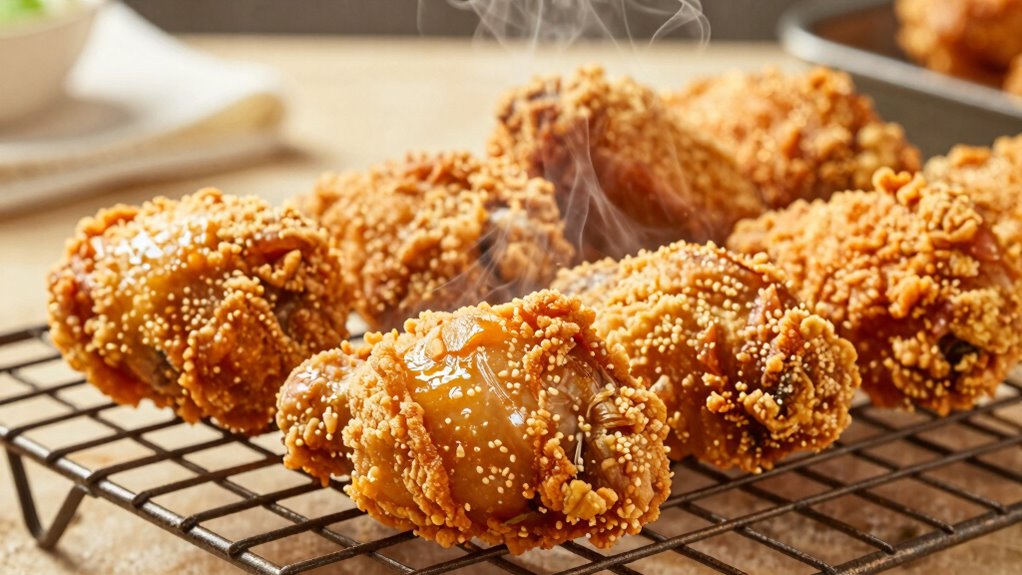
Before reheating, make sure your fried chicken was stored properly to keep it crispy. Let it sit at room temperature for a few minutes to promote even reheating. A light coat of oil can help restore some of the crunch and moisture. For best results, use an oven or air fryer with proper ventilation considerations to maintain crispiness without overcooking. Additionally, selecting the right reheating method can significantly impact the texture and flavor of your leftover fried chicken. Incorporating the role of heat transfer in your reheating process can further help achieve a crispy exterior while keeping the meat moist. Understanding modern kitchen technology can also help you choose appliances that optimize reheating for crispy results. Being mindful of food safety guidelines ensures your reheated chicken is both delicious and safe to eat.
Proper Storage Techniques
Proper storage is essential to maintain the crispy texture and safety of fried chicken before reheating. To do this effectively, focus on food storage techniques that prevent moisture buildup and preserve flavor. Use an appropriate container, ideally one that’s airtight and shallow, to allow even airflow and prevent sogginess. Avoid stacking pieces directly on top of each other; instead, place parchment paper or paper towels between layers to absorb excess moisture. Keep the chicken in the refrigerator within two hours of cooking to ensure freshness and safety. Choosing the right container choices helps maintain the chicken’s crispiness by limiting exposure to humidity and outside air. Proper storage sets the foundation for reheating fried chicken so it stays crunchy and delicious. Additionally, understanding the Free Floating concept can help optimize airflow around the stored chicken, further preserving its texture. Maintaining consistent Temperature Control during storage also plays a critical role in preventing moisture and spoilage.
Bring to Room Temperature
Allowing fried chicken to sit at room temperature for about 15 to 20 minutes before reheating helps it warm evenly and regain some of its original crispness. When you bring it to room temperature, the chicken reaches a more consistent internal temperature, which promotes even heating during reheating. This prevents cold spots that can make the skin soggy or the meat unevenly heated. Make sure to place the chicken on a wire rack or plate, uncovered, in a clean area away from direct sunlight. Letting it sit at room temperature guarantees the chicken isn’t too cold when reheated, reducing the chances of uneven heating and sogginess. Proper food safety measures should also be followed to prevent bacterial growth during this resting period. Resting at appropriate temperatures is crucial to maintain food safety standards. This simple step helps your fried chicken stay crispy and delicious after reheating. Additionally, avoiding temperature abuse ensures the chicken remains safe to eat while preserving its texture. To further enhance the crispiness, using a high-temperature oven or skillet can help maintain the desired crunch.
Light Coat of Oil
Applying a light coat of oil to the fried chicken before reheating helps restore its crispy texture and prevent it from becoming dry. An oil coating creates a barrier that keeps moisture in while promoting even heating. Use a brush or spray to apply a thin layer, ensuring the chicken isn’t greasy. This step also aids in flavor infusion, enhancing the taste as the oil penetrates slightly into the meat and crust. The oil helps the skin crisp up better during reheating, maintaining that desirable crunch. Be careful not to overdo it—too much oil can make the chicken greasy. A light, even coating is all you need to boost texture and flavor, setting the stage for perfectly reheated fried chicken with crispy skin. Cultural heritage influences how traditional methods are preserved and adapted, which can also be reflected in cooking practices. Additionally, understanding cooking techniques can help you achieve optimal results when reheating fried foods. Incorporating a proper reheating method can further improve the overall quality of your leftovers. Using the right reheating equipment ensures your chicken stays crispy and delicious.
The Best Ways to Reheat Fried Chicken for Maximum Crispiness
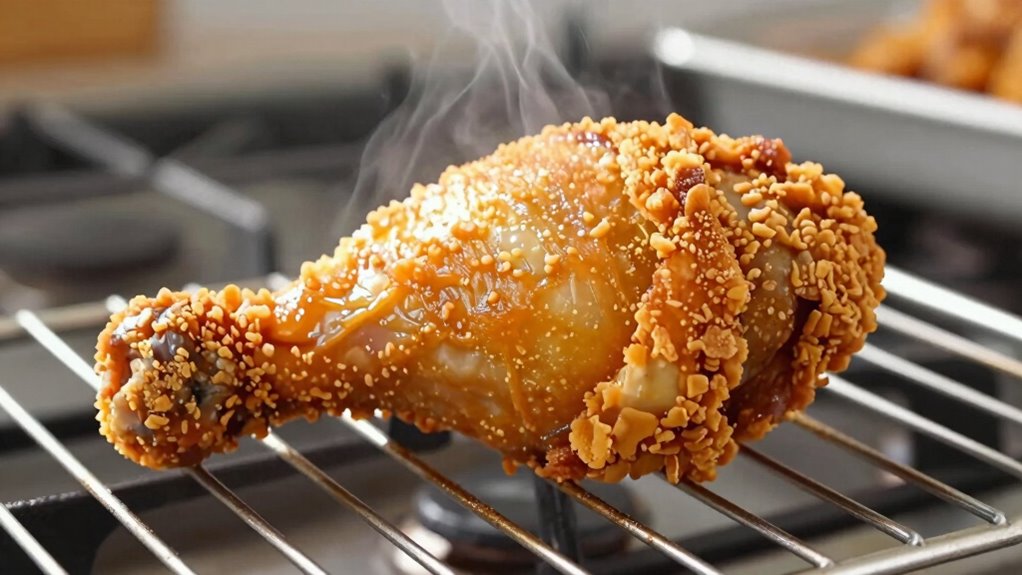
To keep your fried chicken crispy, you should consider the best reheating methods like the oven, skillet, or toaster oven. Each technique helps restore crunchiness while keeping the meat juicy. Let’s explore how to use these tools effectively for maximum crispiness.
Oven Reheating Techniques
Reheating fried chicken in the oven is one of the best ways to restore its crispy exterior and juicy interior. To achieve maximum crunch, preheat your oven to 375°F and place the chicken on a wire rack over a baking sheet. This airflow helps maintain crispiness. As you reheat, consider the breading techniques used initially; thicker breading may need a bit longer, while thinner coatings reheat faster. Keep sauce considerations in mind—adding sauce before reheating can make the coating soggy, so serve sauces on the side. For perfect results, avoid covering the chicken fully, which traps steam. Instead, lightly tent it with foil if necessary, and check frequently to prevent overcooking. This method keeps your fried chicken crispy and delicious.
Skillet Recrisp Strategies
Using a skillet is one of the best ways to revive fried chicken’s crispy texture, as it allows you to control the heat and reintroduce moisture without sacrificing crunch. Start by adding a thin layer of oil, enough to coat the bottom of the skillet. Heat the oil to about 350°F (175°C); maintaining this temperature ensures the chicken crisps up without becoming greasy. Adjust the heat as needed, especially if your chicken pieces vary in thickness. Thicker pieces may need a slightly longer cook time, but avoid high heat that can burn the coating. Place the chicken skin-side down first, then flip once the skin looks crisp. This method helps restore the crunch while keeping the meat juicy and flavorful.
Using Toaster Oven
A toaster oven offers a convenient way to revive fried chicken’s crispiness without the need for extra oil or stovetop fuss. Its efficiency guarantees you get crispy coating preservation with minimal effort. To reheat, preheat your toaster oven to 375°F. Place the chicken on a wire rack or baking sheet to allow heat circulation. This setup helps maintain the crispy exterior. As the chicken warms, you’ll see steam escape, indicating moisture is leaving while the coating stays crunchy. Imagine:
- The sizzling sound as the skin crisps up again
- The warm aroma filling your kitchen
- The golden, crunchy exterior restored to perfection
Using a toaster oven is quick, effective, and keeps your fried chicken delicious and crunchy, making it an ideal choice for reheating while maintaining maximum crispiness.
How to Reheat Fried Chicken in a Skillet for a Freshly Fried Taste
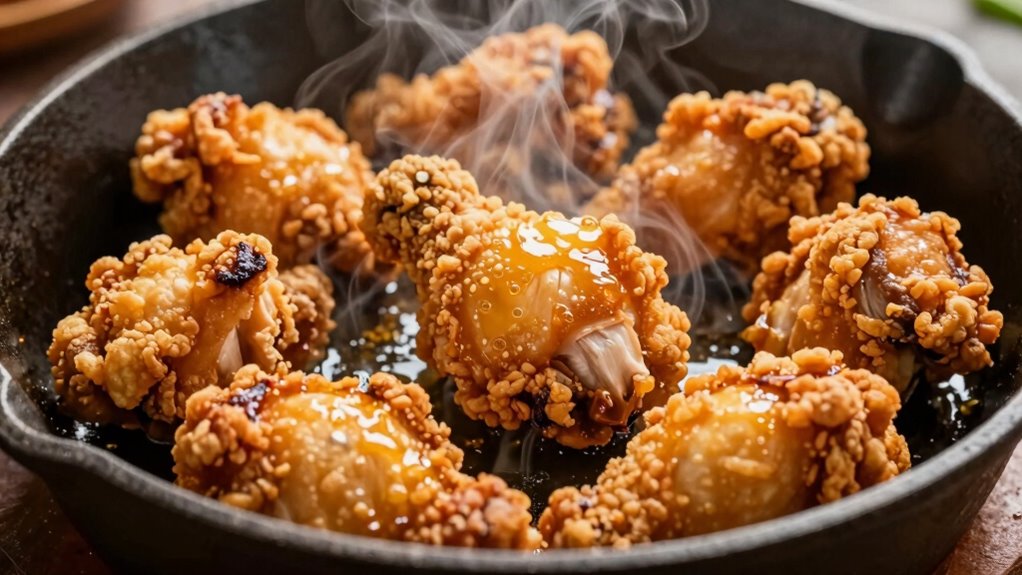
To reheat fried chicken in a skillet and keep that crispy, freshly fried flavor, start by heating a tablespoon or two of oil over medium heat. Place the chicken pieces in the skillet, avoiding overcrowding. Cover loosely to trap heat and moisture, which helps maintain the breading techniques that keep the crust crunchy. Flip the chicken occasionally until heated through and skin is crisp. For added flavor, consider a sauce pairing that complements the crispy texture. Here’s a quick guide:
| Step | Details |
|---|---|
| Oil temperature | Medium heat to prevent burning breading techniques |
| Cooking time | 4-6 minutes per side |
| Covering | Loosely to retain moisture |
| Flip frequency | Every 2-3 minutes |
| Final check | Ensure internal temp reaches 165°F |
This method preserves crunch and flavor, making your reheated fried chicken taste just as good as fresh.
Can You Use the Oven to Reheat Fried Chicken and Keep It Crispy?
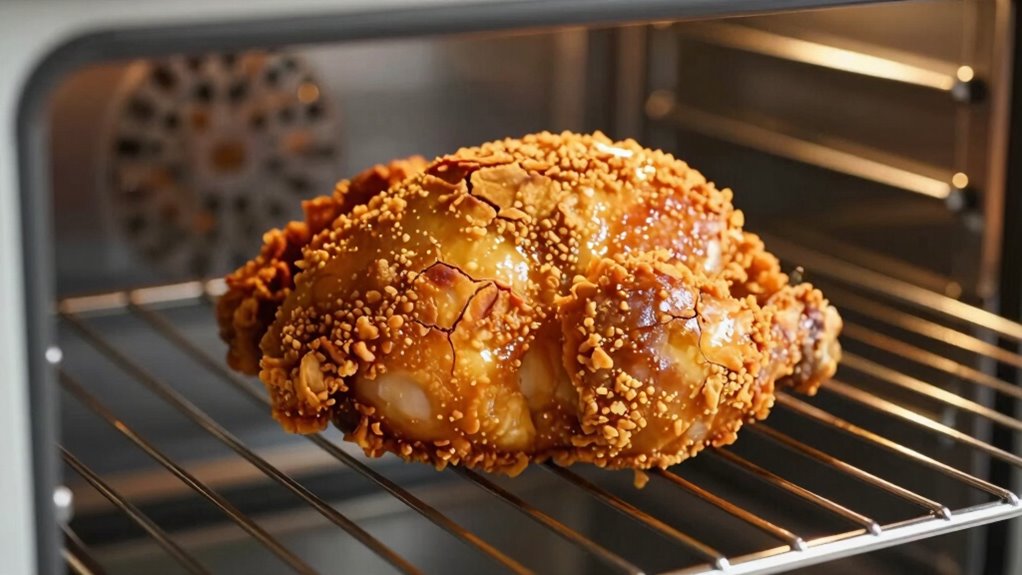
Reheating fried chicken in the oven is an excellent way to restore its crispy texture without sacrificing flavor. To keep the skin crunchy, preheat your oven to 375°F (190°C), and place the chicken on a wire rack set over a baking sheet. This allows hot air to circulate evenly around the pieces. For best results, follow these storage tips: store leftovers in airtight containers, and reheat promptly to prevent sogginess. Using the oven as a reheating method preserves the crispy exterior because it heats evenly and prevents the chicken from becoming soggy. Imagine the sizzling sound as the skin crisps up again, the aroma filling your kitchen, and the golden-brown color returning. This method is perfect for maintaining texture and flavor with minimal effort.
How Long Should You Reheat Fried Chicken?
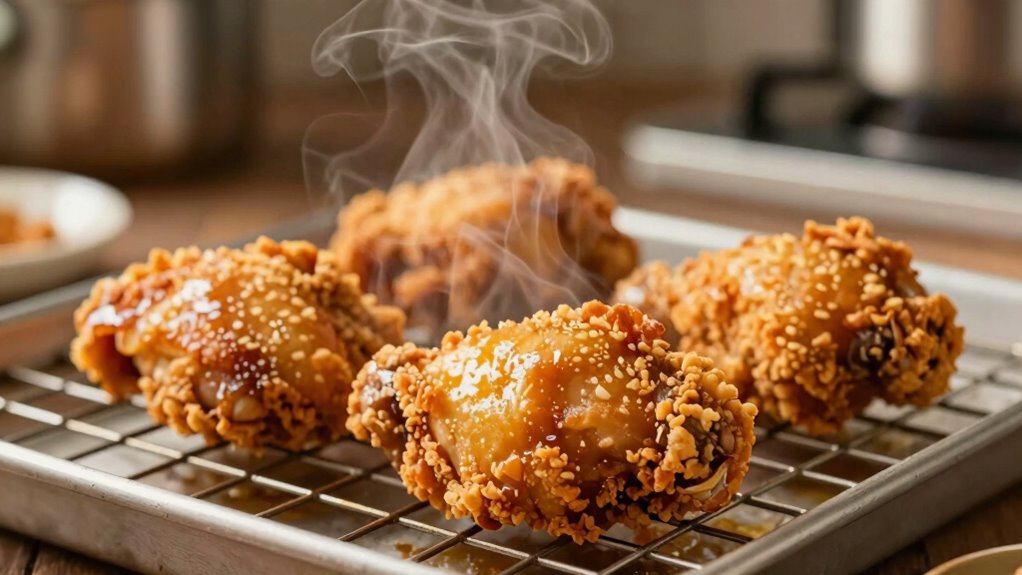
Wondering how long to reheat fried chicken to make sure it’s hot and crispy without drying out? The key is following proper temperature guidelines and reheating times. For oven reheating, aim for 375°F (190°C) and heat the chicken for about 15-20 minutes. Check the internal temperature; it should reach at least 165°F (74°C) to ensure it’s thoroughly heated. If you’re using a microwave, reheating times are shorter—around 2-3 minutes—but be cautious as microwaves can make the skin soggy. Always turn or flip the chicken halfway through to promote even heating. Remember, the goal is to reheat just enough so that the chicken is hot all the way through without drying out or losing its crispy skin.
Quick Hacks to Restore Crunch if Your Fried Chicken Becomes Soggy
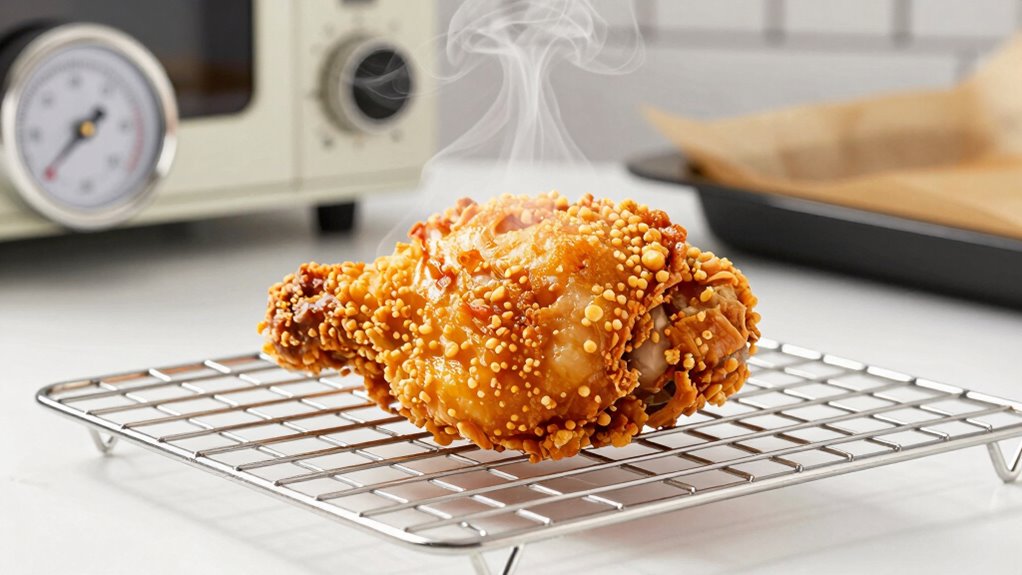
To restore crunch quickly, skip the microwave and opt for your oven or toaster instead. Place the chicken on a baking sheet to reheat evenly and regain its crispiness. Avoid microwave reheating, which can make your chicken soggy rather than crunchy.
Use Oven or Toaster
If your fried chicken has lost its crispness and become soggy, using an oven or toaster is a quick way to restore its crunch. Preheat your oven or toaster to about 375°F (190°C). Place the chicken on a wire rack or baking sheet to allow air circulation. This helps the heat circulate evenly, re-crisping the skin without making the meat dry. To prevent sogginess, avoid stacking pieces directly on each other. Instead, think of the chicken as:
- Crisp, golden exterior, shimmering with tiny bubbles
- Steamy heat emanating, reviving the original texture
- A light coating of cooking oils, enhancing flavor and sheen
Reheat With Baking Sheet
When your fried chicken turns soggy, reheating it on a baking sheet can quickly restore its crunch. Start by placing the chicken on a baking sheet lined with parchment paper or a wire rack for even heat circulation. Use baking sheet techniques like elevating the chicken on the rack to prevent moisture buildup. Preheat your oven to 375°F (190°C); oven preheating guarantees consistent heat distribution. Arrange the chicken in a single layer, leaving space between pieces. Reheat for about 10-15 minutes, checking that the internal temperature reaches 165°F. This method helps moisture escape and keeps the skin crispy. Avoid covering the chicken with foil, which traps steam and makes it soggy. Using a baking sheet with proper oven preheating is key to restoring that satisfying crunch.
Avoid Microwave Reheating
Reheating fried chicken in the microwave often results in soggy, limp skin that loses its crispiness. This quick method heats the meat unevenly, making the skin rubbery and dull. To avoid this soggy texture, skip microwave reheating altogether. Instead, opt for methods that preserve crunch, like using an oven or skillet. If you must microwave, place the chicken on a paper towel to absorb moisture, but don’t expect crispy results. Visualize:
- A microwave steamer trapping steam and moisture, softening the crust
- Hot air circulating unevenly, leaving parts soggy and parts dry
- The rapid heat causing the batter to soften and become chewy
Avoid microwave reheating to keep your fried chicken crispy and delicious.
Common Mistakes When Reheating Fried Chicken and How to Avoid Them
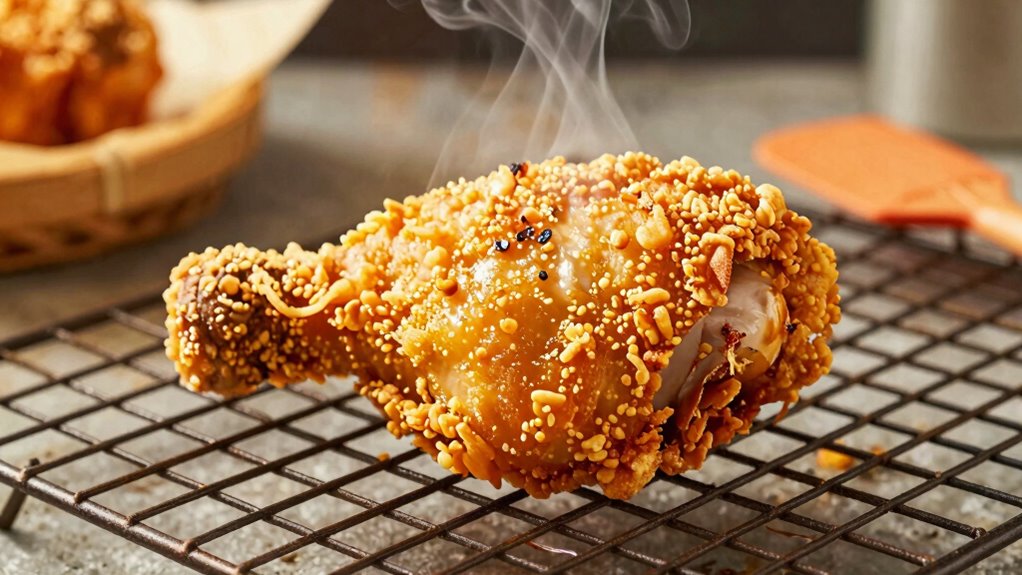
One common mistake people make when reheating fried chicken is using high heat, which can quickly burn the breading and dry out the meat. To avoid this, pay attention to your breading techniques—thick or uneven coatings can lead to uneven reheating. Instead, opt for moderate heat to preserve crispiness without burning. Additionally, oil selection matters; using too much or the wrong type of oil can cause sogginess or uneven browning. Stick to oils with high smoke points, like vegetable or canola oil, and use just enough to lightly coat the chicken. This helps maintain the crunchy exterior and keeps the meat moist. By managing heat levels and choosing the right breading techniques and oil, you’ll reheat your fried chicken perfectly every time.
Final Tips for Enjoying Hot, Crispy Fried Chicken Every Time

To guarantee your fried chicken stays hot and crispy every time, focus on proper reheating techniques and serving methods. Start by experimenting with marinade variations to enhance flavor and juiciness before reheating. When serving, consider the presentation—arrange the chicken on a wire rack to keep the skin crispy, or serve immediately to prevent sogginess. For added crunch, use a side of pickles or a fresh salad to complement the savory bite. Keep these tips in mind:
- Reheat on a wire rack for even crispness
- Serve immediately to maintain texture
- Incorporate marinade variations for flavor depth
These simple steps ensure each bite is hot, crispy, and delicious, making every meal satisfying.
Frequently Asked Questions
Can I Reheat Fried Chicken Using a Microwave Without Losing Crunch?
You can reheat fried chicken in a microwave, but it’s tricky to keep the crunch. Use microwave-safe containers, and cover the chicken with a paper towel to absorb moisture. Reheat on low power in short bursts, checking frequently to avoid sogginess. While microwave reheating is quick and safe for leftovers, for crispy skin, it’s better to use an oven or air fryer.
What Type of Oil Is Best for Reheating Fried Chicken?
Think of oil selection as choosing the perfect partner for your fried chicken. For reheating, use high smoke point cooking oils like vegetable, canola, or peanut oil. These oils heat evenly without burning, helping your chicken stay crispy. Avoid oils with low smoke points, like extra virgin olive oil, which can make your chicken soggy. By picking the right cooking oils, you guarantee that your leftovers stay just as delicious and crunchy as the first bite.
How Does the Thickness of Chicken Pieces Affect Reheating Methods?
The thickness of chicken pieces impacts heat distribution, so thicker pieces require longer reheating times. If you don’t account for this, uneven reheating can occur, leaving some parts cold while others overcook. To avoid this, cut thicker pieces into smaller portions or use lower heat for a longer period. This helps guarantee even reheating, maintains the crispy skin, and keeps your fried chicken delicious throughout.
Is It Safe to Reheat Fried Chicken Multiple Times?
Reheating fried chicken multiple times isn’t recommended because it risks food safety and diminishes food quality. Each reheating increases bacteria growth, making it unsafe to eat. Plus, repeated reheating can turn crispy chicken into greasy, rubbery leftovers. To keep your chicken safe and tasty, reheat only once, store leftovers properly, and verify thorough heating. Prioritize safety and savor the crispy crunch in every fresh bite!
Can I Reheat Fried Chicken Using an Air Fryer for Optimal Crispiness?
Yes, you can reheat fried chicken in an air fryer for maximum crispiness. The air fryer advantages include even heat distribution and quick reheating, which helps restore the crispy skin without drying out the meat. To get the best results, set your air fryer to 375°F, place the chicken in a single layer, and reheat for about 4-5 minutes. This method ensures your fried chicken stays flavorful and crunchy.
Conclusion
Reheating fried chicken is like reigniting a flame—if you follow the right steps, it stays crispy and delicious. Store it properly, prep it carefully, and choose the best reheating method to keep that crunch intact. Avoid common mistakes, and don’t be afraid to give it a quick hack if it loses its crisp. With these tips, your fried chicken will always come back to life, hot and crispy, just like it was fresh out of the fryer.