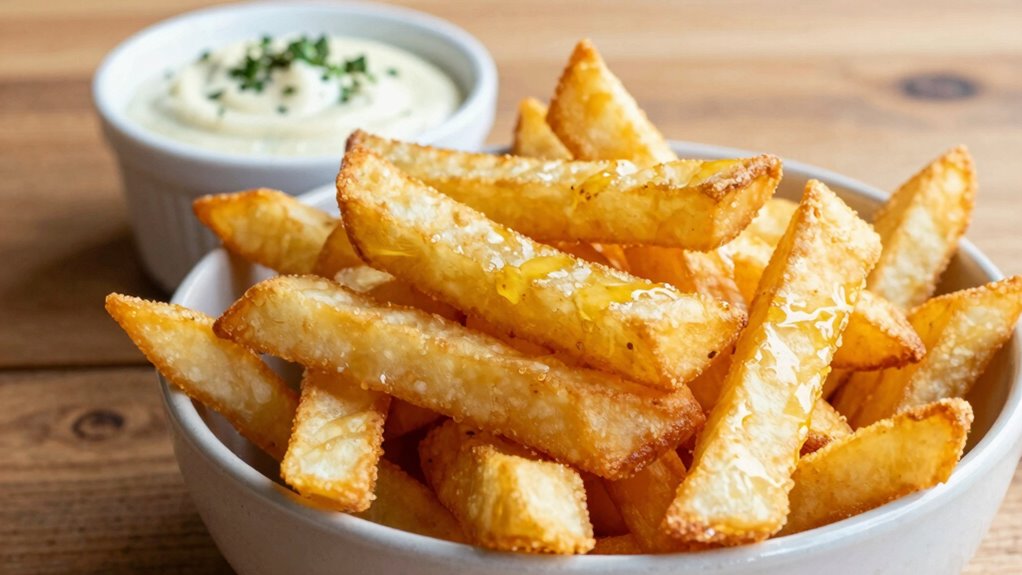

To make frozen fries taste like restaurant fries, start with a two-step method: first, parboil or soak the fries in seasoned water or broth to remove moisture and boost flavor. then, double fry them—initially at 325°F to cook through, followed by a hot second fry at 375°F for crispiness. Season immediately after the second fry for maximum flavor. Keep watching for tips on perfect frying and flavor ideas to elevate your fries even more.
Key Takeaways
- Parboil or soak frozen fries in seasoned water to remove excess moisture and boost flavor absorption.
- Double fry at two different temperatures: first at 325°F to cook through, then at 375°F for crispiness.
- Preheat your oven or air fryer to 400°F and arrange fries in a single layer to ensure even cooking.
- Season fries immediately after the second fry with salt and spices for maximum flavor and color.
- Use high smoke point oils like vegetable or peanut oil, maintain consistent temperature, and avoid overcrowding for crisp, restaurant-style results.
Why Frozen Fries Often Don’t Taste Like Restaurant Fries

Frozen fries often don’t taste like restaurant fries because they’re usually pre-cooked and frozen quickly to preserve shelf life, which can compromise their flavor and texture. When you buy them, they often lack the seasoning options and fresh taste of restaurant-quality fries. Additionally, the oil selection during freezing and processing impacts their flavor; commercial oils may not provide the same richness as the oils used in restaurants. These factors result in a bland, less crispy fry when cooked at home. To improve taste, consider adding your favorite seasonings and choosing quality oils when preparing frozen fries. This way, you can elevate their flavor profile and make them closer to the delicious fries you enjoy at your favorite restaurant. Using proper cooking techniques can also help achieve a more authentic, crispy texture. Incorporating protective styling benefits by properly seasoning and cooking can enhance the overall quality of your homemade fries.
How to Prepare Frozen Fries for Maximum Crispiness
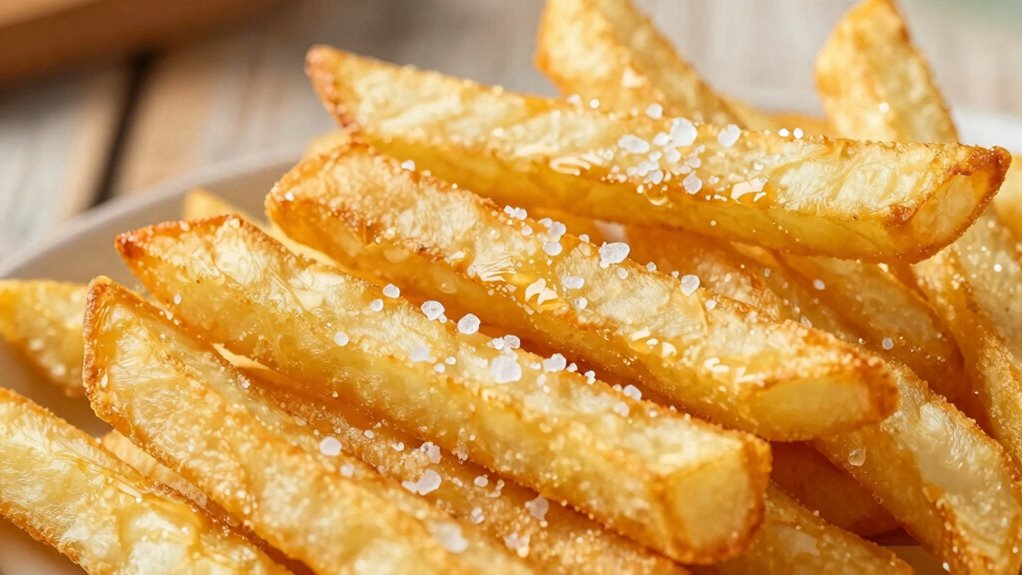
To achieve maximum crispiness, start by preheating your oven or air fryer to the right temperature—usually around 400°F (200°C). Arrange the frozen fries in a single layer for even cooking, avoiding overcrowding. Toss them lightly with your favorite seasoning options—paprika, garlic powder, or seasoned salt—to enhance flavor and texture. For extra crispiness, consider tossing the fries in a small amount of oil before cooking. Once crispy, serve with your preferred dipping sauces like ketchup, aioli, or spicy mayo. Remember, the key is consistent heat and proper preparation to get that restaurant-quality crunch. Additionally, paying attention to contrast ratio in your cooking setup can help you better gauge doneness and achieve optimal crispiness. Understanding market trends in the Gold IRA sector can also help you make more informed investment decisions to secure your retirement future. Using modern connected appliances can further streamline the process and ensure consistent results every time. Paying attention to cooking environment factors like humidity and airflow can also influence the crispiness of your fries, helping you consistently achieve that perfect texture. Moreover, monitoring cooking temperature closely can prevent undercooking or burning, ensuring your fries come out just right.
The Two-Step Method to Make Frozen Fries Taste Like Restaurant-Style Fries

Achieving restaurant-style fries at home often requires more than just baking or frying once. The two-step method enhances flavor and texture, making your fries irresistible. First, bake or fry your frozen fries until golden and crispy. Next, toss them in a flavorful seasoning or a light oil coating to boost their taste. For an authentic touch, serve with a variety of dip varieties like spicy aioli, cheesy ranch, or tangy ketchup, which complement the crispy texture and elevate the experience. These sauce pairings make your fries feel more restaurant-quality and customizable. Additionally, using the right luggage & bags can help you transport your favorite dips and sauces securely during travel. Incorporating innovative cloud solutions can also streamline your meal prep and sharing process through smart kitchen technology. This simple two-step process ensures your fries are perfectly crispy on the outside and fluffy inside, creating the ideal base for your favorite dips and sauces, while professional culinary techniques can further refine your results for a truly gourmet experience.
Furthermore, understanding the parts of herbs used in herbal remedies can inspire creative flavor enhancements in your cooking, paralleling how plant knowledge elevates herbal applications.
Parboiling or Soaking for Better Texture and Flavor
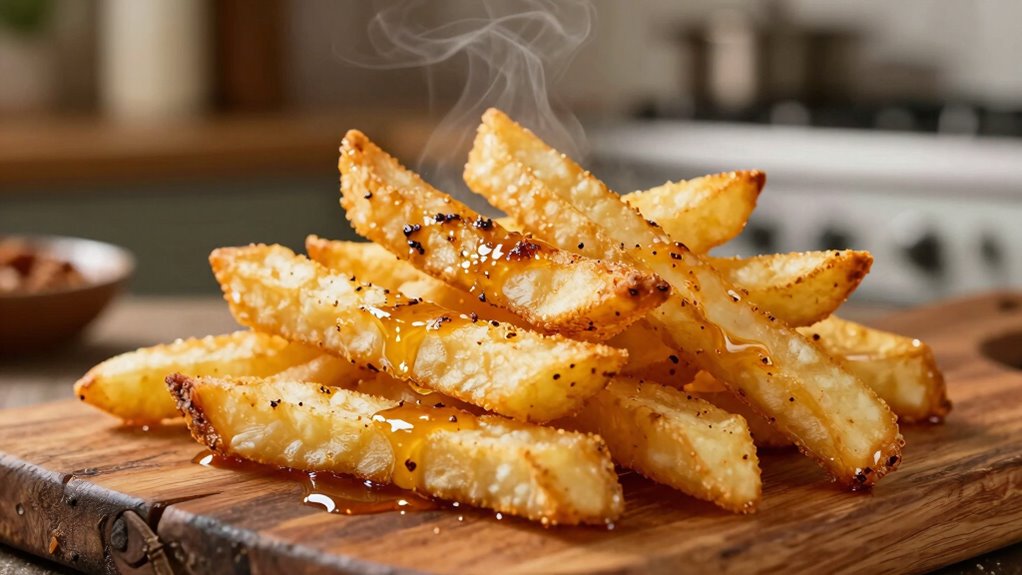
Parboiling or soaking your fries can considerably improve their texture and flavor. This process helps create a crispier crust, allows better flavor absorption, and even shortens the frying time. Just a quick step that makes a big difference in achieving that perfect restaurant-quality fry. Incorporating Free Floating techniques can also enhance the overall frying process by promoting even cooking and preventing sticking.
Enhances Crust Crispiness
Enhancing crust crispiness begins with soaking or parboiling your fries before frying. This step helps remove excess moisture, resulting in a sturdier crust that crisps up better. After soaking, choose your seasoning options carefully—salt, garlic powder, or paprika can add flavor without compromising crunch. When it comes to oil choices, opt for high-smoke-point oils like vegetable or peanut oil, which allow you to fry at higher temperatures for a crispier exterior. Properly prepared fries will develop a golden, crunchy crust that mimics restaurant-quality fries. Just remember, the key is to keep the moisture out and the oil hot enough to create that desirable crispy texture. Using the right frying techniques can make a noticeable difference in achieving that perfect, restaurant-style crust. This simple step makes a noticeable difference in achieving that perfect, restaurant-style crust.
Improves Flavor Absorption
Soaking or parboiling your fries not only helps improve their crust but also plays a key role in flavor absorption. When you soak your fries, they become better at soaking up seasoning blends, making each bite more flavorful. This process also enhances how well they absorb dipping sauces, creating a richer taste experience. To maximize flavor, consider these steps:
- Use a flavorful soaking liquid, like seasoned water or broth, for deeper taste.
- Let the fries soak long enough to fully absorb the flavors before frying.
- Toss the fries in seasoning blends right after soaking for an even coating.
This method ensures your fries are bursting with flavor, making every bite more satisfying and restaurant-quality.
Reduces Frying Time
By partially cooking your fries through parboiling or soaking, you can considerably cut down the time needed to finish them during frying. This step lowers the frying temperature required to achieve crispy exterior and fluffy interior, reducing the risk of overcooking or burning. When you fry, start by heating your oil to the right temperature—around 350°F to 375°F—so the fries cook evenly and quickly. Parboiling or soaking also allows you to incorporate seasoning techniques early, enhancing flavor absorption. Since the fries are partially cooked, they’ll need less time in the oil, making the process more efficient. This method not only saves time but also helps you attain that perfect restaurant-quality texture and flavor with less effort. Additionally, understanding best anime movies can inspire you to enjoy a relaxing night after preparing your fries.
Double Frying for Perfect Crispness

Double frying is the secret to achieving that perfect restaurant-quality crispness in your fries. First, fry them at a lower oil temperature around 325°F to cook through without burning. Then, increase the oil temperature to 375°F for the second fry to crisp up the exterior. To maximize flavor and texture, follow these tips:
- Timing is key—don’t skip the first fry; let the fries rest briefly to prevent sogginess.
- Season immediately after the second fry to lock in flavor, using your favorite seasoning tips like salt, garlic powder, or paprika.
- Maintain consistent oil temperature throughout to ensure even cooking and crispy results.
This two-step process guarantees fries that are tender inside and irresistibly crisp outside, just like your favorite restaurant.
Tips for Even Cooking and Achieving a Golden Color
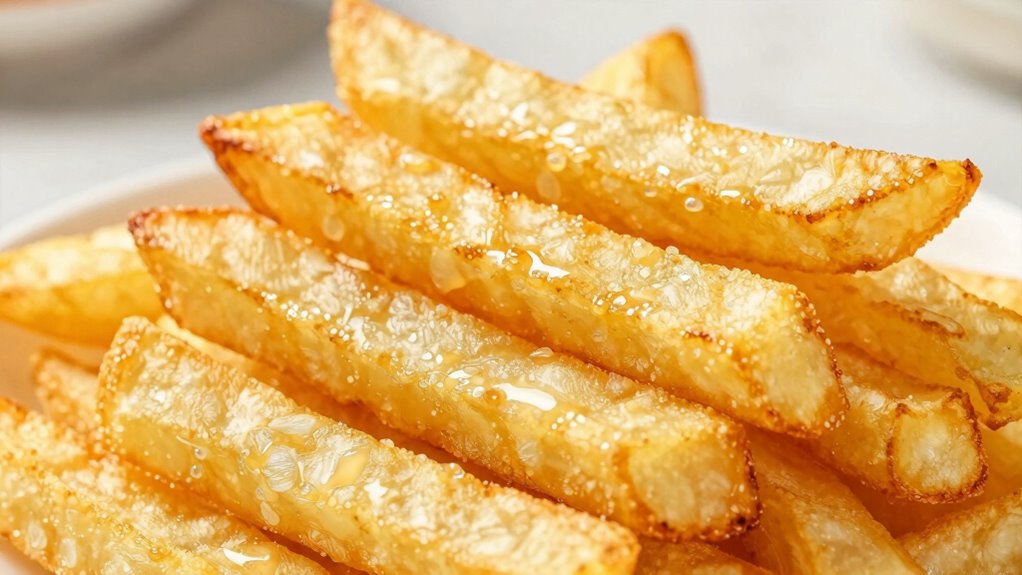
Achieving an even cook and a beautiful golden color starts with controlling your oil temperature carefully. Keep it between 350°F and 375°F to ensure fries cook uniformly without burning. Use a reliable thermometer to monitor the oil constantly. When it comes to seasoning options, wait until after frying to add salt or spices; this prevents uneven coloring. For oil selection, choose oils with high smoke points like vegetable or peanut oil, which promote even browning. Avoid overcrowding the pan, as too many fries can lower the temperature and cause uneven cooking. Stir or flip the fries frequently during frying to promote consistent heat distribution. Additionally, maintaining proper ventilation in your kitchen helps dissipate heat and fumes, ensuring a safer frying environment. Proper oil temperature management is essential for achieving the perfect fry texture and color. Using frying techniques that distribute heat evenly is also crucial for consistent results. Regularly monitoring oil temperature helps prevent overheating and burning, ensuring optimal results. Incorporating consistent stirring throughout the frying process can further improve even cooking and coloration.
Common Mistakes to Avoid When Making Restaurant-Quality Fries
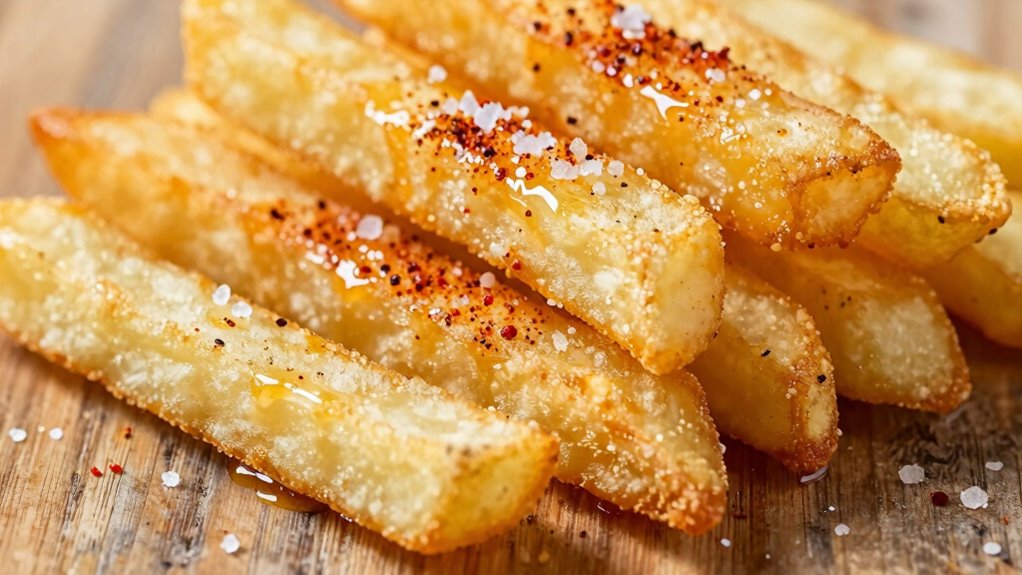
One common mistake when making restaurant-quality fries is neglecting to maintain the correct oil temperature throughout the frying process. If the oil isn’t hot enough, your fries will absorb excess oil, turning soggy and greasy. Conversely, too hot, and they’ll burn before cooking through. To avoid this, use the right oil selection—high smoke point oils like canola or peanut oil work best. Also, don’t skimp on seasoning options; bland fries lack flavor and authenticity. *Finally*, rushing the process by overcrowding the fryer drops the temperature, resulting in uneven, limp fries. Keep the oil steady, choose quality oil, and focus on seasoning options that enhance flavor without overpowering. Proper frying technique and controlling oil temperature ensure consistent results and help you achieve restaurant-quality fries every time. Additionally, understanding frying techniques can significantly improve your results and bring that perfect crispy texture. Maintaining consistent oil temperature is essential because thermal stability of the oil directly impacts the texture and flavor of your fries. Being aware of oil composition can also help in selecting the best oil for achieving optimal frying conditions.
How to Add Flavors and Variations to Elevate Your Fries

Adding flavors and variations to your fries is a simple way to elevate their taste and make them more exciting. You can experiment with seasoning blends or try different toppings to customize each batch. For example, sprinkle garlic herb seasoning, chili powder, or Parmesan cheese for unique flavors. Topping ideas include chopped fresh herbs, crispy bacon bits, or a drizzle of aioli. To help you get started, here’s a quick guide:
| Flavor Idea | Seasoning Blends | Topping Ideas |
|---|---|---|
| Classic Garlic | Garlic powder, parsley | Parmesan, chopped herbs |
| Spicy Kick | Cajun, cayenne pepper | Jalapeños, hot sauce |
| Cheesy Delight | Nutritional yeast, cheddar | Melted cheese, bacon bits |
| Herb-infused | Italian herbs, rosemary | Fresh basil, cherry tomatoes |
| Savory BBQ | Smoked paprika, cumin | BBQ sauce, fried onions |
Adding proper seasoning can significantly enhance the flavor profile of your fries and make them taste more like restaurant-quality dishes.
Troubleshooting: What to Do When Your Fries Aren’t Crispy Enough
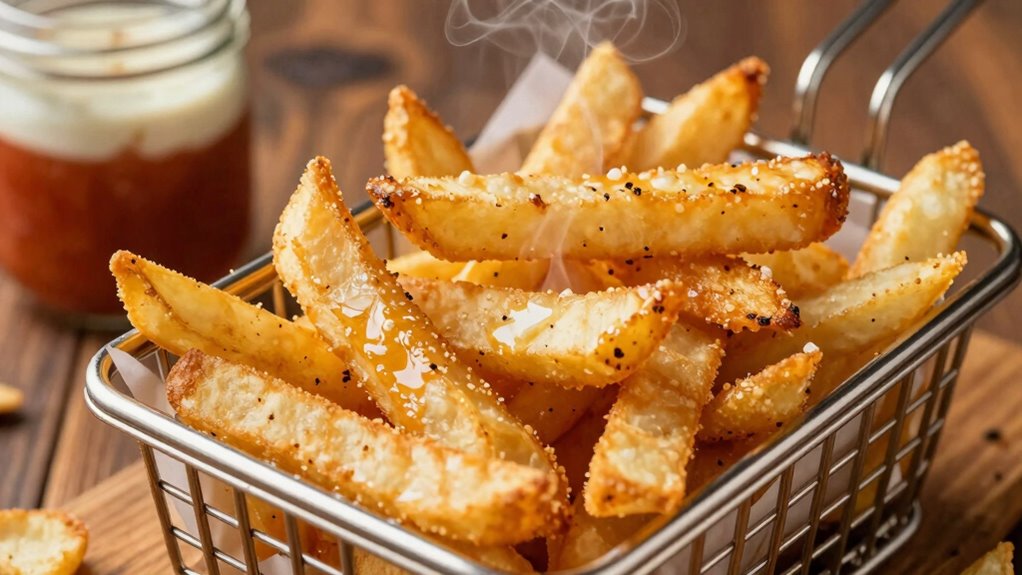
Even if you’ve seasoned and flavored your fries to perfection, they can still fall short of that crispy restaurant-quality texture. Don’t worry—there are simple fixes. First, try adjusting your seasoning options; adding a sprinkle of cornstarch before frying can improve crunch. Second, verify proper storage tips: keep your frozen fries in airtight containers to prevent moisture, which can make them soggy. Third, revisit your cooking method—use a higher temperature during the second fry or bake longer for extra crispiness. Also, avoid overcrowding the pan, which traps steam and softens fries. Additionally, understanding the Sun’s energy can help you appreciate how heat impacts frying and baking processes. These small adjustments can make a big difference, transforming limp fries into crispy, crave-worthy bites that match restaurant standards.
Frequently Asked Questions
Can I Use Different Types of Frozen Fries With This Method?
Yes, you can use different types of frozen fries with this method. The key is to adjust cooking times based on the fries’ texture and fry variety. Thicker or crinkly fries might need a bit longer, while thinner ones cook faster. Experiment to find the perfect balance, and you’ll enjoy restaurant-quality fries no matter the variety. Just keep an eye on how the texture develops for the best results.
How Long Should I Double Fry the Fries for Optimal Crunch?
Think of your fries as a symphony ready to hit the high notes. For an ideal crunch, double fry them for about 3-4 minutes in the first round, then 2-3 minutes in the second. This double frying duration creates that irresistible crispy exterior and fluffy interior, mimicking restaurant-quality fries. Keep an eye on them to prevent burning, and you’ll get perfect crispy fries every time.
Is There a Way to Make the Fries Healthier Using This Technique?
Yes, you can make the fries healthier using this technique by choosing healthier alternatives and nutritional modifications. Opt for baking instead of frying to reduce oil intake, and use olive or avocado oil for healthier fats. You can also try seasoning with herbs and spices instead of salt. These tweaks cut calories and improve nutrient content, making your fries a smarter, tastier snack without sacrificing flavor.
What Oils Are Best for Achieving Restaurant-Style Fries?
You should choose oils with high smoke points like peanut, canola, or vegetable oil for the best restaurant-style fries. These oils withstand high frying temperatures without burning, ensuring crispy results. When frying, maintain a consistent temperature around 350-375°F to get that perfect crunch. Using the right cooking oil and controlling the frying temperature are key to achieving authentic, restaurant-quality fries that taste delicious every time.
Can I Prepare These Fries Ahead of Time and Reheat Them?
You can prep these fries ahead of time and reheat them, just like a modern-day chef in a 1950s diner! For makeahead prep, bake or fry the fries, then let them cool completely before storing in an airtight container in the fridge. When you’re ready to reheat, use reheating tips like an oven or air fryer for crispy results. Just avoid microwave reheating, as it can make fries soggy.
Conclusion
With this simple two-step dance of parboiling and double frying, you’ll transform lifeless frozen fries into crispy, golden masterpieces that rival restaurant favorites. Think of it as revealing a secret recipe buried beneath a crispy shell, revealing a tender, flavorful heart. Embrace the process, avoid common pitfalls, and soon you’ll be savoring fries that sing with perfection—every bite a symphony of crunch and warmth, turning your kitchen into a beloved fry joint.