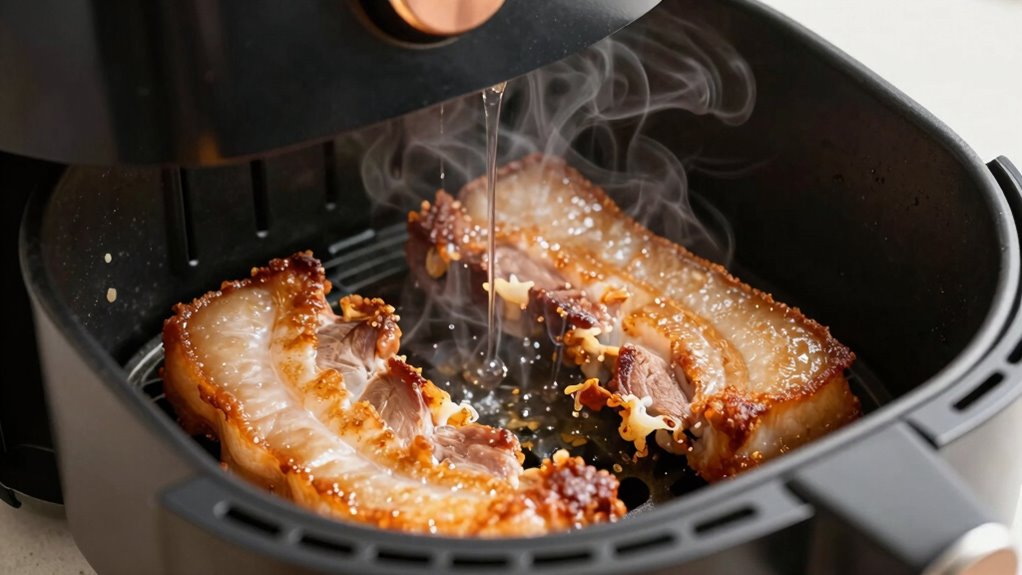

To render fat from pork belly in an air fryer without smoke, start by thoroughly drying the skin with paper towels and refrigerating it uncovered to remove moisture. Score the skin, season generously, and trim excess fat to prevent flare-ups. Use a drip tray or place water in the basket to catch drippings, and make certain good ventilation. Proper setup and technique help you achieve crispy skin without smoke—discover more tips to perfect your cook.
Key Takeaways
- Pat dry the pork belly thoroughly and leave it uncovered in the fridge to reduce moisture and splattering.
- Score the skin and season generously to promote even crisping and fat rendering.
- Add water or use a drip tray in the air fryer to catch drippings and minimize smoke.
- Trim excess fat beforehand and use racks or parchment paper to prevent drippings from reaching the heating element.
- Keep the air fryer clean, preheat properly, and ensure good ventilation to prevent smoke buildup during cooking.
Why Fat Rendering in an Air Fryer Doesn’t Have to Cause Smoke
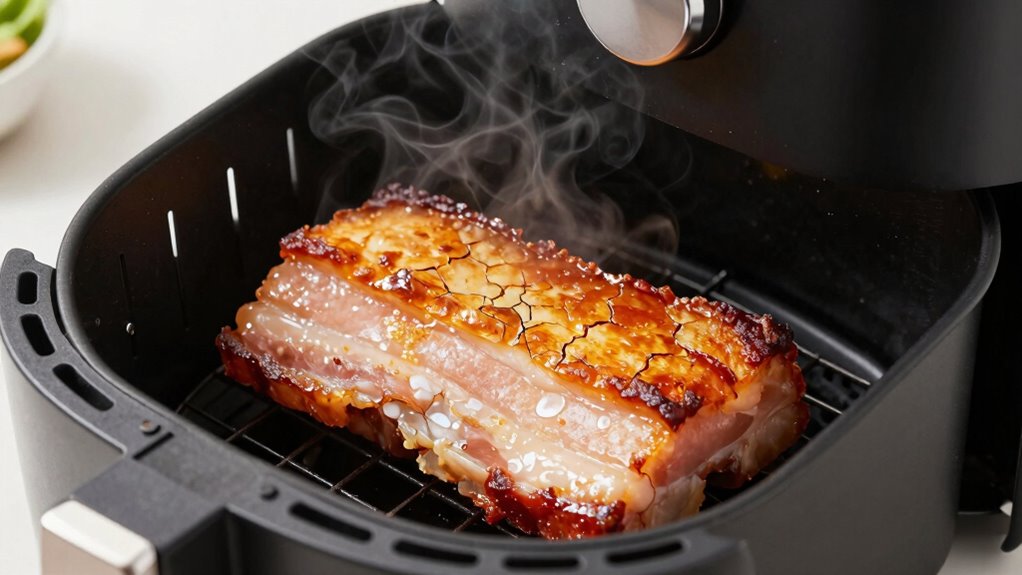
Although fat rendering in an air fryer can sometimes produce smoke, it doesn’t have to be a problem if you take the right precautions. The key is managing the fat smoke to preserve that tempting pork belly aroma without causing a smoky mess. To do this, start by trimming excess fat to reduce flare-ups, which can lead to smoke. Using a drip tray or placing a small amount of water underneath helps with fat smoke management, preventing grease from burning directly on the heating element. Keep the air fryer clean and dry to avoid any buildup that could cause smoke. Additionally, understanding the importance of airflow dynamics can help prevent smoke buildup by ensuring proper ventilation around the appliance. Proper ventilation is essential for maintaining a smoke-free cooking environment and can be improved by positioning the air fryer in a well-ventilated area or near an exhaust fan. Recognizing the significance of cleanliness in the device can further reduce smoke issues, as grease buildup can contribute to smoke during cooking. Furthermore, proper maintenance of your air fryer ensures it operates efficiently and minimizes smoke production. With these simple steps, you’ll enjoy that delicious pork belly aroma without the smoke drama, making your air fryer experience smoother and more enjoyable.
How to Prepare Your Pork Belly for Crispy, Smoke-Free Results
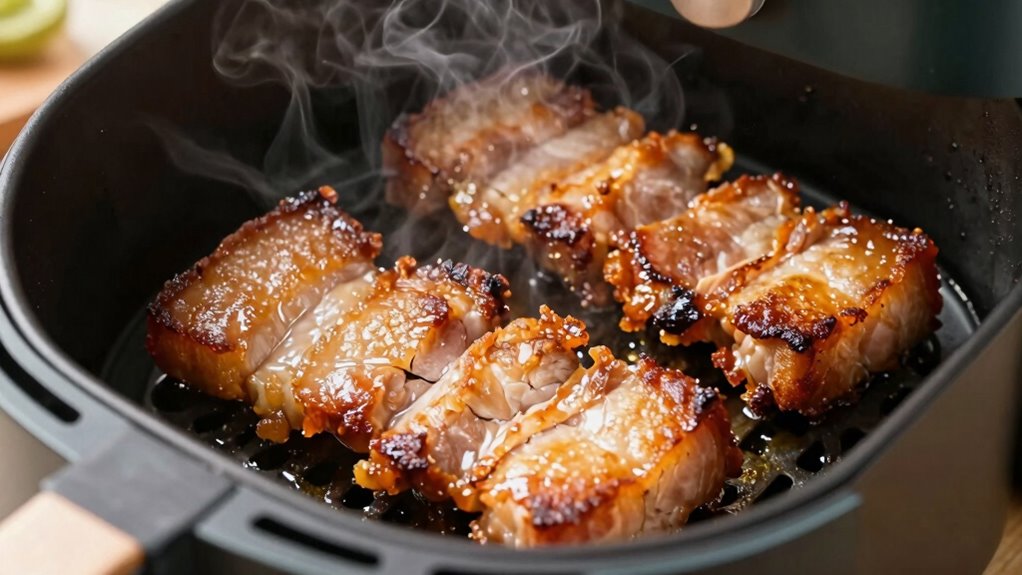
Start by scoring the skin with a sharp knife to help excess fat escape and promote crispiness. Be sure to pat the pork belly dry thoroughly, removing any moisture that could cause splattering or prevent a crispy finish. Taking these steps sets the stage for a perfectly crispy, smoke-free result in your air fryer. Additionally, ensuring proper filtration can help reduce smoke and odors during cooking. Proper ventilation in your kitchen can also contribute to a cleaner cooking environment and help prevent smoke buildup. Using proper airflow techniques can further enhance smoke management and overall safety during your cooking process. Incorporating smart kitchen ventilation systems can optimize airflow and further minimize smoke production.
Score the Skin
To achieve crispy, smoke-free pork belly, you need to properly score the skin first. Use a sharp knife to make shallow cuts through the skin, creating a grid pattern. This scoring technique allows the fat to render effectively and helps achieve even crispiness. Be careful not to cut too deep into the meat. For best results, follow these seasoning tips along with scoring:
- Use a light hand; avoid puncturing the meat.
- Keep cuts evenly spaced for uniform crispiness.
- Season generously after scoring to enhance flavor.
- Pat the skin dry before scoring to prevent steaming during cooking.
- Proper scoring not only promotes better fat rendering but also helps in maintaining optimal temperature control during cooking, which is essential for a smoke-free process. In modern kitchens, connected cooking appliances can assist in monitoring temperature precisely, ensuring consistent results. Additionally, understanding cooking techniques can further improve your results and reduce smoke production. Incorporating proper ventilation techniques can also help minimize smoke and ensure a safer, more comfortable cooking environment.
Pat Dry Thoroughly
Before roasting, make sure your pork belly’s skin is thoroughly pat dry with paper towels. Proper pork belly preparation starts with removing excess moisture, which helps achieve crispy skin and prevents smoke during cooking. Patting dry also minimizes splattering and reduces kitchen safety risks associated with hot oil or fat. Take your time to press gently but firmly, ensuring all crevices are dry. This step is vital for even crisping and avoiding smoke, especially in an air fryer. Keep your workspace clean and handle paper towels carefully to prevent slips. Drying the pork belly thoroughly not only enhances texture but also reduces smoke and splatter. Proper air fryer techniques and maintenance can further enhance your cooking results and safety. Ensuring your kitchen safety practices are up to date can help prevent accidents and make your cooking experience more enjoyable. Proper preparation sets the foundation for a perfect, crispy, smoke-free pork belly. Additionally, understanding water evaporation during cooking can help you better control smoke and splatter issues.
How to Score and Season Pork Belly for Crispy, Flavorful Skin
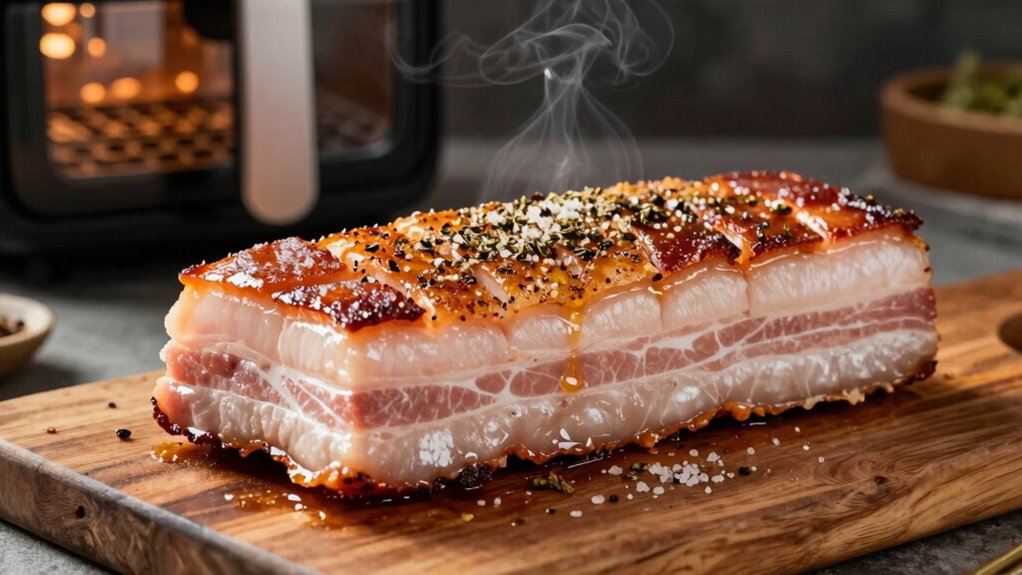
Start by properly scoring the skin with a sharp knife to help excess fat render and create crispiness. Next, apply a salty, sticky rub evenly over the meat and skin to boost flavor and help the skin crisp up. Finally, let the pork belly dry completely in the fridge to guarantee maximum crunch when cooked. Ensuring the skin is thoroughly dried promotes better air circulation and crispiness during cooking. Proper drying also reduces the risk of smoke caused by excess moisture during high-heat cooking safety precautions. Additionally, using high-quality chargers can improve the effectiveness of drying and help achieve optimal results. To further improve the drying process, ensuring proper airflow in your refrigerator can make a noticeable difference.
Properly Score the Skin
Scoring the pork belly skin is a crucial step that helps achieve that perfect crispy texture. Proper skin scoring allows heat to penetrate evenly, promoting efficient fat rendering and crispiness. Use a sharp knife to make shallow cuts in a crosshatch pattern or straight lines across the skin. Keep the cuts evenly spaced, about 1/4 inch apart, to prevent tearing the meat. This process:
- Enhances fat rendering, making the skin crisper
- Prevents the skin from curling during cooking
- Creates channels for seasoning to penetrate
- Ensures even heat distribution for consistent crispiness
- Proper skin scoring is especially important when rendering fat without smoke drama, as it helps control smoke generation during cooking.
Be careful not to cut into the meat itself—only score the skin. Well-executed skin scoring is key to crispy, flavorful pork belly with minimal smoke.
Use Salty, Sticky Rub
Applying a salty, sticky rub is essential for building flavor and ensuring the skin becomes irresistibly crispy. You want a coating that sticks well, so opt for a mixture of salt, sugar, and spices, or try seasoning alternatives like soy sauce or fish sauce for added depth. Spread the rub evenly over the scored pork belly, pressing it into the skin to create a sticky layer that enhances crispiness. If you’re not cooking immediately, store the pork belly uncovered in the fridge to keep the skin dry and the rub intact. This helps prevent moisture buildup, which can hinder crisping. Properly seasoned and stored, your pork belly will develop a flavorful crust that’s both crispy and delicious.
Let Skin Dry Completely
To achieve perfectly crispy pork skin, it’s essential to let the skin dry completely before cooking. The drying process helps remove moisture, which is key for that satisfying crunch. After scoring and seasoning your pork belly, pat the skin dry with paper towels thoroughly. For best results, leave the pork uncovered in the fridge for a few hours or overnight, encouraging the moisture to evaporate. During this time, avoid covering it, so the skin remains exposed to air. You can also use a fan or air dryer to speed up the drying process. Ensuring the pork skin is dry creates a better surface for seasoning and helps achieve an even, crackling finish. Remember, patience in drying makes a significant difference in your pork belly’s crispiness.
How to Set Up Your Air Fryer for Fat Rendering Without Smoke

Setting up your air fryer for fat rendering without smoke requires some simple adjustments. First, guarantee the vents are unobstructed to allow proper airflow, which helps prevent smoke buildup. Using the smoke filters can also catch any excess grease or fumes. Place a small amount of water in the basket or at the bottom of the fryer to create a barrier that minimizes smoke. Additionally, preheat the air fryer to reduce initial smoke production. Here’s a quick overview:
| Tip | Why it helps |
|---|---|
| Clear air fryer vents | Promotes good airflow, reduces smoke |
| Use smoke filters | Traps grease and fumes |
| Add water in the basket | Minimizes smoke during cooking |
| Preheat before cooking | Lowers initial smoke production |
These steps ensure you render fat with minimal smoke drama.
Cooking Pork Belly in the Air Fryer: A Step-by-Step Guide
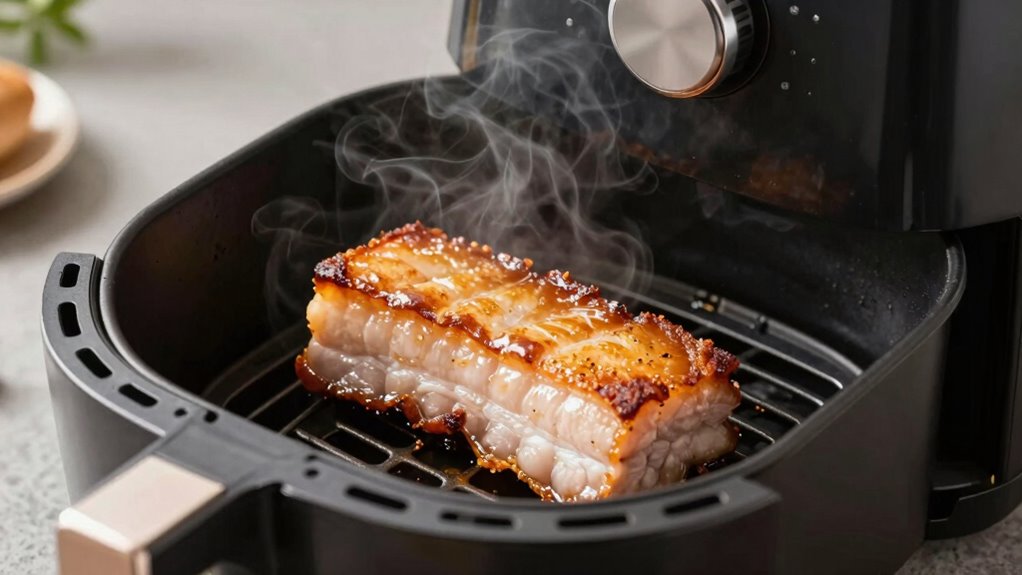
Now that your air fryer is prepped for minimal smoke, it’s time to cook the pork belly to crispy perfection. Start by trimming excess fat carefully, leaving enough to render deliciously. Pat the pork belly dry with paper towels to guarantee crispness and remove moisture. Season it generously with salt and your favorite spices, then use air fryer accessories like a rack or parchment paper to prevent sticking. Place the pork belly skin-side up in the basket, ensuring good airflow around it. Cook at 375°F (190°C) for about 25-30 minutes, flipping halfway if needed. Keep an eye on it to avoid smoke, and adjust cooking time based on thickness. Use these steps to achieve perfectly rendered fat and crispy skin without the smoke drama.
Tips for Achieving Crispy Skin and Tender Meat
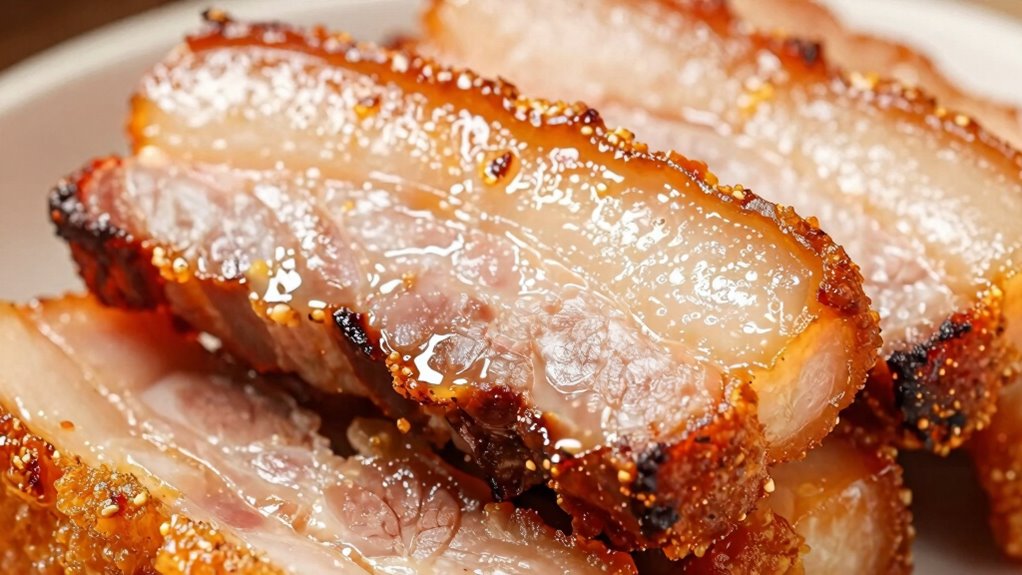
Achieving crispy skin and tender meat starts with proper preparation and cooking techniques. First, apply a well-balanced pork belly seasoning that enhances flavor and helps draw out moisture. Pat the skin dry thoroughly—this step is vital for crispiness. Use the right air fryer accessories, like a rack or crisper tray, to promote even heat circulation and prevent excess moisture buildup. When cooking, avoid overcrowding the basket; give the pork belly space to crisp up. For even results, flip or rotate the meat if your air fryer allows. Keep an eye on the cooking time and temperature—around 375°F for 25-30 minutes usually works well. Rest the pork belly briefly before slicing to let the juices settle, ensuring tender meat with a crispy skin.
Avoid These Common Mistakes That Cause Smoke
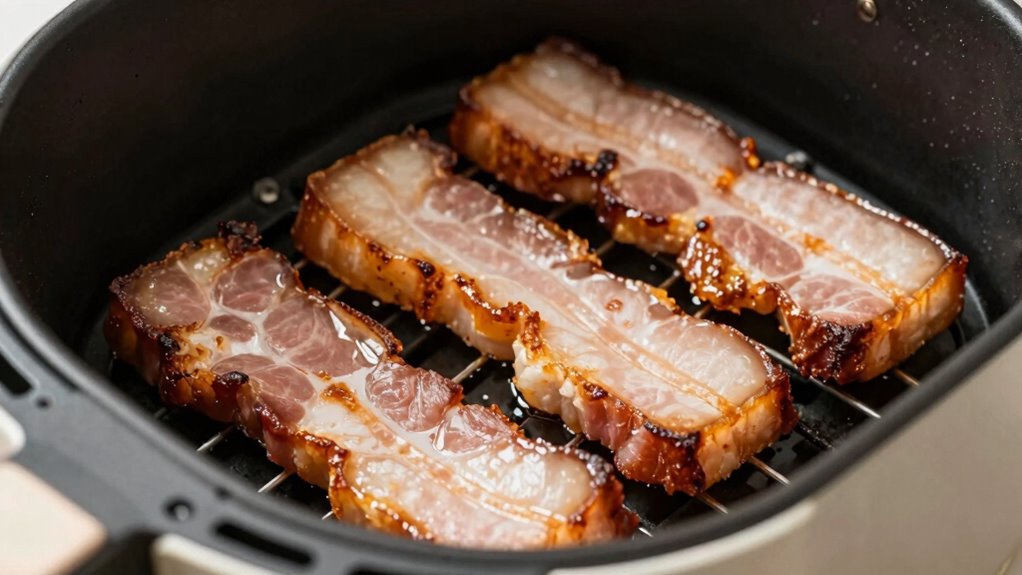
One common pitfall when cooking pork belly in an air fryer is producing smoke, which can be caused by excess fat and oil dripping onto the heating element. To prevent this, carefully select your pork belly seasoning to avoid extra oil, and consider using air fryer accessories like a drip tray.
Here are some tips:
- Trim excess fat from the pork belly before seasoning.
- Use a rack or elevated tray to keep drippings away from the heating element.
- Avoid overcrowding the basket to ensure proper airflow.
- Use a paper towel to pat dry the pork belly for less splatter.
Following these steps helps reduce smoke and keeps your air fryer clean. Proper preparation with the right accessories ensures you enjoy crispy pork belly without smoke drama.
How to Clean and Maintain Your Air Fryer After Cooking Pork Belly
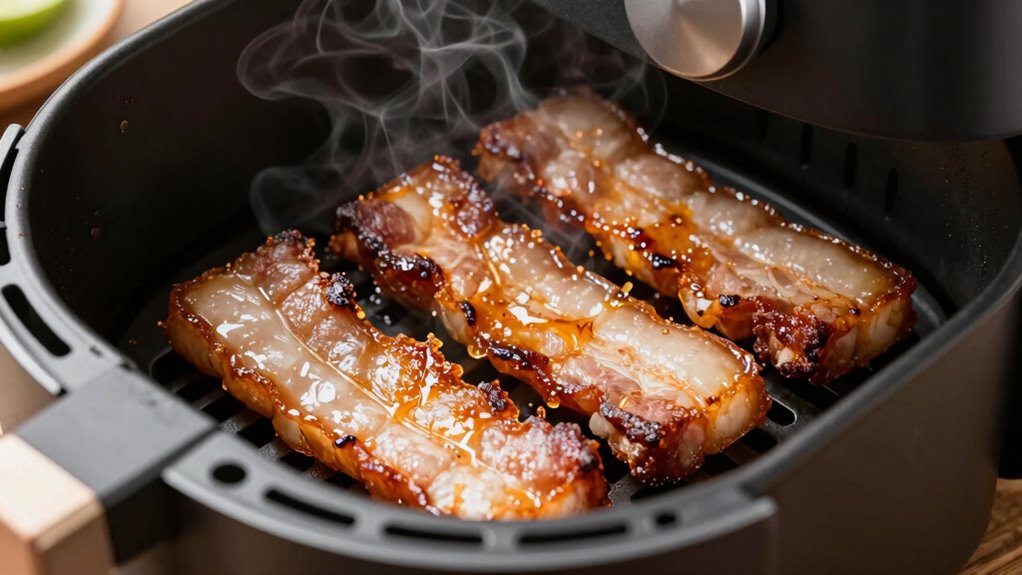
After cooking pork belly in your air fryer, it’s important to clean it thoroughly to keep it functioning ideally and prevent lingering odors. Proper air fryer cleaning helps with grease management, ensuring no residues affect future dishes. Start by unplugging and letting it cool. Remove the basket and tray, then wash them with warm, soapy water. Use a non-abrasive sponge to scrub away grease buildup. For stubborn spots, soak parts in hot water first. Wipe down the interior with a damp cloth, avoiding harsh cleaners. Regular maintenance extends your air fryer’s lifespan and keeps it smelling fresh. Here’s a quick guide:
| Step | Action | Tips |
|---|---|---|
| Disassemble | Remove basket and tray | Wash immediately |
| Clean surfaces | Wipe interior and exterior | Use gentle cleaners |
| Grease management | Clear grease from crevices | Use soft brush if needed |
| Dry & reassemble | Ensure everything’s dry | Reassemble for next use |
Flavor Variations and Ideas for Your Air Fryer Pork Belly
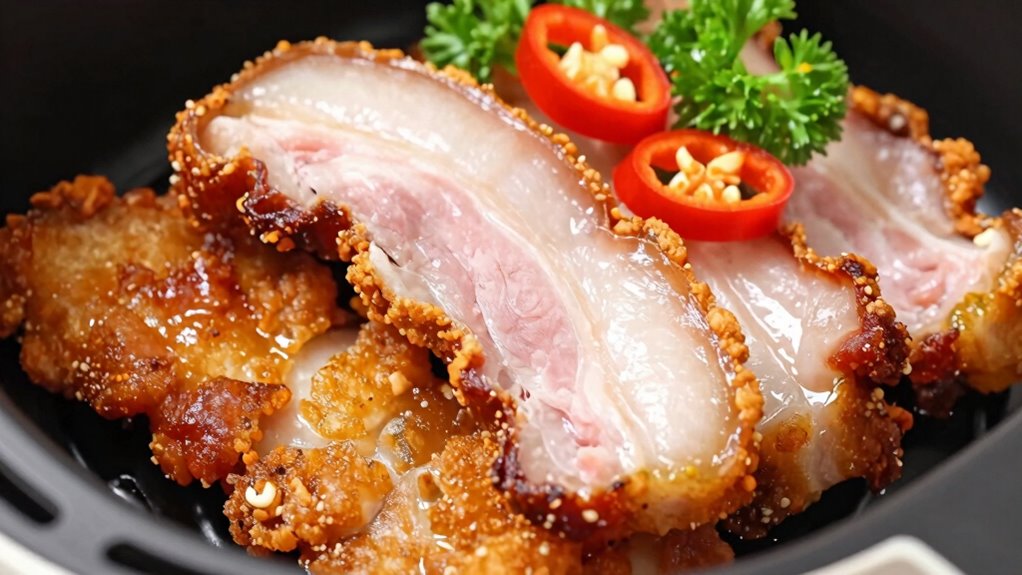
Enhancing the flavor of your air fryer pork belly is easy with a variety of seasoning and marinade ideas. You can experiment with spice rubs to add depth and heat, or brush on sauce pairings for a glossy, flavorful finish. Consider using a sweet and spicy glaze, teriyaki sauce, or a tangy barbecue sauce to elevate your dish. For a savory touch, try a garlic and herb marinade or a Asian-inspired soy and ginger mix. Here are some ideas:
Boost your air fryer pork belly with flavorful spice rubs, tangy marinades, or sweet glazes to elevate every bite.
- Spice rubs with paprika, cumin, and chili powder
- Honey mustard glaze for sweetness and tang
- Teriyaki marinade for umami richness
- BBQ sauce for smoky flavor
Mix and match these options to customize your pork belly to your taste.
Frequently Asked Questions
Can I Use Foil or Parchment Paper to Reduce Smoke?
Yes, you can use foil alternatives like parchment paper or a silicone mat to reduce smoke, but they may not be as effective as a cooking rack. Placing a cooking rack inside your air fryer allows excess fat to drip away, minimizing smoke. Avoid covering the entire basket with foil, as it can block airflow. Properly draining fat and using a rack helps render pork belly fat without smoke drama.
What Temperature Is Best for Rendering Fat Without Burning?
Set your air fryer to around 275°F (135°C) to gently render fat without burning or smoke. Think of it as a slow dance, where the pork belly waltzes to a perfect temperature without setting off smoke alarms. This cooking temperature balances fat melting and smoke prevention, giving you crispy skin and tender meat. Keep an eye on it, and enjoy a smoke-free, flavorful pork belly experience.
How Long Should I Cook Pork Belly for Optimal Crispiness?
You should cook pork belly for about 20 to 25 minutes in your air fryer to achieve ideal crispiness. Keep an eye on the cooking duration to maintain a perfect crispiness balance—too long, and it may burn; too short, and it won’t be crispy enough. Turn the pork belly halfway through for even crispiness, and check regularly near the end to avoid overcooking.
Is It Necessary to Preheat the Air Fryer Before Cooking?
Think of preheating as setting the stage for a perfect performance—you’ll get better results. Preheating benefits include ensuring heat consistency, which helps your pork belly cook evenly and crisply. It’s usually necessary for achieving ideal texture, especially with fattier cuts. By preheating your air fryer, you prevent uneven cooking and reduce the risk of smoke or undercooked spots, giving you a beautifully cooked, crispy pork belly every time.
Can I Reuse Rendered Fat for Other Recipes?
Yes, you can reuse rendered fat for other recipes. Reusing rendered fat enhances flavor, adding richness to dishes like sautés or roasted vegetables. Strain the fat to remove impurities and store it in an airtight container in the fridge. Keep in mind, reusing fat may alter its flavor over time, so use it within a week for the best taste and quality.
Conclusion
Think of your air fryer as a delicate dance partner—when you handle it with care, it leads you to perfectly crispy, juicy pork belly without the smoke. By following these tips, you’ll master the art of fat rendering and keep your kitchen smoke-free. With patience and practice, you’ll turn this kitchen gadget into your trusty chef’s assistant, creating deliciously crispy pork belly that’s as satisfying as a well-choreographed dance.