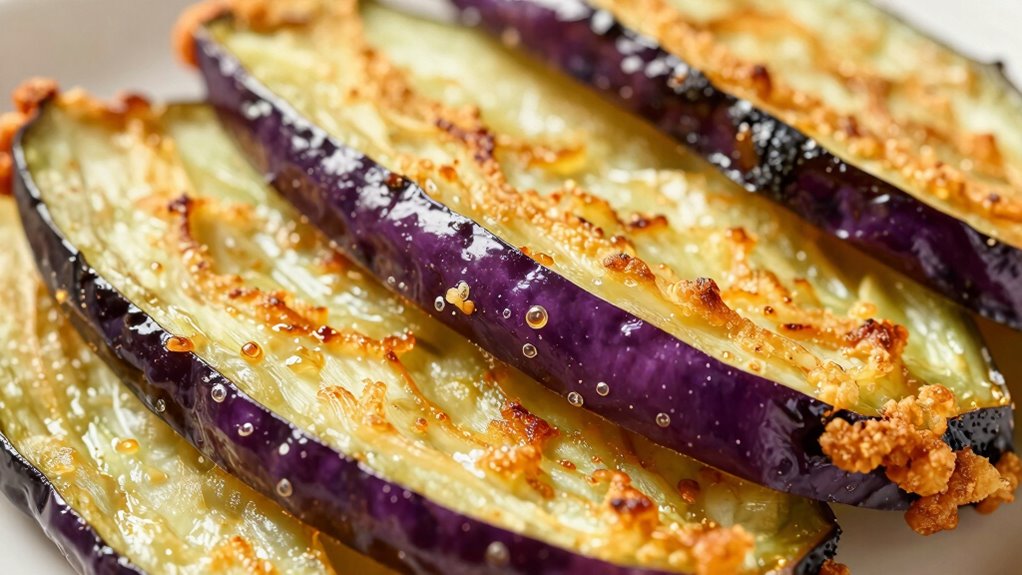

To fix spongey, waterlogged eggplant in your air fryer, start by selecting fresh, firm slices and salt them for 30 minutes to draw out excess moisture. Rinse and dry thoroughly before coating with oil and breadcrumbs. Cook at around 375°F for 15-20 minutes, flipping halfway. Proper prep, cooking techniques, and tips for storing and reheating can help achieve crispy, delicious results—keep going to discover all the secrets to perfect air-fried eggplant.
Key Takeaways
- Salt eggplant slices for 30 minutes to draw out excess moisture and prevent sogginess.
- Rinse and thoroughly dry slices before coating and air frying for crispier texture.
- Use a light oil coating and breadcrumbs or panko to promote browning and crunch.
- Avoid overcrowding the air fryer basket to ensure even cooking and crispy results.
- Flip or shake the eggplant halfway through cooking to enhance crispness and reduce sponginess.
Why Does Eggplant Turn Spongey When Air Fried?
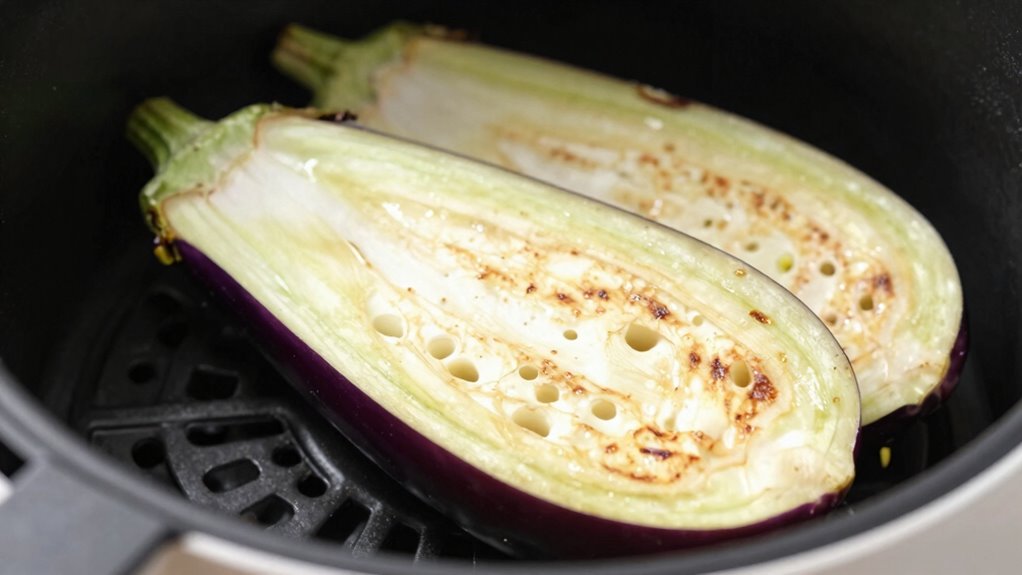
Eggplant often turns spongy when air fried because it tends to absorb a lot of moisture during the cooking process. This excess moisture affects the eggplant texture, making it soft and waterlogged. When you air fry, the high heat causes the moisture inside the eggplant to turn to steam, but if the moisture isn’t properly managed, it gets trapped, resulting in a spongy feel. Proper moisture retention is essential for achieving a better texture, but eggplant naturally absorbs liquids easily. Without pre-treatment, the moisture inside can cause the flesh to become overly soft and soggy. To prevent this, you need to control moisture absorption during preparation, ensuring the eggplant retains just enough moisture for a tender, crispy outcome instead of a spongy mess. Understanding food properties can help you better manage moisture levels and improve your cooking results.
How to Prepare Eggplant for Crispy Results
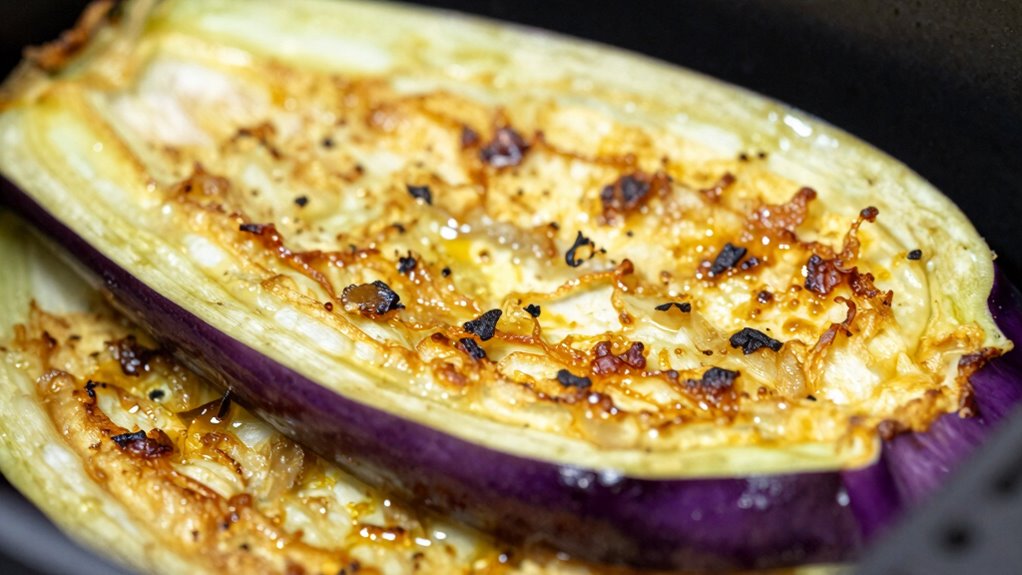
To achieve crispy eggplant results, proper preparation is essential. First, select fresh eggplant with firm flesh and vibrant color to enhance its flavor and nutritional benefits. Slice it evenly to ensure uniform cooking. Salting the slices for 30 minutes helps draw out excess moisture, preventing sogginess. Rinse and pat dry thoroughly. Lightly coat the slices with oil to promote crispiness without excess fat. Use a coating of breadcrumbs or panko for extra crunch. Proper preparation techniques can make a significant difference in the final texture of your eggplant. Additionally, understanding the contrast ratio helps in choosing the right cooking method to achieve the desired texture and appearance. Applying the correct moisture removal techniques is critical for a crispy exterior. Ensuring proper moisture control during preparation can lead to better results and prevent sogginess. Proper temperature control during cooking is also crucial to achieve the optimal crispy texture. Here’s a quick guide:
| Step | Purpose | Tips |
|---|---|---|
| Slice evenly | Ensure uniform cooking | Use a sharp knife |
| Salt & drain | Remove moisture, prevent soggy | Wait 30 mins, rinse, dry |
| Oil coating | Promote crispness | Light, even application |
| Breading | Add crunch | Use panko or crushed chips |
| Final prep | Ready for air frying | Avoid overcrowding |
Proper prep enhances eggplant flavor and maximizes its nutritional benefits.
What’s the Best Temperature and Time for Perfect Eggplant?
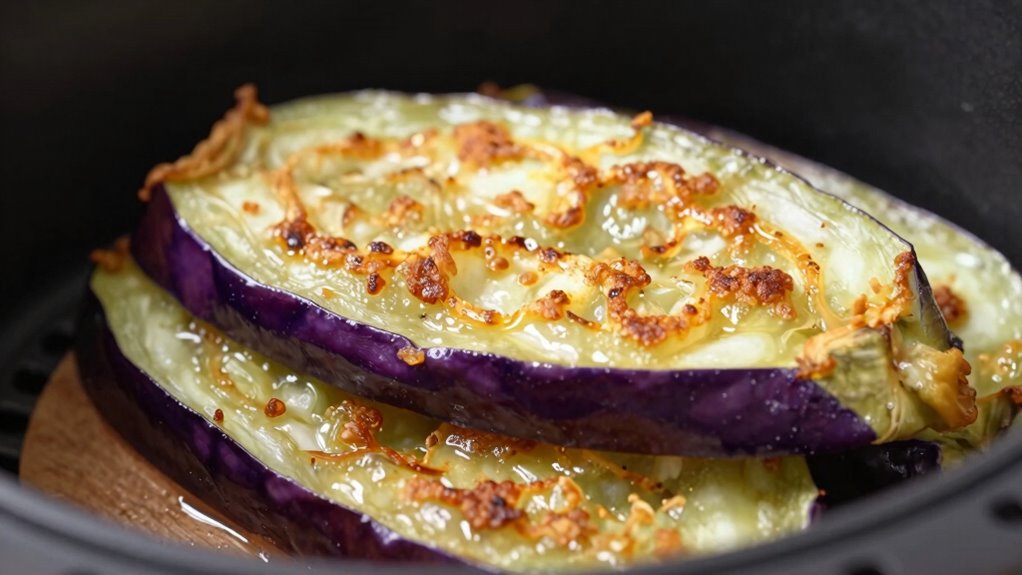
Getting the perfect crispy eggplant starts with choosing the right temperature and cooking time. For the best results in your air fryer, set the oven temperature to around 375°F (190°C). This guarantees the eggplant cooks evenly without burning. Typically, a cooking time of 15 to 20 minutes works well, but it depends on the thickness of your slices. Shake or flip the eggplant halfway through to promote even crispiness. Keep an eye on it, as thinner slices may need less time, while thicker pieces might require a few extra minutes. Adjusting the oven temperature slightly can help you achieve that golden-brown exterior without overcooking. Consistent temperature and timing are key to perfect, crispy eggplant every time. Proper cooking technique can also help prevent sogginess and ensure a satisfying crunch.
How to Use Breading and Coatings for Crispy Eggplant
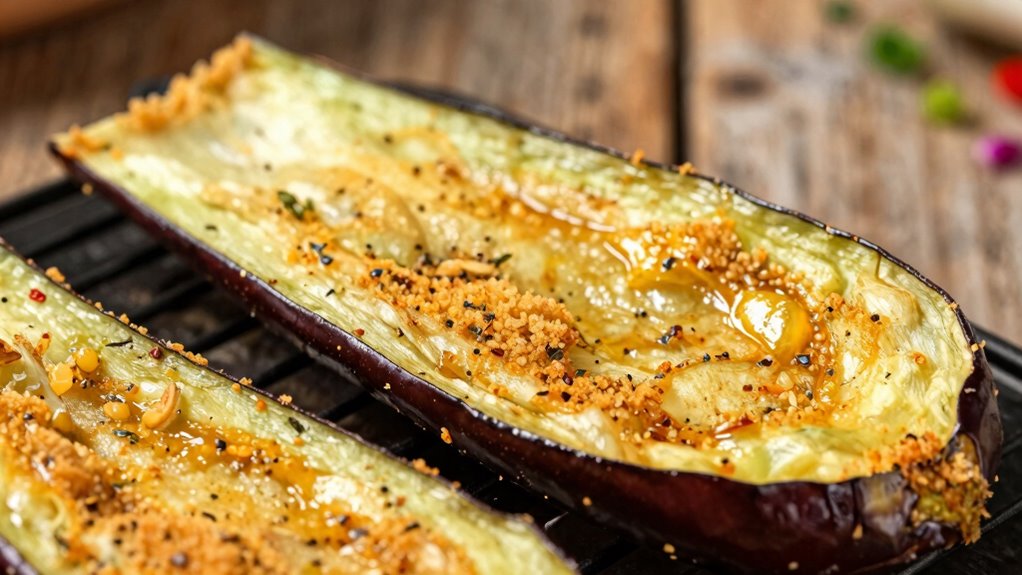
Using the right breading and coatings is essential for achieving that irresistible crispy exterior on your eggplant. To do this, experiment with different breading techniques, such as dredging in flour, dipping in egg wash, then coating with breadcrumbs or panko for extra crunch. You can also try coating variations like crushed cornflakes, Parmesan cheese, or seasoned breadcrumbs to add flavor and texture. Make sure to press the coating firmly onto the eggplant slices so they stick well. For an even crisp, avoid overcrowding the air fryer basket, and spray the coated eggplant lightly with oil before cooking. This simple step helps develop a golden, crispy crust that complements the tender interior perfectly. Incorporating proper breading techniques and tips can help you achieve consistent, satisfying results every time. Additionally, ensuring your breading adheres well to the eggplant can prevent the coating from falling off during cooking. Using a light coating of oil can further enhance browning and crispiness, leading to a more delicious final product. To optimize the crispiness, consider preheating the air fryer to ensure even cooking and browning.
Why Salting and Draining Eggplant Matters
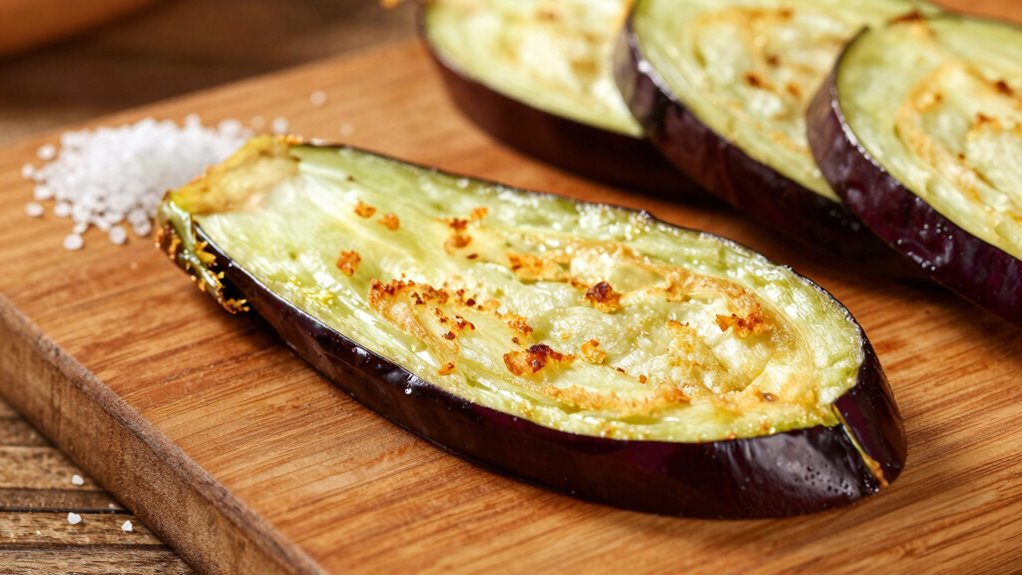
Salting and draining eggplant helps remove excess moisture, which is key to achieving crispy, well-cooked slices. During the salting process, you sprinkle salt on the cut eggplant and let it sit. This draws out moisture through osmosis, ensuring moisture removal from the flesh. Removing this extra water prevents the eggplant from becoming soggy or spongy when cooked. By draining the salt and liquid afterward, you create a drier surface that crisps up better in the air fryer. Skipping this step can lead to uneven cooking and a less desirable texture. Taking time to salt and drain your eggplant ensures a crisp exterior and tender interior, giving you a more satisfying, professional-quality result.
Common Mistakes That Make Eggplant Soggy or Chewy: And How to Avoid Them
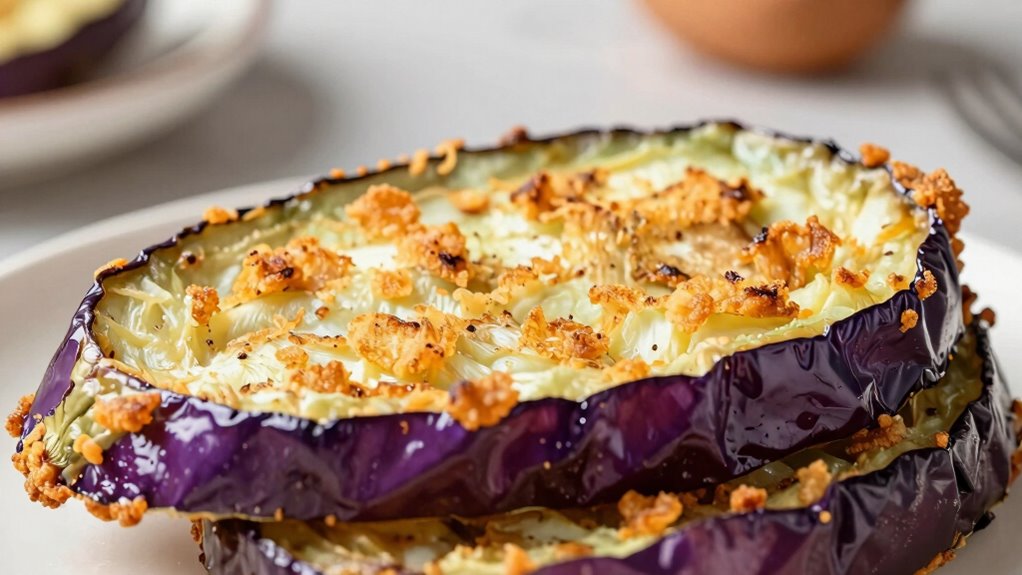
One common mistake that leads to soggy or chewy eggplant is skipping the salting and draining process. Without this step, excess moisture and bitterness remain, dulling the eggplant flavor and causing uneven texture. Additionally, choosing the wrong eggplant variety, like larger, more watery types, can intensify these issues. To avoid sogginess, select firm, smaller eggplant varieties such as Japanese or Asian types. Proper salting and draining help remove excess water, ensuring a crisp finish. Here’s a quick comparison:
| Eggplant Variety | Best for Crispy Texture | Notes |
|---|---|---|
| Japanese | Yes | Less watery, tender flesh |
| Globe | Less ideal | More watery, thicker skin |
| Chinese | Yes | Firm, less bitter |
| Italian | Moderate | Slightly more bitter |
| Small round | Yes | Compact, fewer seeds |
Understanding proper preparation techniques is essential for achieving the desired texture and flavor in your eggplant dishes. Incorporating moisture control methods can significantly improve the final result. For example, applying adequate salting can help draw out moisture more effectively. Avoid sogginess by paying attention to eggplant type and prep, and consider proper cooking techniques to enhance texture and flavor.
Tips for Serving and Storing Air-Fried Eggplant to Keep It Crispy

After preparing your eggplant properly, the next step is to serve and store it in a way that keeps it crispy and delicious. To maintain that crunch, let it cool completely before storage, and keep it in an airtight container or loosely covered in foil. When reheating, use the air fryer for a few minutes to restore crispiness. For serving, focus on appealing presentation tips, such as layering eggplant slices with fresh herbs or drizzling with a flavorful sauce. Pair your eggplant with complementary flavors like garlic, lemon, or spicy dips for added appeal. Properly stored and thoughtfully presented, your air-fried eggplant will stay crispy longer and look as tempting as it tastes, making every bite satisfying. Proper food storage is essential to preserving texture and flavor over time. Incorporating food preservation techniques can further extend the freshness and crispiness of your leftovers, ensuring you enjoy them at their best. Additionally, choosing the right storage containers can help prevent moisture loss and maintain optimal food freshness.
Frequently Asked Questions
Can I Use Different Eggplant Varieties for Air Frying?
Yes, you can use different eggplant varieties for air frying, but some are more suitable than others. For best air fryer suitability, choose smaller, firmer varieties like Japanese or Italian eggplants, which hold their shape and texture well. Avoid large, spongy types like Globe eggplants, as they tend to become mushy. Experimenting with various varieties lets you find the perfect balance for crispy, tender results.
Is It Better to Peel Eggplant Before Air Frying?
Peeling produces prettier, plumper portions, but keeping the skin preserves beneficial nutrients and adds textural interest. If you prefer a tender, less bitter bite, peel the eggplant before air frying. However, if you want maximum flavor and fiber, leave the skin intact—just slice and season. Ultimately, peeling benefits depend on your texture preference and nutritional priorities, so choose based on your desired dish and dietary desires.
How Do I Prevent Eggplant From Sticking to the Air Fryer Basket?
To prevent eggplant from sticking to your air fryer basket, spray it with non-stick spray before placing the slices inside. For extra protection, line the basket with parchment paper, ensuring it’s cut to fit well without blocking airflow. These steps help prevent sticking, make cleanup easier, and keep your eggplant crispy. Remember to avoid overcrowding, so hot air circulates evenly and prevents sticking altogether.
Can I Cook Frozen Eggplant in the Air Fryer?
Yes, you can cook frozen eggplant in the air fryer. Just follow some air fryer tips: preheat your basket, don’t overcrowd, and shake halfway through. For best results, toss the frozen eggplant with a bit of oil and seasoning before cooking. Keep the temperature around 375°F and cook for 10-15 minutes. This method helps avoid a soggy, spongey texture and guarantees crispy, evenly cooked eggplant.
What Are Alternative Coatings for Gluten-Free Crispy Eggplant?
You can try using gluten-free breadcrumbs or a rice flour coating for crispy eggplant. Gluten-free breadcrumbs add crunch and flavor, while a rice flour coating creates a light, crispy texture. Simply dip your eggplant slices in beaten egg or a dairy-free substitute, then coat them evenly with either option before air frying. These alternatives help achieve a delicious, crispy crust without gluten, enhancing your eggplant dish.
Conclusion
Think of air-fried eggplant like a delicate butterfly emerging from its cocoon — with the right prep and technique, it transforms from spongey to crispy, beautiful, and satisfying. By salting, controlling temperature, and using the right coatings, you’re guiding it to its perfect form. So, trust the process, avoid shortcuts, and soon you’ll enjoy a golden, crispy masterpiece that’s as delightful as a well-told story.