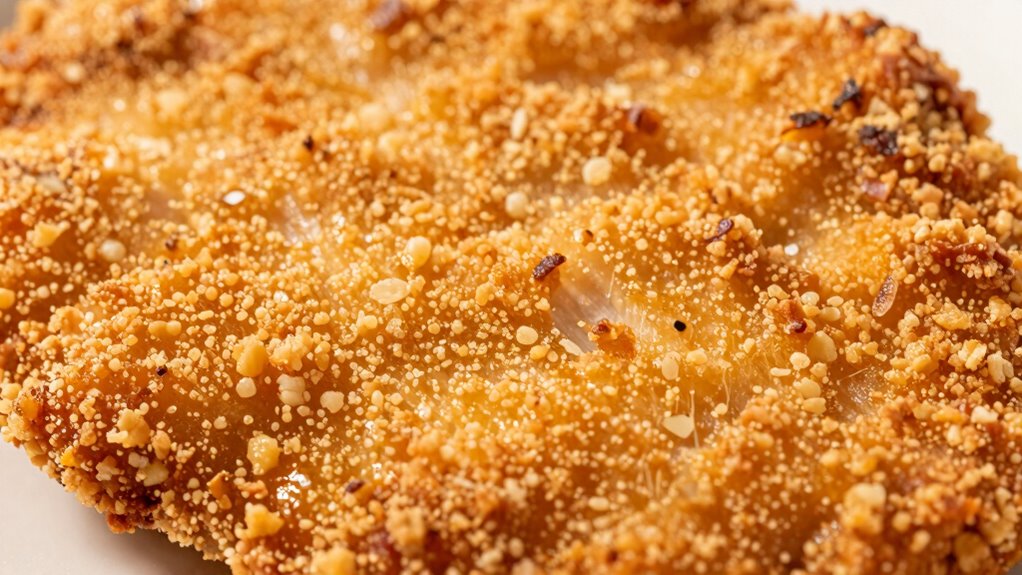

To get a crispy, well-adhered breaded cutlet, start by thoroughly drying the meat with paper towels, then let it sit uncovered in the fridge for 15-30 minutes. Use a three-step coating—flour, egg wash, then breadcrumbs or panko—pressing each layer gently but firmly to secure it. Fry at the right temperature (350-375°F) and handle carefully to keep the coating intact. For more tips on perfecting your crust, keep exploring these techniques.
Key Takeaways
- Thoroughly dry the meat surface and chill unfinished breaded cutlets to improve adhesion and prevent coating slip during frying.
- Use a three-step breading process: flour, egg wash, then breadcrumbs or panko, pressing firmly for even, secure coverage.
- Double coat the cutlet with breading layers to create a sturdier, more durable crust that resists falling off.
- Maintain oil temperature at 350-375°F and avoid flipping too early to ensure crispy, well-adhered coating.
- Rest coated cutlets before frying and reheat properly afterward in the oven or air fryer to preserve crispness.
Why a Crispy, Well-Adhered Coating Matters for Your Cutlets
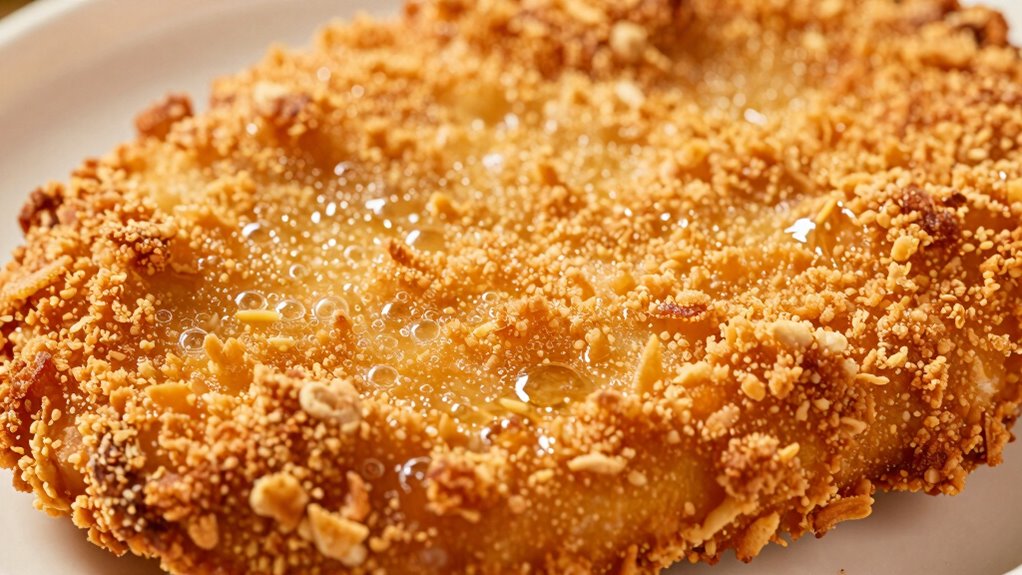
A crispy, well-adhered coating is essential because it enhances the texture and flavor of your cutlets, making them more enjoyable to eat. Achieving the right breading consistency ensures that the coating sticks properly without falling off during cooking. When your breading is too thick or uneven, it can become soggy or separate, diminishing the overall crunch and taste. A consistent coating creates a barrier that locks in juices and flavors, resulting in a more flavorful bite. Plus, a well-adhered crust provides a satisfying crunch that elevates the dish’s appeal. Proper breading techniques not only improve the appearance but also maximize flavor enhancement, making every bite delicious and satisfying. Ensuring uniform coating helps prevent the crust from splitting or peeling during frying, which is key to achieving perfect, crispy cutlets every time. Using the right breading adhesion techniques can significantly improve your results and ensure the coating stays intact throughout cooking, especially when employing proper frying methods to maintain crispness. Additionally, understanding the role of coating thickness can help you achieve a more durable and crispy crust. Paying attention to temperature control during frying also plays a crucial role in maintaining the integrity of the coating.
Common Reasons Your Breaded Coating Falls Off
Your breaded coating might fall off if you don’t dry the surface thoroughly before breading, causing the coating to slip off. Uneven application of the breading can also create weak spots that don’t stick well during cooking. Additionally, using the wrong cooking technique, like rushing the process or not frying at the right temperature, can cause the coating to loosen and come off. Moreover, neglecting attention to detail during preparation can lead to inconsistencies that make the coating more likely to fall off. Ensuring proper airflow around the unit can help maintain consistent cooking conditions and prevent uneven frying that could loosen the coating. Incorporating proper temperature control can further enhance adhesion and prevent the coating from detaching. Proper food safety practices are essential to ensure the coating stays firmly attached throughout the cooking process. Also, using the right carrier oils for any additional coatings or treatments can improve the adhesion of breading by maintaining surface moisture.
Insufficient Drying Process
When the surface of the meat isn’t properly dried before breading, the coating is more likely to slip off during frying. An inadequate drying process leaves excess moisture, preventing the coating from adhering firmly. To guarantee proper moisture removal, follow these steps:
- Pat the meat thoroughly with paper towels to eliminate surface moisture.
- Let the meat sit uncovered in the refrigerator for 15-30 minutes to dry out further.
- Avoid adding wet ingredients or marinades immediately before breading, as these increase moisture levels.
- Ensuring the surface is dry also helps achieve an even and smooth finish, reducing the risk of coating failure. Proper surface preparation is essential for a crisp and secure coating.
- Using a drying technique that effectively removes moisture is crucial for optimal adhesion and texture.
- Recognizing the importance of moisture control can make a significant difference in the final result. Incorporating proper drying methods is key to preventing the coating from falling off.
Uneven Coating Application
Uneven coating application often occurs when the breading isn’t applied consistently or pressed firmly enough onto the meat. If your breading varies in thickness, some spots may be too thin, causing the coating to fall off, while others become overly thick, affecting the coating color and texture. To prevent this, guarantee an even layer of breading, pressing firmly to secure it.
| Breading Thickness | Coating Color |
|---|---|
| Too thin | Pale or uneven color |
| Too thick | Darker, uneven patches |
| Inconsistent | Patchy appearance |
| Proper thickness | Uniform color & crunch |
| Excessive pressure | Coating cracks or tears |
Inadequate Cooking Technique
Even if you’ve applied the breading evenly, improper cooking techniques can cause the coating to slip off. First, rushing the cooking process can leave the coating undercooked and fragile. Second, using incorrect seasoning choices or skipping seasoning altogether can weaken the breading’s adhesion. Third, neglecting to preheat your pan or oil leads to uneven heat, causing the coating to loosen or burn. To improve, choose breading alternatives like panko or crushed cornflakes for better crunch and adhesion. Make certain you cook at the right temperature—too high, and the coating burns; too low, and it soaks up oil. Properly preheat your skillet, avoid flipping too often, and give the cutlet enough time to develop a crisp crust that stays intact.
How to Prepare and Dry Your Cutlets for Better Breading
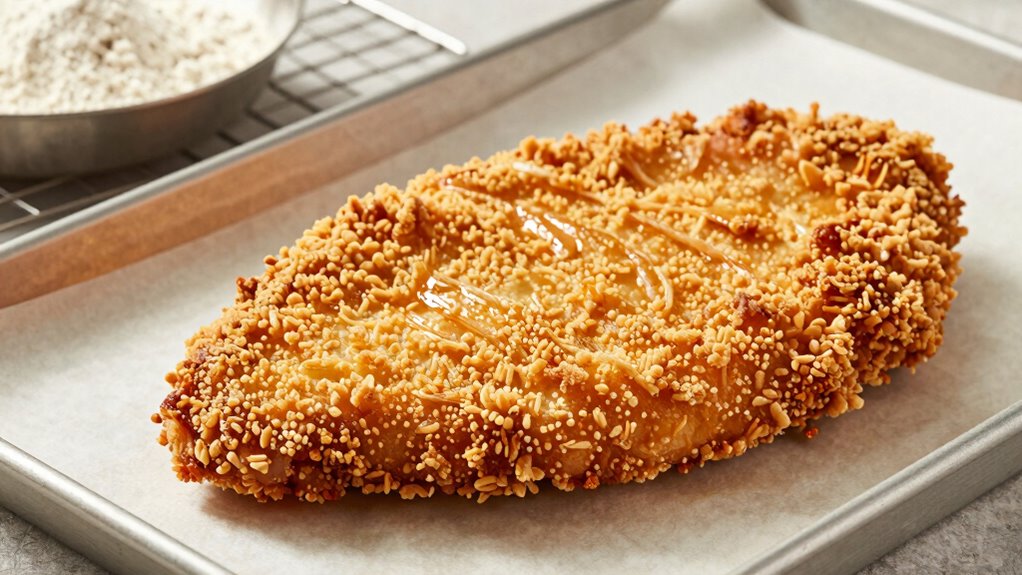
To guarantee your breading sticks properly and turns out crispy, you need to prepare and dry your cutlets thoroughly. Start by applying marinating techniques that incorporate a bit of acid or tenderizer to enhance meat tenderness and improve adhesion. After marinating, pat the cutlets dry with paper towels, removing excess moisture. This step is essential because moisture causes the breading to slip off or become soggy. If your meat is too wet, the coating won’t adhere well or crisp up properly. For best results, let the cutlets air-dry for a few minutes after patting them down. Ensuring your meat is dry and tenderized creates the perfect surface for a crispy, even coating that stays intact during frying. Properly drying your cutlets also helps preserve the quality assessment steps, ensuring a more consistent and professional finish. Additionally, using a kitchen thermometer can help verify that the meat reaches the appropriate temperature, promoting food safety and optimal texture. Paying attention to the surface moisture of the meat is critical to achieving that desired crunch and preventing the coating from falling off. Incorporating appliance maintenance practices such as ensuring your equipment is clean and functioning properly can further contribute to consistent cooking results and food safety.
Choosing the Best Breading Ingredients for Crispy Cutlets
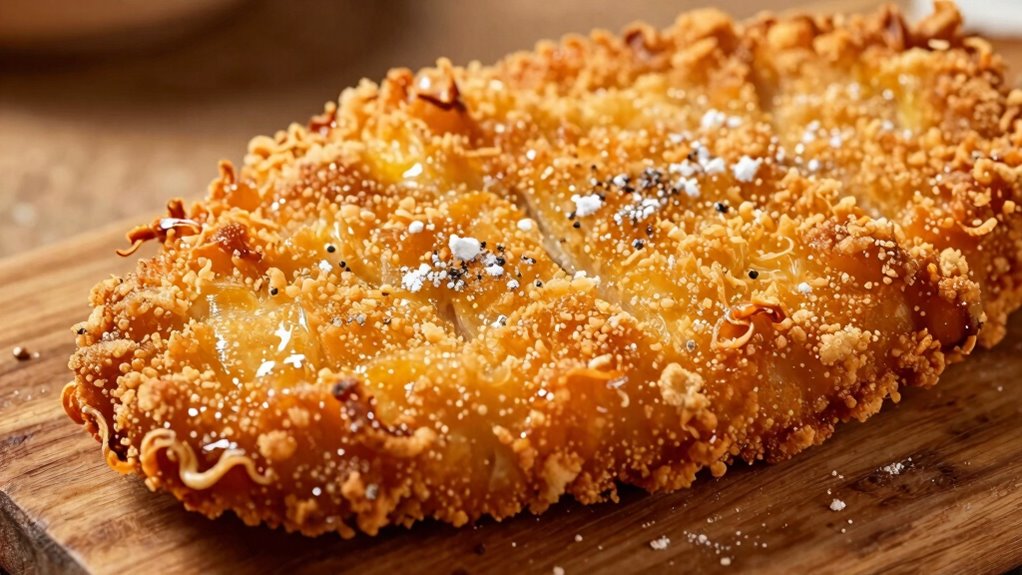
When selecting your breading ingredients, consider whether fresh or dried options suit your desired texture and flavor. Choosing the right coating, like panko or seasoned flour, can make a big difference in crispiness. Don’t forget to add seasonings that enhance the taste without compromising the crunch. Additionally, proper ventilation considerations can help maintain the ideal environment for achieving optimal crispiness and preventing sogginess.
Fresh vs. Dried Breading
Choosing between fresh and dried breading ingredients can considerably impact the crispiness of your cutlets. Fresh ingredients often provide moisture that can make the coating less crispy but allow for better seasoning enhancements. Dried options typically create a crunchier exterior and help the coating adhere better, reducing the risk of falling off. To optimize your breading:
- Use dried breadcrumbs or panko for maximum crunch and durability.
- Incorporate seasoning enhancements like herbs and spices into dried breading for flavor.
- Consider breading alternatives such as crushed crackers or cornflakes for added texture and crispness.
Both fresh and dried ingredients have their advantages, but dried options generally result in a longer-lasting, crunchier coating that stays intact during frying. Choose based on your desired texture and flavor profile.
Ideal Breading Coatings
Selecting the right breading ingredients is essential for achieving that perfect crispy exterior. Herb combinations like thyme, rosemary, and parsley add flavor and aroma, elevating your cutlets without overpowering them. For a crunchier texture, breading alternatives such as panko breadcrumbs or crushed cornflakes work better than traditional flour. These options create a light, airy coating that crisps nicely when fried. You can also mix in grated Parmesan or ground nuts to add extra flavor and crunch. Keep in mind, the key is balancing moisture absorption and crispiness—using ingredients that adhere well yet stay crunchy. Experimenting with herb mixes and alternative coatings allows you to customize your crust for ideal texture and taste, ensuring your cutlets stay crispy and delicious every time.
Seasoning for Flavor
Adding the right seasonings to your breading not only enhances flavor but also complements the crispy texture of your cutlets. To achieve this, choose seasoning blends that balance well with your protein. First, consider using herbs like thyme or oregano to add aromatic depth. Second, incorporate flavor enhancers such as garlic or onion powder for a savory boost. Third, experiment with spices like paprika or cayenne to introduce a subtle heat or smoky note. These ingredients elevate your breading’s taste profile without overwhelming the crispiness. Remember, well-chosen seasoning blends create harmony between flavor and texture, making each bite more satisfying. Keep it simple but impactful by focusing on ingredients that enhance rather than mask the natural flavors of your cutlets. Additionally, understanding how to properly season and prepare your ingredients can further improve your cooking results.
How Flour, Egg, and Breadcrumbs Help Your Coating Stick
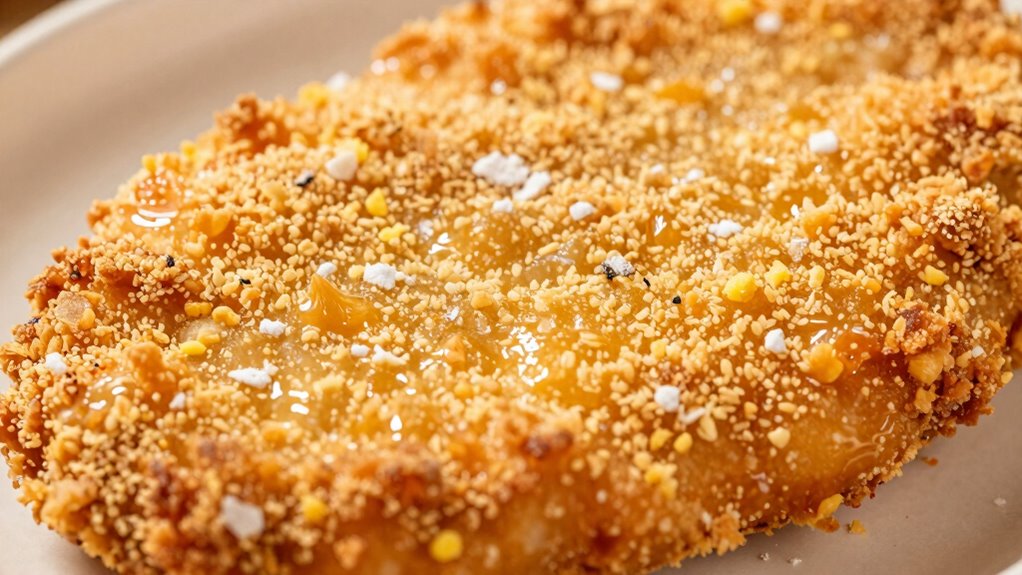
To guarantee your breaded cutlet stays crispy and well-coated, understanding how flour, egg, and breadcrumbs work together is essential. Flour adhesion creates a dry surface that helps the egg stick, forming a sticky layer. The egg acts as a binder, ensuring the breadcrumbs adhere firmly. Breadcrumb texture influences the crunch; finer crumbs create a smoother coating, while coarser crumbs add crunchiness. Combining these elements ensures a durable, crispy crust that won’t fall apart during cooking.
| Ingredient | Role in Coating |
|---|---|
| Flour | Creates a dry surface for adhesion |
| Egg | Binds flour and breadcrumbs together |
| Breadcrumbs | Provide texture and crunch |
| Coating Layer | Must be uniform for even crispiness |
| Texture Focus | Fine vs. coarse impacts final crunch |
The Right Technique for Dipping and Coating Your Meat

Mastering the right technique for dipping and coating your meat guarantees a smooth process and a perfect crust. First, verify your meat preparation is thorough—pat it dry to promote even breading. Next, focus on breading consistency; avoid clumps or runny mixtures that can cause uneven coating. Follow these steps:
- Dip your meat into the egg wash, fully submerging it to create a sticky surface. This step is crucial for proper adhesion of the coating. Using a consistent coating method ensures each piece is evenly coated. Additionally, maintaining a uniform coating thickness helps prevent the coating from slipping off during frying.
- Gently shake off excess, then coat evenly in breadcrumbs, pressing lightly to adhere. Ensuring the breadcrumbs are evenly distributed helps improve overall coating adhesion.
- Repeat if needed for a thicker crust, ensuring each layer is smooth and uniform.
This approach ensures the coating sticks properly without slipping off. Proper technique results in a more consistent breading, leading to a crispier, more appealing cutlet. Ensuring your breading technique is correct helps achieve a reliable and delicious crust every time.
Rest Your Coated Cutlets Before Frying for Better Adhesion

Allowing your coated cutlets to rest before frying helps the breading set firmly and adhere better during cooking. Resting ensures the breading maintains its consistency, preventing it from slipping off when frying. During this time, the coating thickens slightly, creating a more uniform layer that sticks evenly to the meat. This step reduces the chances of uneven or patchy breading, resulting in a crispier, more professional finish. Keep in mind that a consistent breading thickness is key; too thick might lead to uneven cooking, while too thin can cause the coating to fall off. Resting allows the excess moisture to evaporate, helping the breading bond securely. Overall, this simple step makes a significant difference in achieving a durable, crispy crust.
Frying Tips to Keep Your Coating Crispy and Intact
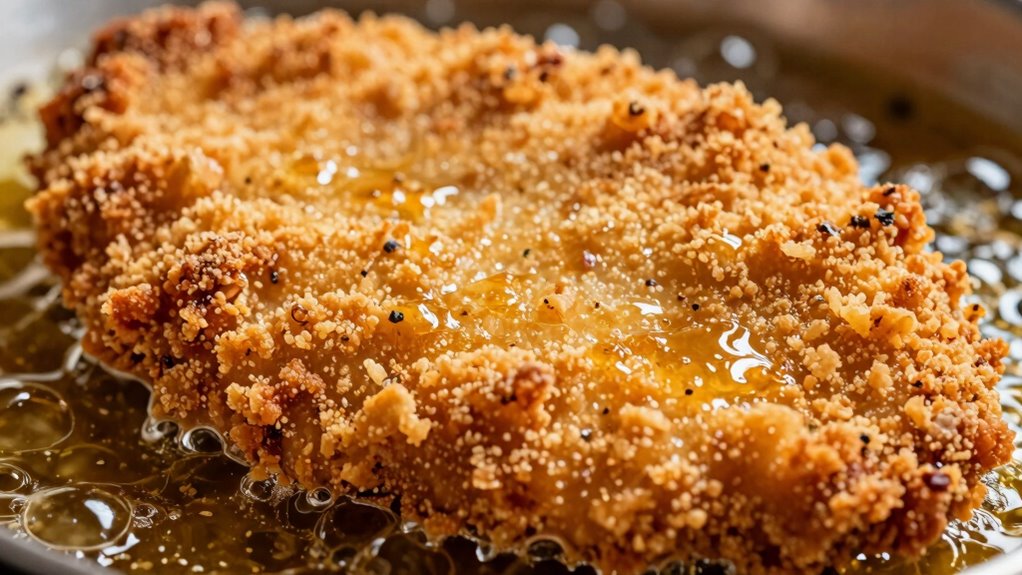
To keep your coating crispy and intact, start with proper breading techniques that make certain of even coverage and adhesion. Make sure your oil is at the right temperature—too hot or too cold can ruin the texture. Maintaining ideal frying temperatures and using the correct breading methods will give you that perfect, crunchy finish.
Proper Breading Techniques
Getting your breaded cutlet crispy and intact starts with proper technique. First, ensure breading safety by rinsing your ingredients and drying them thoroughly to prevent excess moisture. Next, follow these steps:
- Use a three-step coating process: flour, egg wash, then breadcrumbs. This creates a sturdy base and helps the coating stick.
- When making ingredient substitutions, choose dry, well-mixed alternatives to maintain breading adhesion.
- Press the coating firmly onto the meat, avoiding excess, and shake off any loose crumbs before frying.
Optimal Frying Temperatures
Maintaining the right frying temperature is essential for ensuring your breaded cutlets stay crispy and intact. If the oil temperature is too low, your coating absorbs excess oil, becoming soggy. Too high, and the outside burns before the inside cooks. Aim for an oil temperature of 350-375°F (175-190°C). Keep an eye on the frying duration; typically, it takes about 3-4 minutes per side. Use a thermometer to monitor the temperature constantly. Adjust the heat as needed to maintain a steady temperature. Remember, consistent oil temperature results in even cooking and a crispy coating. Here’s a quick guide:
| Oil Temperature | Frying Duration |
|---|---|
| 350°F (175°C) | 3-4 minutes |
| 360°F (182°C) | 3-4 minutes |
| 370°F (188°C) | 3-4 minutes |
| 375°F (190°C) | 3-4 minutes |
| Too high | Burnt coating |
Troubleshooting Soggy or Falling-Off Breadings
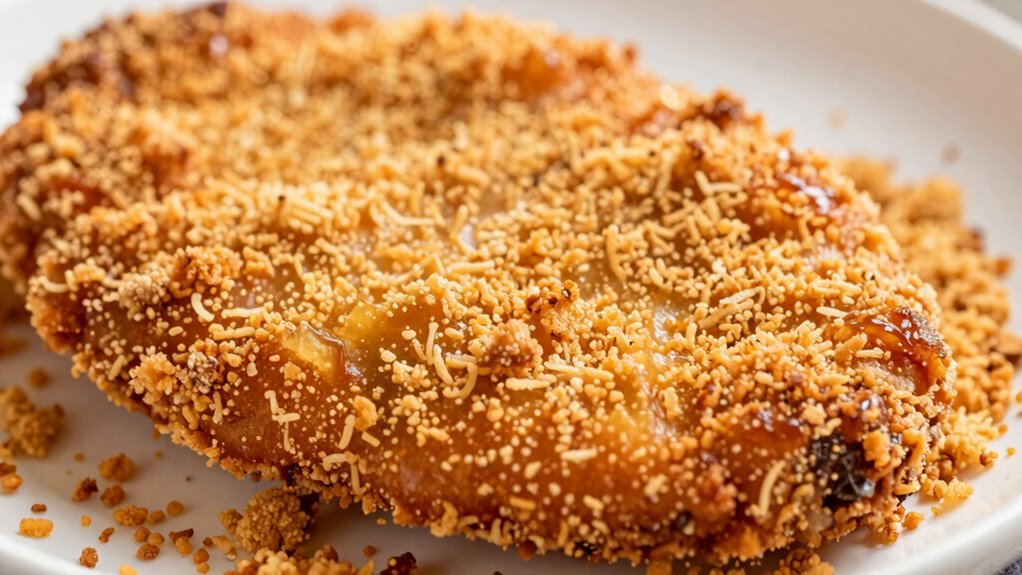
If your breaded cutlets turn out soggy or the coating falls off during frying, the issue often stems from improper preparation steps. To fix this, consider the following:
- Seasoning enhancements: Properly season your meat and dry the surface thoroughly before breading to improve adhesion.
- Alternative breading methods: Use a three-step process—dredge in flour, dip in egg wash, then coat in breadcrumbs—to create a better grip.
- Avoid excess moisture: Ensure the breading is not overly wet or sticky, which can cause sogginess and shedding during frying.
Extra Tips for Extra-Crispy, Long-Lasting Breaded Cutlets
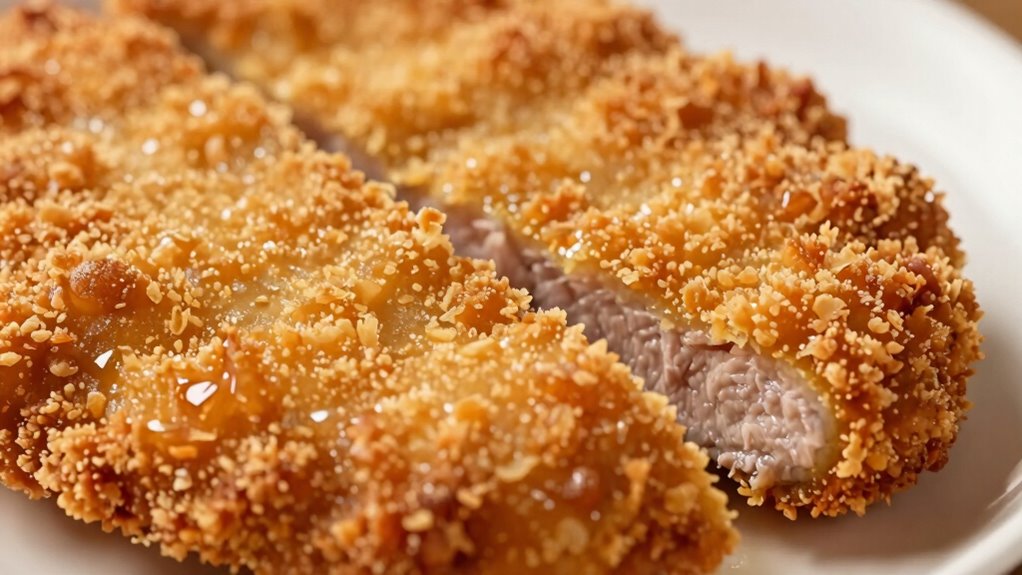
To achieve extra-crispy, long-lasting breaded cutlets, focus on specific techniques that enhance texture and durability. Consider experimenting with breading alternatives like panko or crushed cornflakes, which create a crunchier crust that holds up longer. Applying a double coating—dipping the cutlet in egg wash, then breading, and repeating—builds a thicker, sturdier layer. Once cooked, use proper storage techniques: let the cutlets cool completely before refrigerating, and place them on a wire rack to prevent sogginess. If reheating, opt for the oven or air fryer to restore crispiness without sacrificing texture. These tips help ensure your cutlets remain crispy and flavorful, even after storage, so each bite stays satisfying and delicious.
Frequently Asked Questions
Can I Use Gluten-Free Breadcrumbs for a Crispy Coating?
Yes, you can use gluten-free breadcrumbs for a crispy coating. Gluten-free alternatives like rice flakes, crushed cornflakes, or gluten-free breadcrumb substitutes work well and give a crunchy texture. Just make sure to coat your cutlet evenly and press the coating on firmly. These options help achieve a crispy finish without gluten, making your dish suitable for gluten-sensitive or celiac diets while still delivering that satisfying crunch.
How Can I Prevent the Coating From Falling off During Freezing?
To prevent the coating from falling off during freezing, you should use proper freezing techniques that promote coating adhesion. First, make certain your cutlet is well coated and chilled before freezing. Wrap it tightly in plastic wrap or place it in an airtight container to prevent moisture loss. When ready to cook, don’t thaw; cook directly from frozen to maintain coating integrity and avoid damaging the crispy exterior.
Is Double Coating Necessary for Extra Crunch?
Think of double coating as armor for your cutlet—crispier and more resilient. It’s not strictly necessary, but if you crave that extra crunch, go for it. Alternative cooking methods like air frying or baking can also boost crispiness without doubling up. Don’t forget seasoning tips—adding herbs or spices to your breading elevates flavor and enhances crunch. Try both techniques to discover your perfect balance of crunch and flavor!
What Oils Are Best for Frying Breaded Cutlets?
You should choose oils with a high smoke point for frying breaded cutlets, like canola, peanut, or vegetable oil, to prevent burning and guarantee crispiness. These oils withstand high temperatures without smoking or breaking down, giving you even frying and a crispy crust. Avoid oils with low smoke points, such as olive oil, as they can burn easily and compromise the texture. Always monitor the oil temperature for perfect results.
Can I Bake Instead of Fry for a Crispy Coating?
Yes, you can bake instead of fry for a crispy coating. Baking offers a healthier alternative by reducing oil use while still delivering crunch. To achieve a crispy texture, preheat your oven, use a wire rack, and spray the cutlets lightly with oil. Baking vs frying depends on your health goals, but baking is a great way to enjoy a crunchy, flavorful cutlet with fewer calories and less fat.
Conclusion
Mastering the art of breading guarantees your cutlets stay crispy and delicious, like armor that sticks and shines. When you follow these tips, you’ll turn simple ingredients into a fortress of flavor that doesn’t fall apart. Think of your coating as a loyal shield—strengthened by patience and proper technique. With a little practice, your breaded cutlets will not only stay intact but also impress everyone with their perfect crunch every time.