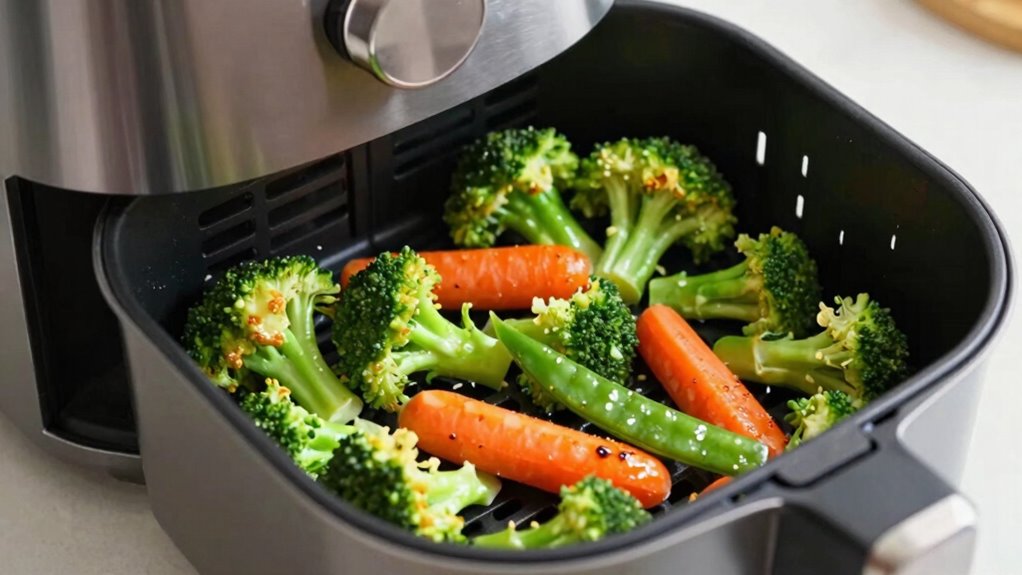

To prevent frozen vegetables from steaming in the air fryer, first dry them thoroughly with paper towels to remove surface moisture. Spread the vegetables in a single layer and avoid overcrowding the basket for even airflow. Toss them with a light coat of oil and season after cooking if needed. Set the air fryer to around 375°F and shake halfway through. For more tips on crispy results, keep exploring how to perfect your frozen veggie air frying technique.
Key Takeaways
- Thoroughly dry frozen vegetables with paper towels or a clean cloth before air frying to remove surface moisture.
- Spread vegetables in a single layer without overcrowding to ensure proper airflow and moisture evaporation.
- Toss vegetables with a light coat of oil to promote crispness and prevent steaming during cooking.
- Cook at around 375°F (190°C), shaking the basket halfway to promote even crisping and moisture release.
- Avoid adding excess liquids or marinade before air frying; season after cooking for better adhesion and texture.

Toshiba Air Fryer Combo 4-in-1 Countertop Microwave Oven, Smart Sensor, Convection, Mute Function, Position Memory 13.6" Turntable, 1.5 Cu Ft, 1000W, Silver, ML-EC42P(SS)
4-in-1 Multifuntional Countertop Microwave One microwave with multi-functions of microwave, air fry, convection, combination cooking (microwave plus convection)...
As an affiliate, we earn on qualifying purchases.
Why Frozen Vegetables Often Turn Soggy in the Air Fryer
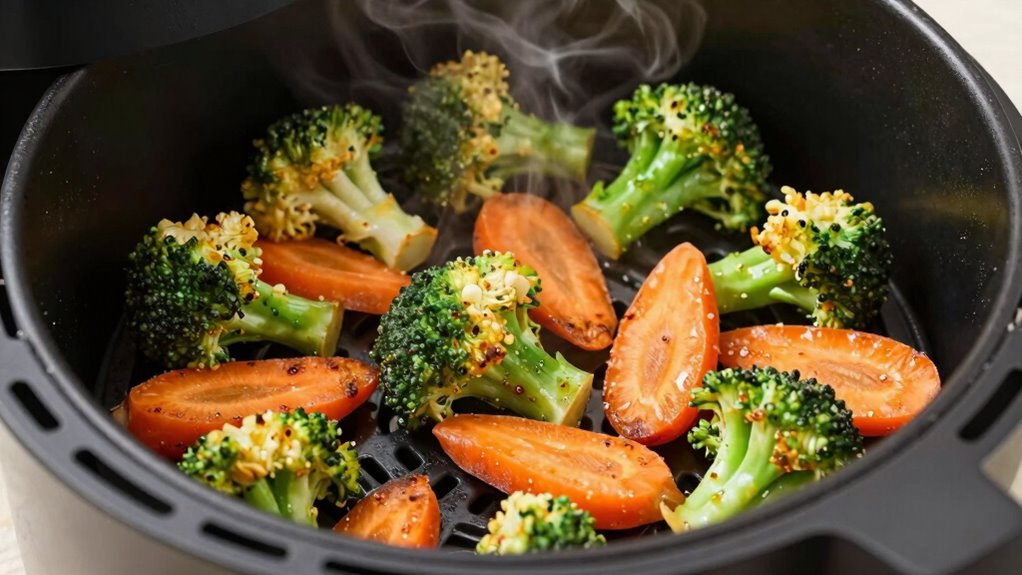
Frozen vegetables often turn soggy in the air fryer because excess moisture from freezing creates steam during cooking. When vegetables are stored too long, they can develop freezer burn, which damages cell walls and causes dehydration. This leads to uneven cooking and increased moisture release as they heat. Additionally, nutrient loss occurs during freezing, making vegetables less firm and more prone to becoming limp and soggy. The moisture trapped inside the frozen veggies turns into steam, preventing them from crisping properly. Instead of achieving a crispy exterior, you’ll end up with soggy, over-moistened vegetables. To avoid this, it’s essential to properly store your vegetables and understand how moisture and freezer burn impact their texture when air frying. Proper storage and understanding moisture content can help maintain their crispness and texture.

TOSHIBA Countertop Microwave Oven Air Fryer Combo, Inverter, Convection, Broil, Speedy Combi, Even Defrost, Humidity Sensor, Mute Function, 27 Auto Menu&47 Recipes, 1.0 cu.ft/30QT, 1000W
Ultimate Versatility: This multi-microwave with 10 power levels is your ultimate kitchen helper. The versatility as a microwave,...
As an affiliate, we earn on qualifying purchases.
How to Prepare Frozen Veggies for Crispy Results
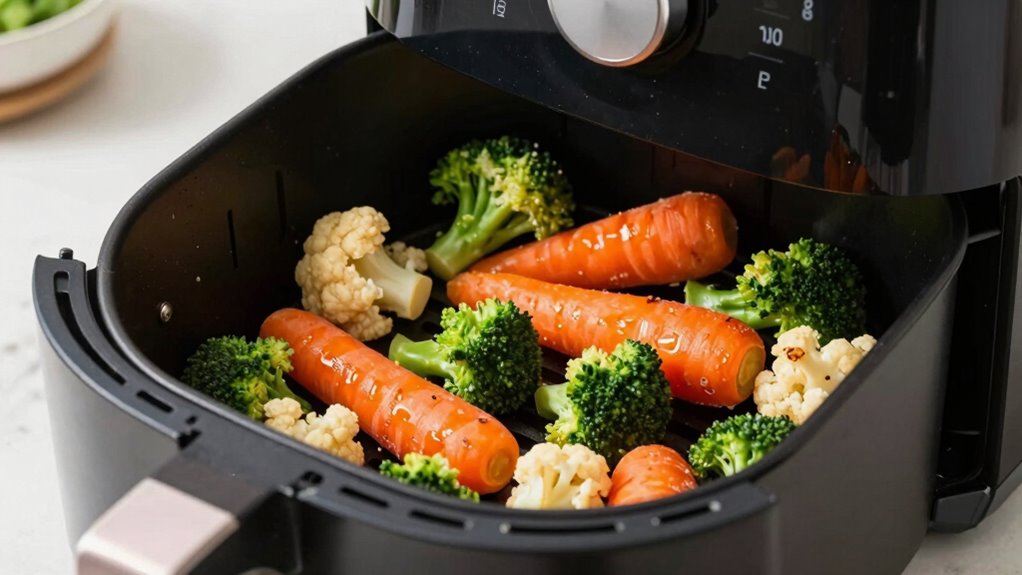
To achieve crispy results when air frying vegetables, proper preparation is key. Start with vegetable prep by spreading your frozen veggies on a paper towel or a clean cloth to remove excess moisture. This helps prevent steaming and promotes crispiness. For seasoning techniques, toss the veggies with a light coat of oil to enhance browning and crunch. Avoid over-seasoning at this stage; keep it simple to let the natural flavors shine. If you like, you can add salt, pepper, or other spices after cooking for better adhesion. Ensuring the vegetables are dry and lightly coated with oil improves airflow and helps achieve that perfect crispy texture. Proper veggie prep and mindful seasoning set the foundation for delicious, crispy air-fried frozen vegetables. Understanding how moisture impacts crispiness can help you fine-tune your preparation for better results. Additionally, airflow and heat distribution are crucial factors that influence how evenly your veggies crisp up during cooking. Being aware of farming tips such as managing moisture and airflow can further enhance your air frying success. Maintaining consistent moisture control throughout the process is essential for achieving optimal crispiness.

TOSHIBA Air Fryer Combo 8-in-1 Countertop Microwave Oven, with Convection, Broil, Odor Removal Mode, 12.4" Position Memory Turntable, Child-Lock, 1.0 Cu.ft, Black Stainless Steel, ML2-EC10SA(BS)
Two-Step Child Lock: This mandatory safety feature for microwaves helps prevent unintended use by younger family members, plesase...
As an affiliate, we earn on qualifying purchases.
Seasoning and Tossing Frozen Vegetables for Air Frying
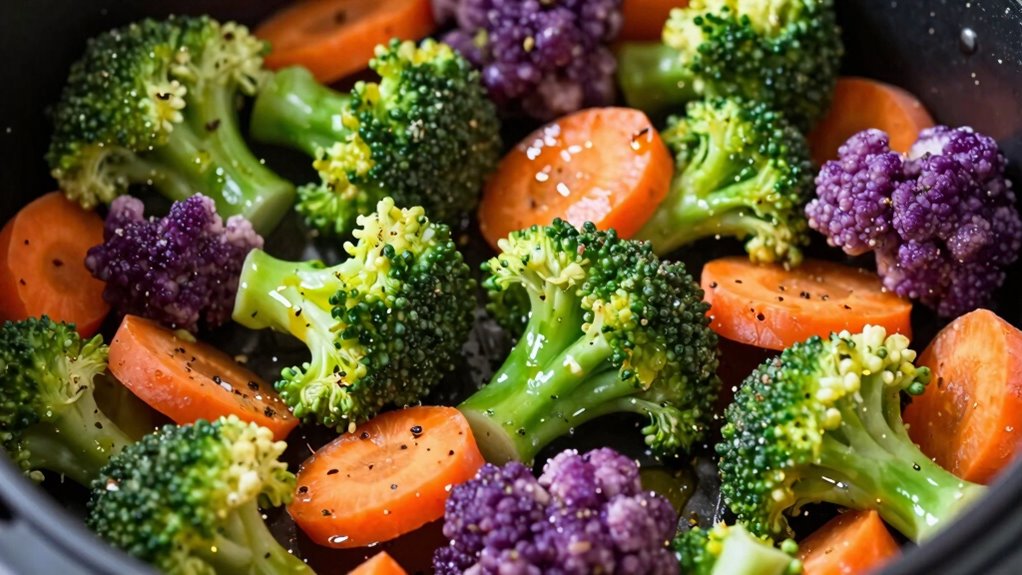
Seasoning and tossing your vegetables before air frying guarantees they’re flavorful and evenly coated. Start by choosing marinade options like olive oil with garlic, lemon juice, or your favorite herbs. These help enhance flavor and improve texture. When flavoring, avoid too much liquid, as excess moisture can cause steaming. Use storage techniques that keep your frozen veggies fresh and prevent freezer burn, like airtight containers or resealable bags. Before tossing, lightly coat the vegetables with oil or marinade, then add spices or flavoring blends. This ensures even coverage and better adherence during cooking. Proper seasoning and tossing not only boost flavor but also help achieve crispy, delicious results without steaming. Always remember to avoid overcrowding the air fryer for even seasoning distribution. Additionally, selecting vegetables that are well-preserved and free from freezer burn helps ensure optimal texture and flavor after cooking quality preservation. Incorporating proper seasoning techniques can further enhance the overall flavor and texture of your air-fried vegetables. To maximize crispiness, make sure to maintain appropriate frying temperatures and shake the basket periodically during cooking. Being mindful of air circulation within the fryer also plays a key role in achieving evenly crisped vegetables. Using the right tools, like a quality mesh basket or perforated tray, can improve airflow and help prevent steaming.

GE 4-in-1 Countertop Microwave Oven, 1.0 Cu Ft, 1050W Convection Microwave with Air Fry & Broil, Compact and Quiet, Stainless Steel, Ideal for Apartments, Dorms & Offices, GCST10A1WSS
THIS MICROWAVE DOES IT ALL: 4‑IN‑1 GE microwave countertop, air fry, convection bake and broil in one compact...
As an affiliate, we earn on qualifying purchases.
Best Air Fryer Settings for Crispy Frozen Veggies
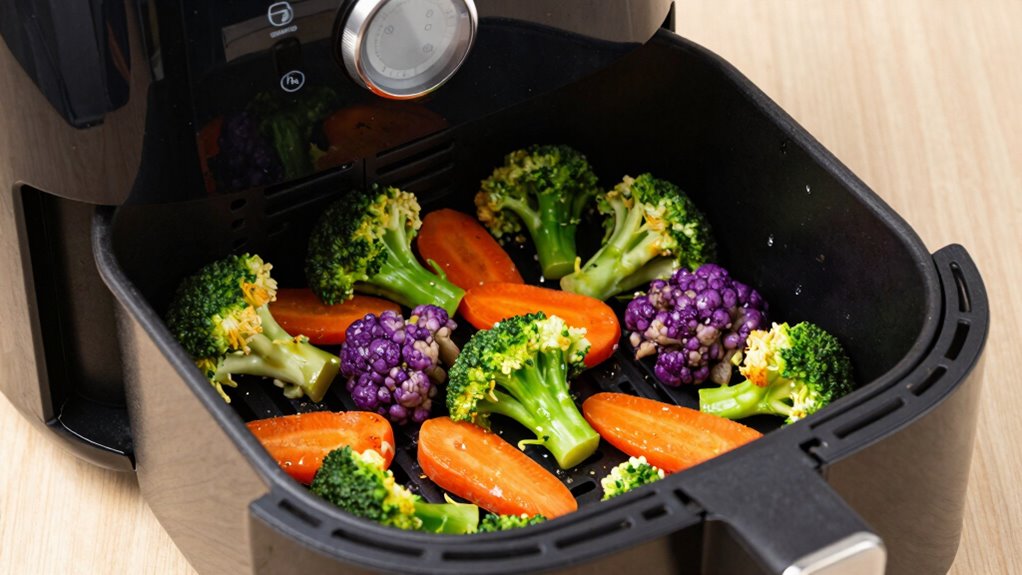
To get crispy frozen veggies, setting your air fryer to the right temperature is key—around 375°F usually works well. Keep an eye on the cooking time, typically 10-15 minutes, to prevent overcooking. Make sure to pat the veggies dry beforehand to avoid excess moisture that can hinder crispiness. Additionally, airflow efficiency plays a significant role in achieving even crispiness throughout the vegetables. Ensuring proper free floating in your air fryer basket helps distribute heat evenly and promotes uniform crisping. Incorporating Suprem fabric in appliance design can enhance airflow and improve heat distribution for consistent results. Paying attention to thermal behavior can also help you fine-tune your settings for optimal crispiness and prevent steaming. Optimizing air circulation within the fryer can further enhance crisping by reducing hot spots and ensuring even cooking.
Optimal Temperature Settings
Getting the perfect crispy texture from frozen vegetables starts with setting your air fryer to the right temperature. For crispy results, aim for 375°F (190°C). This temperature balances crispiness with even cooking. To enhance flavor, consider seasoning options like garlic powder, paprika, or lemon zest before cooking. Proper storage tips also matter—keep your vegetables frozen and avoid thawing to prevent steaming. Additionally, air fryer temperature settings can significantly impact the texture, so adjusting based on your preferences is helpful. Here are the ideal temperature tips:
- Set your air fryer to 375°F for crispy, evenly cooked vegetables.
- Toss vegetables with seasonings before air frying for extra flavor.
- Ensure vegetables are spread in a single layer to avoid steaming and to maximize crispiness.
- Using appropriate cooking times can help achieve the perfect crunch without overcooking.
Following these guidelines helps you achieve crunchy, delicious frozen veggies every time.
Proper Cooking Time
Achieving crispy frozen vegetables in your air fryer depends heavily on setting the right cooking time. Cooking time variations can make a big difference in achieving that perfect crunch without overcooking or steaming. Typically, most frozen veggies need about 10-15 minutes at the ideal temperature, but thicker or denser ingredients, like broccoli florets or carrots, may require a few extra minutes. For ingredient substitutions, adjust the cooking time accordingly—smaller, more delicate vegetables cook faster, while larger pieces need longer. Always shake the basket halfway through to ensure even crisping. Keep an eye on your vegetables in the final minutes to prevent burning. Fine-tuning your cooking time will help you get consistently crispy, delicious results. Additionally, understanding lease terms can help you better plan for equipment and maintenance costs if considering a rental appliance or leasing options. Proper air circulation also plays a crucial role in achieving uniform crispiness, so avoid overcrowding the basket. Proper airflow ensures even cooking and prevents sogginess, leading to better texture and flavor. Ensuring consistent temperature control throughout the cooking process can further enhance your results. Using an air fryer with precise temperature settings can help maintain the ideal heat for crispy vegetables without overcooking.
Avoiding Excess Moisture
Using the right air fryer settings helps prevent excess moisture from making your frozen vegetables soggy rather than crispy. To optimize moisture control and enhance crispiness, follow these tips:
- Set the temperature between 400°F and 425°F to promote rapid moisture evaporation and crisping.
- Use a light spray or toss with a small amount of oil to aid crispiness without adding moisture.
- Cook in a single layer, avoiding overcrowding, so hot air circulates evenly and moisture escapes.
Adjusting these settings guarantees excess moisture escapes instead of being trapped, resulting in vegetables that are perfectly crispy. Monitoring the cooking process and using these techniques will maximize crispiness enhancement and prevent sogginess.
Tips to Avoid Moisture and Get Crispy Veggies Every Time
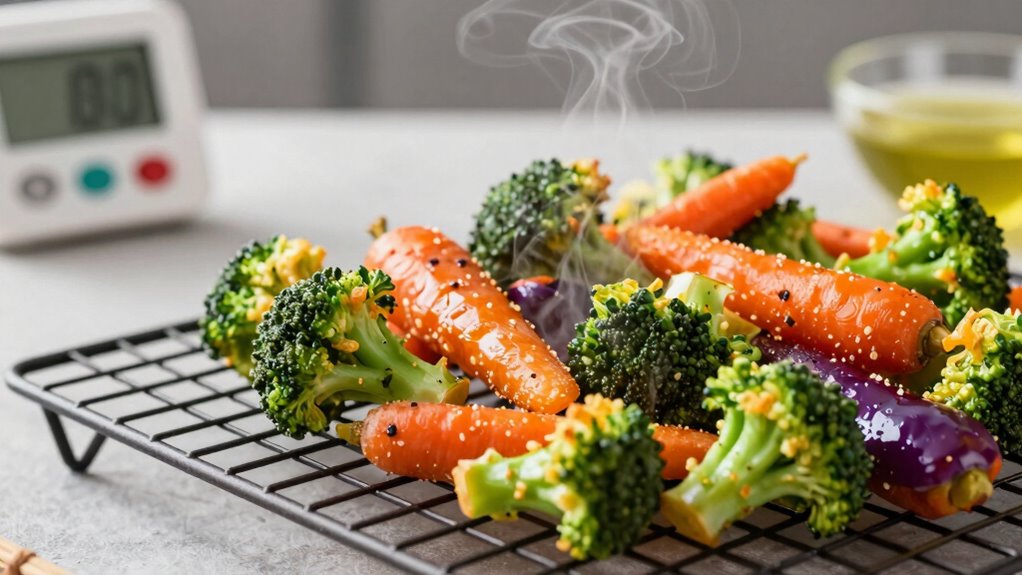
To prevent your vegetables from becoming soggy, it is vital to remove excess moisture before air frying. Using proper frying techniques, like patting vegetables dry with a clean towel or paper towels, helps eliminate surface water that causes steaming. Different vegetable varieties may release varying amounts of moisture; for example, zucchini and mushrooms tend to be more watery, so extra drying is essential. Tossing vegetables with a small amount of oil can promote crispness without steaming them. Spread them in a single layer in the air fryer basket, making sure there is good airflow around each piece. Avoid overcrowding, which traps moisture. These steps ensure your veggies crisp up nicely and stay flavorful every time.
Troubleshooting Soggy Frozen Vegetables in the Air Fryer
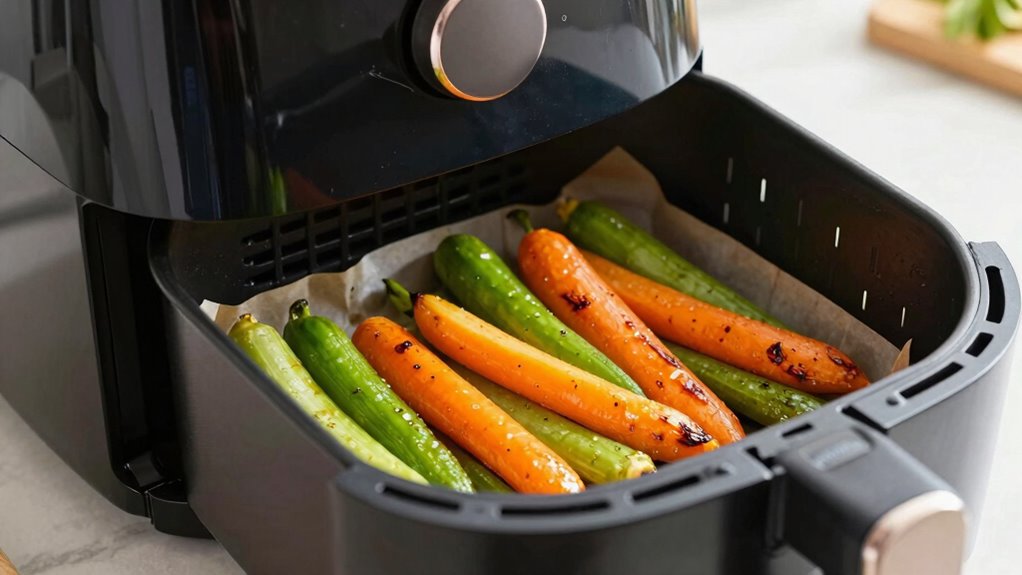
Soggy frozen vegetables in the air fryer often result from excess moisture and overcrowding, which trap steam and prevent crisping. To rectify this, start by:
- Dry the vegetables thoroughly with a paper towel before air frying to reduce moisture that causes soggy texture and flavor loss.
- Avoid overcrowding the basket; leave space between pieces to allow hot air to circulate evenly.
- Increase cooking time or temperature slightly to promote crispness without steaming the veggies.
These steps help eliminate excess moisture, improve crispiness, and preserve flavor. If you still notice soggy texture, double-check your patting technique and ensure you’re not adding too much oil, as excess oil can contribute to steaming instead of roasting.
Creative Serving Ideas for Crispy Frozen Veggies
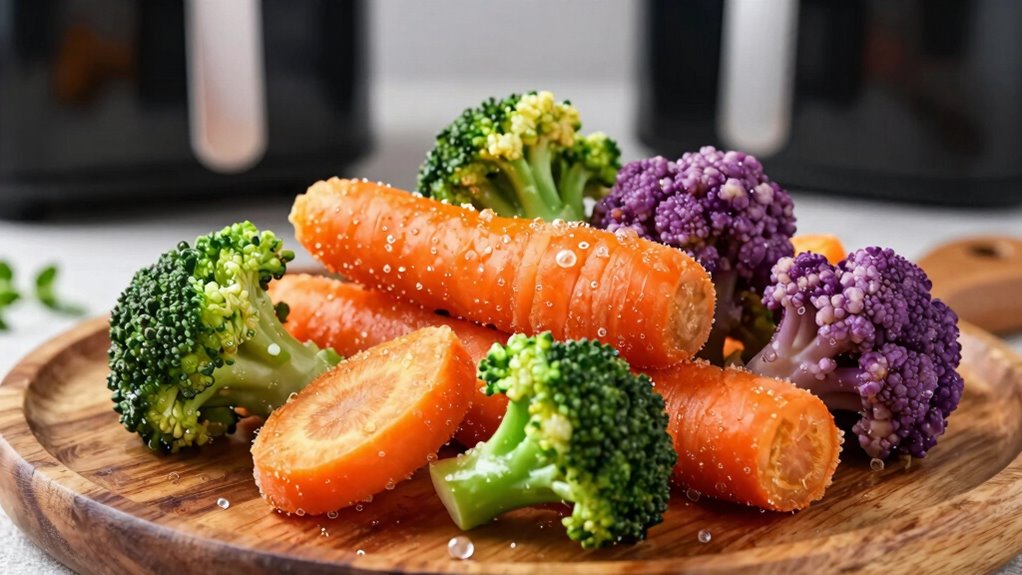
Once you’ve achieved perfectly crispy frozen vegetables, the next step is to get creative with your presentation and flavor combinations. Experiment with different vegetable varieties like Brussels sprouts, cauliflower, or green beans to keep things interesting. For an extra touch of flavor, consider adding aromatherapy, which can enhance the sensory experience of your meal. Incorporating focused workspace techniques can help you plan and organize your flavor experiments more efficiently. Proper vegetable preparation ensures even cooking and optimal texture, making your crispy veggies more appealing. Additionally, understanding the importance of battery lifecycle can inspire you to find sustainable ways to enjoy your kitchen creations over time. For serving suggestions, toss them with a drizzle of balsamic glaze, sprinkle with grated Parmesan, or add a squeeze of lemon for brightness. You can also incorporate herbs and spices such as garlic powder, paprika, or chili flakes to enhance flavor. Consider serving your crispy veggies as a side dish, topping salads, or blending into grain bowls for added texture. The key is to balance flavors and textures, making each serving visually appealing and delicious, so your crispy frozen veggies become a versatile part of your meal.
Frequently Asked Questions
Can I Use Fresh Vegetables Instead of Frozen for Air Frying?
Yes, you can use fresh vegetables instead of frozen for air frying. Keep in mind, fresh veggies often have a different texture than frozen ones, usually crisper and less moist. You might need to modify cooking times slightly since fresh vegetables tend to cook faster. Just cut them evenly, toss with a little oil, and check for doneness to ensure they don’t overcook or undercook.
How Do I Prevent Ice Crystals From Forming on Frozen Veggies?
To prevent ice crystals from forming on frozen veggies, make sure to moisture reduce before air frying. Pat the vegetables dry with a paper towel to remove excess moisture, which helps prevent ice crystal formation. Also, keep your freezer at a consistent temperature and store veggies in an airtight container. These steps promote ice crystal prevention and maintain the vegetables’ quality, ensuring they cook evenly without steaming.
Is It Necessary to Thaw Frozen Vegetables Before Air Frying?
In the spirit of a modern-day alchemist, you don’t need to thaw frozen vegetables before air frying. Thawing alternatives like rinsing or microwaving can cause excess moisture, risking steaming and flavor loss. To preserve flavor, it’s best to cook directly from frozen, ensuring they don’t release too much water. This way, your veggies come out crispy and flavorful, just like a gourmet dish from a vintage cookbook.
What Types of Seasonings Work Best With Frozen Vegetables?
You’ll find that garlic powder, paprika, and dried herbs like thyme or rosemary work great as seasoning pairings with frozen vegetables. For flavor enhancements, toss your veggies with olive oil and a splash of lemon juice before seasoning. Feel free to experiment with cumin or chili flakes for a spicy kick. These seasonings add depth and complement the natural flavors, making your frozen veggies taste fresh and delicious straight from the air fryer.
How Long Should I Preheat My Air Fryer for Crispy Results?
You should preheat your air fryer for about 3-5 minutes at your desired temperature setting, typically around 375°F (190°C) for crispy vegetables. This preheat time guarantees the air fryer reaches the right temperature quickly, helping your frozen vegetables cook evenly and become crispy. Always check your air fryer’s manual for specific preheat recommendations, but a short preheat period is generally enough for perfect results.
Conclusion
Now that you know how to keep your frozen vegetables crispy in the air fryer, why settle for soggy when you can enjoy perfectly roasted, crunchy veggies every time? With the right prep, seasoning, and settings, you’ll elevate your veggie game effortlessly. So next time you reach for frozen greens, ask yourself: aren’t crispy, delicious vegetables worth a little extra effort? Give it a try and enjoy your healthiest, tastiest snack or side!