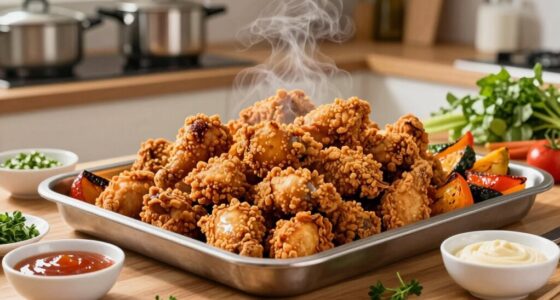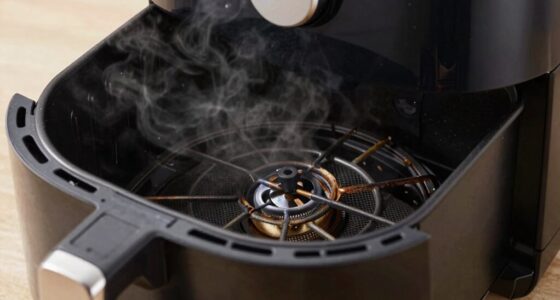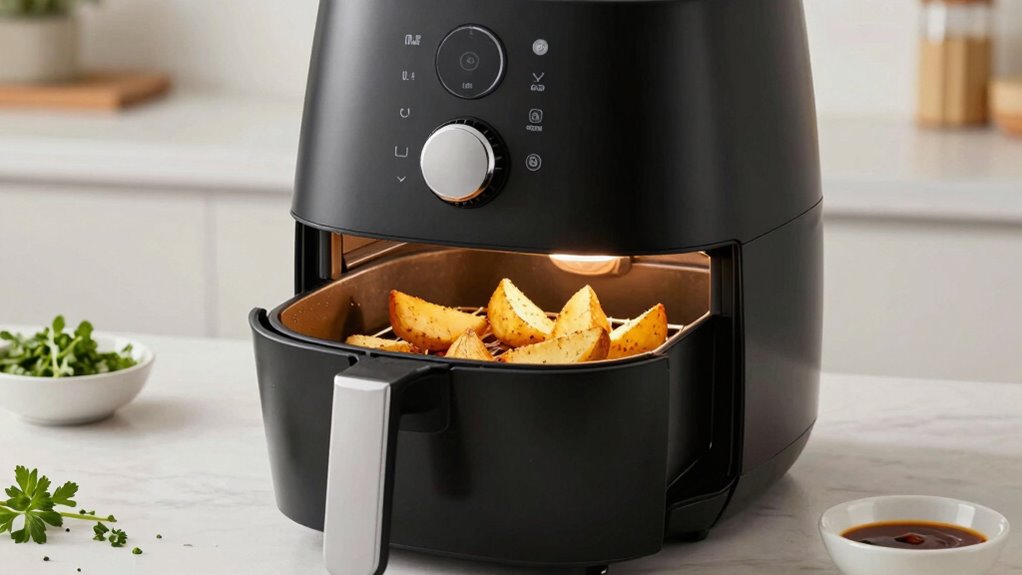

An air fryer cooks food by rapidly circulating hot air around it, creating a crispy, browned exterior without deep frying. The heating element produces high-temperature air while a fan evenly distributes it for consistent results. This hot air promotes the Maillard reaction, giving foods their browning and flavor. You often use less oil, making healthier options. Curious how this clever balance works? Keep exploring to learn more about how air fryers give you that perfect crunch.
Key Takeaways
- Air fryers cook food by rapidly circulating hot air, creating crispy textures without deep frying in oil.
- The heating element produces high-temperature air, which the fan evenly disperses around the food for uniform cooking.
- The Maillard reaction from high heat browns and crisps food surfaces, mimicking traditional frying flavors and textures.
- Unlike deep frying, air frying uses minimal or no oil, making it a healthier method with less greasiness.
- Proper calibration of the heating element and fan ensures consistent crispiness and prevents soggy or uneven results.
How Do Air Fryers Use Hot Air to Cook Food?
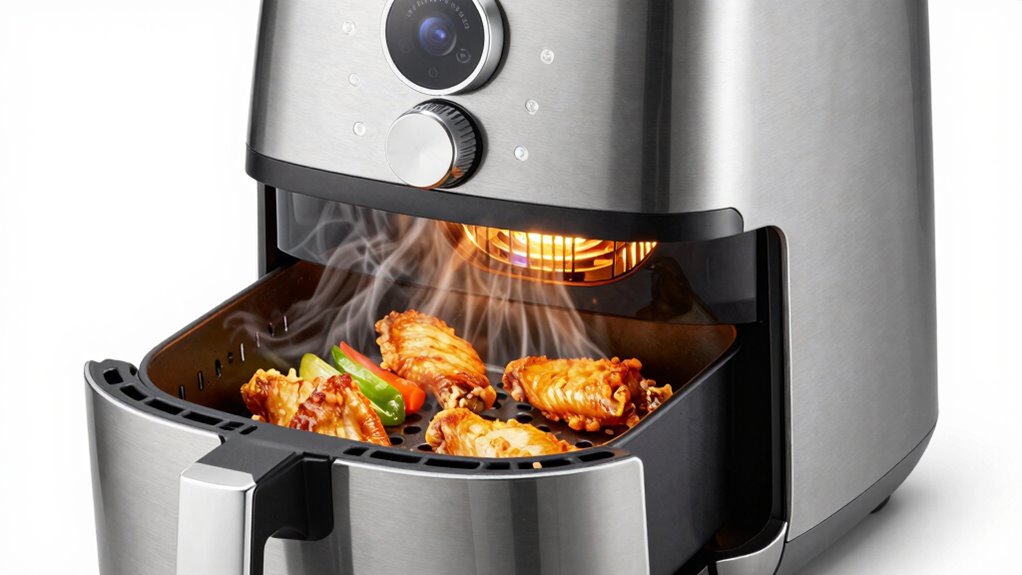
Air fryers cook food by rapidly circulating hot air around it. This process depends on efficient air circulation, which guarantees the heat is evenly distributed across the food’s surface. As the fan blows hot air, it creates a convection current that reaches all sides, eliminating cold spots. This efficient air circulation is key to achieving a crispy exterior without deep frying. You’ll notice that the food cooks evenly, with a golden-brown finish, thanks to this rapid air movement. Unlike traditional ovens, air fryers generate high-velocity air that surrounds the food, reducing cooking time and promoting uniform crispiness. This method makes air frying a healthier alternative, as it uses less oil while still delivering deliciously crispy results. Proper air circulation is essential for optimal cooking performance in an air fryer.
What Role Do the Heating Element and Fan Play in Creating Crispy Results?
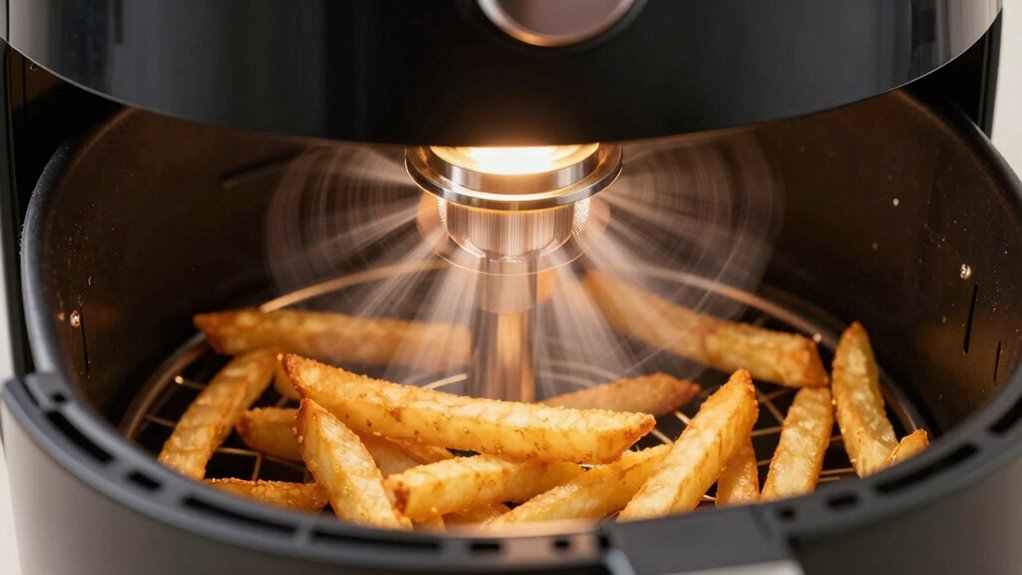
The heating element generates the hot air that cooks your food, providing the necessary heat. The fan circulates this hot air evenly around your meal, ensuring every bite gets crispy. Together, they work to create that perfect, crunchy texture you’re after. Proper calibration of these components can also influence the texture and color of your cooked dishes. When these parts are well-maintained and properly adjusted, they can optimize the precise temperature control needed for consistent results. Additionally, understanding Free Floating mechanisms can help in maintaining the optimal airflow and heat distribution within the appliance. Being aware of airflow dynamics can further enhance the efficiency and effectiveness of your air fryer.
Heating Element’s Heat Generation
The heating element is the core component responsible for generating the high temperatures necessary to crisp your food. It produces intense heat quickly, which is then transferred to the food surface. This process relies on efficient heat distribution to ensure even cooking and browning. The heating element’s design ensures that heat is spread uniformly across the cooking chamber, reducing cold spots and promoting consistent crispiness. When the element heats up, it radiates infrared energy directly onto the food, helping to create that desirable crunchy exterior. Without this powerful heat source, your air fryer wouldn’t achieve the high temperatures needed for proper crisping. Proper heat generation and distribution are essential for delivering the crispy, delicious results you expect from your air fryer.
Fan’s Air Circulation Role
While the heating element generates the high temperatures needed for crisping, the fan plays a crucial role in distributing that heat evenly across your food. Proper air circulation ensures every piece gets exposed to consistent heat, preventing uneven cooking or soggy spots. The fan’s speed controls how quickly and thoroughly the hot air moves around, impacting texture and crispiness. Higher fan speeds promote rapid air circulation, resulting in a crisp exterior, while lower speeds may produce a more gentle heat distribution. By balancing the fan speed, your air fryer can achieve uniform browning without overcooking or undercooking certain areas. Additionally, airflow management ensures optimal performance and energy efficiency. This efficient air circulation is what makes the food crispy, even though it’s not deep-fried. Effective air flow is essential for maximizing the appliance’s performance and achieving the desired crispy results.
Achieving Crispy Texture
To achieve that perfect crispy texture in your air fryer, both the heating element and the fan work together to create ideal conditions. The heating element generates the high heat needed to dehydrate and crisp the surface of your food, while the fan circulates hot air rapidly around it. This combination mimics deep frying but uses less oil, resulting in that desirable crispy exterior. Proper air fryer maintenance ensures these components function efficiently, preventing uneven cooking or safety hazards. Regular cleaning of the heating element and fan not only prolongs your appliance’s life but also maintains peak performance. Always follow kitchen appliance safety guidelines to avoid accidents. When these parts work harmoniously, you get crispy, delicious results every time, making your healthier cooking experience more satisfying. Additionally, understanding the mechanics behind hot air circulation can help you optimize cooking times and achieve consistently crisp results.
How Does the Maillard Reaction Make Your Food Brown and Delicious?

When you cook at high heat, chemical changes occur that turn your food brown and flavorful. The Maillard reaction happens when sugars and proteins react, developing rich flavors and appealing textures. Understanding this process helps you make more delicious, perfectly browned dishes in your air fryer.
Chemical Changes During Heating
The Maillard reaction is a chemical process that occurs when heat transforms amino acids and sugars in your food, creating those tempting browned and flavorful crusts. This reaction is a key part of the chemical transformation during thermal processes like air frying. As your food heats up, complex reactions happen, producing new compounds responsible for flavor and color.
Imagine the transformation like this:
| Before Heating | After Heating |
|---|---|
| Raw, pale surface | Brown, crusted exterior |
| Simple amino acids | Aromatic, flavorful molecules |
| Sugars still intact | Caramelized compounds |
| Minimal aroma | Rich, inviting smell |
| Soft texture | Crispy, browned surface |
This process highlights how heat induces chemical changes, making your food delicious without actual frying.
Impact of Sugar and Proteins
As your food heats up in the air fryer, the interaction between sugars and proteins kicks into gear, producing the rich browning and complex flavors you love. Sugar caramelization occurs when sugars reach high temperatures, turning golden and adding sweetness and depth. Meanwhile, proteins undergo denaturation, where their structure unfolds, allowing new chemical reactions to happen. These processes combine in the Maillard reaction, which creates the appealing brown crust and enhances flavor complexity. As heat continues, these reactions intensify, giving your food that irresistible aroma and taste. Understanding this interplay helps explain why your air-fried dishes develop such appetizing color and savory notes without the need for traditional frying. It’s a natural, controlled transformation driven by heat and chemistry.
Flavor and Texture Development
The Maillard reaction is responsible for turning your food brown and creating its appealing flavor and texture. To harness this process, you need proper seasoning techniques and temperature control. Seasoning enhances the Maillard reaction by providing amino acids and sugars that react under heat, boosting flavor complexity. Maintaining the right temperature, typically around 300-400°F, is vital—too low, and the reaction won’t occur; too high, and you risk burning the food. With precise temperature control in your air fryer, you can achieve a perfect balance, resulting in crispy, flavorful exteriors and tender interiors. Experimenting with seasoning techniques and monitoring temperature helps develop rich flavors and desirable textures, making your meals more appetizing without deep frying.
Do You Really Need Oil When Using an Air Fryer?
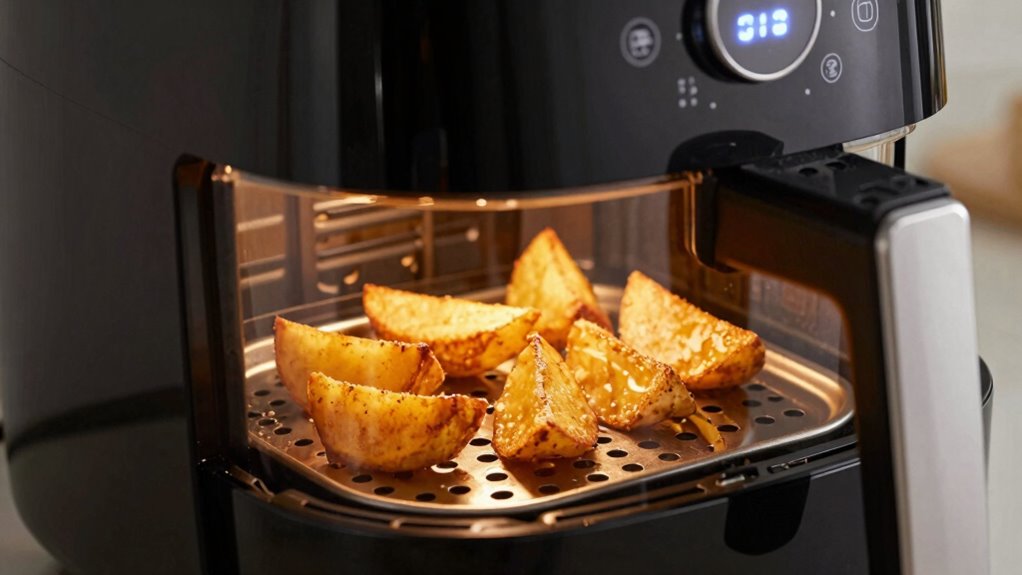
Many people wonder whether oil is truly necessary when using an air fryer. The answer depends on your goals and the dish you’re preparing. While some recipes benefit from a light coating of oil to improve texture and flavor, the oil necessity isn’t absolute. Air fryers are designed to cook food evenly with circulating hot air, which can produce crispy results without much or any cooking fats. Using a small amount of oil can enhance browning and crispiness, but it’s not always essential. Many foods, like vegetables or lean proteins, turn out great without added oil. If you’re aiming to reduce fat intake, you can often skip oil altogether and still enjoy a satisfying, crunchy texture. Additionally, proper air purifier maintenance can ensure your kitchen environment stays fresh and free from airborne pollutants that might affect your cooking experience. To maximize your air fryer’s efficiency, consider proper cleaning and care to maintain optimal airflow and performance. Staying informed about healthy cooking practices can help you make better dietary choices while enjoying crispy, delicious meals.
How Is Air Frying Different From Deep Frying in Health and Texture?

While using less or no oil can make air frying a healthier choice, it’s important to understand how it differs from traditional deep frying in both health benefits and texture. Air frying significantly reduces oil usage, leading to lower calorie and fat intake. The texture also varies: air-fried foods are crispy on the outside but tend to be less greasy and greasy than deep-fried items.
Air frying uses less oil for healthier, crispy, and less greasy meals compared to traditional deep frying.
- Uses little to no oil, promoting oil reduction and better health benefits
- Produces a lighter, crisp texture without excess greasiness
- Maintains flavor while reducing fat content
- Cooks food evenly with less oil absorption
- Offers a healthier, less greasy alternative without sacrificing crunch
Common Myths About How Air Fryers Work, Debunked

There are several common myths about how air fryers operate, and understanding the facts can help you make the most of your appliance. One widespread misconception is that air fryers cause excessive oil absorption, making foods just as greasy as deep frying. In reality, they use little to no oil, which markedly reduces calorie content. Many believe that air frying results in foods with the same crispiness as traditional frying, but it actually relies on rapid hot air circulation to create a similar texture without the excess fat. This hot air circulation not only produces a crispy exterior but also ensures even cooking throughout the food. Additionally, the air circulation technology employed in air fryers is designed to mimic the effects of frying without the need for large amounts of oil. Properly understanding how air fryers mimic frying can help you optimize your cooking results and choose healthier options. Debunking these myths shows that air fryers are healthier options that produce less oily, lower-calorie meals. Knowing the truth helps you enjoy crispy foods without the guilt, maximizing your appliance’s potential. Understanding air fryer technology is key to using your device effectively and making healthier choices. Additionally, the circulation of hot air is what truly mimics the effects of frying without the need for large amounts of oil.
Frequently Asked Questions
Can You Cook Liquids or Soups in an Air Fryer?
You can’t effectively cook liquids or soups in an air fryer, as it’s like trying to tame a storm in a teacup. Air fryers are designed for dry heat, so liquid cooking and soup preparation aren’t suitable here. The circulating hot air can cause spills or messes, and it won’t heat liquids evenly. For soups, stick to your stove or microwave, where liquids can simmer safely and thoroughly.
What Are the Best Foods to Avoid Using in an Air Fryer?
You should avoid using frozen snacks with heavy coatings or wet batters in your air fryer. These can cause messes, uneven cooking, or damage your appliance. Stick to foods like pre-cooked frozen snacks that are dry or lightly coated. Wet batters tend to drip and burn, creating cleanup challenges. For the best results, choose foods that are suitable for air frying and won’t compromise your appliance’s safety or performance.
How Do Different Air Fryer Models Vary in Cooking Performance?
You’ll notice that different air fryer models vary in cooking performance, especially regarding temperature consistency and cooking capacity. Some models heat evenly, ensuring your food cooks thoroughly, while others might have hot spots. Larger capacities let you cook more at once, but may take longer to preheat. Choosing a model that balances temperature accuracy and suitable capacity for your needs can make your air frying experience much better.
Is There a Risk of Plastic Fumes From the Air Fryer’s Components?
Did you know that over 90% of air fryer models tested are safe for kitchen use? You don’t need to worry much about plastic fumes from components if you choose reputable brands. Most manufacturers prioritize component safety, using heat-resistant plastics that won’t release harmful fumes during normal operation. Just make certain you follow the manufacturer’s instructions, avoid overusing the appliance at high temperatures, and regularly clean it to maintain safety and performance.
How Do You Clean and Maintain an Air Fryer Effectively?
To clean and maintain your air fryer effectively, follow simple cleaning tips and maintenance routines. After each use, unplug it and let it cool, then remove the basket and tray to wash with warm, soapy water. Wipe the interior with a damp cloth, avoiding abrasive cleaners. Regularly check for grease buildup and clean the heating element. Proper maintenance keeps your air fryer working efficiently and extends its lifespan.
Conclusion
Now you know that air fryers aren’t truly frying — they’re a culinary wizard’s secret weapon. By harnessing hot air and clever science, they make your food crispy and delicious without drowning it in oil. So next time you hear “air frying,” remember it’s more like magic than frying. With this knowledge, you can turn everyday ingredients into crispy masterpieces, proving that understanding the science behind cooking is the most powerful kitchen tool you’ll ever own.