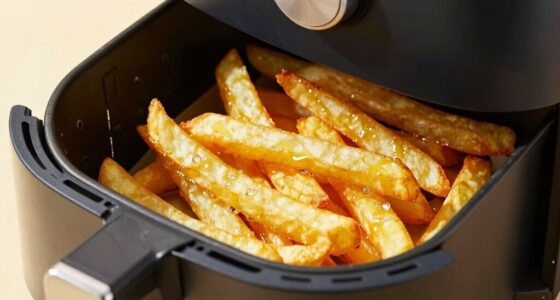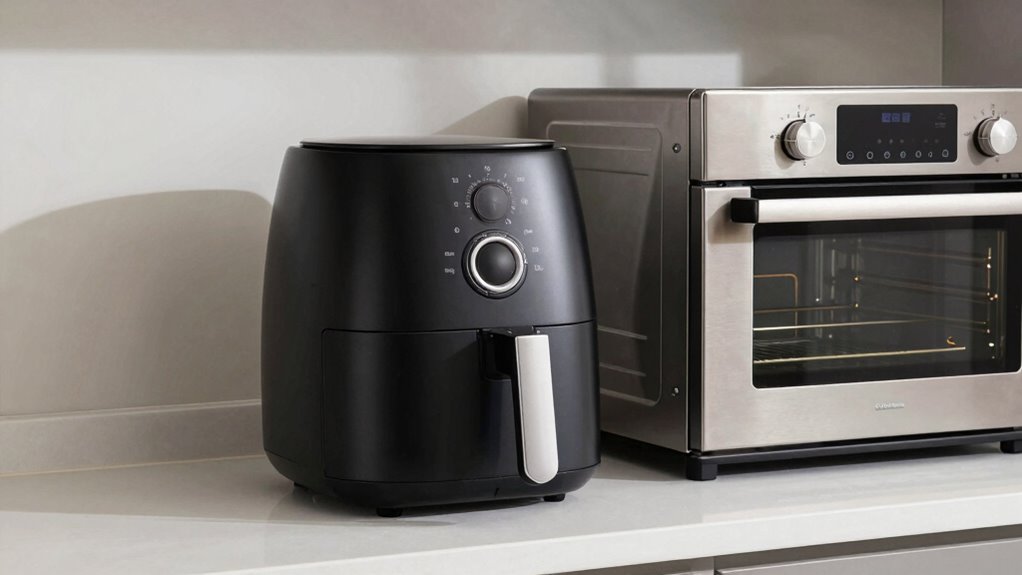
If you’re choosing between an air fryer and a convection oven, your decision depends on space, speed, and cooking style. Air fryers are compact, heat quickly, and excel at crispy, oil-free snacks. Convection ovens are larger, support bigger batches, and offer more versatility for baking and roasting. Understanding these differences helps you pick the right tool for healthier, efficient cooking. The details below reveal what truly matters, so keep exploring to find your perfect fit.
Key Takeaways
- Air fryers are compact with top-mounted heating and rapid airflow, ideal for quick, crispy snacks in small batches.
- Convection ovens are larger, use broader airflow for even cooking and multi-functionality, suitable for bigger meals.
- Air fryers cook faster, using less energy, and excel at crisping foods with less oil; convection ovens handle larger quantities efficiently.
- Air fryers produce crunchier textures with localized airflow; convection ovens offer even browning and tender interiors through wider heat circulation.
- Choose an air fryer for quick, small meals and space-saving needs; opt for a convection oven for versatile, larger-scale cooking.

Cuisinart Air Fryer, 2.6-Quart Compact Basket Fryer with 3 Cooking Functions to Air Fry, Roast, and Bake, 3 Airfryer Presets, Dishwasher-Safe Parts, AIR-80, Stainless Steel & Black
VERSATILE AIR FRYER: This Cuisinart Air Fryer has a 2.6-quart internal capacity with four cooking functions and three…
As an affiliate, we earn on qualifying purchases.
As an affiliate, we earn on qualifying purchases.
How Do Air Fryers and Convection Ovens Work Differently?
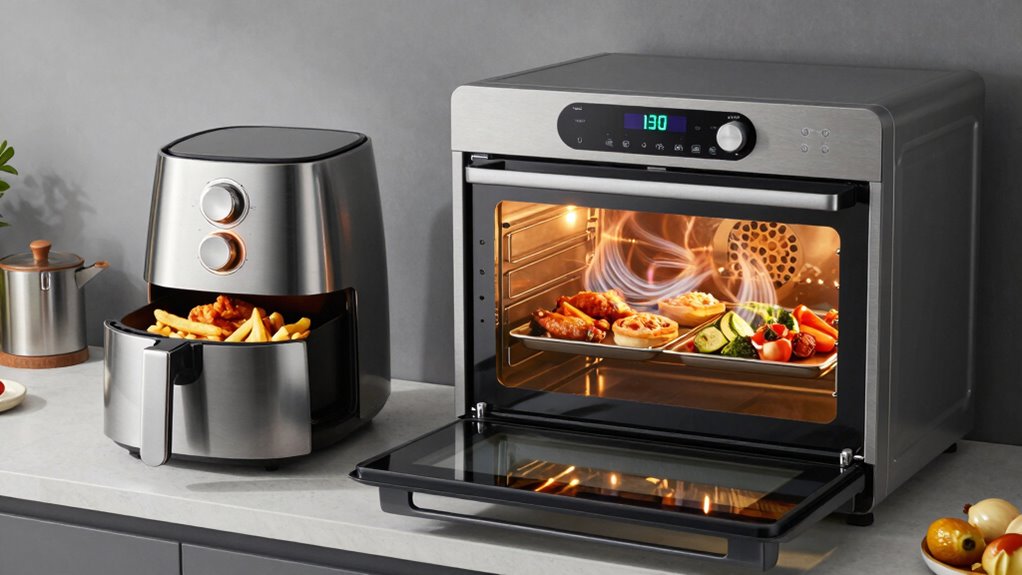
Although both air fryers and convection ovens use circulating hot air to cook food, they operate differently in design and function. Air fryers typically feature a compact, countertop size with precise temperature control and dedicated cooking presets, making them easy to use for quick meals. They heat up rapidly and circulate hot air at high speeds, creating a crispy exterior. Convection ovens, on the other hand, are larger appliances with more complex temperature controls and multiple preset options, often including bake, roast, and broil functions. They heat more gradually and circulate hot air at a lower speed, providing even cooking for larger quantities. These differences in design and features impact how each appliance manages temperature control and cooking presets, ultimately influencing cooking efficiency and versatility. Additionally, cooking efficiency can vary based on how quickly each appliance reaches the desired temperature and maintains it during cooking. The air circulation mechanism also plays a significant role in how evenly food is cooked, particularly in larger convection ovens. Furthermore, size and capacity influence how suitable each appliance is for different cooking needs and kitchen spaces.

BLACK+DECKER TO3250XSBD 8-Slice Extra Wide Convection Countertop Toaster Oven, Includes Bake Pan, Broil Rack & Toasting Rack, Stainless Steel/Black
Fits Most Oven Pans – Use the pans you already have! This spacious oven fits most standard 9”x13”…
As an affiliate, we earn on qualifying purchases.
As an affiliate, we earn on qualifying purchases.
Size and Space Requirements for Air Fryers vs. Convection Ovens
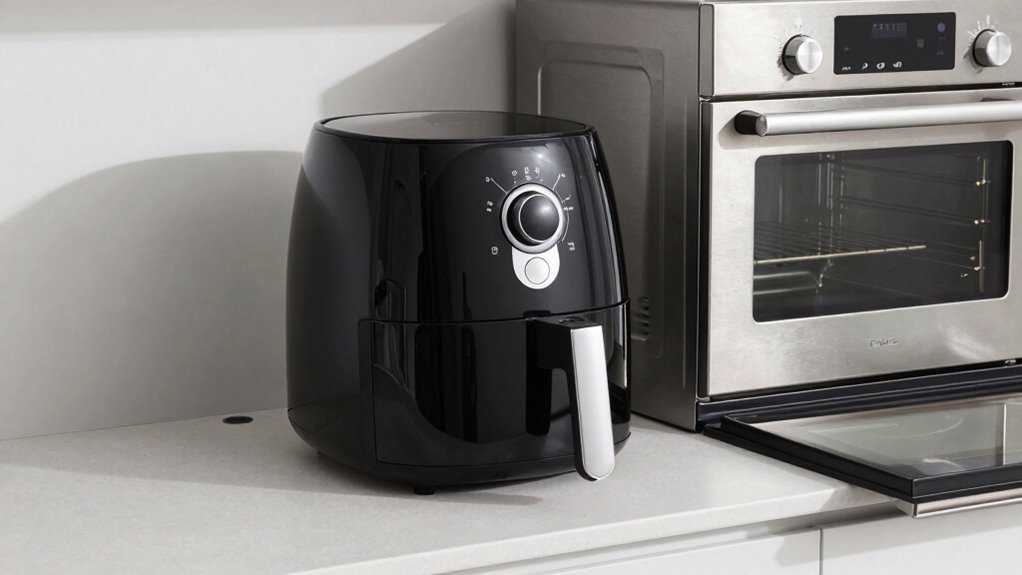
When choosing between an air fryer and a convection oven, consider their size and space needs. Air fryers typically take up less countertop space, making them easy to store, while convection ovens often require more room. Think about your kitchen’s layout and storage options to find the best fit for your cooking style. Additionally, understanding size and space requirements can help you select appliances that maximize your kitchen’s efficiency and comfort. Knowing how these appliances fit into your overall kitchen setup can make a significant difference in your daily cooking experience. Moreover, considering kitchen ergonomics can ensure your workspace remains comfortable and functional during meal preparation. Evaluating appliance placement is also crucial for maintaining a smooth workflow and safety in your kitchen. Proper planning of countertop organization can further enhance your kitchen’s efficiency and prevent clutter.
Countertop Footprint Size
Air fryers generally occupy less countertop space than convection ovens, making them a convenient choice for small kitchens or limited countertops. Their compact appliance size allows you to save valuable surface area. To visualize, consider these typical dimensions:
- A standard air fryer might measure about 9 x 9 inches.
- A small convection oven could be around 18 x 16 inches.
- Larger convection models may reach 24 x 20 inches or more.
- An average kitchen counter has limited space, so a smaller footprint helps maximize your workspace.
- Additionally, the power output of electric appliances can influence their size and efficiency, with smaller units often being more energy-efficient for limited spaces. This makes choosing an appliance with a suitable size and space requirements important for optimizing your kitchen setup.
- When selecting appliances, considering appliance footprint helps ensure the unit fits comfortably without overcrowding your counter.
Choosing an appliance with a smaller countertop footprint means less clutter and easier access. If space is tight, an air fryer’s compact size offers a significant advantage without sacrificing functionality.
Storage Space Needed
Because space is often at a premium in your kitchen, understanding the storage needs of air fryers and convection ovens is essential. Air fryers generally have a smaller storage capacity, making them easier to tuck away when not in use. They’re compact, designed for space optimization in tight areas. Convection ovens, on the other hand, tend to be larger, requiring more storage space even when inactive. If you have limited cabinet or countertop space, an air fryer offers a clear advantage. Additionally, market options for these appliances vary widely in size, so measuring your available space beforehand can help prevent purchasing an appliance that won’t fit. Considering kitchen layout and how these appliances integrate into your existing setup can further influence your decision. Proper appliance dimensions are crucial to ensure a good fit and optimal functionality. Additionally, some models feature compact design options specifically aimed at maximizing small kitchen spaces. For those seeking added versatility, many convection ovens also come with multi-functionality, which might justify their larger size. Carefully consider your storage capacity and how each appliance fits into your available space to make the best choice.
Kitchen Compatibility
Choosing between an air fryer and a convection oven largely depends on your kitchen’s size and available space. For countertop installation, consider how much room each appliance needs. An air fryer is compact, fitting easily on small counters, while convection ovens are bulkier, requiring more space. Think about electrical requirements: air fryers usually need a standard outlet and minimal wiring, whereas convection ovens often demand a dedicated circuit. Additionally, mounting options and setup complexity can influence your decision, especially if you prefer a straightforward plug-and-play appliance versus a more integrated kitchen installation.
Here’s what to visualize:
- A small, sleek air fryer occupying a corner of your countertop.
- A spacious convection oven taking up a significant portion of your workspace.
- The ease of plugging in the air fryer without rearranging your kitchen.
- The larger electrical setup needed for a convection oven’s installation.

Dash Tasti-Crisp Express Air Fryer – Mini Air Fryer For Crispy Snacks, Frozen Foods and Oil-Free Cooking – Nonstick Basket – White, 2.6-Quart
Compact Size For Everyday Cooking: The Dash Tasti-Crisp Express Air Fryer features a space-saving design that fits easily…
As an affiliate, we earn on qualifying purchases.
As an affiliate, we earn on qualifying purchases.
Which Is Faster and More Efficient in Cooking?
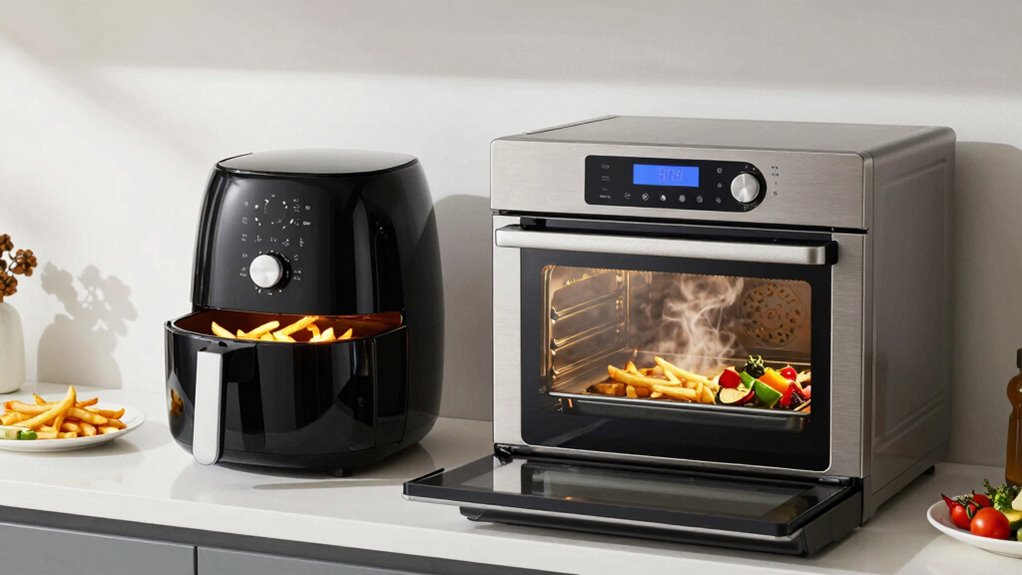
When it comes to speed and efficiency, convection ovens generally heat up faster and cook more quickly than air fryers. Their larger size and powerful heating elements allow for higher cooking temperatures and more even heat distribution, boosting cooking speed. This means you can prepare larger meals in less time. In terms of energy efficiency, convection ovens often use more energy overall because of their size and longer preheating times, but their faster cooking can offset this. Air fryers, on the other hand, heat up quickly and cook efficiently for small batches, making them ideal for quick snacks or single servings. If you’re looking for faster cooking and better energy efficiency for small portions, an air fryer might be your best choice.

Beelicious 32QT Extra Large Air Fryer, 19-In-1 Air Fryer Toaster Oven Combo with Rotisserie and Dehydrator, Digital Convection Oven Countertop Airfryer Fit 13" Pizza, 6 Accessories, 1800w, Black
【 19+N Presets for Your Endless Inspiration】 One machine to fulfill air fry, bake, roast, broil, rotisserie, toast,…
As an affiliate, we earn on qualifying purchases.
As an affiliate, we earn on qualifying purchases.
Heating Elements and Air Circulation in Air Fryers vs. Convection Ovens

You’ll notice that air fryers have heating elements placed near the top, which helps create intense heat quickly. Convection ovens, on the other hand, often have elements positioned at the bottom or sides, affecting how heat and air circulate. Understanding these differences can help you choose the appliance that cooks your food more evenly and efficiently. Additionally, connected home fitness technology can optimize your kitchen appliances for smarter cooking experiences. Incorporating smart appliance integration can further enhance your cooking efficiency by allowing remote control and monitoring through your smart home system. Recognizing the airflow patterns within each appliance can also assist in achieving desired cooking results.
Heating Element Placement
The placement of heating elements considerably influences how air circulates within air fryers and convection ovens. Proper positioning affects heating element efficiency and guarantees even cooking. In air fryers, the heating element is typically located at the top, close to the food, promoting rapid heat transfer. Conversely, convection ovens often place the heating element at the bottom or top, combining with a fan for better air circulation. Imagine these scenarios:
- A top-mounted element radiates heat downward, like the sun shining from above.
- A bottom element heats the air from below, similar to a stove’s flame.
- An element near the fan creates a direct blast of hot air around your food.
- A middle placement balances heat distribution for consistent results.
Understanding these differences helps optimize heating element placement for better cooking efficiency.
Airflow Dynamics
Airflow dynamics play a crucial role in how efficiently heat is transferred and food is cooked in both air fryers and convection ovens. Your cooking results depend on airflow patterns and airflow control. In air fryers, fans create rapid, focused airflow that circulates around food, promoting crispiness. Convection ovens use larger fans for broader airflow, ensuring even cooking across larger batches. Proper airflow control is essential; restricted airflow can lead to uneven results, while ideal circulation enhances browning and tenderness. Here’s a comparison:
| Aspect | Air Fryer | Convection Oven |
|---|---|---|
| Airflow Pattern | Rapid, localized circulation | Gentle, widespread circulation |
| Airflow Control | Precise, adjustable fans | Less adjustable, steady flow |
How Do Cooking Results Compare: Crispy, Even, and Juicy?
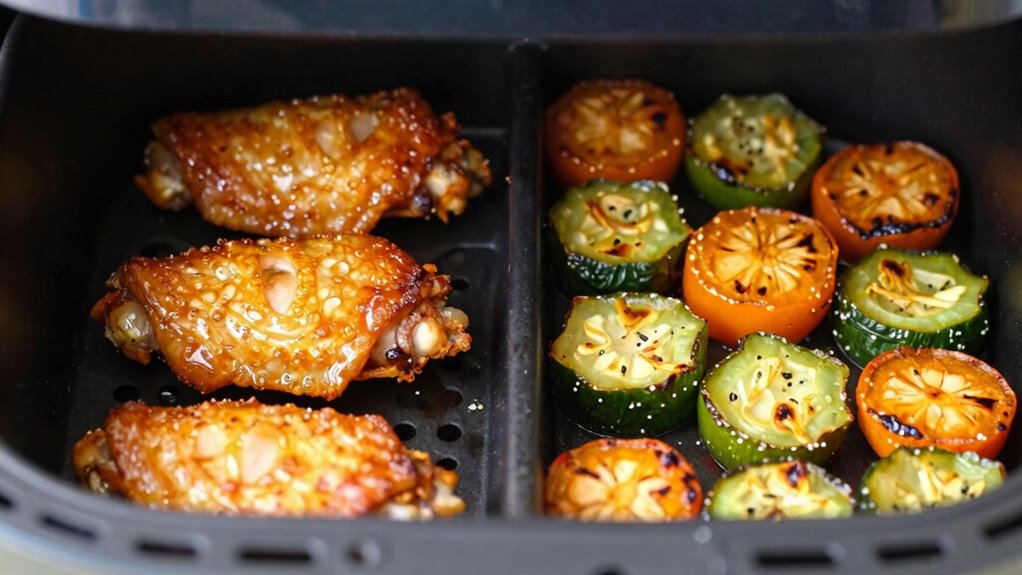
When comparing cooking results, both air fryers and convection ovens can produce crispy, evenly cooked, and juicy dishes, but they do so in different ways. The texture comparison reveals that air fryers often deliver a crunchier exterior due to rapid air circulation, while convection ovens provide a more consistent, tender interior. For flavor enhancement, air fryers excel at sealing in juices, creating juicy bites, whereas convection ovens develop richer flavors through longer cooking times. To visualize the difference:
- Crispy chicken skin with a satisfying crunch
- Evenly browned, tender vegetables
- Juicy, succulent meat interiors
- Uniform doneness across thick cuts
Both appliances excel, but your choice influences the final texture and flavor profile you get. The science behind airflow helps explain how each appliance achieves these results.
Versatility: Can You Cook a Variety of Recipes in Both?

Both appliances can handle a variety of recipes, but their versatility varies. You can prepare different cuisine types and use multiple cooking techniques in each. Understanding these differences helps you choose the right tool for your culinary needs. Additionally, maximizing your kitchen’s potential ensures you get the most out of these appliances for all your cooking adventures.
Different Cuisine Types
Have you ever wondered if an air fryer or convection oven can handle a wide range of cuisines? Both appliances offer impressive cuisine diversity, but they excel with different flavor profiles. An air fryer crisps up foods with a fried texture, ideal for dishes like tempura, falafel, or crispy chicken wings. Meanwhile, a convection oven can bake, roast, and broil, making it perfect for Italian pasta, Indian curries, or French pastries. Visualize these scenarios:
- A Mediterranean-inspired grilled vegetable platter
- A Japanese tempura platter with dipping sauces
- A spicy Mexican roasted chicken
- A flaky French croissant fresh from the oven
Both appliances can adapt to various cuisines, but your choice depends on the flavors you want to enhance and the dishes you aim to prepare. Additionally, cuisine versatility can be expanded by understanding the different cooking methods and temperature controls each appliance offers.
Multiple Cooking Techniques
Air fryers and convection ovens are both versatile kitchen appliances capable of handling a variety of cooking techniques. With these appliances, you can bake, roast, reheat, and even dehydrate, making them suitable for many recipes. The appliance features of each device influence their versatility—convection ovens typically offer more adjustable settings, allowing for precise control over temperature and time. This means you can cook everything from delicate baked goods to hearty roasts. Air fryers excel at quick, crispy results with less oil, but many models now include functions like grilling or baking. Overall, both appliances can handle multiple cooking techniques, but convection ovens often provide broader versatility for a wider array of recipes. Your choice depends on the types of dishes you want to prepare most often.
Cleaning and Maintenance Tips for Air Fryers and Convection Ovens
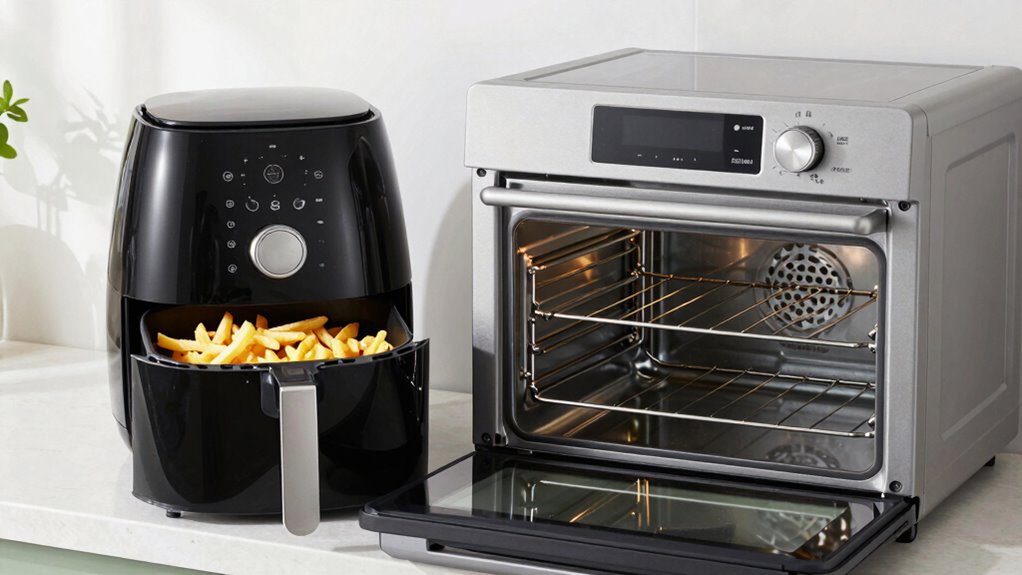
Keeping your air fryer and convection oven clean is essential for ideal performance and longevity. Regular cleaning routines keep food residues at bay and prevent odors. To maintain efficiency, follow a consistent maintenance schedule. Here are four key tips:
- Remove and soak removable parts like trays and baskets in warm, soapy water weekly.
- Wipe down interior surfaces with a damp cloth after each use.
- Clean the heating elements gently with a soft brush to remove any grease buildup.
- Check and clear vents and fans monthly to ensure proper airflow.
Sticking to these routines helps prevent buildup and extends your appliance’s lifespan. Proper maintenance makes your cooking easier and ensures your appliances operate at their best.
Cost Differences Between Air Fryers and Convection Ovens

When comparing the costs of air fryers and convection ovens, you’ll find that initial purchase prices vary markedly. Air fryers are generally more affordable upfront, with price comparisons showing they typically cost between $50 and $150. Convection ovens, especially larger or countertop models, can range from $150 to $500 or more. However, the initial cost isn’t the only factor. Energy consumption plays a role too. Air fryers tend to use less energy because they heat up quickly and cook faster, saving you money over time. Convection ovens usually consume more power due to their larger size and longer cooking times. So, while the upfront price difference is clear, consider long-term energy costs when evaluating which appliance fits your budget.
Which Appliance Is Better for Guilt-Free, Crispy Meals?

If you’re aiming for guilt-free, crispy meals, both air fryers and convection ovens can deliver satisfying results, but the choice depends on your priorities. For healthier snacks, an air fryer uses less oil and produces crispy textures with minimal fat, making it ideal for guilt-free indulgence. Convection ovens also create crispy results but often require more oil or longer cooking times. Imagine:
- Hot air circulating evenly, crisping food with less oil
- Quick preheat times, saving cooking efficiency
- Smaller, compact design for easy snack prep
- Consistent, even browning for perfect texture
- Flavorful Appetizers like Patatas Bravas are easily prepared in convection ovens, showcasing their versatility for crispy dishes
Both appliances support healthy eating, but if you want quicker, oil-free crispiness, an air fryer is your best bet. For larger batches and versatile cooking, a convection oven offers greater flexibility.
How to Choose the Right Appliance for Your Cooking Style
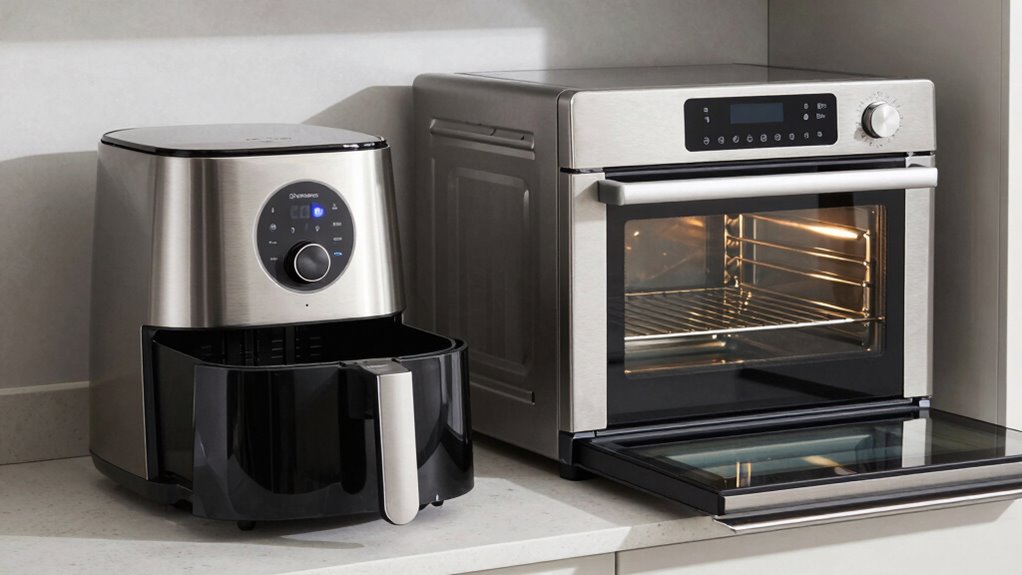
Choosing the right appliance depends on how you prefer to cook and the types of meals you enjoy most. If you prioritize food preservation and want to maintain nutrients and flavors, consider an appliance with even heat distribution and easy cleaning. An air fryer is great for quick, crispy snacks, while a convection oven offers versatility for baking, roasting, and more. Durability also matters; look for models with sturdy construction and quality materials to ensure long-term performance. Think about your cooking frequency and meal variety—if you often prepare large batches, a convection oven might be more practical. Conversely, if space is limited and you want faster results, an air fryer could be the better choice. Matching your cooking style with these factors helps you select the appliance that truly fits your needs.
Frequently Asked Questions
Can Air Fryers Replace Traditional Convection Ovens Entirely?
You can’t fully rely on an air fryer to replace a traditional convection oven because of its limitations. While air fryers excel at crispy, quick snacks, they lack the versatility of convection ovens for baking, roasting, and large meals. Convection ovens offer more space and functions, making them better suited for diverse cooking needs. So, an air fryer complements rather than completely replaces a convection oven in your kitchen.
Are There Specific Foods That Don’T Cook Well in Either Appliance?
Some foods don’t cook well in either appliance due to food compatibility and cooking limitations. For example, delicate baked goods like soufflés may not rise properly, and large roasts might not cook evenly. You’ll find that foods requiring precise temperature control or longer cooking times, such as stews or big cuts of meat, can be challenging. Both appliances excel at quick, crispy results but may struggle with certain textures or bulkier dishes.
How Do Energy Consumption Levels Compare Between the Two?
You’ll find that air fryers generally consume less energy than convection ovens because they heat up faster and cook more quickly. Their smaller size and targeted heating make them more energy-efficient, reducing overall power consumption. Convection ovens, while versatile, tend to use more energy due to their larger size and longer preheating times. So, if energy efficiency is your priority, an air fryer can save you on electricity costs.
Do Both Appliances Require Preheating Before Use?
You don’t always need to preheat both appliances, but it depends. For preheating requirements, most air fryers heat up quickly and are ready to use in a few minutes, making appliance readiness fast. Convection ovens often require longer preheating, especially for precise cooking. Preheating helps guarantee even cooking and ideal results, so check your appliance’s manual for specific instructions. In general, preheating enhances performance for both devices.
What Safety Features Should I Look for in These Appliances?
When choosing an appliance, look for safety mechanisms like automatic shut-off and cool-touch exteriors to prevent accidents. Overheat protection is vital too, as it automatically turns off the device if it gets too hot. These features guarantee safe operation, give you peace of mind, and help avoid potential hazards. Always check the manufacturer’s safety features to make sure your appliance is equipped to keep you safe during use.
Conclusion
Choosing between an air fryer and a convection oven depends on your cooking style and space. Think of it as picking the right tool for your kitchen adventure—each has its own strengths, like a trusted sidekick. Whether you crave crispy perfection or versatile baking, understanding their differences helps you make smarter choices. So, which will be your culinary hero? The answer lies in your kitchen dreams, waiting to be realized with just the right appliance by your side.