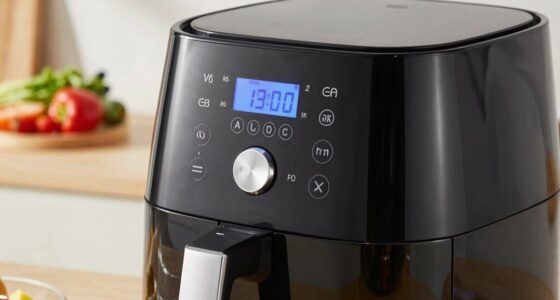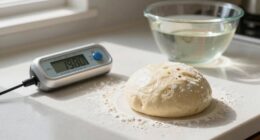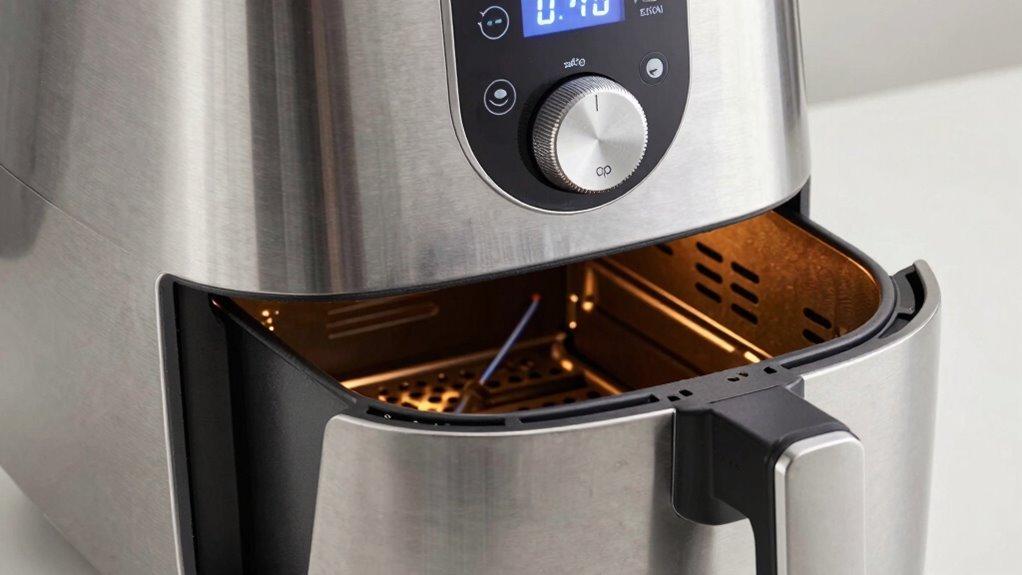

To quickly check if your air fryer runs hot, preheat it on high for 3-5 minutes and then place a reliable oven thermometer inside the basket. Monitor the temperature during operation—if it exceeds safe levels or your air fryer’s normal range, it may be overheating. Keep an eye out for unusual noises or odors. If this sounds familiar, there’s more you can do to guarantee safe, efficient performance, so keep exploring.
Key Takeaways
- Preheat the air fryer to the highest setting for 3-5 minutes before testing.
- Place a reliable food-safe thermometer inside the basket during operation.
- Check if the thermometer reading exceeds the air fryer’s recommended maximum temperature.
- Observe for signs of overheating, such as smoke, burning smell, or unusual noises within one minute.
- Ensure the air fryer is unplugged and cooled down before inspecting for internal or external heat issues.

Vuwwey Instant Read Meat Thermometer Digital with Dual Probe, Food Thermometer for Cooking & Grilling, Large Backlit & Calibration, for Kitchen/Oven/Grill/Smoker/BBQ/Candy/Oil/Fry, Gifts for Men & Dad
【Dual Safe Probes for Multi-Use】Vuwwey meat thermometer probe is great for meat, liquids, oil frying, baking, candy making,…
As an affiliate, we earn on qualifying purchases.
As an affiliate, we earn on qualifying purchases.
Why Checking If Your Air Fryer Runs Too Hot Matters

If your air fryer runs too hot, it can lead to uneven cooking, burnt food, and even safety hazards. Temperature fluctuations caused by overheating can result in inconsistent results, leaving some parts overcooked while others remain undercooked. Overheating also increases the risk of safety hazards, such as fires or damage to the appliance. When your air fryer operates at higher-than-normal temperatures, it puts stress on internal components, which can shorten its lifespan or cause malfunctions. Recognizing if your air fryer runs too hot is essential to prevent these issues. Regularly checking its temperature helps ensure it performs safely and efficiently, reducing the risk of accidents and preserving the quality of your cooked food. Understanding how temperature regulation works in air fryers can help you maintain optimal performance and safety. Proper filter maintenance can also prevent overheating caused by dust or debris buildup in some models, ensuring the appliance’s internal components stay cool and function properly. Additionally, being aware of manufacturer guidelines can help you identify when your air fryer is not operating within safe temperature ranges. Conducting periodic performance checks can further help detect early signs of overheating and avoid costly repairs.

Fryer Oil Test Kit – Visual Two Color Analysis – Deep Fryer Oil Analysis Kit w/Eye Dropper – Monitor Frying Grease Quality for Kitchen, Restaurant, Food Truck – FC3017B FMP 538-1000 by FryOilSaver Co
EASY & ACCURATE OIL QUALITY MONITORING – Perfect for both home kitchens and commercial deep fryers, the FryOilSaver…
As an affiliate, we earn on qualifying purchases.
As an affiliate, we earn on qualifying purchases.
How to Recognize Normal Air Fryer Performance
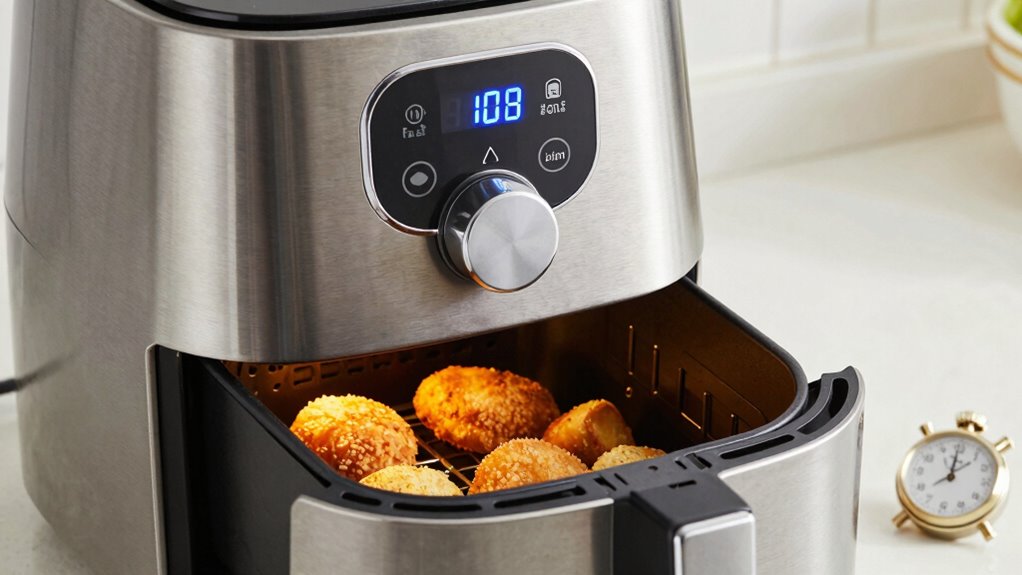
You’ll notice your air fryer performs normally when it maintains consistent cooking temperatures without sudden fluctuations. Proper air circulation makes sure your food cooks evenly and crisply. If these points are met, your appliance is likely functioning as it should. Additionally, energy efficiency is an important factor that can indicate optimal performance. A well-maintained air fryer also exhibits a stable temperature control system, ensuring reliable cooking results. Monitoring proper airflow can help identify if your air fryer is operating at the correct temperature range. Regularly checking airflow patterns can help prevent overheating and ensure consistent results. Being aware of performance indicators can further help you assess whether your air fryer is running hot or within normal parameters.
Consistent Cooking Temperatures
Maintaining consistent cooking temperatures is essential for achieving reliable results with your air fryer. Proper temperature regulation ensures your food cooks evenly and thoroughly, preventing undercooking or burning. When your air fryer operates normally, you’ll notice stable heat levels during the cooking process. If it fluctuates or overheats, it could be a sign of malfunction. Recognizing this consistency helps you identify when your appliance is functioning correctly. Regularly checking that your air fryer maintains even heat not only improves your cooking results but also ensures safe operation. Thermal regulation is a key indicator that your air fryer performs as expected. Additionally, understanding temperature control mechanisms can help you troubleshoot and optimize your device’s performance. Being familiar with heat distribution can also assist in diagnosing irregularities and ensuring your air fryer operates at optimal efficiency. Monitoring thermal stability during use can help you detect early signs of issues before they become more serious, and understanding how circulating hot air works can further improve your cooking consistency.
Proper Air Circulation
When your air fryer is functioning properly, you’ll notice that hot air circulates evenly around the food, promoting uniform cooking and crispiness. Good air circulation ensures heat distribution remains consistent, preventing cold spots or overcooking. To recognize normal performance, observe these signs:
- Airflow feels steady and unobstructed during use
- Food cooks evenly without frequent need for stirring
- No unusual noises from the fan or vents
- The basket and interior remain cool to the touch after cooking
- The airflow pattern remains consistent across different cooking cycles, indicating stable performance
Additionally, a properly operating air fryer should have efficient air circulation that minimizes cooking time and energy use. If any of these indicators are missing, your air fryer might have poor air circulation. This can lead to inconsistent heat distribution and uneven results. Regularly checking these signs helps maintain ideal performance and ensures your food turns out perfectly crispy every time. Ensuring proper air flow can also extend the lifespan of your appliance by preventing overheating and mechanical issues. Recognizing airflow patterns can help you troubleshoot and maintain your air fryer’s optimal operation, especially since proper air circulation is crucial for reliable performance.

Alpha Grillers Meat Thermometer Digital – Instant Read Food Thermometer for Cooking & Grilling – Professional Kitchen Gifts for Men, Dad & Mom
Instant Read Food Thermometer | Our instant read thermometer features a temperature probe and advanced, highly accurate technology…
As an affiliate, we earn on qualifying purchases.
As an affiliate, we earn on qualifying purchases.
How to Prepare Your Air Fryer for a Quick Hot Test

Make sure to preheat your air fryer so it reaches the right temperature quickly. Using a thermometer helps you verify that it’s hot enough for an accurate test. This way, you’ll guarantee consistent results every time you check its performance. Understanding upgrades and maintenance can also help you optimize your air fryer’s longevity and efficiency.
Preheat Properly
Ever wondered why preheating your air fryer matters? Preheating guarantees even heat distribution, helping you accurately assess its temperature. Before starting, remove any leftover air fryer seasoning or residue to prevent interference with your test. Set your air fryer to the desired cooking preset, allowing it to reach the correct temperature. To preheat properly:
- Use the highest temperature setting initially
- Run the air fryer for 3-5 minutes
- Avoid overcrowding the basket during preheat
- Confirm the basket is clean and dry
- Proper preheating creates a consistent environment, so your quick hot test reflects the true performance. This step is vital for detecting if your air fryer runs hot or maintains the right temperature, giving you reliable results for future cooking.
Use a Thermometer
Have you prepared your air fryer correctly for an accurate temperature test? Using a reliable thermometer is essential for precise temperature calibration. Place the thermometer in the center of the basket or tray, ensuring it doesn’t touch the sides or heating element. Set your air fryer to a specific temperature, usually around 350°F (175°C), and let it run for about five minutes. Keep safety precautions in mind: avoid opening the door or basket during the test to prevent burns or accidents. Once the time’s up, carefully check the thermometer reading. If it’s notably higher or lower than your target temperature, your air fryer may need calibration or repairs. This step guarantees you’re cooking at the right heat, ensuring safety and excellent results. Confirming the temperature accuracy helps maintain consistent cooking performance.

Air Fryer Cheat Sheet Magnets Cooking Guide Booklet – Air Fryer Cookbooks – Air Fryer Liners – Air Fryers Kitchen Gifts Gadgets 2026 – Air Fryer Accessories – Air Fryer Cooking Guide
Master Air Frying with All-in-One Air Fryer Cookbook Guide. Featuring 120+ foods across 5 helpful categories, this air…
As an affiliate, we earn on qualifying purchases.
As an affiliate, we earn on qualifying purchases.
Step-by-Step: How to Test If Your Air Fryer Is Overheating
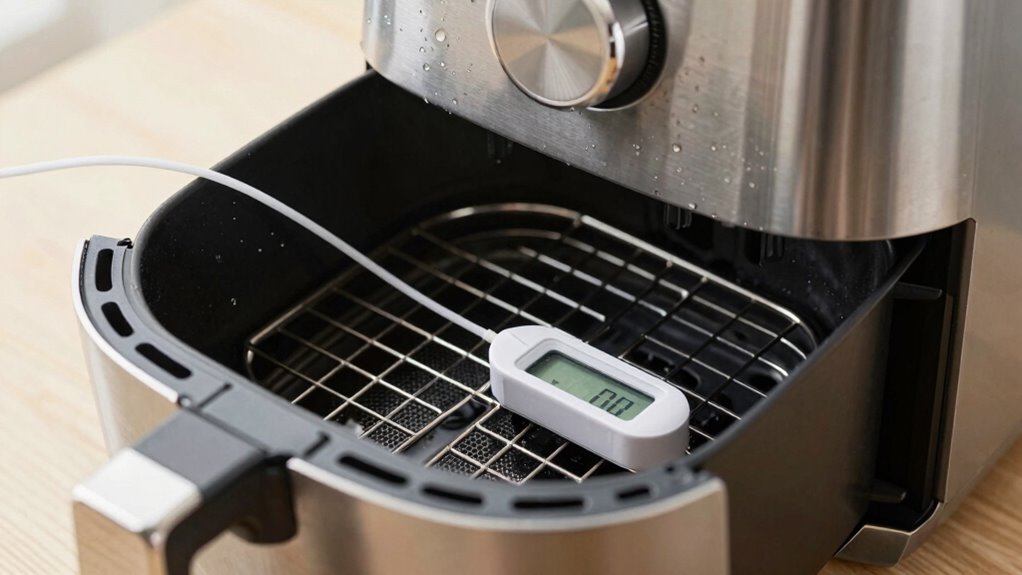
To determine if your air fryer is overheating, start by unplugging it and letting it cool down completely. Once cooled, you can perform a simple test to assess its temperature regulation. Place a thermometer inside the basket and run the air fryer at typical cooking settings for about 10 minutes. Observe the following:
- Check if the temperature exceeds the recommended range for safe operation.
- Listen for unusual noises indicating overheating components.
- Look for any signs of smoke or burning smells during operation.
- Inspect the exterior for excessive heat buildup.
- Regularly monitor the thermal behavior of your air fryer to ensure it maintains safe operating temperatures.
- Keep an eye on automatic shutoff features, which can help prevent overheating during prolonged use.
- Remember that consistent overheating may indicate internal component issues that require professional inspection.
This step is essential for proper air fryer maintenance and ensuring cooking safety. Addressing overheating issues promptly helps prevent potential damage and keeps your appliance functioning efficiently.
How to Read Your Test Results and Spot Overheating Signs

Once you’ve completed the test by running your air fryer and recording the temperature readings, it’s time to interpret what those results mean. Check if the temperature aligns with your air fryer’s recommended calibration range. If it’s considerably higher, your appliance may be overheating. Look for overheating symptoms like uneven cooking, a burning smell, or excessive smoke. Consistently high temperatures suggest your air fryer runs hot and might need calibration or repair. If the readings seem off, consider recalibrating your device to ensure accurate operation. Spotting these signs early helps prevent potential damage and prolongs your air fryer’s lifespan. Remember, a properly calibrated air fryer maintains safe temperatures and cooks food evenly, so understanding your test results is key.
What to Do If Your Air Fryer Is Too Hot or Uneven

If your air fryer is overheating or cooking unevenly, addressing the issue promptly can prevent damage and guarantee better results. Start with basic air fryer maintenance by cleaning the interior and fan to ensure proper airflow. Check the heating element for signs of damage or buildup. To troubleshoot uneven cooking, rotate or shake your food midway through the cooking process. Consider adjusting the temperature or cooking time slightly to compensate for hot spots. Additionally, verify that your food is evenly spaced and not overcrowded.
Regularly clean and shake your air fryer to prevent overheating and uneven cooking.
- Clean the interior and heating element regularly
- Ensure proper airflow by avoiding overcrowding
- Rotate or shake food during cooking
- Adjust temperature settings if necessary
Easy Tips to Keep Your Air Fryer Safe and Efficient

Keeping your air fryer safe and efficient starts with simple, consistent habits. Regular air fryer maintenance prevents buildup and guarantees optimal performance. Always clean the basket and interior after each use, removing grease and food debris that can affect cooking safety. Check the power cord and plug for damage before every use to avoid electrical issues. Avoid overcrowding the basket, which can lead to uneven cooking and strain on the appliance. Use the recommended temperature settings and avoid exceeding the maximum to prevent overheating. Periodically inspect the heating element and fan for dust or debris. By maintaining your air fryer properly, you promote cooking safety and extend its lifespan, making every meal safer and more efficient.
Frequently Asked Questions
Can I Use Household Items to Test My Air Fryer’s Temperature?
Yes, you can use household items as homemade thermometers for household testing methods. For example, place a small, heat-safe object like a candy or sugar thermometer inside your air fryer to monitor the temperature. Alternatively, use a digital thermometer with a probe, which is easy to insert and read. These methods help you quickly check if your air fryer runs hot without needing specialized equipment.
How Often Should I Perform the Hot Test on My Air Fryer?
You should perform the hot test every 3 to 6 months to guarantee your air fryer stays accurate. Regular calibration frequency helps maintain consistent cooking results and extends your appliance’s lifespan. Incorporate this test into your maintenance schedule, especially if you notice uneven cooking or longer cook times. Staying proactive with these checks prevents overheating issues, saving you time and money. Keep your air fryer running smoothly with routine calibration.
What Safety Precautions Are Necessary During the Hot Test?
During the hot test, you should prioritize fire safety by keeping a fire extinguisher nearby and ensuring proper ventilation. Wear protective gear like oven mitts and safety glasses to prevent burns or splashes. Avoid leaving the air fryer unattended, and keep flammable materials away from the appliance. Follow these precautions to stay safe while accurately checking your air fryer’s temperature, reducing risks of accidents or fires.
Are There Specific Signs Indicating My Air Fryer Needs Repair?
Your air fryer might be signaling trouble if alarms go off unexpectedly, like an alarm clock gone rogue. If it takes longer or shorter than usual to cook your favorite snacks, it’s a red flag. Strange noises or uneven browning also hint that your appliance needs repair. Trust your instincts and match these signs with your cooking time; if they don’t align, it’s time to get it checked out.
Can a Faulty Thermostat Cause My Air Fryer to Run Hot?
Yes, a faulty thermostat can cause your air fryer to run hot. If the thermostat calibration is off or there are wiring issues, it might not regulate temperature properly, leading to overheating. You should check the wiring connections and consider replacing or repairing the thermostat. Proper calibration guarantees your air fryer maintains the correct temperature, preventing potential damage or safety hazards caused by overheating.
Conclusion
Now that you know how to quickly test if your air fryer runs hot, you can confidently catch caution signs early. Regularly review and react to your appliance’s behavior, preventing problems before they pop up. Keep it cool, consistent, and safe by staying vigilant and vigilant. With simple steps, you’ll safeguard your kitchen and savor tasty, safe treats every time, turning everyday errands into effortless enjoyment.