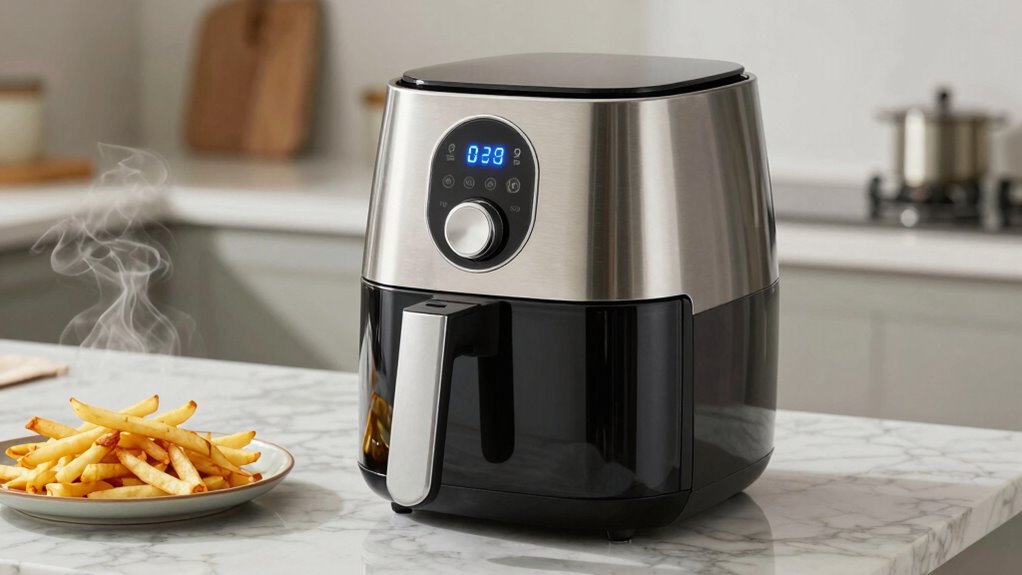

If your air fryer is cooking slower than before, it’s likely due to calibration issues, environmental factors, or improper load. Check that you’ve set the correct temperature and consider using a thermometer to verify it. Clean grease build-up and ensure proper airflow by arranging items correctly. External factors like cold or damp spaces can also affect performance. For more tips on fixing this and optimizing your air fryer’s efficiency, keep exploring ways to enhance its operation.
Key Takeaways
- Calibrated thermostat issues or misread temperatures can cause slower cooking times.
- External factors like placement in cold or humid environments may hinder heating efficiency.
- Overcrowding or blocked airflow around the basket reduces heat circulation, delaying cooking.
- Dirt, grease buildup, or lack of maintenance impairs heating components and performance.
- Voltage fluctuations or damaged power cords can decrease heating speed and overall efficiency.

Hamilton Beach Electric Indoor Searing Grill with Viewing Window & Adjustable Temperature Control to 450F, 118 sq. in. Surface Serves 6, PFAS-Free Removable Nonstick Grate, Stainless Steel
ENJOY OUTDOOR FLAVOR INDOORS. Grill your favorite foods year-round in any weather with this Hamilton Beach indoor grill....
As an affiliate, we earn on qualifying purchases.
Why Is My Air Fryer Cooking Slower Than It Used To?
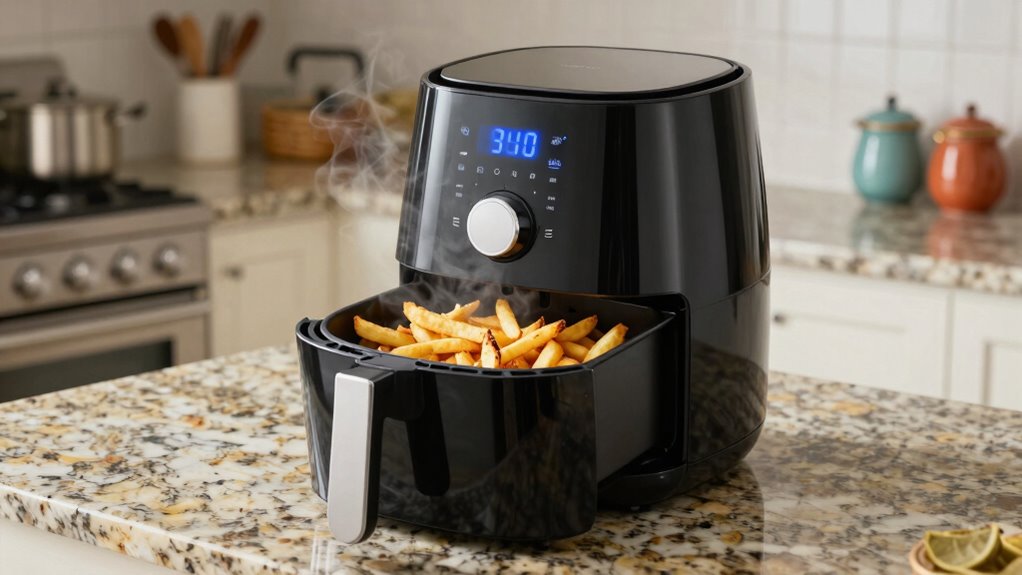
If your air fryer suddenly takes longer to cook food than it used to, there are a few common reasons behind this slowdown. One key factor is temperature accuracy. Over time, your air fryer’s thermostat might become less precise, causing it to heat unevenly or at lower temperatures. This impacts food quality, making dishes take longer to cook and potentially affecting texture and flavor. When temperature control falters, you might notice food isn’t as crispy or cooked through as quickly as before. Ensuring your air fryer maintains proper temperature accuracy helps keep cooking times consistent and food quality high. Additionally, calibration can help restore your air fryer’s proper functioning and ensure accurate cooking times. Regularly cleaning your air fryer and checking for wear and tear can also prevent performance issues that contribute to slower cooking, and keeping an eye on thermal stability is vital for consistent results. Performing routine maintenance checks can further prevent unexpected slowdowns and prolong your appliance’s lifespan.

Chefman Electric Smokeless Indoor Grill w/ Non-Stick Cooking Surface & Adjustable Temperature Knob from Warm to Sear for Customized BBQing, Dishwasher Safe Removable Water Tray, Black
GRILLED FLAVOR, LESS SMOKE: This grill produces less smoke than traditional indoor grills, so you can enjoy perfectly...
As an affiliate, we earn on qualifying purchases.
Check and Set Your Air Fryer’s Temperature Correctly
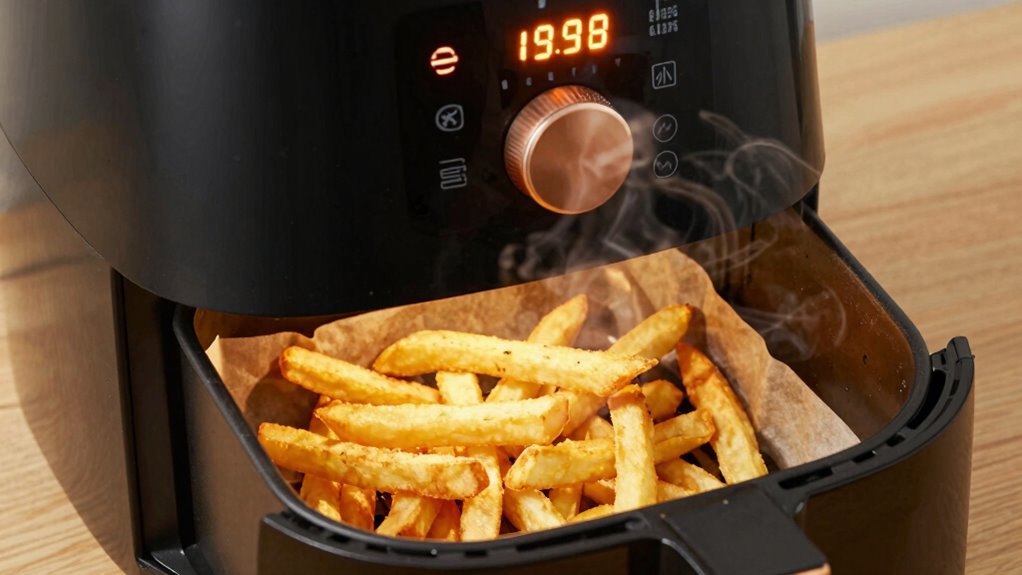
To guarantee your air fryer cooks food evenly and efficiently, it’s important to check and set the temperature correctly. Poor temperature accuracy can lead to uneven cooking, making it seem like your air fryer isn’t working properly. Start by verifying the actual temperature with an oven-safe thermometer, as thermostats can become miscalibrated over time. If the readings don’t match your desired setting, consider recalibrating the thermostat or adjusting the temperature manually. Keep in mind:
Check and calibrate your air fryer’s temperature regularly for even, efficient cooking.
- Regularly test temperature accuracy to catch issues early
- Use a reliable thermometer for precise readings
- Calibrate your thermostat periodically for consistent results
- Remember, small adjustments can greatly improve cooking times and quality
- Ensuring your temperature control is accurate and reliable is key to optimal performance. Additionally, proper air fryer maintenance can prevent calibration issues and ensure consistent cooking results.
Proper temperature management ensures your air fryer performs at its best and cooks faster.

Electric Indoor Grill 1500W -2 in 1 Smokeless Indoor Grill for Kitchen with Non-stick Removable Grill & Griddle Plate,Temperature Control Korean BBQ Grill with 3 Cheese Pans Dishwasher Safe
【2-in-1 Indoor Electric Grill】This 1500W electric indoor grill comes with a baking tray and grill mesh, providing diverse...
As an affiliate, we earn on qualifying purchases.
Clean Your Air Fryer for Better, Faster Results

Even if your air fryer’s temperature is spot-on, leftover grease and food debris can hinder its performance. Regular air fryer maintenance is essential to keep it running efficiently. A thorough cleaning removes buildup that can block airflow and cause uneven cooking, making your cooking technique less effective. Start by unplugging and wiping down the interior with a damp cloth or soft brush to loosen stuck-on residue. Don’t forget to clean the heating element and the basket thoroughly. Using a little vinegar or baking soda can help break down stubborn grease. Proper maintenance ensures your air fryer heats evenly and cooks faster. Regular cleaning routines are key to maintaining optimal performance. Remember, a clean appliance not only improves performance but also extends its lifespan, giving you consistently better results every time. Incorporating preventive maintenance into your cleaning routine can also help monitor and maintain your air fryer’s performance over time. Additionally, following the manufacturer’s maintenance guidelines can prevent common issues and keep your appliance in top shape.

George Foreman Smokeless - Digital Smart Select, Family Size (4-6 Servings), Stainless Steel, GRD6090B
Touch-Sensitive Controls - The digital controls give you time and temperature options for precise cooking, with visual and...
As an affiliate, we earn on qualifying purchases.
Adjust Cooking Time Based on Food Size and Thickness
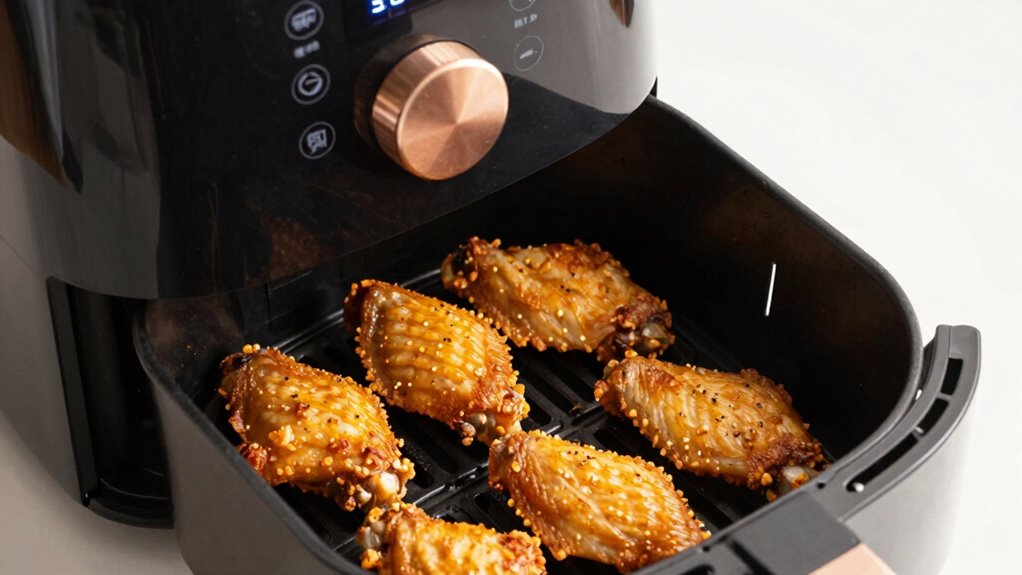
When cooking with your air fryer, remember that thicker or larger pieces take longer to cook through. Adjust the cooking time accordingly to make certain your food is evenly done. Keeping an eye on size and thickness helps you avoid undercooked or overcooked results. Paying attention to food preparation and how you cut or portion items can further ensure consistent cooking. Additionally, understanding cooking times based on food size can improve your results and prevent unnecessary guesswork. For optimal results, consider how air circulation affects cooking speed and evenness. Being aware of proper food placement inside the basket can also influence cooking efficiency and outcome.
Adjust Time for Thickness
Adjusting cooking time based on the thickness of your food is essential for achieving perfect results. Thicker items require more time because the increased food thickness affects heat penetration. Remember, ingredient density also plays a role; denser ingredients need longer to cook through evenly. To guarantee ideal results, consider these tips:
- Thicker foods may need a few extra minutes compared to thinner slices.
- Use a meat thermometer to check for doneness, especially with dense ingredients.
- When in doubt, add time gradually rather than overcooking.
- Keep in mind that uneven thickness can cause inconsistent cooking, so try to cut food uniformly.
- Understanding AI-powered virtual reality in e-learning can help you better visualize how heat penetrates foods of different sizes and shapes, leading to more precise cooking adjustments.
- Additionally, being aware of Support Breakfast options can inspire you with ideas for incorporating nutritious and satisfying meals into your cooking routine.
- Incorporating indoor farming techniques can help you grow fresh herbs and vegetables at home, ensuring your ingredients are always ready for your air fryer.
Consider Food Size
While thickness impacts cooking time, the overall size of your food also plays a significant role in ensuring even doneness. Larger pieces require more time to cook through completely, affecting the food texture and overall cooking duration. If you’re cooking bigger items, like whole chicken breasts or thick-cut fries, expect longer cooking times to achieve that crispy exterior and tender interior. Conversely, smaller or thinner foods will cook faster, so adjusting the time prevents overcooking or burning. Pay attention to how the size influences heat penetration, especially considering food size and heat transfer. Understanding how food size affects heat transfer can help optimize your cooking process. Additionally, the distribution of heat within the air fryer can impact how evenly your food cooks, especially with larger items. Properly managing air circulation is essential for consistent results when cooking bigger or thicker foods. By considering food size, you’ll better control the cooking duration, ensuring consistent results and perfect food texture every time. This simple adjustment helps your air fryer work efficiently, even when cooking larger or thicker items.
External Factors That Can Slow Down Your Air Fryer
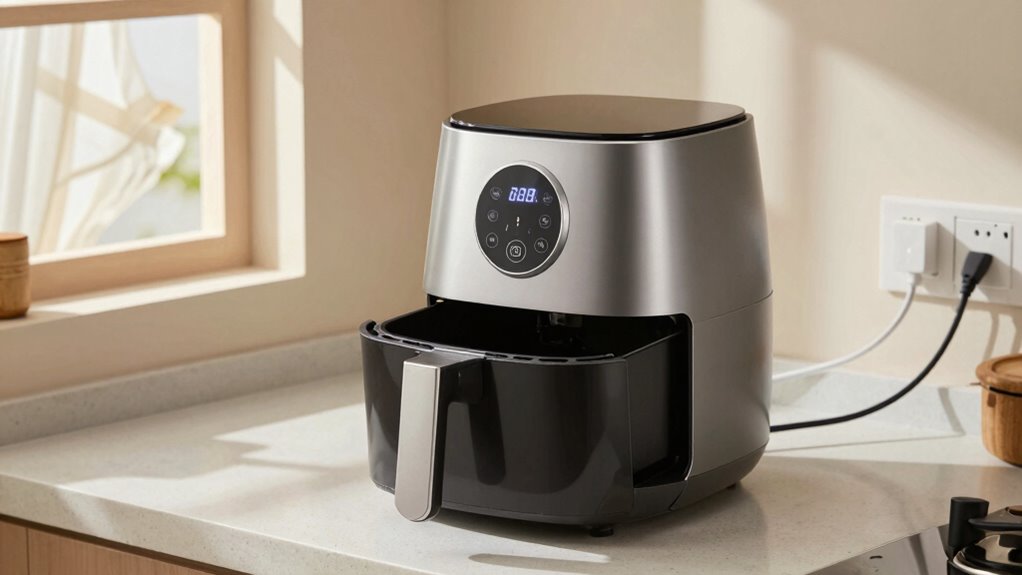
External factors can markedly impact your air fryer’s cooking speed. A fluctuating power supply may cause inconsistent heating, leading to slower cooking times. Additionally, ambient temperature plays a role; colder environments can hinder your air fryer’s ability to reach and maintain the desired temperature efficiently. Other external factors include:
- Voltage fluctuations affecting heating performance
- Obstructions near the air fryer that block airflow
- Using incompatible or damaged power cords
- Placing the appliance in a location with poor ventilation
- Proper placement of the air fryer can help ensure optimal airflow and temperature stability
Being aware of these factors helps you troubleshoot effectively. Ensuring a stable power supply, placing the air fryer in a warm, well-ventilated area, and avoiding electrical issues can keep your appliance running at its bestand prevent unnecessary delays in cooking.
Load Your Air Fryer Properly to Speed Up Cooking
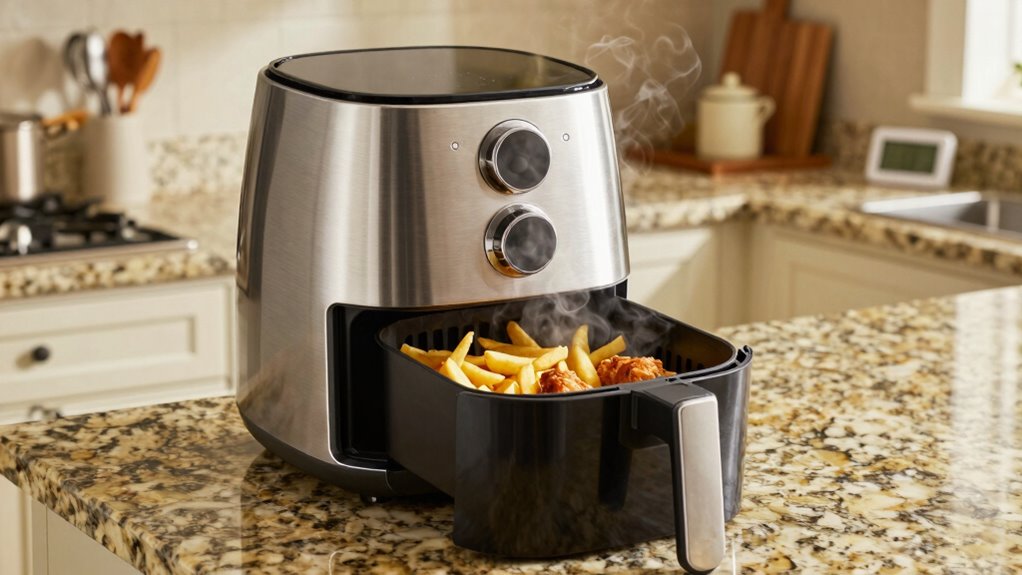
Properly loading your air fryer guarantees it cooks food evenly and quickly. When you focus on air fryer loading, avoid overcrowding the basket, as too much food blocks air circulation. Proper placement means spreading items in a single layer, ensuring hot air reaches all surfaces. Keep larger pieces separated from smaller ones to prevent uneven cooking. If you’re reheating or cooking multiple items, give each enough space so air flows freely around them. This not only speeds up cooking time but also improves texture and crispiness. Remember, the key is to load the basket thoughtfully—don’t pile food on top of each other. With proper placement, your air fryer works more efficiently, saving you time and ensuring perfectly cooked results every time.
Frequently Asked Questions
Can a Power Outage Affect My Air Fryer’s Performance?
A power outage can temporarily affect your air fryer’s performance, as about 70% of appliances need proper reset after electrical interruptions. When a power outage occurs, your device might experience electrical interference or inconsistent voltage, causing it to cook slower or unevenly. To fix this, unplug your air fryer for a few minutes, then plug it back in and reset. This guarantees it functions correctly again.
How Does Altitude Impact Cooking Times in an Air Fryer?
Altitude impacts cooking times in your air fryer because lower air pressure causes boiling points and cooking temperatures to change. You should consider altitude adjustments, as cooking time variations increase at higher elevations. To guarantee your food cooks properly, adjust the temperature and time accordingly, usually increasing cooking times slightly. Keep an eye on your dishes and experiment with small adjustments until you find the perfect settings for your altitude.
Is It Normal for an Air Fryer to Smell During Operation?
Yes, it’s normal for your air fryer to smell during cooking. Think of those air fryer odors as a temporary aroma trail, often caused by the heating element burning off residue or oil. This smell during cooking is usually harmless and will fade as the appliance gets seasoned. To reduce odors, clean your fryer regularly, and don’t worry—your air fryer is just settling into its culinary rhythm.
Should I Replace My Air Fryer’s Heating Element Regularly?
You don’t need to replace your air fryer’s heating element regularly, but good air fryer maintenance can extend its lifespan. Check for signs of wear or damage, like inconsistent heating or strange smells, which might indicate it’s time for a replacement. Typically, heating elements last several years with proper care. Regularly cleaning your device and avoiding overuse can help maintain peak performance and prolong the heating element’s lifespan.
Can Using Metal Accessories Slow Down My Air Fryer’s Cooking?
Using metal accessories can act like a traffic jam in your air fryer, slowing down cooking speed. Metal heats quickly and reflects heat, which interferes with proper air circulation. This disruption makes your food cook more slowly and unevenly. To keep things running smoothly, stick to oven-safe silicone or parchment paper instead of metal accessories. Your air fryer will thank you with faster, more consistent results.
Conclusion
If your air fryer suddenly cooks slower, don’t worry—it’s often fixable. Regularly checking the temperature, keeping it clean, and loading food properly can boost its speed. Did you know that a dirty air fryer can increase cooking time by up to 20%? Staying on top of maintenance and adjusting for food size can save you time and ensure perfect results every time. Your air fryer isn’t broken—it just needs a little TLC!