
To stop food from turning damp after cooking, make sure you cool hot leftovers quickly before sealing them in airtight containers. Leave lids slightly loose to let steam escape and avoid trapping moisture, which causes condensation. Use containers with vents or breathable covers, and store food in a way that minimizes humidity and temperature fluctuations. If you want to discover more tips on keeping your leftovers dry and fresh, keep exploring these suggestions.
Key Takeaways
- Allow hot food to cool at room temperature before sealing to reduce moisture buildup.
- Use breathable or vented containers to let excess steam escape during storage.
- Avoid sealing containers tightly immediately after cooking to prevent condensation.
- Store leftovers in shallow, wide containers for faster cooling and less moisture retention.
- Maintain proper fridge organization and humidity control to prevent dampness from condensation.
Why Do Leftovers Get Damp and How Can You Prevent It?

Leftovers often become damp because moisture escapes from the food and collects inside the container, creating a humid environment. This moisture migration occurs as steam condenses on cooler surfaces within the container, leading to dampness. Poor container ventilation worsens this issue, trapping moisture instead of allowing it to escape. To prevent this, use containers with venting options or leave the lid slightly open to promote airflow. Ensuring proper ventilation helps moisture escape instead of settling on your leftovers, reducing dampness. Additionally, allowing food to cool slightly before sealing the container can minimize steam build-up. Proper container design can further help regulate airflow and moisture escape, keeping leftovers fresher longer. Incorporating ventilation features into container design enhances moisture control and helps maintain food quality, especially when combined with moisture management techniques for optimal freshness. Proper cooling and airflow regulation are essential to prevent excess humidity and spoilage, which can be influenced by air circulation within storage containers.
How Do Humidity and Temperature Affect Food Condensation?
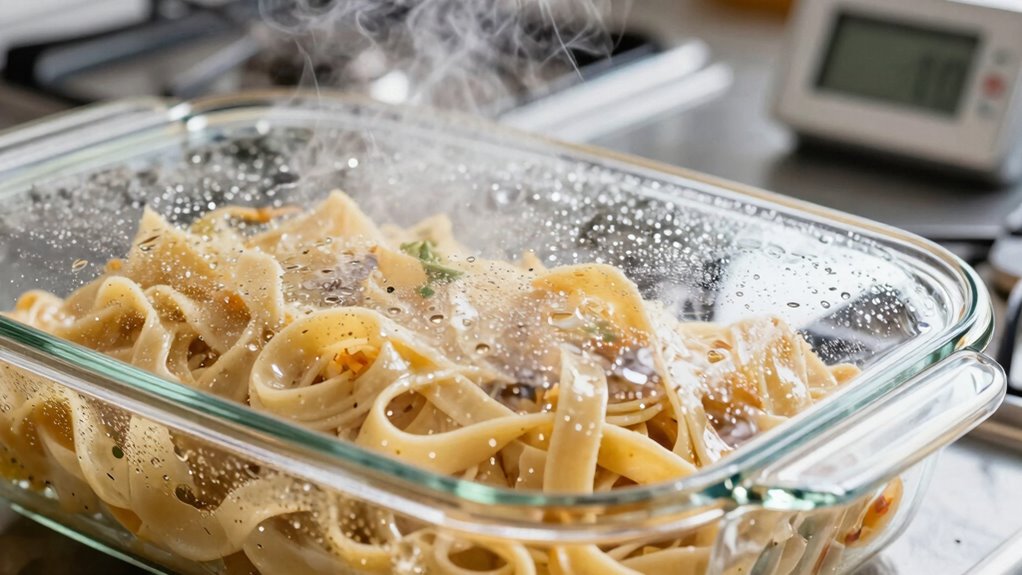
When humidity levels rise, your food is more likely to develop condensation because moisture in the air transfers to the cooler surface. Temperature fluctuations cause moisture to move between the environment and the food, increasing dampness. Understanding how these factors interact helps you prevent excess moisture and keep your leftovers fresher longer. Additionally, proper storage solutions can help control the impact of food preservation and environmental conditions on food preservation. Incorporating ventilation techniques can further reduce humidity around stored food and minimize condensation buildup, especially when using appropriate equipment to maintain optimal conditions. Recognizing how indoor air quality influences moisture levels can also guide you in creating a more controlled environment for your food.
Humidity Levels Increase
Humidity levels increase after cooking because warm, moist air rises and interacts with cooler surfaces, causing water vapor to condense into droplets. This rise in humidity creates the perfect environment for dampness and food spoilage. To prevent this, focus on effective humidity control and condensation prevention strategies. Understanding the humidity levels and how they influence condensation can help you better manage your kitchen environment. You can: – Use exhaust fans or open windows to vent excess moisture – Keep lids on pots to trap steam and reduce humidity in the kitchen – Store leftovers in airtight containers to limit moisture exposure – Wipe down surfaces regularly to remove condensed water droplets. Additionally, being aware of Youngster Choice and its influence on personal routines can provide insights into managing household environments more effectively. Proper humidity management helps minimize condensation and keeps your food dry. Controlling humidity helps minimize condensation and keeps your food dry. Implementing these tips ensures a less damp environment, reducing the risk of mold and spoilage. Proper humidity management is key to preserving your food’s quality after cooking.
Temperature Fluctuations Occur
Temperature fluctuations play a vital role in how food condensation develops after cooking. When your kitchen experiences inconsistent temperature stability, the air around your food changes rapidly, causing moisture to condense on cooler surfaces. Without proper humidity control, these fluctuations make it harder to keep food dry. If the environment shifts from hot to cool quickly, moisture escapes from the food and settles as dampness. Maintaining steady temperatures helps prevent this by reducing sudden air changes that pull moisture out of your food. Using consistent heat and avoiding temperature swings can substantially cut down on condensation. Keeping your environment stable and managing humidity levels ensures that your cooked food stays dry and fresh longer, reducing that annoying dampness caused by fluctuating temperatures. humidity control techniques, such as using dehumidifiers or proper ventilation, can further help in maintaining optimal conditions.
Moisture Transfer Happens
Moisture transfer during and after cooking depends heavily on both humidity levels and temperature differences. When you cook, moisture moves from your food to the surrounding air if the environment is dry, promoting dehydration techniques that help retain moisture. Conversely, in high humidity, moisture from the air can condense on your food, causing dampness. To prevent this, using moisture barriers like airtight containers slows moisture exchange. Temperature fluctuations also intensify condensation, as warm, moist air cools and releases water. Understanding this, you can control condensation by managing humidity and temperature. Consider these factors:
- Keep food covered to reduce moisture exchange
- Use moisture barriers to limit humidity impact
- Maintain stable temperatures to avoid condensation spikes
- Apply dehydration techniques to preserve texture and dryness
- Controlling environmental conditions is essential for minimizing unwanted moisture transfer and ensuring your food stays as intended.
Common Mistakes That Make Your Leftovers Soggy

One common mistake is storing leftovers in improper containers, which can trap moisture and cause sogginess. Using overly sealed containers prevents moisture from escaping, increasing condensation and making food mushy. To keep your leftovers fresh, choose the right storage methods and avoid sealing them too tightly. Additionally, proper container ventilation can help reduce excess moisture buildup and maintain food texture. Implementing moisture control strategies from your storage setup can further enhance moisture management and preserve freshness. Being aware of passive voice detection techniques can also help you write clearer, more direct instructions for proper storage. Adjusting airflow around stored food can also help prevent moisture accumulation and keep leftovers crisp.
Improper Storage Techniques
When leftovers aren’t stored properly, excess moisture can quickly turn them soggy. Poor storage techniques allow humidity to seep in, causing food to absorb moisture and lose texture. Using the right containers is key; always opt for airtight containers to limit air exposure. Additionally, adding moisture barriers, like paper towels, can absorb excess humidity and keep leftovers dry. Avoid overcrowding storage spaces, which traps moisture and promotes sogginess. Be sure to let food cool before sealing, as trapping steam speeds up condensation. Properly stored leftovers stay fresher and maintain their original texture longer. Incorporating airtight containers can further ensure your food stays dry and maintains optimal freshness. Proper storage is simple but effective at preventing unwanted moisture buildup, especially when selecting containers designed for moisture control.
Overly Sealed Containers
While sealing leftovers tightly might seem like the best way to prevent moisture loss, overly airtight containers can actually backfire. When you create an airtight seal, moisture from hot food gets trapped inside, leading to condensation that makes your leftovers soggy. The container materials also matter—some plastics and glass retain heat differently, influencing how much moisture builds up. If you pack food while it’s still hot, the trapped steam can quickly turn into condensation, making the food damp. To avoid this, let your food cool slightly before sealing, and don’t tighten the lid too much right away. Using containers with venting options or leaving a small gap can help moisture escape, keeping your leftovers fresh and less damp.
Best Ways to Cool and Cover Your Leftovers
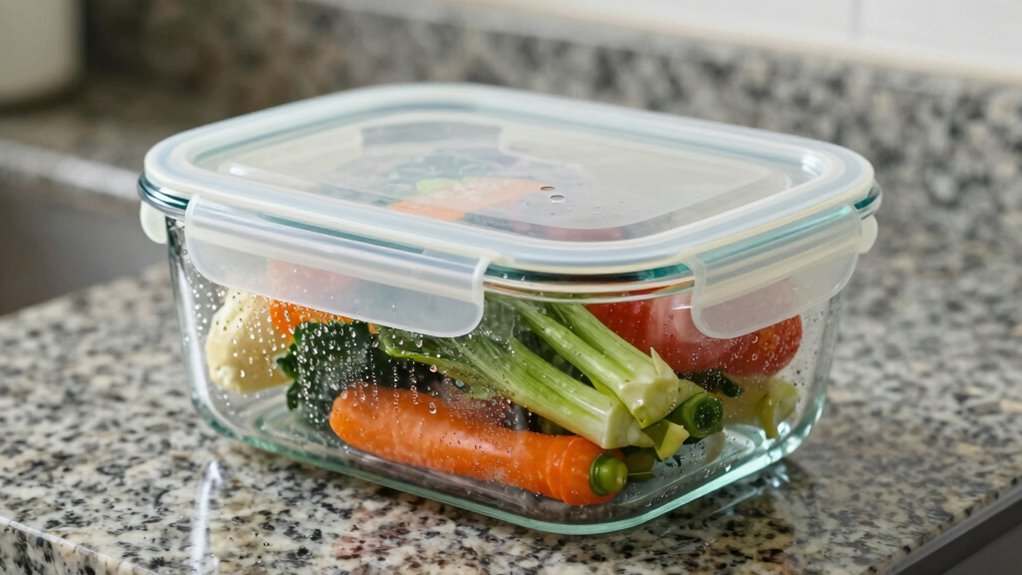
Cooling and covering leftovers properly is essential to keep your food fresh and prevent spoilage. When you cool food correctly, you support food preservation and moisture management, reducing the risk of condensation forming. Always let hot foods cool slightly at room temperature before covering and refrigerating—they should be cooled within two hours. Use shallow containers to speed up cooling and prevent heat buildup. When covering leftovers, opt for breathable lids or loose wraps to allow moisture to escape, avoiding excess dampness.
- Use shallow, wide containers for quick cooling
- Leave lids slightly ajar or use breathable covers
- Cool leftovers at room temperature briefly before refrigerating
- Label and date leftovers for efficient food preservation
What Containers Help Keep Food Dry and Fresh?
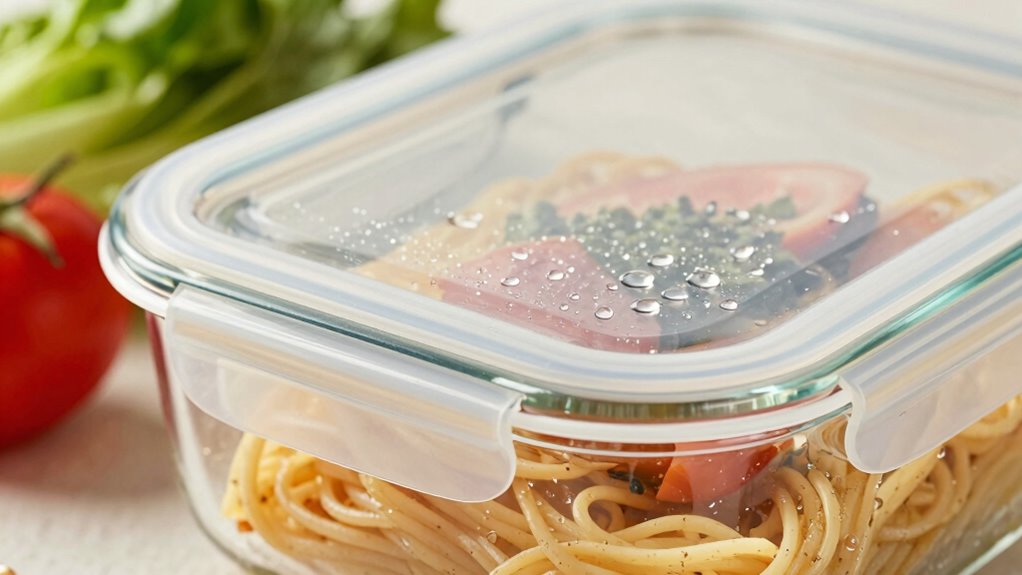
Are you choosing the right containers to keep your food dry and fresh? Airtight containers are your best option because they create a strong moisture barrier, preventing dampness and condensation. Look for containers with tight-fitting lids that seal completely, which helps maintain the ideal environment and keeps moisture out. Glass or high-quality plastic containers with secure seals are effective, as they avoid air leaks that can cause food to become damp. Avoid flimsy or poorly sealing containers, which won’t protect against humidity. Using these moisture barriers ensures your leftovers stay dry, fresh, and ready to enjoy later. Proper containers are essential in stopping condensation from making your food damp after cooking.
How to Store Different Types of Cooked Food Properly
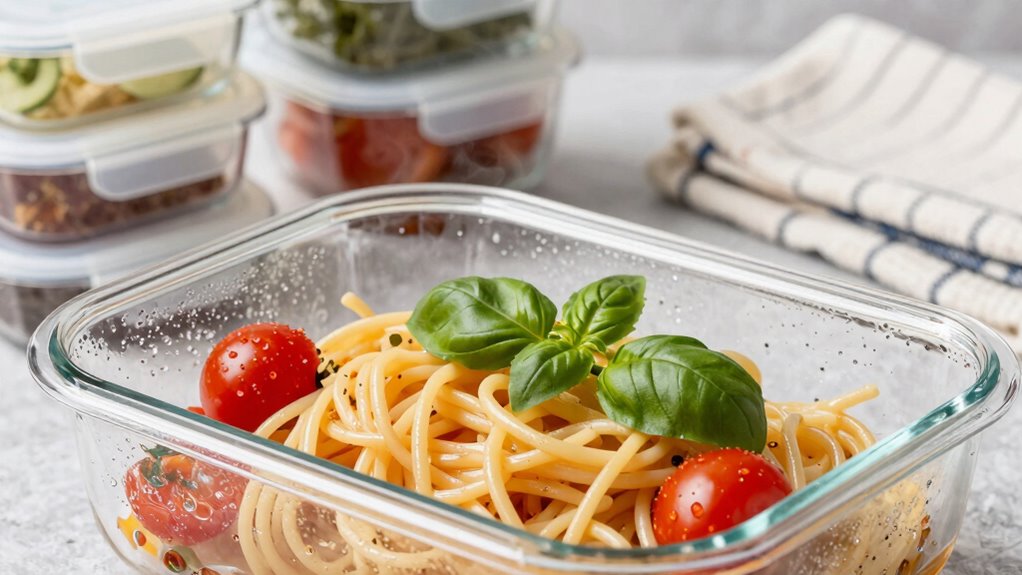
To store cooked food properly, you need to contemplate the specific type of dish and its ingredients. Different foods require different storage methods to prevent moisture buildup and preserve freshness. Use appropriate storage containers that seal tightly to minimize air exposure. For items prone to food dehydration, like roasted vegetables or bread, avoid excess moisture and opt for containers that wick away dampness. Leftovers like soups or stews should be cooled quickly before sealing in airtight containers to prevent condensation. For dishes with high moisture content, consider using vented containers or covering with paper towels to absorb excess humidity. Proper storage helps prevent dampness, preserves flavor, and reduces spoilage, ensuring your cooked food stays fresh longer and free from unwanted condensation.
Tips to Keep Your Leftovers Dry and Tasty
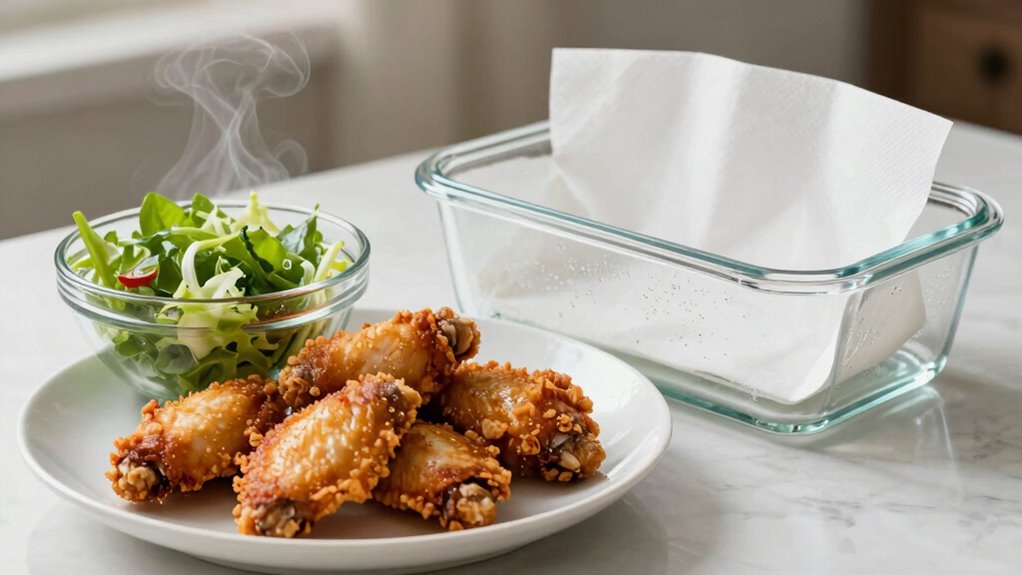
Keeping your leftovers dry and tasty starts with proper storage practices that prevent excess moisture buildup. Use airtight containers to limit air and humidity exposure, which helps maintain food safety and quality. Before storing, let hot foods cool completely to avoid trapping steam inside containers, which causes condensation. Wrapping leftovers with paper towels can absorb excess moisture and prevent sogginess. Organize your fridge to keep leftovers separate from raw foods and avoid cross-contamination. Label containers with dates to ensure timely consumption, reducing spoilage risk. Proper kitchen organization makes it easier to monitor storage conditions and keeps your food fresh longer. By following these tips, you help prevent condensation, preserve flavor, and keep your leftovers safe to eat.
How to Fix Persistent Food Condensation Problems
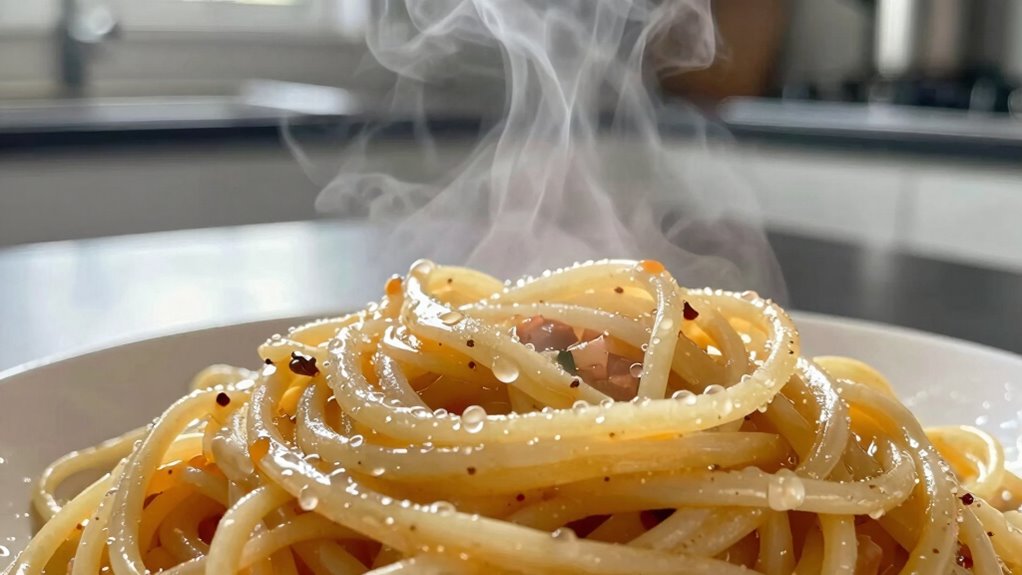
Persistent condensation inside your refrigerator or on leftovers can still be a challenge even when you follow proper storage methods. To fix this, focus on reducing excess moisture and improving airflow. Start by allowing food to cool completely before storing; hot food releases more moisture, leading to condensation. Use food dehydration techniques to remove moisture from leftovers, helping prevent dampness. Adjust your fridge’s humidity settings if possible, and ensure vents are unblocked for better condensation prevention.
- Use airtight containers to limit moisture exposure
- Add a paper towel inside containers to absorb excess humidity
- Regularly check and clean your fridge’s drainage drain
- Store leftovers in smaller portions for faster drying and less condensation
Frequently Asked Questions
Can the Type of Food Influence Condensation Levels After Cooking?
Yes, the food type substantially influences condensation levels after cooking. Foods with high moisture retention, like vegetables or fruits, release more steam, leading to increased condensation. Conversely, dry or low-moisture foods, such as grilled meats, produce less vapor. Your choice of food impacts how much moisture escapes during cooking, affecting the amount of condensation that forms afterward. Adjusting cooking methods or covering techniques can help manage this moisture buildup.
Does the Material of Storage Containers Impact Food Moisture Retention?
You bet, the material of your storage containers really matters. It can make a difference in moisture retention because of material compatibility and container sealing. Glass and stainless steel often prevent excess dampness, while plastic may trap more moisture if not sealed properly. To keep your food fresh and dry, choose containers with tight seals and materials that suit your storage needs, preventing that unwanted dampness from creeping in.
How Does Cooking Method Affect Subsequent Condensation in Leftovers?
Your cooking method directly impacts condensation in leftovers by influencing steam buildup and moisture migration. For instance, boiling or steaming creates more steam, leading to increased moisture and dampness when stored. Conversely, roasting or frying produces less steam, reducing condensation. To prevent damp leftovers, let food cool slightly before storing, and use containers with vents or leave lids slightly ajar to allow moisture to escape, minimizing steam buildup and moisture migration.
Are There Specific Ingredients That Increase Moisture When Stored?
Certain ingredients, like tomatoes, cucumbers, and leafy greens, increase moisture when stored, making food prone to dampness. To control moisture and prevent food dehydration, store these ingredients properly in airtight containers and use paper towels to absorb excess moisture. You can also consider drying out leftovers partially before storage. These steps help maintain ideal moisture control, keeping your food fresh and preventing unwanted dampness after cooking.
Can Microwave Reheating Cause Additional Condensation Issues?
Imagine reheating leftover soup in your microwave; you’ll likely notice microwave moisture causing reheating condensation. Microwave moisture builds up because heat causes water molecules in your food to vaporize, then condense on the cooler microwave interior surfaces. This reheating condensation makes your food damp, especially if you cover it tightly. To reduce this, vent the cover slightly or reheat in shorter intervals, allowing moisture to escape and keeping your food dry.
Conclusion
To keep your leftovers crisp and inviting, imagine their steam gently escaping as you uncover the container, revealing vibrant, dry food inside. By mastering proper cooling, covering, and storing techniques, you create a barrier against dampness that lingers. Think of your kitchen as a fortress, protecting your meals from unwanted moisture. With these simple steps, you’ll savor every bite—fresh, dry, and bursting with flavor—just like a homemade feast waiting to be enjoyed.