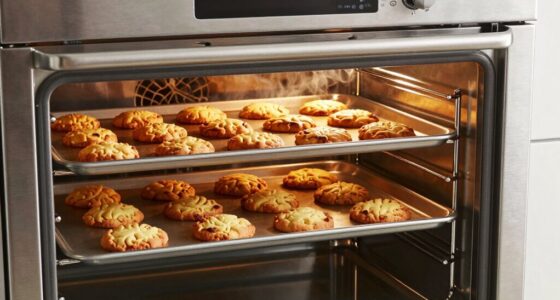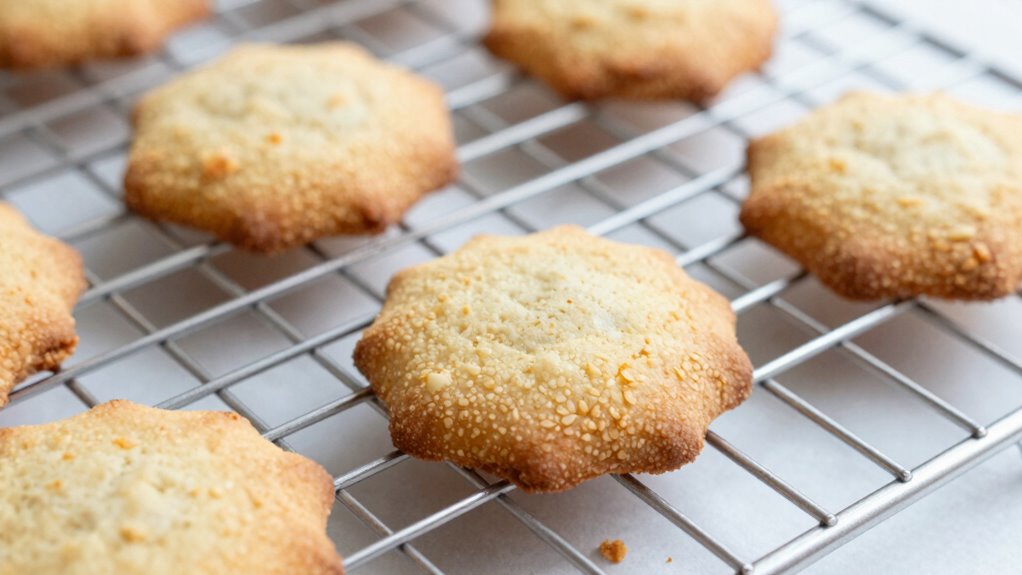

If you cool cookies on a flat surface or warm baking sheet instead of a proper cooling rack, moisture gets trapped underneath. This causes the cookies to soften and lose their crispness. A cooling rack elevates the cookies, allowing air to circulate and moisture to escape. Without proper airflow, your cookies may turn out soft and sticky. Want to discover more tips to keep your cookies perfectly crispy? Keep going to learn the full scoop.
Key Takeaways
- Not transferring cookies immediately to a cooling rack causes moisture buildup, leading to sogginess.
- Cooling cookies on a warm or flat surface traps heat and moisture, softening the texture.
- Using an inadequate cooling rack with poor airflow prevents proper moisture evaporation.
- Cooling cookies directly on baking sheets after baking increases moisture retention, softening cookies.
- Failing to cool cookies completely before storage traps residual moisture, making them soft.
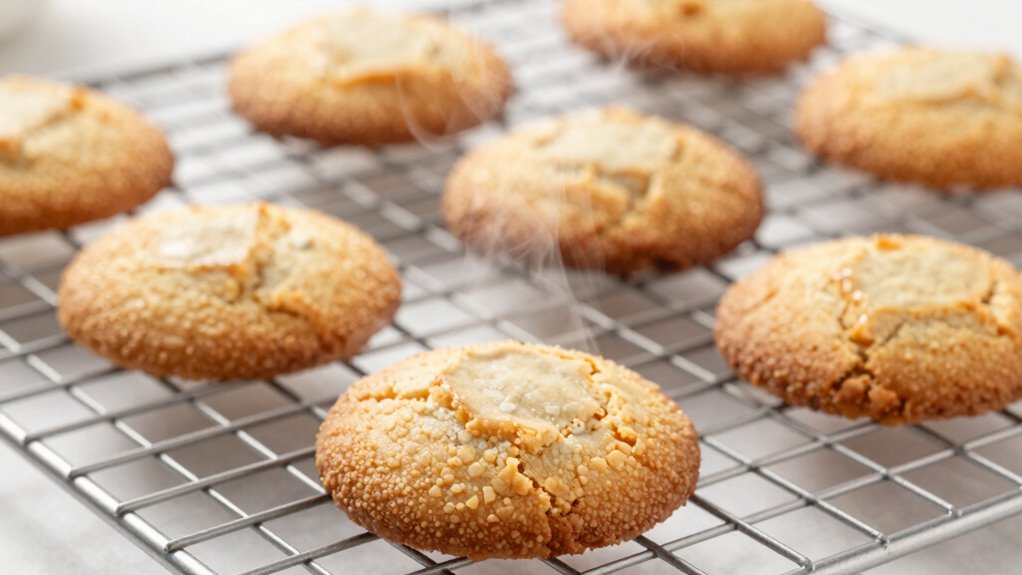
If you’ve ever waited patiently for your freshly baked cookies to cool only to find them turned soft and sticky, the culprit might be your cooling process. The way you handle your cookies after baking can dramatically impact their final texture. One common mistake is how you use your cooling rack. If you place your cookies on a flat surface or leave them on a warm baking sheet, they’re likely to become soggy and lose that perfect crispy edge. To avoid this, you should transfer your cookies to a proper cooling rack immediately after baking. A cooling rack elevates the cookies, allowing air to circulate around them, which helps set their texture and prevents moisture from building up underneath. Proper airflow is crucial in maintaining the desired cookie texture, and using a quality cooling rack specifically designed for baked goods can further enhance airflow and help maintain the ideal texture. Ensuring proper cooling techniques can make all the difference in achieving that perfect crunch.
Another mistake that many bakers make is related to cookie storage. Once your cookies have cooled completely, you might be tempted to stack them in an airtight container or plastic bag right away. While it might seem convenient, this can trap residual moisture, making your cookies go soft faster. Instead, guarantee they’ve cooled thoroughly on the cooling rack first. Proper cookie storage is essential to preserve their texture and freshness. If you need to store them for later, use a container with layers separated by parchment paper to prevent sticking. Keep the container in a cool, dry place, and avoid overcrowding. This way, the cookies maintain their intended texture longer.

2PCS Cooling Racks for Cooking and Baking – 10" x 15"Heavy Duty Stainless Steel Wire Rack for Baking, Grilling, Roasting – Oven & Dishwasher Safe – Fits Jelly Roll Sheet Pan-Silver
QUALITY STAINLESS STEEL CONSTRUCTION: Made from food grade stainless steel instead of metal plating or coating, the grill…
As an affiliate, we earn on qualifying purchases.
As an affiliate, we earn on qualifying purchases.
Frequently Asked Questions
Can Using Parchment Paper Affect Cookie Texture?
Using parchment paper on baking sheets can affect your cookie texture. It creates a non-stick surface that helps cookies slide off easily, but it can also trap moisture underneath, making cookies softer or chewier than intended. If you want crispier cookies, consider baking directly on the baking sheet or using a silicone baking mat. Parchment paper is great for cleanup, but it might subtly change your cookie’s final texture.
How Does Humidity Impact Cookie Crispiness?
You might notice your cookies lose their crispiness on humid days—that’s humidity effects at play. High humidity adds moisture to the air, which then seeps into your cookies, increasing cookie moisture and softening their texture. To keep cookies crisp, store them in airtight containers and avoid humid environments. Understanding humidity effects helps you preserve that perfect crunch, even when the weather is damp.
Is It Better to Store Cookies Immediately or After Cooling?
It’s best to store cookies after they’ve cooled completely to maintain freshness. Place them in airtight containers to prevent moisture loss or absorption, which can make cookies go soft or stale. Keep storage temperature consistent—preferably at room temperature—avoiding heat or humidity. This way, your cookies stay crisp and delicious longer. Avoid storing warm cookies directly, as residual heat can create condensation and spoil their texture.
Do Different Cookie Recipes Require Different Cooling Methods?
Ah, the art of cookie cooling—truly a culinary ballet. Different recipes demand different cooling methods; for instance, delicate shortbread prefers a gentle resting on a cooling surface, while chewier cookies might need a longer cooling duration on a wire rack. Your baking surface and timing can make or break the texture. So, yes, tailoring the cooling process to each recipe guarantees your cookies stay perfect, not sad, soft little disappointments.
Can the Type of Cooling Rack Change Cookie Texture?
Yes, the type of cooling rack can change cookie texture. Different cooling rack types, like wire or solid racks, impact air circulation around your cookies, affecting how they cool. Wire racks promote better airflow, helping cookies stay crisp, while solid racks may trap moisture, making them softer. Selecting the right cooling rack based on your cookie recipe guarantees you achieve the desired cookie texture, whether crispy or chewy.

Cooling Racks for Cooking and Baking – 2 PCS 10" x 15" Grid Wire Baking Rack for Oven Cooking, Baking, Grilling, Roasting – Dishwasher Safe Bacon Rack – Fits Jelly Roll Cookie Sheet Pan
STURDY STAINLESS STEEL CONSTRUCTION: Our baking cooling rack is made of quality materials, prevents bending or deformation when…
As an affiliate, we earn on qualifying purchases.
As an affiliate, we earn on qualifying purchases.
Conclusion
If you keep making this cooling rack mistake, your cookies will turn into soggy, floppy messes that could make even the bravest baker cry! Don’t let your hard work be ruined by a simple slip-up—switch to a wire rack immediately. Otherwise, you’ll end up with cookies so soft and limp, they’ll practically wail for mercy. Fix this tiny error today, and save your treats from a fate worse than burnt cookies!
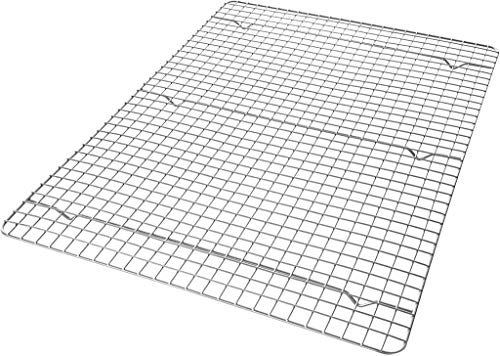
USA Pan X-Large Bakeable Nonstick Cooling Rack, XL, Stainless
Baking and cooling rack is oven safe up to 450 degrees Fahrenheit
As an affiliate, we earn on qualifying purchases.
As an affiliate, we earn on qualifying purchases.
2PCS Cooling Racks for Cooking and Baking – 10" x 15"Heavy Duty Stainless Steel Wire Rack for Baking, Grilling, Roasting – Oven & Dishwasher Safe – Fits Jelly Roll Sheet Pan-Silver
QUALITY STAINLESS STEEL CONSTRUCTION: Made from food grade stainless steel instead of metal plating or coating, the grill…
As an affiliate, we earn on qualifying purchases.
As an affiliate, we earn on qualifying purchases.