To prevent condensation on dessert covers, choose materials like acrylic or tempered glass that minimize moisture buildup. Keep desserts in cooler areas and refrigerate until just before serving to maintain consistent temperatures. Use moisture-absorbing packets inside the covers for added protection. Make certain the covers fit snugly but allow for airflow to avoid trapping humidity. With these strategies, you’ll keep your desserts looking pristine, and you’ll discover even more effective techniques to enhance your display.
Key Takeaways
- Use acrylic or tempered glass covers to minimize condensation and enhance dessert visibility.
- Refrigerate desserts until shortly before serving to maintain stable temperatures and reduce moisture.
- Incorporate desiccants or moisture-absorbing packets inside covers to keep the environment dry.
- Ensure covers fit snugly but allow for airflow to prevent trapped humidity.
- Monitor environmental conditions and consider dehumidifiers for high-humidity display areas.
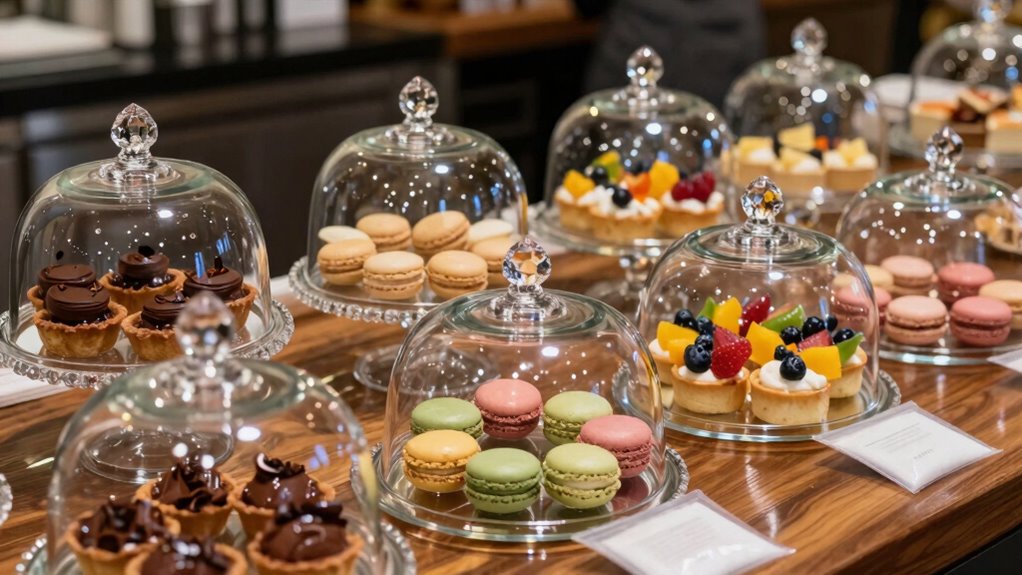
When you cover desserts, condensation can easily become a frustrating issue that ruins their appearance and texture. You’ve probably noticed how moisture forms on the inside of covers, creating unsightly droplets that can drip onto your beautifully crafted treats. This problem often arises in environments with high humidity, making it vital to implement effective humidity control strategies when setting up your dessert display.
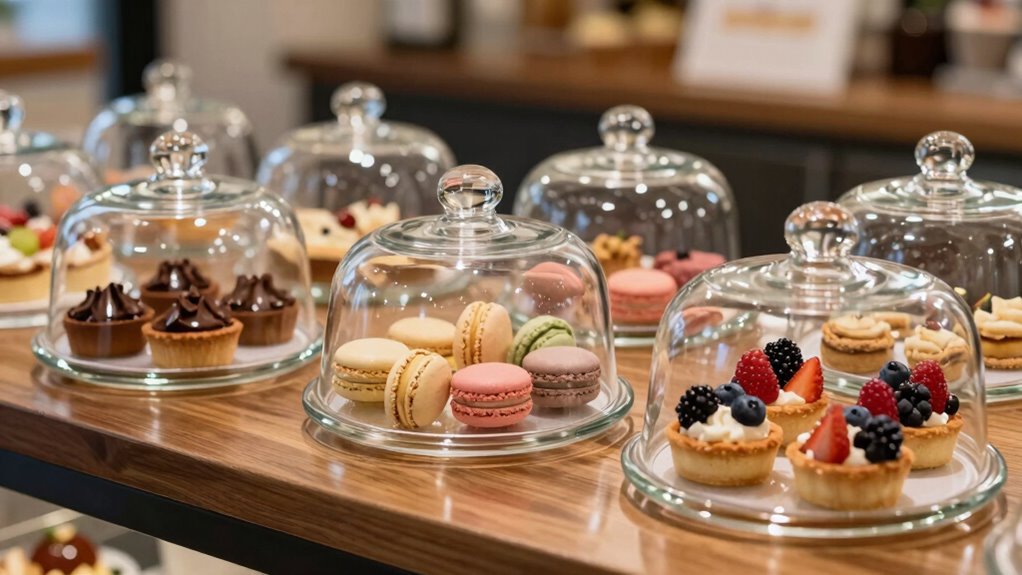
One effective way to tackle this issue is by choosing the right cover materials. Opt for covers made from materials that minimize condensation, like acrylic or tempered glass. These materials not only provide a clear view of your desserts but also help maintain a stable temperature inside. When the temperature inside the cover stays consistent, it reduces the likelihood of moisture forming on the surface. If you’re using plastic wrap or lightweight materials, you might notice more condensation, as these can trap heat and moisture more easily.
Choosing the right cover materials, like acrylic or tempered glass, can effectively minimize condensation and maintain dessert integrity.
Another important aspect of humidity control is temperature management. When you place your desserts in a cooler area, you’re less likely to encounter condensation. If possible, keep your desserts refrigerated until just before serving. This way, they’ll remain cool, and when you cover them, the temperature difference will be less pronounced, decreasing the chances of moisture accumulation. Proper humidity control is essential in high-humidity environments to prevent unwanted moisture buildup. Additionally, understanding the effects of humidity on food presentation can help you better anticipate and prevent issues like condensation. Using climate control methods such as dehumidifiers can further stabilize the environment and reduce moisture issues.
Moreover, consider the use of desiccants or moisture-absorbing packets inside your dessert covers. These can absorb excess moisture, keeping the inside environment dry and preventing condensation from forming. Just make sure they’re food-safe and won’t interfere with the desserts themselves. Using moisture-absorbing materials can further enhance your humidity management efforts.
You should also pay attention to how you cover your desserts. If you’re using a dome or a lid, verify it fits snugly but allows for some airflow. This prevents moisture buildup while still keeping your desserts protected. Avoid tightly sealed covers that trap humidity; they’ll only exacerbate the condensation issue.
Lastly, it’s a good idea to monitor the environment where your desserts are displayed. If you know you’re in a high-humidity area, consider investing in a dehumidifier or air conditioning. This can greatly improve the overall conditions and help you maintain the integrity of your desserts. By taking these steps, you can effectively control humidity and keep your dessert display looking pristine.
As an affiliate, we earn on qualifying purchases.
Frequently Asked Questions
What Types of Covers Are Best for Dessert Displays?
For dessert displays, glass cloches and acrylic domes are your best bets. Glass cloches offer a classic look and let your treats shine, while their solid construction helps maintain temperature. On the other hand, acrylic domes are lightweight and shatter-resistant, making them easy to handle. Both options protect your desserts from dust and pests, so you can showcase your creations while keeping them fresh and appealing. Choose what suits your style!
How Long Can Desserts Be Displayed Without Refrigeration?
If you’re showcasing cupcakes at an outdoor event, you can typically display them for about two hours without refrigeration. Beyond that, the dessert shelf life diminishes due to temperature control issues. For instance, on a warm day, the frosting can melt, compromising both appearance and taste. Keep an eye on the temperature and the environment; if it’s too hot, consider using ice packs or a shaded area to prolong freshness.
Can I Use Plastic Wrap Instead of Covers?
Yes, you can use plastic wrap instead of covers. Plastic wrap offers benefits like easy application and a tight seal that helps keep desserts fresh. It’s a great alternative to materials like aluminum foil or fabric covers, as it prevents air exposure and minimizes moisture loss. Just be mindful of condensation; using it in a cool, dry environment can help maintain your desserts’ quality while displaying them attractively.
What Are the Signs of Spoiled Desserts?
Have you ever wondered what signs indicate dessert freshness? Look for spoilage indicators like off smells, discoloration, or mold. If your dessert feels overly sticky or has a strange texture, it’s likely gone bad. Check the expiration date, too. Trust your senses—if it doesn’t look or smell right, it’s best to toss it. Keeping an eye on these signs helps guarantee you enjoy safe, delicious treats every time.
How Do I Properly Clean Dessert Covers?
To properly clean dessert covers, start by identifying the cover materials. For glass or acrylic, use a gentle glass cleaner and a microfiber cloth. Avoid abrasive materials that can scratch. For plastic covers, warm soapy water works best; rinse thoroughly. Employ cleaning techniques like wiping in circular motions to guarantee a streak-free finish. Always dry your covers completely before using them again to prevent moisture buildup that can affect your desserts.
As an affiliate, we earn on qualifying purchases.
Conclusion
By following these tips, you can keep your dessert covers looking pristine and your treats tempting. Think of condensation as an unwelcome guest at your dessert party—by controlling humidity and temperature, you can guarantee your sweets shine like stars in the night sky. So, next time you set up your display, remember: a little preparation goes a long way in creating a delightful experience for your guests. Your desserts deserve to be the center of attention!
moisture-absorbing packets for food display
As an affiliate, we earn on qualifying purchases.
As an affiliate, we earn on qualifying purchases.
refrigerated dessert display case
As an affiliate, we earn on qualifying purchases.
As an affiliate, we earn on qualifying purchases.