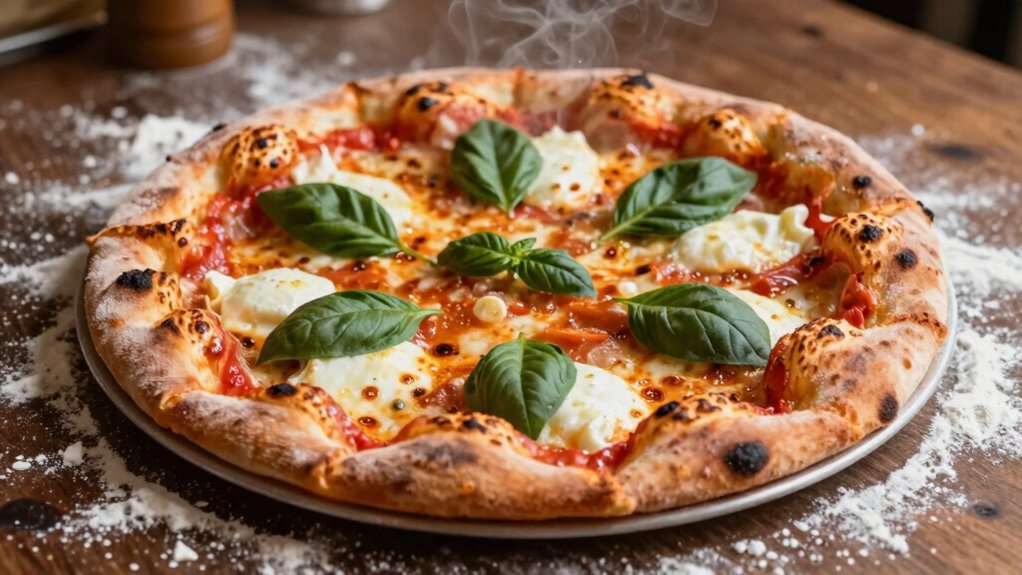
To stop burnt pizza bottoms, choose high-protein flours like bread flour or Tipo ’00’ for a chewier crust and better heat resistance. Preheat your pizza stone and dust your peel generously with flour or cornmeal to prevent sticking. When launching your pizza, aim for a smooth transfer to guarantee even baking without tearing. Remember, getting the right dough thickness is essential too. Stick around for more tips on perfecting your pizza-making process.
Key Takeaways
- Use high-protein flours like bread flour or Tipo ’00’ for a chewier crust and better heat resistance.
- Preheat your pizza stone to ensure even cooking and prevent burnt bottoms.
- Generously dust the pizza peel with flour or cornmeal to facilitate smooth transfers and avoid sticking.
- Monitor baking time and temperature closely to prevent scorching the pizza bottom.
- Opt for a thicker crust, which reduces burning risks and allows for more even cooking.
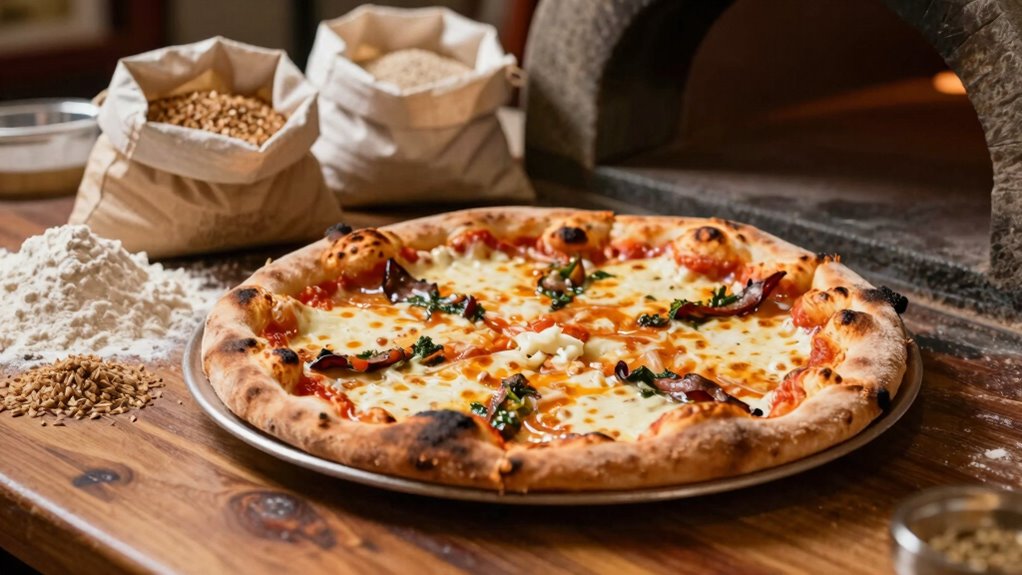
When you’re craving a perfect slice of pizza, the last thing you want is a burnt bottom ruining your meal. You might wonder why this keeps happening, especially when you’ve followed the recipe to the letter. A common culprit could be the launch and flour choices you make before you even start pizza baking. Getting these aspects right can mean the difference between a delicious pizza and a charred disappointment.
First, let’s talk about the flour. Not all flours are created equal when it comes to pizza. If you’re using all-purpose flour, you might not get the desired results. Instead, opt for a high-protein flour, like bread flour or Tipo ’00’. These flours help create a chewier crust with better structure, allowing for more even cooking. The protein content in these flours also aids in controlling dough thickness, which plays a critical role in your pizza’s final outcome. A thicker dough can hold up better against the heat, while a thinner crust might be more prone to burning.
Choosing the right flour is crucial; high-protein options like bread flour or Tipo ’00’ yield a chewier, more resilient crust.
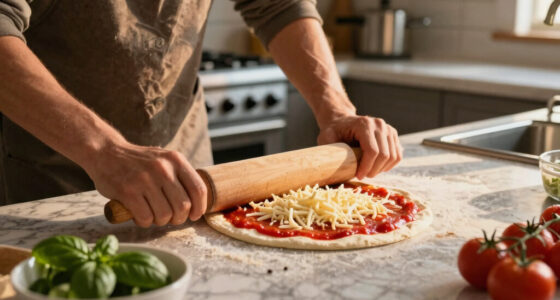
Next, consider how you launch your pizza into the oven. If you’re using a pizza stone, preheating it is essential. But just as important is how you transfer the pizza. If you’re not using enough flour or cornmeal on your pizza peel, your pizza might stick and warp as you try to slide it onto the hot stone. This can lead to uneven cooking and, inevitably, a burnt bottom. Always dust your peel generously with flour or cornmeal before placing your dough onto it. Additionally, oven temperature can significantly impact your pizza’s bottom, so adjusting it may help prevent burning. To further reduce the chance of burning, consider using a baking steel, which conducts heat more evenly than traditional stones.
Using a pizza peel with a proper dusting of flour or cornmeal can also help you transfer the pizza smoothly without sticking or tearing, which contributes to even baking. Dough thickness also plays a significant role in how your pizza bakes. A thicker crust will take longer to cook, reducing the chances of burning. However, if you push it too far, you risk an undercooked center. Finding that sweet spot takes practice, but it’s worth it for that perfectly balanced slice. Additionally, experimenting with different launch techniques can improve your overall baking results and help avoid bottom scorching.
Finally, keep an eye on the baking time and temperature. An oven that’s too hot can easily scorch the bottom of your pizza. Consider lowering the temperature slightly if you notice this happening.

Old Stone Round Pizza Stone, 16-Inch
- Versatile for pizzas and baked goods: Makes restaurant-quality pizzas, bread, pastries, vegetables
- Durable and crack-resistant: Crafted from lead-free clay blend
- Even heat distribution: Absorbs and transfers oven heat evenly
As an affiliate, we earn on qualifying purchases.
As an affiliate, we earn on qualifying purchases.
Frequently Asked Questions
What Temperature Should I Preheat My Oven for Pizza?
You should preheat your oven to 475°F (245°C) for the best pizza results. This temperature helps achieve that crispy crust you love. Make sure you allow the oven to fully heat before placing your pizza inside; this can take about 20-30 minutes. Keep an eye on your cooking times, as they can vary depending on the thickness of your crust and toppings. Enjoy your perfectly baked pizza!
How Can I Tell When My Pizza Is Done?
You can tell your pizza’s done by checking the crust color. It should be a golden brown, indicating it’s baked through. Give it a gentle shake; if it slides easily on the baking surface, that’s a good sign. You might also want to look for bubbling cheese and slightly charred edges for added flavor. Trust your instincts, and remember, a great pizza comes from careful observation during the baking process!
Can I Use Frozen Pizza Dough?
Yes, you can use frozen pizza dough! But wait—before you jump in, you need to know the best thawing methods. You can either leave it in the fridge overnight or let it sit at room temperature for about two hours. Both methods will guarantee your dough rises properly. Just remember, don’t rush the process; a little patience makes all the difference in achieving that perfect crust. Enjoy your pizza-making adventure!
What Toppings Are Best for a Crispy Crust?
For a crispy crust, you’ll want to choose light topping combinations. Go for a mix of fresh veggies like bell peppers and mushrooms, paired with lean proteins like chicken or prosciutto. When it comes to cheese types, opt for low-moisture mozzarella or a sprinkle of parmesan to avoid sogginess. This way, you’ll keep your crust crunchy while enjoying a flavorful pizza. Keep it simple, and you’ll love the results!
How Do I Store Leftover Pizza Properly?
If you’ve got leftover pizza, treat it like a vintage vinyl record! First, wrap each slice in aluminum foil or place it in an airtight container to guarantee proper pizza preservation. For reheating techniques, the oven’s your best bet—preheat it to 375°F and bake for about 10 minutes. You’ll enjoy a crispy crust without losing that delicious flavor. Avoid the microwave if you can; it makes the crust soggy!
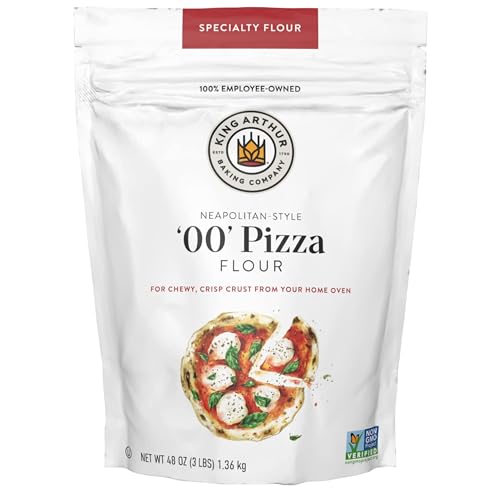
King Arthur 00 Pizza Flour, Non-GMO Project Verified, 100% American Grown Wheat, 3 lb Bag
- Authentic Italian Texture: Creates authentic Neapolitan pizza crusts
- Premium American Wheat: Made from 100% American-grown wheat
- Versatile Baking Use: Suitable for pizza, pasta, and more
As an affiliate, we earn on qualifying purchases.
As an affiliate, we earn on qualifying purchases.
Conclusion
In your quest for the perfect pizza, think of your crust like a canvas; the right flour is your paint. Just like a brilliant artist avoids muddy colors, you’ll want to steer clear of burnt bottoms. Remember the time you pulled a charred slice from the oven, only to find your masterpiece ruined? By choosing the right flour and mastering your launch technique, you’ll create a pizza that’s as beautiful as it is delicious—no more burnt offerings!

King Arthur Premium Semolina Flour: Coarse Ground, High Protein Durum Wheat for Perfect Pasta, Pizza, and Bread Making – Kosher, 3 lbs Resealable Bag, USA-Grown Wheat, Versatile Baking Ingredient
- Versatile Baking Use: Ideal for bread, pizza, and pasta
- Premium Quality: Made from 100% USA-grown durum wheat
- High Protein Content: Creates strong, elastic dough for various baked goods
As an affiliate, we earn on qualifying purchases.
As an affiliate, we earn on qualifying purchases.

ThermiChef 16" x 16" Pizza Steel – 1/4" Steel, 17.6 lbs
- Efficient Heat Conductivity: Cooks pizza in under 8 minutes
- Large 16×16 Inch Size: Fits most standard ovens
- Versatile Steel Thickness: 1/4 inch ideal for various foods
As an affiliate, we earn on qualifying purchases.
As an affiliate, we earn on qualifying purchases.