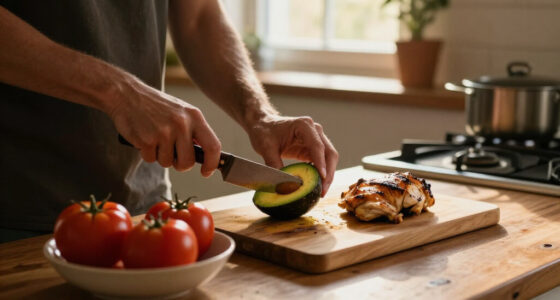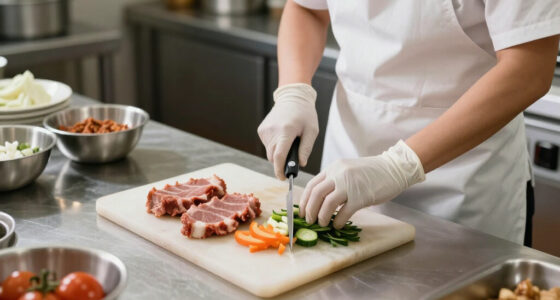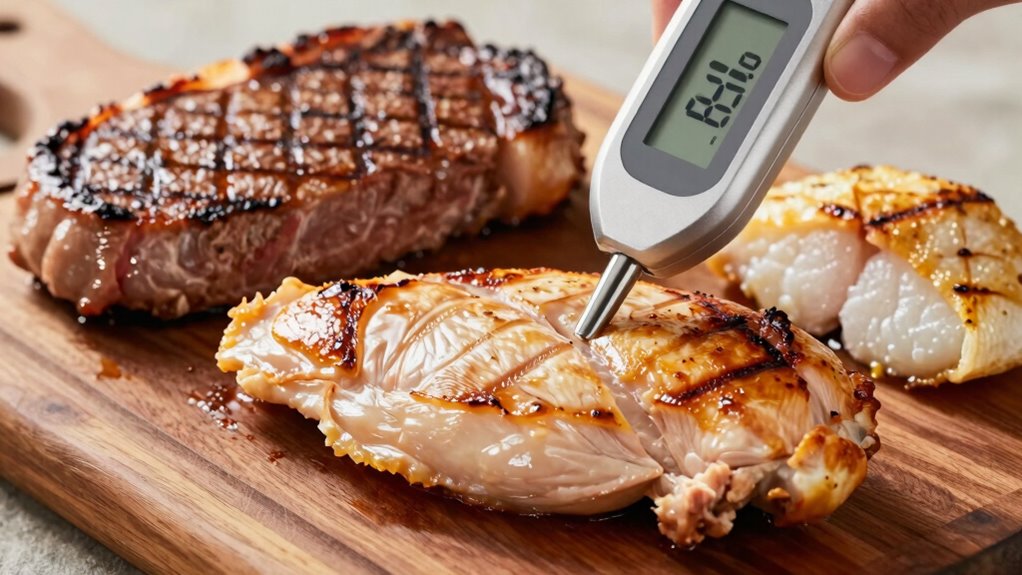

To guarantee your meats are food-safe and flavorful, you need to cook them to specific internal temperatures. For chicken and turkey, reach 165°F; for beef, cook to 120-145°F depending on your preferred doneness; pork should hit 145°F and rest for safety and juiciness; and fish needs to reach 145°F. Using a reliable meat thermometer helps you avoid under or overcooking. Keep going, and you’ll discover tips for perfect results every time.

Get kitchen gear delivered free with Prime
- Fast, free delivery on millions of items
- Prime Video, Amazon Music and more included
- Member-only deals all year
Key Takeaways
- Cook poultry to an internal temperature of 165°F to ensure safety from Salmonella and Campylobacter.
- Beef steaks should reach 120-145°F based on desired doneness, then rest before serving.
- Pork and ham need a minimum internal temperature of 145°F, with a 3-minute rest for whole cuts.
- Fish and seafood must be cooked to 145°F or until opaque and firm for safety and best texture.
- Use a calibrated food thermometer to accurately check internal temperatures and prevent undercooking or overcooking.
digital meat thermometer for cooking
As an affiliate, we earn on qualifying purchases.
As an affiliate, we earn on qualifying purchases.
Why Knowing Safe Internal Temperatures Is Essential for Food Safety
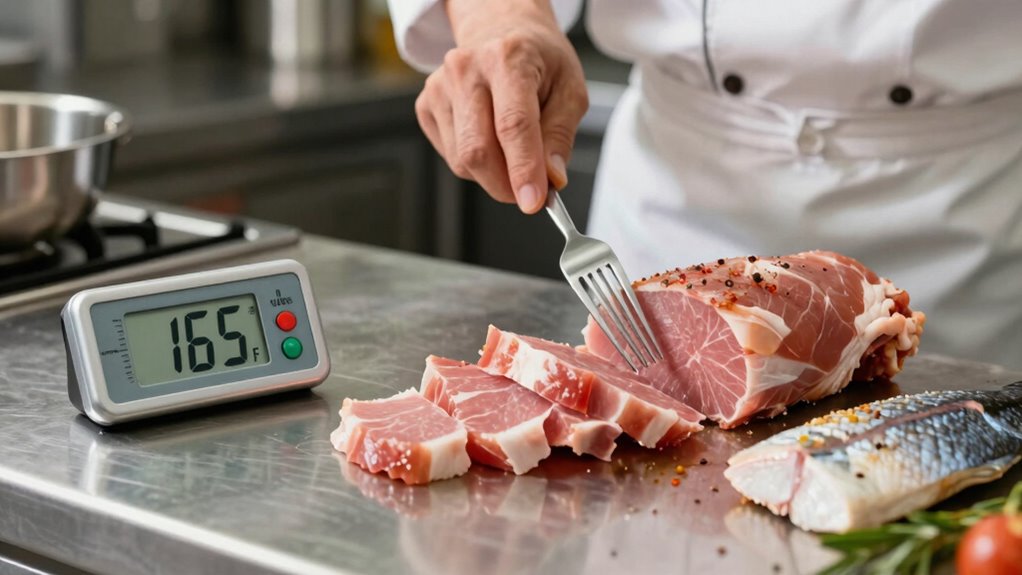
Knowing the safe internal temperatures of cooked foods is crucial because it directly prevents foodborne illnesses. When you understand these temperatures, you reduce risks like Salmonella or Trichinella, protecting your health. Cross contamination prevention starts with proper meat storage tips; keep raw meats separate from other foods and store them at the correct temperature. This prevents juices from raw meat from contaminating ready-to-eat items. Using the right internal temperature ensures meat is cooked thoroughly, eliminating harmful bacteria. Proper storage and temperature awareness are essential steps in maintaining food safety and preventing foodborne illnesses at home. Additionally, understanding meat safety guidelines helps ensure proper handling from purchase to plate. Knowing how to interpret contrast ratios can also help in choosing the right cooking equipment to achieve safe and optimal results. Moreover, familiarizing yourself with temperature monitoring tools can improve the accuracy of your cooking process.
As an affiliate, we earn on qualifying purchases.
How to Use a Meat Thermometer Correctly for Accurate Results

To get accurate temperature readings, you need to use your meat thermometer correctly. First, insert the probe into the thickest part of the meat, avoiding bones and fat, which can give false readings. Make sure your meat has been stored properly in the refrigerator to prevent bacteria growth before cooking. When seasoning, wait until after cooking to add salt or spices, as these won’t affect temperature accuracy. Always clean your thermometer with hot, soapy water before and after each use to prevent cross-contamination. If you’re using a dial thermometer, calibrate it regularly to ensure precision. Proper meat storage and correct thermometer technique are key to achieving safe, perfectly cooked dishes. Using modern technology such as digital thermometers can help improve your cooking accuracy and safety. Additionally, understanding safe internal temperatures for different meats ensures you cook them thoroughly and safely. Monitoring air quality considerations can also contribute to a healthier cooking environment by reducing airborne contaminants during food preparation. Regularly checking meat temperature during cooking helps prevent undercooking or overcooking, ensuring food safety and optimal texture.
As an affiliate, we earn on qualifying purchases.
What Are the Safe Internal Temperatures for Chicken and Turkey?

To guarantee your chicken and turkey are safe to eat, you need to know the recommended internal temperatures. Using a food thermometer helps you check accurately, so you don’t rely on visual cues alone. Properly cooked poultry will reach specific temperatures and show clear signs of doneness. Additionally, understanding the safe cooking temperatures for different poultry cuts ensures you maintain food safety and quality. For example, aquatic exercise principles highlight the importance of precise temperature control in water-based therapies, emphasizing consistency for safety and effectiveness. Being aware of affiliate disclosure policies can also help you make informed purchasing decisions when selecting cooking tools and thermometers.
Recommended Internal Temperature
Ensuring your chicken and turkey reach the correct internal temperature is essential for safety and quality. The recommended internal temperature for cooked poultry is 165°F (74°C). This temperature guarantees that harmful bacteria like Salmonella and Campylobacter are destroyed, making your meal safe to eat. Use a reliable food thermometer to check the internal temperature at the thickest part of the meat without touching bone. Keep in mind that reaching this temperature not only guarantees food safety but also helps maintain ideal texture and flavor. Avoid undercooking, which increases foodborne illness risk, or overcooking, which can dry out the meat. Staying within the recommended internal temperature range is the simplest way to serve perfectly cooked, safe chicken and turkey. Proper cooking techniques are essential for maintaining food safety and quality.
Using a Food Thermometer
Using a food thermometer is the most reliable way to confirm your poultry reaches a safe internal temperature. Accurate thermometer readings ensure proper cooking safety and prevent undercooking. To get precise results, check that your thermometer is calibrated correctly. Insert the thermometer into the thickest part of the meat without touching bone. Remember, a digital thermometer often provides faster, more accurate readings than analog ones. Keep your thermometer clean to maintain accuracy. Here’s a quick guide:
| Step | Tip | Benefit |
|---|---|---|
| Calibrate Thermometer | Check accuracy before use | Ensures reliable readings |
| Insert Properly | Avoid bone and fat | Accurate internal temp measurement |
| Wait for Stability | Keep in place until reading stabilizes | Precise temperature confirmation |
| Clean After Use | Use hot, soapy water | Maintains thermometer accuracy |
| Record Temperatures | Track for consistent results | Ensures ongoing cooking safety |
Additionally, understanding safe internal temperatures helps prevent foodborne illnesses.
Signs of Proper Cooking
Checking your food thermometer is just the first step—knowing the proper internal temperatures for poultry confirms safe cooking. Beyond using a thermometer, look for signs of proper doneness. Visual inspection reveals that cooked chicken or turkey should no longer be pink inside and juices should run clear. Texture analysis helps too: the meat should feel firm but not rubbery or overly dry. Properly cooked poultry will have a consistent, white or tan appearance throughout, with no translucent or raw-looking areas. These signs, combined with the correct temperature—165°F for chicken and turkey—ensure safety. Relying solely on visual cues can be misleading, so always confirm with a thermometer for peace of mind. Proper signs of cooking help you serve safe, delicious poultry every time. Additionally, understanding juice extraction techniques can help you prepare flavorful broths or sauces that complement your cooked poultry.
As an affiliate, we earn on qualifying purchases.
How to Cook Beef and Steak to the Perfect Temperature
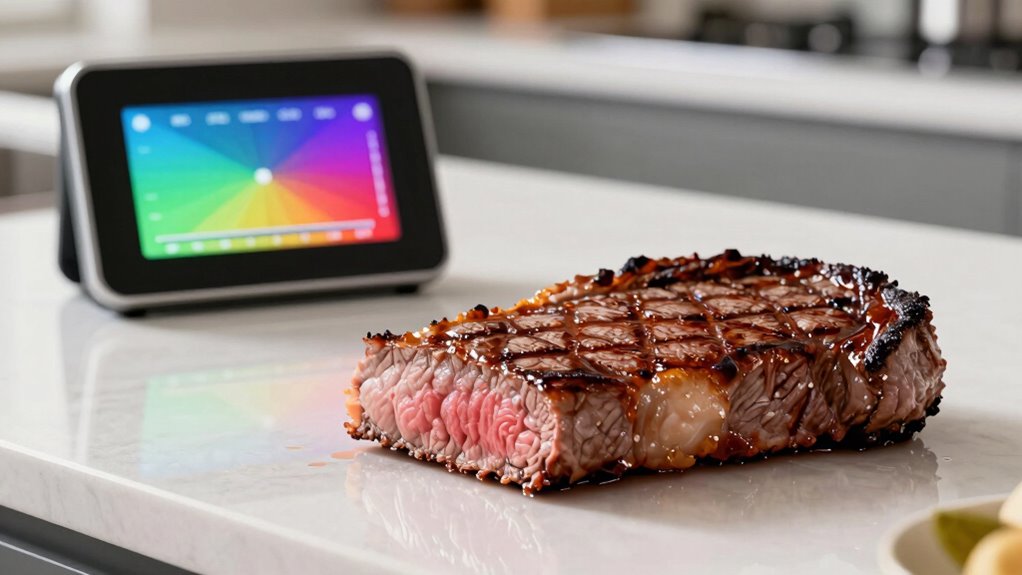
To cook beef and steak to the perfect temperature, you need to follow specific guidelines based on your desired doneness. Using a reliable meat thermometer guarantees you hit the right internal temperature without overcooking. Mastering the proper cooking techniques helps you achieve juicy, flavorful steaks every time.
Temperature Guidelines for Beef
Achieving the perfect doneness for beef and steak depends on reaching specific internal temperatures, which guarantee both safety and ideal flavor. Proper temperature ensures beef tenderness and highlights marbling importance, enhancing juiciness and richness.
- For rare beef, aim for 120-125°F; you’ll enjoy a soft, tender center with vibrant color.
- For medium-rare, target 130-135°F; this preserves beef tenderness while allowing some marbling to melt.
- For medium, cook to 140-145°F; the meat remains juicy but firmer, balancing tenderness and flavor.
Always use a reliable thermometer and let the beef rest before serving. This ensures the juices redistribute and the temperature stabilizes, maximizing marbling importance and tenderness.
Cooking Techniques for Steak
Mastering the art of cooking steak involves selecting the right technique to reach your desired internal temperature. Grilling techniques are popular for achieving perfect doneness, whether you prefer rare or well-done. Start by preheating your grill to the appropriate temperature and seasoning your steak with seasoning tips like salt, pepper, and herbs to enhance flavor. Use a meat thermometer to monitor the internal temperature as you cook. For thicker cuts, sear each side over high heat to develop a crust, then finish on lower heat to avoid overcooking. Remember, resting the steak for a few minutes allows juices to redistribute, ensuring a juicy, perfectly cooked result. With these techniques, you’ll master steak cooking and serve delicious, safe-to-eat steaks every time.
What Temperatures Are Safe for Pork and Ham?
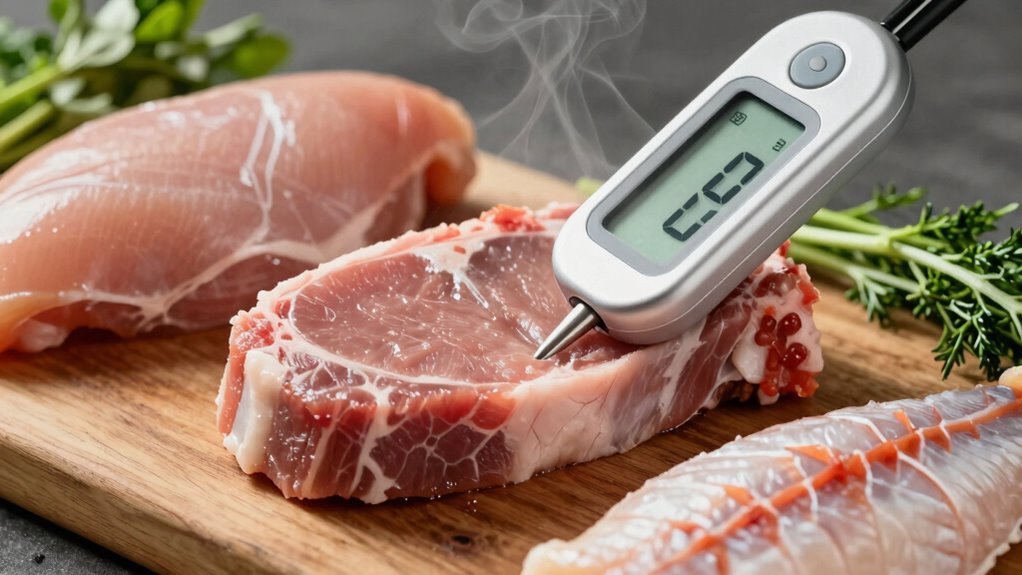
Ensuring pork and ham are cooked to the right temperature is crucial for both safety and quality. Proper pork safety means reaching the correct internal temperature to kill harmful bacteria. For whole cuts of pork, cook to an internal temperature of 145°F (63°C), then let it rest for three minutes. When it comes to ham cooking, fully cooked ham should be heated to 140°F (60°C), while fresh ham needs 145°F (63°C). Here are key points to remember:
- Use a reliable thermometer to check the thickest part of the meat.
- Rest the meat for the recommended time before carving or serving.
- Follow safe handling practices for pork safety and ham cooking to prevent contamination.
- Understanding food safety guidelines helps ensure your meat is both safe and delicious.
- Proper temperature control is essential for meat safety and optimal flavor. Properly monitoring internal temperatures is vital for avoiding undercooking or overcooking your meat. Additionally, utilizing a digital thermometer can improve accuracy in measuring doneness. Staying informed about recommended cooking temperatures is an important part of ensuring safe and tasty meat.
Fish and Seafood: What Are the Correct Cooking Temperatures?
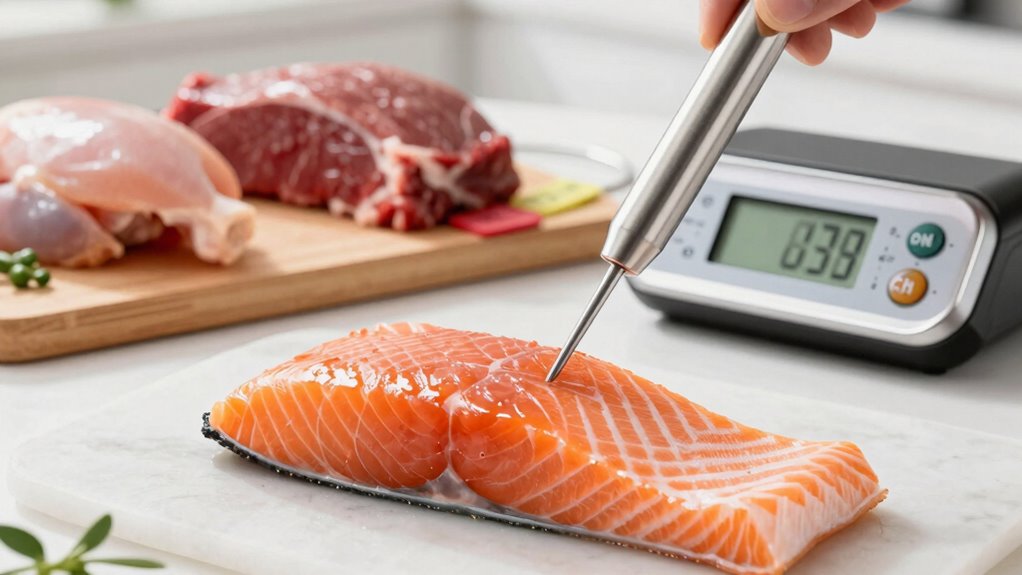
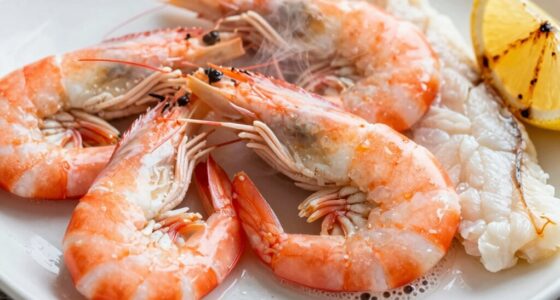
When cooking fish and seafood, reaching the correct internal temperature is essential to guarantee safety and ideal texture. Proper cooking secures seafood freshness and eliminates harmful bacteria. The USDA recommends cooking fish to an internal temperature of 145°F (63°C). For shellfish like shrimp, scallops, and lobsters, aim for 145°F or until the flesh is opaque and firm. Cooking seafood properly not only preserves its delicate texture but also enhances flavor. Use a food thermometer to check the thickest part of the fish or seafood to ensure accurate readings. Remember, seafood continues to cook slightly after removal, so consider removing it from heat just before reaching the target temperature. Proper cooking seafood guarantees safety while maintaining its natural qualities. Using a food thermometer is the most reliable way to ensure seafood reaches the correct internal temperature. Additionally, understanding safe internal temperatures helps prevent undercooking or overcooking seafood, ensuring optimal quality and safety. Incorporating sound scientific principles in cooking techniques can further improve results and confidence in seafood preparation. Employing modern kitchen tools like digital thermometers enhances precision and simplifies the cooking process.
Common Mistakes That Lead to Undercooked or Overcooked Meat: And How to Avoid Them

One common mistake people make when cooking meat is relying solely on visual cues, such as color or texture, instead of using a thermometer to check the internal temperature. This can lead to meat that’s either undercooked or overcooked, affecting meat tenderness and flavor preservation. To avoid this, keep these tips in mind:
- Use a reliable meat thermometer and check early to prevent overcooking.
- Recognize that color isn’t always accurate; internal temperature provides the true measure.
- Avoid cutting into meat prematurely, which releases juices and reduces tenderness, risking flavor loss.
How Resting Meat Affects Its Final Internal Temperature

After using a thermometer to determine when your meat reaches the desired internal temperature, it’s important to let it rest before carving or serving. Meat resting allows for temperature stabilization, meaning the internal temperature continues to rise slightly and then evenly distributes throughout the meat. This process ensures your meat is cooked thoroughly and remains juicy. During resting, juices redistribute, preventing them from spilling out when you cut, which keeps the meat moist. Skipping this step can result in uneven temperatures and drier meat. Resting time varies by meat type and thickness, generally around 5 to 15 minutes. Proper meat resting improves overall texture and flavor, making your cooked meat safer and more enjoyable to eat. Knowing the proper resting time helps you achieve the best results for each type of meat, especially considering the importance of meat temperature stabilization for optimal safety and quality.
Quick Reference Chart: Safe Cooking Temperatures for All Meats
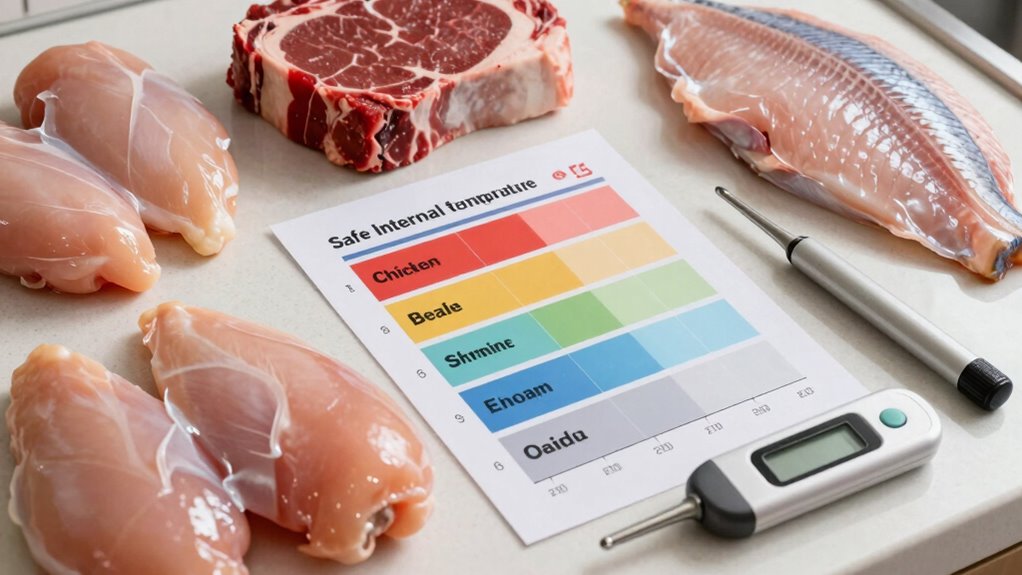
Having a quick reference chart for safe cooking temperatures helps you make certain your meats are both delicious and safe to eat. It guides you in avoiding meat spoilage and ensures proper doneness. To keep things simple:
- Always check the internal temperature with a reliable thermometer, as surface color can be misleading.
- Avoid overcooking by monitoring the temperature, especially on the cooking surface, which can heat unevenly.
- Let your meat rest after cooking to allow juices to settle and prevent premature temperature drops that could promote spoilage.
Using this chart ensures you hit the right internal temperatures for chicken, beef, pork, and fish, reducing health risks and guaranteeing a perfectly cooked meal. It’s your quick guide to safe, tasty meats every time.
Frequently Asked Questions
How Can I Tell if Meat Is Safely Cooked Without a Thermometer?
You can tell if meat is safely cooked by using visual cues and the touch test. Look for clear juices and no pink in the center, especially with poultry. For beef and pork, press the meat gently; it should feel firm but slightly springy, indicating doneness. While these methods help, a thermometer remains the most dependable way to guarantee safety, especially for thicker cuts or uncertain times.
Are There Visual Signs to Determine if Seafood Is Cooked Properly?
You’re almost there, but how can you be sure seafood is perfectly cooked? Watch for visual cues like opaque flesh and firm texture indicators—when fish turns from translucent to opaque and flakes easily with a fork, it’s done. Shrimp should turn pink and curl tightly. These signs are your clues to avoid undercooking or overdoing it. Trust these visual cues to serve seafood that’s safe and delicious every time.
Can Residual Heat Cause Overcooking After Removing From Heat?
Residual heat can definitely cause overcooking after you remove your seafood from heat. This phenomenon, known as carryover cooking, happens because the residual heat inside the food continues to cook it for a few minutes. To prevent overcooking, you should take your seafood off the heat slightly earlier than the recommended internal temperature, allowing residual heat to finish the job without turning your dish dry or rubbery.
How Often Should I Calibrate My Meat Thermometer?
You should calibrate your meat thermometer at least once a year to guarantee accurate readings, but if you use it frequently or notice inconsistent results, calibrate more often. Regular thermometer maintenance, including calibration, helps prevent overcooking or undercooking your meat. To check calibration, use the ice water method or boiling water test. Proper calibration guarantees precise internal temperature readings, making your cooking safer and more reliable.
Do Different Cuts of the Same Meat Require Different Internal Temperatures?
Different cuts of the same meat often need slightly different internal temperatures due to cooking time variations and meat tenderness factors. For example, a steak might be cooked to medium rare, while a brisket requires more time and a higher temperature to become tender. Always check specific guidelines for each cut, and use your thermometer to guarantee you hit the right temperature, optimizing both safety and tenderness.
Conclusion
Think of safe internal temperatures as the key to unfastening your kitchen’s treasure chest of delicious, worry-free meals. By mastering these temperatures, you’re safeguarding your health and opening the secret to perfect doneness. Remember, a reliable thermometer is your compass, guiding you through each culinary journey. When you hit the right temperature, you’re not just cooking—you’re forging a bond of trust with your food, ensuring every bite is a safe, satisfying treasure.
Halloween Picks
halloween
As an affiliate, we earn on qualifying purchases.