
To prevent flour explosions when mixing dry ingredients, store your flour in an airtight container to keep it fresh and minimize mess. Add flour slowly to your mixing bowl, starting your stand mixer on low speed to control the flow. Create a well in the flour for other ingredients, which helps contain airborne particles. Keep a damp cloth handy for quick spills, ensuring a tidy workspace. There’s more to learn about techniques for a safe and clean baking experience.
Key Takeaways
- Store flour in an airtight container to minimize dust and prevent unexpected messes during use.
- Gradually add flour to the mixing bowl to maintain control and reduce airborne particles.
- Start your stand mixer on low speed to prevent flour from jumping out of the bowl.
- Create a well in the flour to contain ingredients and reduce dust cloud formation while mixing.
- Keep a damp cloth handy for quick cleanup of any spills, maintaining a tidy workspace.
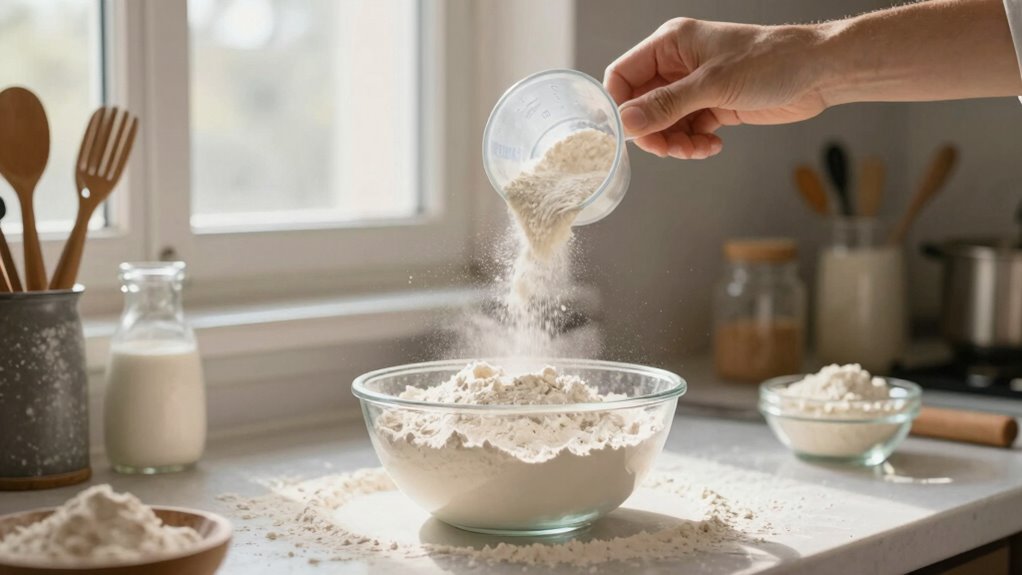
Have you ever wondered why flour can create such a mess in the kitchen? You’re not alone. The fine particles seem to defy gravity, turning a simple mixing task into a mini snowstorm. But don’t worry; there are ways to keep your kitchen tidy while whipping up those delicious treats. It all starts with proper flour storage and effective mixing techniques.
First off, let’s talk about flour storage. If you’re storing your flour in a bag, consider switching to an airtight container. This not only keeps your flour fresh but also minimizes the chances of a flour explosion. When you open a bag of flour, it can billow out, sending clouds of powder into the air. An airtight container lets you scoop out flour without creating a mess. Plus, it helps you easily access your flour while minimizing spills.
Now, onto mixing techniques. When you’re ready to combine your dry ingredients, there are a few tricks you can use. Start by adding your flour slowly to the mixing bowl or mixer. Instead of dumping it all in at once, pour it in gradually. This gives you better control and reduces the risk of flour flying everywhere. If you’re using a stand mixer, start on a low speed. This way, the flour has a chance to mix in without jumping out of the bowl.
Another useful technique is to create a “well” in your flour before adding other dry ingredients. By making a little crater in the center, you can place your baking powder, salt, or other ingredients inside it. When you mix, the surrounding flour helps contain any airborne particles. You’ll find that this simple adjustment makes a noticeable difference. Additionally, understanding the explosive nature of flour particles can help you take extra precautions to prevent accidents. Being aware of airborne dust can also guide you to work more carefully when handling flour. Recognizing the dust clouds that can form during mixing can further improve your safety measures.
Finally, keep a damp cloth nearby. If you accidentally spill flour, you can quickly wipe it up before it spreads. This small habit can save you from a larger cleanup later.
airtight flour storage container
As an affiliate, we earn on qualifying purchases.
As an affiliate, we earn on qualifying purchases.
Frequently Asked Questions
What Type of Flour Is Most Prone to Explosions?
All-purpose flour, due to its moderate gluten content, is most prone to explosions when mixing. When you combine it with other dry ingredients, the fine particles can easily become airborne. High-gluten flours, like bread flour, can also create similar issues, especially if you’re not careful. To avoid the mess, consider using lower-gluten options, like cake flour, which tend to mix more smoothly without sending flour flying everywhere.
Can Humidity Levels Affect Flour Explosions?
Humidity levels can definitely stir up some trouble when you’re mixing flour. When the air’s more humid, flour can absorb moisture, making it clumpier and more prone to those pesky flour clouds. You might find yourself in a bit of a mess if you’re not careful. To keep your kitchen clean and flour happy, store it in a cool, dry place and consider adjusting your mixing technique during those humid days.
Is It Safe to Mix Flour With Other Dry Ingredients?
Yes, it’s safe to mix flour with other dry ingredients when you use proper mixing techniques. Start by measuring your ingredient ratios accurately to guarantee even distribution. Use a whisk or sifter to blend everything smoothly, which helps prevent clumping. If you’re worried about mess, mix gradually or in a larger bowl. With these methods, you’ll create a consistent mixture without the risk of flour explosions. Enjoy your baking!
How Should I Store Flour to Minimize Dust?
Want to keep your kitchen dust-free? Store your flour in airtight containers! This method not only prevents dust from escaping but also keeps your flour fresh longer. Make sure the containers are labeled and placed in a cool, dry location. You’ll find that using airtight containers minimizes mess and maintains quality, making your baking experience much more enjoyable. So, go ahead and organize your flour storage for a cleaner workspace!
What Equipment Is Best for Mixing Dry Ingredients Safely?
For safely mixing dry ingredients, use a sturdy mixing bowl with high sides to contain any dust. A large whisk is great for aerating and blending, while a balloon whisk offers flexibility for lighter mixes. If you prefer more control, try a flat whisk. You might also consider a sifter for evenly distributing flour. Keeping your workspace tidy and using the right tools will help you mix without creating a mess!
stand mixer low speed attachment
As an affiliate, we earn on qualifying purchases.
As an affiliate, we earn on qualifying purchases.
Conclusion
To keep your kitchen flour-free, remember these tips next time you mix dry ingredients. Surprisingly, studies show that about 20% of home cooks experience flour explosions at least once! By using a whisk or sifting your flour, you can minimize the mess and enjoy a smoother baking process. So, take these steps to avoid the cloud of flour and focus on creating delicious treats instead. Happy baking!
As an affiliate, we earn on qualifying purchases.
As an affiliate, we earn on qualifying purchases.