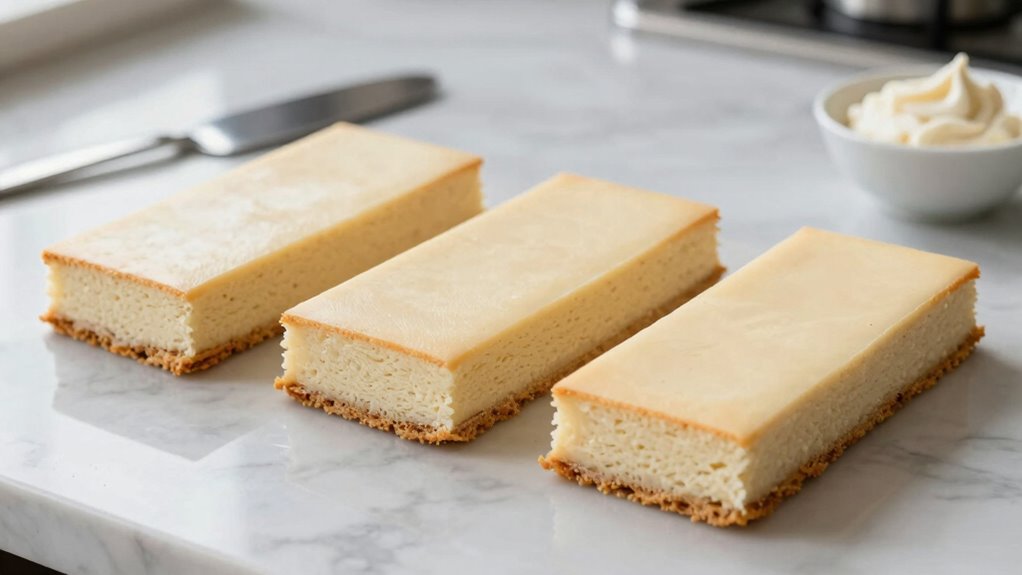

To bake flat cake layers, start with straight-sided, warp-free metal pans and line or grease them well to prevent sticking. Use precise measurements and mix just until combined to avoid overmixing. Preheat your oven, place the pans in the center, and bake at a steady temperature. Cool the layers flat on a wire rack and level them if needed. Keep everything consistent, and you’ll get smooth, even layers every time—if you want to learn more, keep exploring these tips.
Key Takeaways
- Use straight-sided, warp-free metal pans for even, flat layers.
- Properly prepare batter by mixing until just combined and avoiding overmixing.
- Preheat the oven thoroughly and place pans in the center for consistent heat.
- Cool layers flat on a wire rack immediately after baking to prevent warping.
- Level baked layers with a serrated knife or cake leveler for a smooth, even finish.
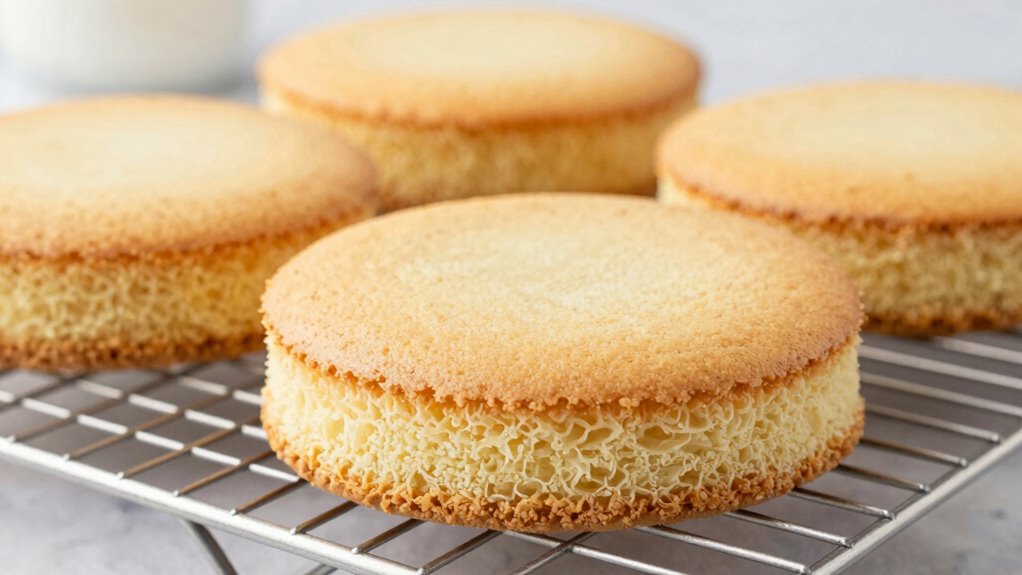
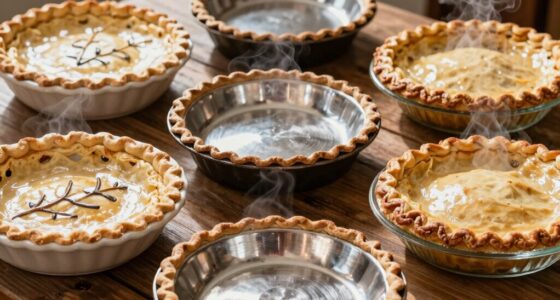
Baking perfectly flat cake layers can be challenging, but with the right techniques, you can achieve smooth, even results every time. The key is setting up your baking process with a simple but effective setup that minimizes the risk of domed or uneven layers. Start by choosing the right pans—preferably metal, straight-sided, and with no warping—since they promote even baking. Before pouring your batter, line the pans with parchment paper or grease them well and dust with flour to prevent sticking. Using a cake strip around the pans can make a significant difference; these strips insulate the sides and promote even heat distribution, helping your cake bake flat without the need for leveling or trimming.
Choose straight-sided, warp-free metal pans, line with parchment or grease, and use cake strips for perfectly flat layers.
When preparing your batter, avoid overmixing, which can introduce air and cause uneven rising. Mix until just combined, and consider using a scale to measure ingredients precisely. A consistent batter helps ensure each layer bakes evenly. After pouring the batter into the pans, gently tap them on the counter to release any trapped air bubbles. This step reduces the likelihood of uneven domes forming during baking. Additionally, some bakers find that consistent oven temperature is vital for achieving flat layers, as fluctuations can cause uneven rising and bulging. It’s also helpful to preheat your oven thoroughly before baking to ensure stable temperature conditions throughout the process.
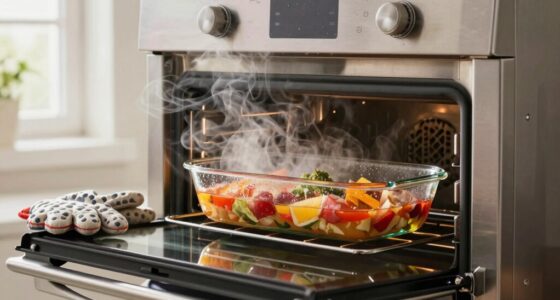
Once your oven is preheated, place the pans in the center to allow heat to circulate evenly. Bake at the temperature specified in your recipe, but keep an eye on the baking time—every oven is different, and overbaking can lead to domed layers. When the cakes are done, a toothpick inserted into the center should come out clean. Let the cakes cool in the pans for a few minutes before transferring them to a wire rack. Cooling flat on a rack prevents the layers from warping and maintains their shape for easier stacking and decorating. Ensuring your oven maintains a steady temperature can significantly influence the flatness of your layers, as temperature fluctuations can lead to uneven rising and bulging.
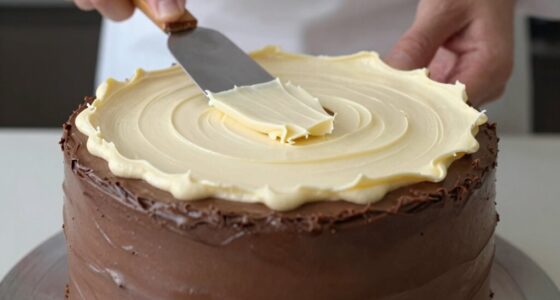
Once cooled, you can level the layers with a serrated knife or a cake leveler if needed. For those working with fondant techniques or intricate cake decoration, having flat, even layers is essential. Flat layers create a smooth surface that makes applying fondant or piped decorations much easier. The more precise your layers, the cleaner your final look will be, and you’ll avoid gaps or bulges that disrupt the aesthetic. Using these simple setup tips, you’ll find that baking flat cake layers becomes routine, giving you a perfect foundation for stunning cake designs every time. Remember, consistent baking technique is crucial for achieving professional-looking results.
As an affiliate, we earn on qualifying purchases.
Frequently Asked Questions
Can I Use Different Pans for Baking Flat Cake Layers?
Yes, you can use different pans for baking flat cake layers. Just make certain the pans are similar in size and shape for even baking. Using various pans allows you to experiment with decorating techniques and flavor variations, creating unique layers for your cake. Keep in mind that different materials may affect baking time, so monitor your layers closely. This flexibility helps you customize your cake to fit your style and taste preferences.
How Do Altitude Changes Affect Flat Cake Layer Baking?
Altitude changes can cause your flat cake layers to rise unevenly or crack, so you need to make altitude adjustments. To counter this, increase your oven temperature slightly and reduce baking time. Also, adjust your batter consistency by adding a bit more liquid to prevent it from becoming too dense. These tweaks help your cake bake evenly at higher elevations, ensuring flat, professional-looking layers every time.
Is It Necessary to Pre-Heat the Oven for Flat Layers?
Yes, pre-heating your oven is necessary for flat cake layers. It guarantees the oven reaches the correct temperature quickly, which helps your cake bake evenly and prevents doming or sinking. By pre-heating, you maintain consistent oven temperature, leading to accurate baking time and a flat, professional-looking layer. Skipping this step can cause uneven rise and affect the overall texture, so always give your oven enough time to heat thoroughly.
What Types of Cake Batters Are Best for Flat Layers?
A stitch in time saves nine, so choose your cake batter wisely. For flat layers, you want a batter with a smooth, pourable consistency, not too thick or thin. Stick to recipes with thorough mixing techniques, avoiding overmixing, which can cause doming. Batters like sponge or genoise work well because their light, airy textures spread evenly, helping you achieve those perfect flat layers.
How Can I Prevent Edges From Burning During Baking?
To prevent edges from burning, you should monitor your oven temperature and adjust if necessary. Use cooling racks to elevate your cake layers, allowing heat to dissipate evenly. Keep an eye on batter consistency—thicker batter tends to burn less easily. Additionally, consider lining your pans with parchment paper or using light-colored pans, which reflect heat better. These steps help guarantee your cake bakes evenly without burnt edges.
As an affiliate, we earn on qualifying purchases.
Conclusion
With the right setup, your cake layers will bake flat and perfect, like a smooth lake reflecting the sky. No more worries about domes or uneven tops—just a steady hand and a simple trick can turn your baking into a masterpiece. Think of your oven as a gentle artist, creating a canvas where every layer sits straight and proud. Now, go ahead and craft those flawless, flat-topped cakes that’ll make everyone marvel at your baking prowess.
As an affiliate, we earn on qualifying purchases.
As an affiliate, we earn on qualifying purchases.