“Air Crisp” uses rapid hot air circulation to create a crispy, fried-like exterior, perfect for quick, crunchy snacks and meats. “Bake” applies gentle, even heat from below, ideal for breads, pastries, and casseroles that need moist, tender textures. “Roast” involves higher, dry heat to develop a browned, caramelized crust, great for meats and vegetables. Exploring these differences helps you choose the right method for perfect results, and you’ll discover how each technique works best as you continue.
Key Takeaways
- Air Crisp circulates hot air rapidly for crispy textures, similar to frying but healthier, ideal for quick, crispy results.
- Bake uses gentle, even heat to produce moist, tender baked goods and casseroles with uniform texture.
- Roast applies high, dry heat to develop browned, caramelized exteriors on meats and vegetables.
- Temperatures differ: baking (325°F-375°F), roasting (400°F+), air crisp (375°F-400°F), affecting texture and cooking time.
- Choosing the right method depends on desired flavor, texture, and food type, with each suited for specific dishes.

Chefman Air Fryer 9 Qt | TurboFry 7-in-1 High-Powered 450°F Cooking for Crispier and Even Results | XL Basket with Viewing Window | Air Fry, Bake, Broil, Reheat, Dehydrate, Defrost, Keep Warm
- High-Speed Convection Power: Cooks 40% faster at 450°F
- 7-in-1 Cooking Functions: Air fry, bake, broil, dehydrate, reheat, keep warm, cook frozen
- Crispy Frozen Food Mode: Automatically defrosts and crisps frozen foods
As an affiliate, we earn on qualifying purchases.
As an affiliate, we earn on qualifying purchases.
What Do “Air Crisp,” “Bake,” and “Roast” Mean in Cooking?
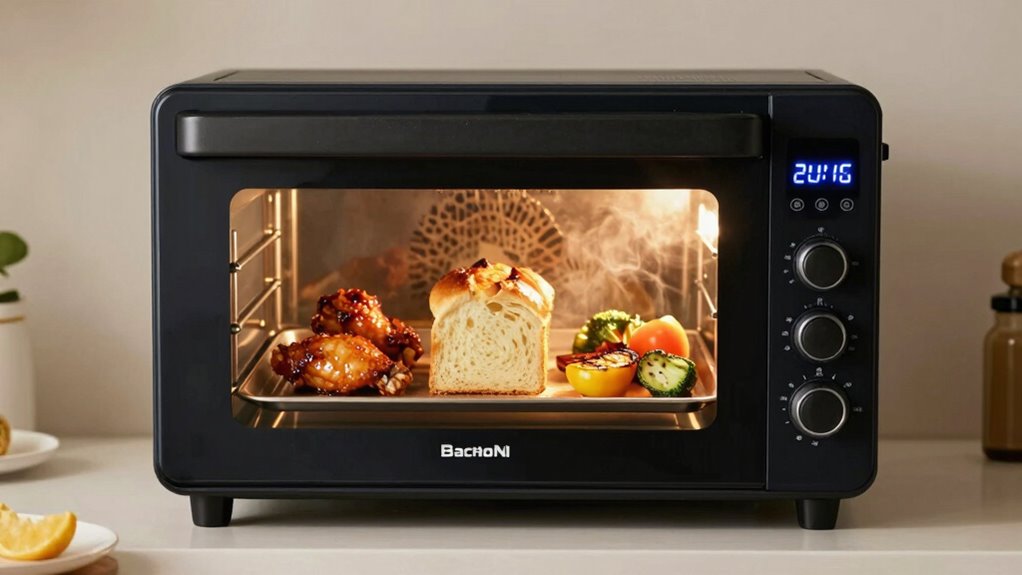
Have you ever wondered what exactly these cooking terms mean? “Air crisp,” “bake,” and “roast” each refer to different methods that use heat to cook food, but they do so in distinct ways. In cooking terminology, understanding these terms helps you use kitchen appliance functions correctly. “Air crisp” involves circulating hot air rapidly around the food, creating a crispy exterior, often using air fryers. “Bake” typically uses even, indirect heat from below, ideal for bread, casseroles, and pastries. “Roast” applies dry heat, usually at higher temperatures, to cook meats and vegetables with a browned, flavorful crust. Knowing these differences ensures you choose the right setting for your dish and master your kitchen tools effectively. Additionally, energy-efficient cooking methods like air crisp can help reduce your kitchen’s energy consumption.

USAJZM 16QT Air Fryer Toaster Oven, 1700W Stainless Steel Oven
- Premium Safety Features: Triple-layer insulation and heat-resistant door
- Versatile Cooking Options: Handles fries, chicken, pizza, steak, and more
- Preset Cooking Programs: Includes cake, shrimp, popcorn, and cookies
As an affiliate, we earn on qualifying purchases.
As an affiliate, we earn on qualifying purchases.
How Are Baking and Roasting Different? Key Distinctions Explained

While baking and roasting both use dry heat to cook food, they differ in temperature, technique, and the dishes they suit best. Baking typically involves lower temperatures and is ideal for bread, pastries, and casseroles. Roasting uses higher heat, perfect for vegetables, meats, and poultry, giving them a browned, caramelized exterior. Understanding these culinary distinctions helps you choose the right method for flavor and texture. Here’s a quick comparison: The difference in cooking methods can significantly impact the outcome of your dishes and the overall dining experience.
| Aspect | Baking | Roasting | Common Uses |
|---|---|---|---|
| Temperature | 325°F – 375°F | 400°F and above | Baked goods vs roasted veggies |
| Technique | Even, gentle heat | High, direct heat | Breads vs meats |
| Food Types | Breads, pastries, casseroles | Vegetables, meats, poultry | Cakes vs roasted chicken |
| Texture | Soft, tender | Crispy, browned | Muffins vs roasted potatoes |
| Preparation | Usually covered or in pans | Often uncovered | Lasagna vs roasted carrots |
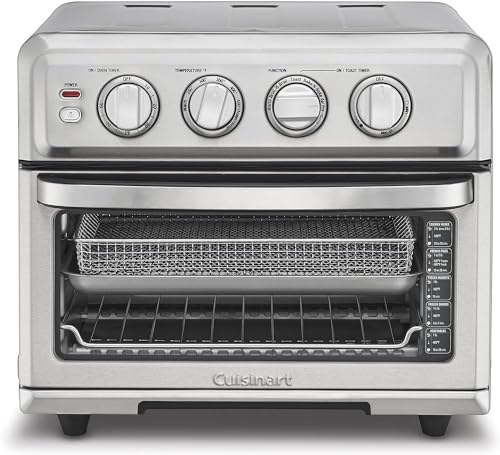
Cuisinart Air Fryer Toaster Oven, 1800W, 8-in-1 with Air Fry, Convection, Broil & Warm, 0.6 Cubic Feet, 60-Minute Timer, TOA-70NAS, Stainless Steel
- Cooking Functions: Air fry, toast, bake, broil, grill, warm
- Large Capacity: Toast 6 slices, air fry 3 lbs., 12" pizza
- Easy Operation: Adjustable temperature, 60-min timer, toast shade
As an affiliate, we earn on qualifying purchases.
As an affiliate, we earn on qualifying purchases.
When Should You Use Bake or Roast for Better Flavor and Texture?
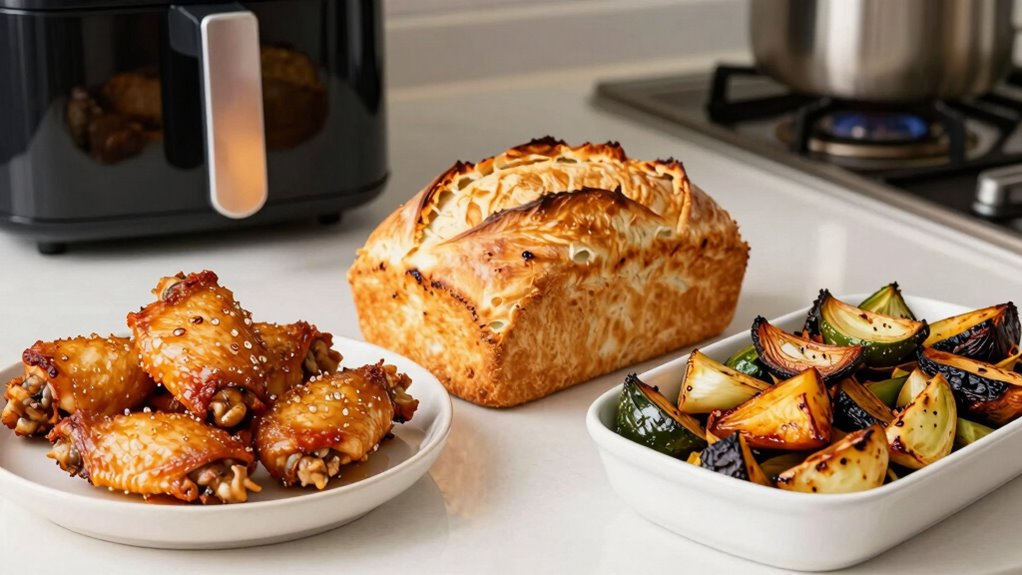
Knowing when to bake or roast can make a big difference in your dish’s flavor and texture. Using the right technique enhances the natural qualities of your ingredients and achieves the desired results. Incorporating connected kitchen technology can also help monitor and optimize cooking parameters for perfect results every time. Additionally, understanding the cooking methods allows you to select the best approach based on the specific ingredients and your culinary goals.
Optimal Cooking Techniques
Choosing between baking and roasting depends on the type of food you’re preparing and the desired outcome. Baking is ideal for delicate items like bread, cakes, and casseroles, where gentle heat guarantees even cooking. Roasting works better for meats and vegetables, providing a caramelized, flavorful crust. To optimize results, consider techniques like sous vide beforehand to achieve precise doneness, especially with meats. Pressure cooking can speed up tenderizing tough cuts before roasting, saving time while enhancing flavor. When you’re aiming for a crispy exterior and rich flavor, roasting is your best option. Conversely, baking is suited for softer textures and even heat distribution. Selecting the appropriate method based on your ingredients and desired texture guarantees better flavor and culinary success.
Enhancing Flavor and Texture
When aiming to enhance flavor and texture, selecting between baking and roasting makes a significant difference. Roasting often yields a richer, caramelized exterior, ideal for meats and vegetables, while baking provides a softer, more uniform texture suited for baked goods and casseroles. To maximize flavor, focus on seasoning techniques like marinating or dry rubs before cooking. Proper plating presentation highlights the dish’s appeal, emphasizing crispy edges or tender interiors. Consider these tips:
- Use roasting for foods that benefit from browning and a crispy crust.
- Opt for baking when you want a moist, evenly cooked result.
- Adjust seasoning techniques based on the cooking method to deepen flavor and improve texture.
- Understanding the different cooking methods can help you select the best technique to achieve your desired flavor and texture. Additionally, experimenting with cooking times and temperatures can help you perfect your dishes for optimal results. Being aware of heat distribution in your appliances can also make a notable difference in cooking consistency. Paying attention to cooking techniques can further enhance your culinary outcomes and bring out the best in your dishes. Exploring sound science in cooking can even offer insights into how sound vibrations influence food textures and cooking efficiency.
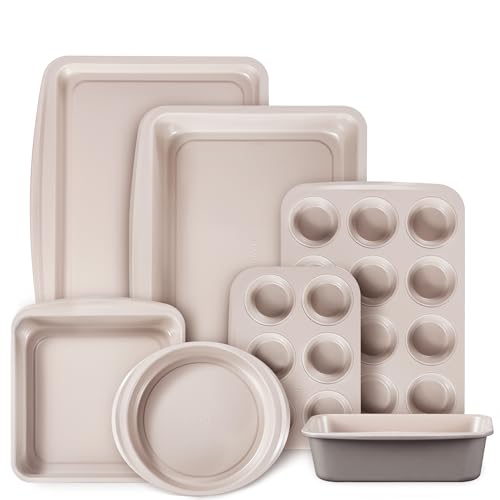
CAROTE 7-Piece Baking Pans Set, Nonstick Bakeware Sets, Gray & Khaki
- Nonstick Coating: Easy release and cleaning
- High-Quality Material: Durable carbon steel construction
- Space-Saving Design: Stackable for compact storage
As an affiliate, we earn on qualifying purchases.
As an affiliate, we earn on qualifying purchases.
How Does Air Crisp Work? Using Hot Air to Get Crispy Results
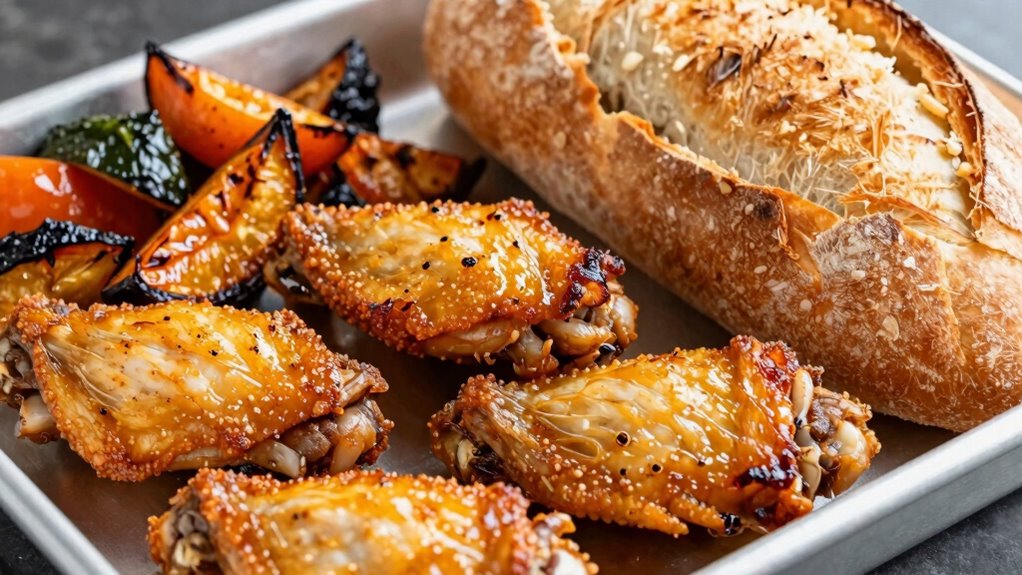
Air crisp technology works by circulating hot air around your food at high speeds, creating a crispy exterior without much oil. This process relies on effective air circulation, which guarantees even exposure of hot air to all surfaces of your food. As the hot air moves rapidly, it promotes heat transfer, quickly cooking and browning the outer layer. The high-speed air movement mimics deep frying but uses little to no oil, making it a healthier choice. The continuous circulation of heated air helps evaporate moisture from the surface, resulting in that desirable crunch. This combination of air circulation and heat transfer is what allows air fryers to produce crispy results efficiently, giving you that satisfying texture without the excess fat or mess associated with traditional frying. Proper air circulation is essential for consistent results and optimal crispiness. Additionally, temperature control plays a crucial role in achieving the perfect texture and doneness.
Can You Use Air Crisp Instead of Baking or Roasting? Limitations and Tips
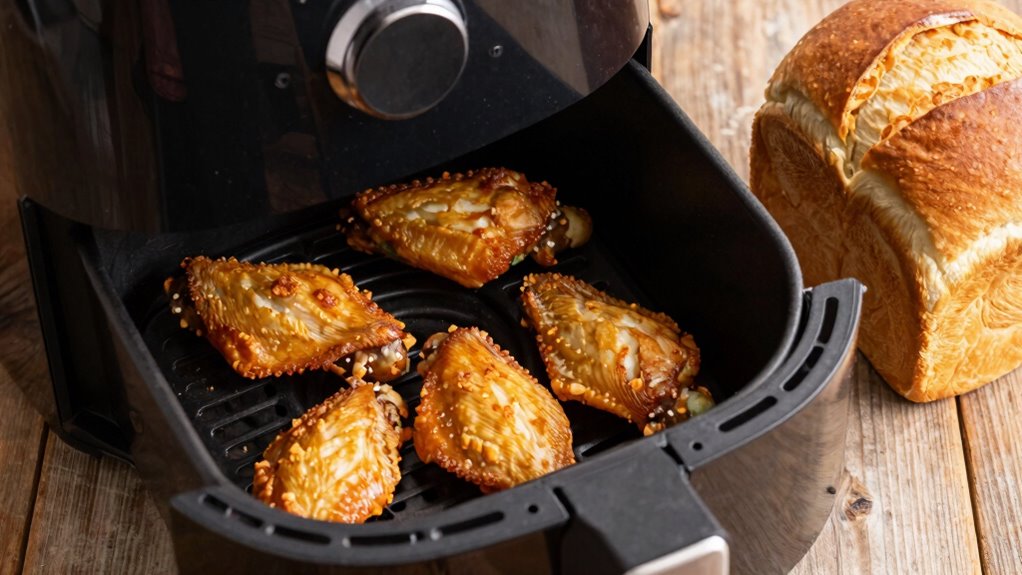
You can use the air crisp setting for many foods, but it’s best suited for items like vegetables, fries, and small cuts of meat. Keep in mind that cooking times may need adjustment to prevent over- or undercooking. Experimenting with different foods helps you find the right balance for your air crisp, baking, or roasting needs. Additionally, understanding smartphone setting functions can help optimize your cooking experience and appliance performance. Knowing how different cooking modes impact heat distribution can further enhance your results and help you choose the best method for each dish. Being aware of air flow patterns can also improve your cooking outcomes by ensuring even heat circulation.
Suitable Food Types
While air fryers can mimic many baking and roasting tasks, their suitability depends on the type of food. You’ll find they work best with items that benefit from quick, even crisping. Consider these food types:
- Frozen snacks and finger foods – perfect for a crispy finish without extra oil.
- Small cuts of meat or poultry – ideal for quick cooking while maintaining juiciness.
- Vegetables – great for roasting or crisping, especially for food pairing with proteins.
Keep dietary considerations in mind, as air fryers often require less oil, making them healthier options. However, some dishes may not develop the same flavor depth as traditional baking or roasting. Use your judgment to match foods to the appliance’s strengths for best results.
Adjusting Cooking Times
Adjusting cooking times when using the air crisp setting instead of traditional baking or roasting requires some experimentation, as these methods often differ in heat distribution and moisture retention. Air crisp typically cooks faster and creates a crispier exterior, so you’ll want to start checking your food earlier than usual. Keep in mind that seasoning tips like using a light coat of oil can enhance browning in the air fryer. Also, consider utensil choices; using smaller or perforated pans allows better air circulation, speeding up the process. It’s best to monitor your food closely and adjust cooking times accordingly. Over time, you’ll develop a sense of how long your specific appliance needs to achieve perfect results, making it easier to switch between air crisp and traditional methods. Understanding cooking techniques can help you better adapt your recipes when switching between these settings.
What Are the Typical Cooking Times and Temperatures for These Settings?
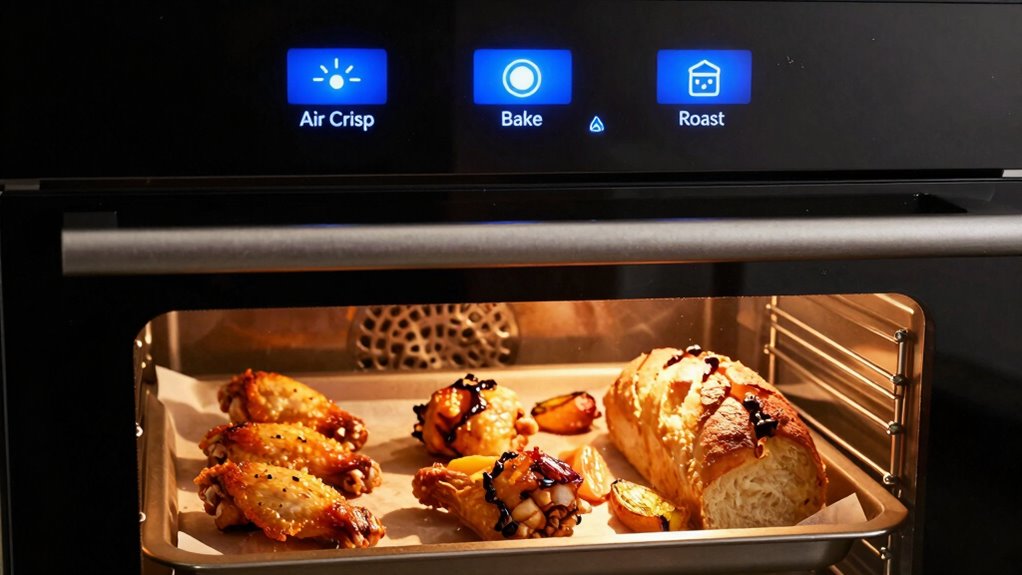
Typically, air crisping, baking, and roasting each require specific temperatures and cooking times to achieve the best results. These settings influence food preservation and the nutritional impact of your meals. For example:
- Air Crisp: Usually around 375°F to 400°F, with cooking times of 10-20 minutes, ideal for quick, crispy results. Utilizing proper cooking techniques can help you perfect your crispy dishes. Incorporating food safety practices ensures that your meals are both delicious and safe to eat.
- Bake: Typically set between 325°F and 375°F, with longer times from 20-45 minutes, perfect for even cooking and moisture retention.
- Roast: Often at 375°F to 450°F, with times varying based on food size—30 to 60 minutes—helping preserve nutrients while developing flavor. Understanding cooking techniques can further enhance your meal preparation.
Common Mistakes When Using Air Crisp, Bake, or Roast: And How to Avoid Them
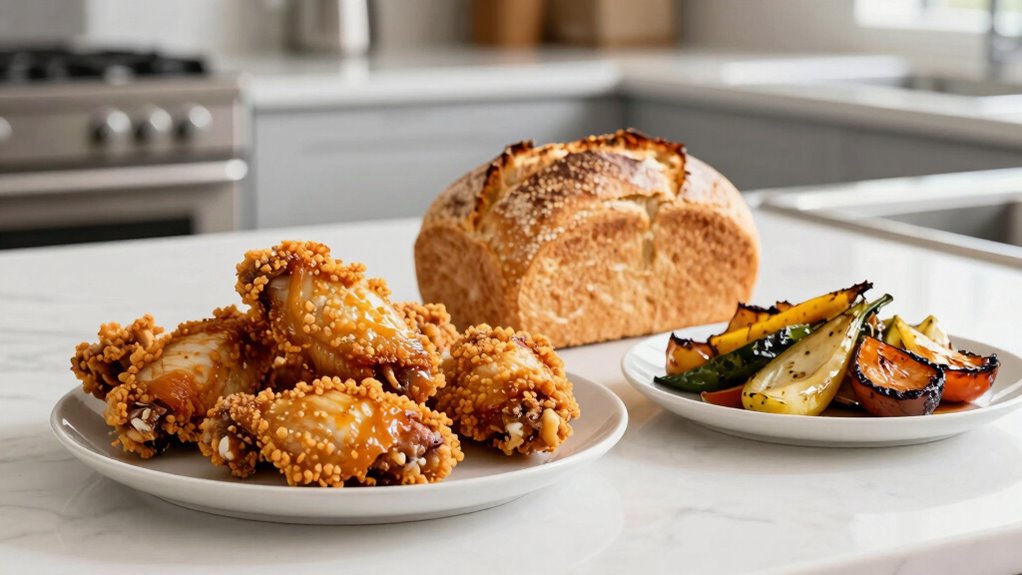
Mistakes in selecting the wrong setting or misjudging cooking times can easily lead to less-than-ideal results when using your air fryer or oven. Common misuses include using the wrong preset for your food, which can cause uneven cooking or dryness. Temperature inaccuracies are another frequent issue; many users don’t calibrate their appliances or misunderstand the ideal temperature for each setting. For example, setting the oven too high during “Bake” can burn baked goods, while too low during “Air Crisp” may leave food undercooked. To avoid these pitfalls, always double-check recommended temperatures and times for your specific recipe. Use a thermometer if necessary, and don’t rely solely on default settings—adjust as needed to match your appliance’s performance for best results. Additionally, understanding the precise function of each setting can help you choose the best option for your dish and improve overall cooking outcomes. Familiarizing yourself with cooking mode differences can also help prevent confusion and ensure you’re using the right setting for each meal.
Which Setting Is Best for Meats, Vegetables, or Baked Goods? Practical Guidance
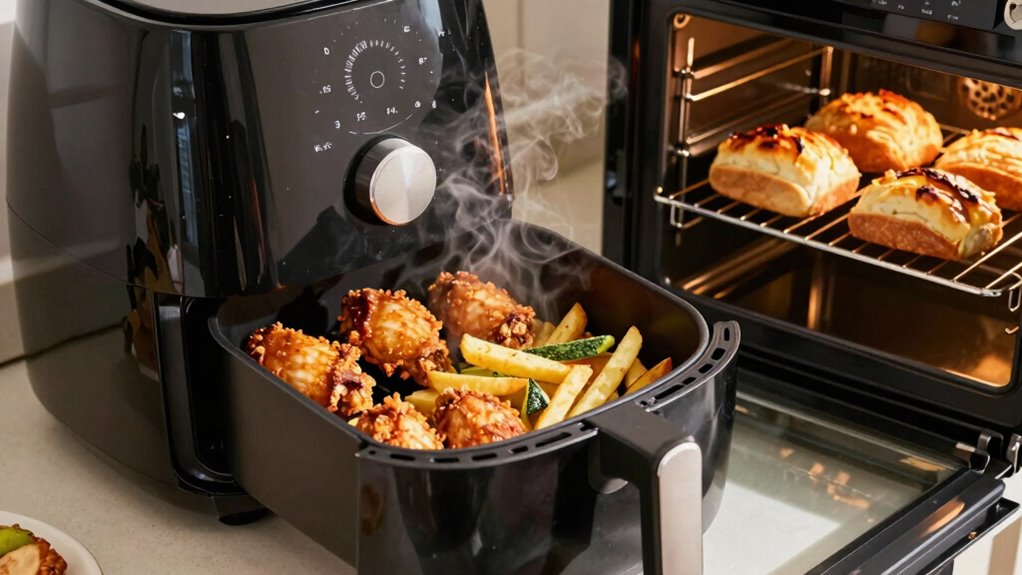
Choosing the right setting for your cooking tasks can make a significant difference in the final result. Understanding cooking terminology helps you select the best option for meats, vegetables, or baked goods. Kitchen appliances often feature multiple functions, so knowing when to use air crisp, bake, or roast guarantees ideal outcomes.
Here are some practical tips:
- Use air crisp for crispy meats like chicken wings or vegetables like fries.
- Select bake for baked goods such as bread, cakes, or casseroles.
- Opt for roast when cooking large cuts of meat or vegetables that benefit from slow, even heat.
Matching the setting to your ingredients maximizes flavor and texture while making your cooking more efficient.
Frequently Asked Questions
Can I Switch Between Air Crisp, Bake, or Roast During Cooking?
Yes, you can switch between air crisp, bake, or roast during cooking, but do so carefully. Changing modes may affect cooking temperature and flavor retention. Adjust the temperature as needed to guarantee even cooking and ideal results. Keep in mind that switching modes too often can impact the texture and flavor of your food, so plan your cooking process accordingly to maintain the best flavor and proper temperature control.
How Do Different Oven Models Affect Cooking Results for These Settings?
Different oven models impact your cooking results based on their interior design and heating element type. A convection oven with a fan circulates hot air evenly, enhancing air crisping, baking, and roasting. In contrast, traditional models with fixed heating elements may produce uneven results. Understanding your oven’s interior layout and heating technology helps you optimize each setting, ensuring your dishes come out perfectly cooked every time.
Are There Specific Foods That Work Better With One Setting Over Others?
You’ll notice certain foods shine brighter with specific settings—think crispy fries with Air Crisp, tender roasts with Roast, or delicate baked goods with Bake. If you love crispy textures, Air Crisp is your hero, while Bake enhances flavor in cakes and bread. For juicy, evenly cooked meats, Roast is unbeatable. Matching your food’s texture preferences and flavor enhancement techniques to the right setting transforms ordinary meals into extraordinary feasts!
How Do Altitude and Humidity Influence Cooking Times for These Methods?
Altitude and humidity notably impact cooking times for air crisp, bake, or roast settings. Higher altitudes require adjustments because lower air pressure speeds up boiling and reduces moisture, so you might need to increase cooking time or temperature. Humidity effects can cause food to take longer to cook or become soggy, so monitor your dishes closely and adjust your timing accordingly. Always consider altitude adjustments and humidity effects for ideal results.
What Are the Health Implications of Using Each Cooking Setting?
You might worry about health risks from different cooking modes, but choosing the right setting can actually benefit you. Air Crisp uses less oil, reducing oil absorption and lowering fat intake. Baking and roasting often retain more nutrients, making your meals healthier. Overall, using these settings thoughtfully helps you control oil absorption and nutrient retention, supporting better health while still enjoying delicious, well-cooked foods.
Conclusion
Now that you know the true differences between air crisp, bake, and roast, you’ll never settle for soggy or bland dishes again. Imagine turning your kitchen into a gourmet restaurant, with perfectly crispy fries, juicy roasts, and fluffy baked goods at your fingertips. Master these settings, and you’ll transform everyday cooking into an art form—making your meals so amazing, they’ll leave everyone wondering if you hired a professional chef. Get ready to impress like never before!