
Food sticking to your pan often happens because the cookware isn’t properly seasoned or heated correctly. Using the right type of fat and preheating your pan helps create a natural non-stick surface, especially with cast iron or carbon steel. Avoid overcrowding and apply a thin layer of oil to prevent sticking. If you keep these tips in mind, you’ll see better results. Keep going to discover more ways to fix sticking issues for good.

Get kitchen gear delivered free — and shop member deals
- Fast, free delivery on millions of items
- Access to Prime Big Deal Days deals on October 6–7
- Prime Video, Amazon Music and more included
Key Takeaways
- Insufficient seasoning or improper maintenance of your cookware can cause food to stick.
- Preheating the pan and adding oil at the right temperature creates a natural non-stick surface.
- Using the appropriate fats and avoiding overheating prevent burning and sticking.
- Choosing cookware material suited to your cooking style and properly caring for it enhances non-stick performance.
- Overcrowding the pan or not allowing proper heating leads to uneven cooking and increased sticking risk.
As an affiliate, we earn on qualifying purchases.
Why Does Food Stick to My Pan? The Science Explained
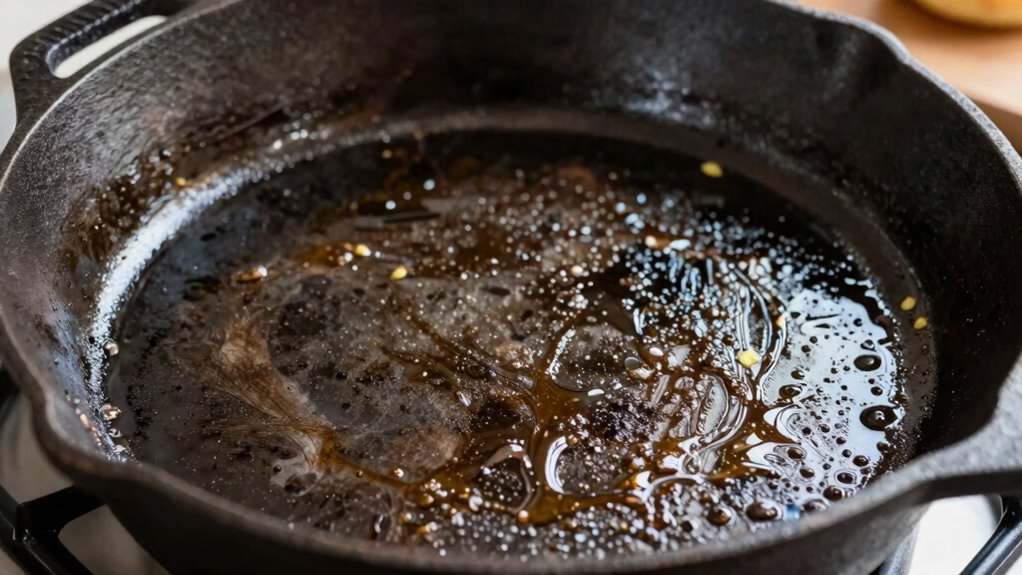
Have you ever wondered why food often sticks to your pan even when you’re careful? The answer lies in the combination of seasoning techniques and pan material. Over time, proper seasoning builds a natural non-stick surface, especially on cast iron or carbon steel pans, by creating a polymerized layer of oils. This layer prevents food from sticking and improves flavor. Additionally, pan material plays a critical role—materials like stainless steel or aluminum conduct heat differently, affecting how food interacts with the surface. If your pan isn’t seasoned well or is made from a material prone to sticking, food is more likely to cling. Proper preheating of the pan can also make a significant difference in preventing food from sticking. Knowing how seasoning affects non-stick properties can help you maintain your pans and achieve better cooking results.
As an affiliate, we earn on qualifying purchases.
How to Choose the Right Non-Stick Cookware for Your Kitchen
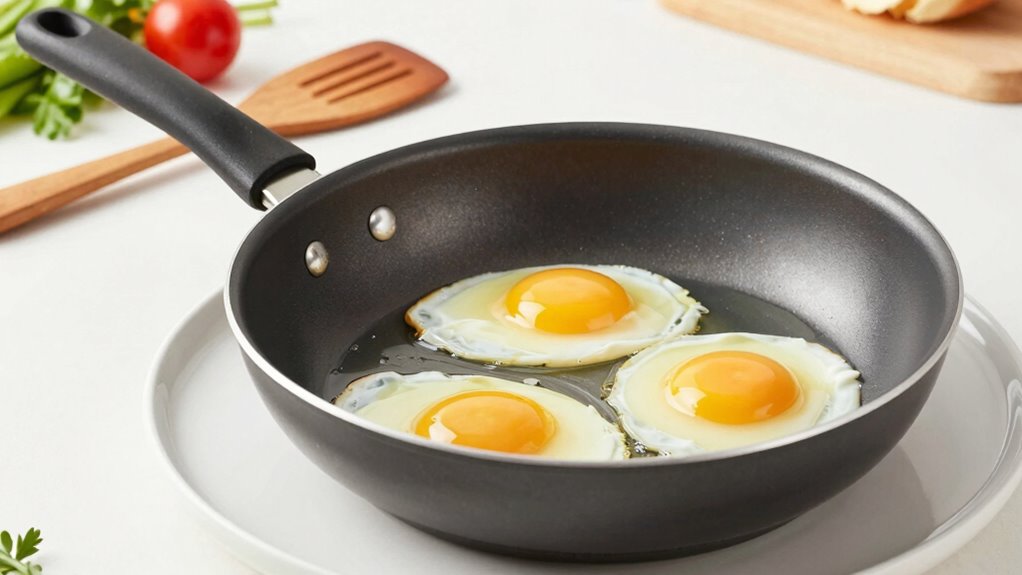
Choosing the right non-stick cookware can make a significant difference in your cooking experience. When selecting your pans, consider material considerations like aluminum for even heat or stainless steel for durability. Non-stick coatings vary in longevity and safety, so select one that suits your cooking style. Ergonomic design is also essential; look for handles that feel comfortable and provide a secure grip, reducing fatigue during use. Weight matters too—lighter pans are easier to maneuver, but ensure they’re sturdy enough for consistent performance. Compatibility with your stove, oven safety, and ease of cleaning are other factors to keep in mind. By paying attention to material considerations and ergonomic design, you’ll find cookware that enhances your cooking and lasts longer. Additionally, understanding non-stick coating safety can help you choose cookware that minimizes health risks and maintains its non-stick properties over time. Proper care and maintenance also play a vital role in extending the lifespan of your non-stick cookware and preserving its performance. For example, selecting cookware with professional-grade materials can ensure durability and reliability over time, especially when combined with proper cleaning techniques. Incorporating advanced coating technologies can further improve non-stick performance and safety, providing more peace of mind during cooking.
As an affiliate, we earn on qualifying purchases.
Preparing Your Pan Properly to Prevent Sticking
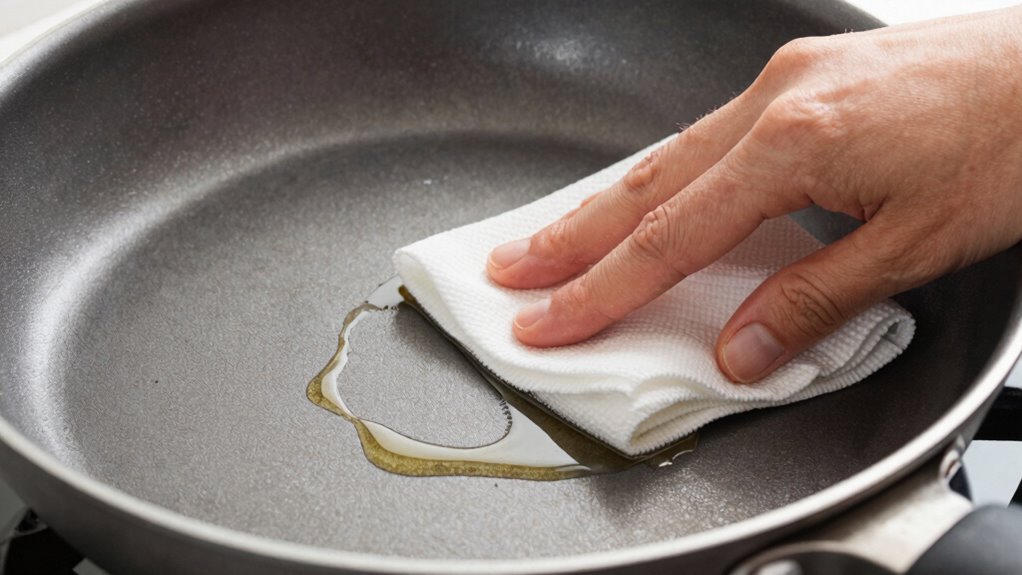
To prevent your food from sticking, it is vital to prepare your pan properly before cooking. First, use effective cleaning methods to remove any residue or old seasoning that could cause sticking. Next, apply seasoning techniques like a light coat of oil or fat to create a natural non-stick surface. Additionally, regularly maintain your cookware to ensure its longevity and optimal performance. Proper pan seasoning can significantly enhance non-stick properties and prevent food from adhering. It is also helpful to understand the role of AI in kitchen technology, which is increasingly improving cookware design for better non-stick results. Finally, make sure your pan is dry before heating to prevent uneven heating or sticking. Proper cookie management ensures your pan remains in optimal condition, reducing sticking and prolonging its lifespan.
non-stick frying pan with ergonomic handle
As an affiliate, we earn on qualifying purchases.
As an affiliate, we earn on qualifying purchases.
The Best Ways to Heat and Use Oil or Fat for Non-Stick Cooking
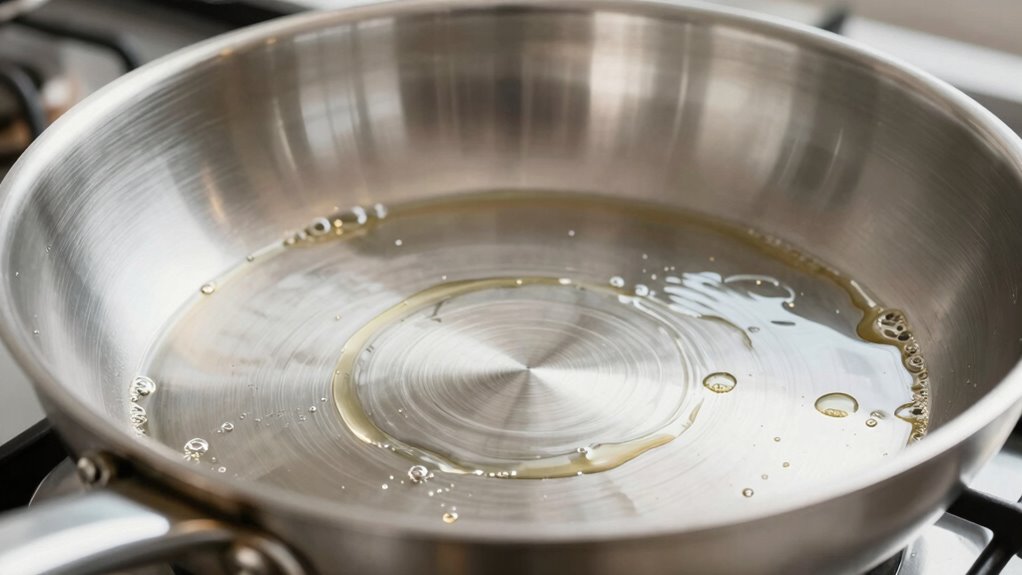
Getting your oil or fat at the right temperature is key to preventing sticking, so make sure to heat it properly before adding food. Choosing the right type of fat and knowing the ideal cooking temperature can make a big difference in non-stick results. Master these techniques, and you’ll cook with less mess and more success. Additionally, maintaining proper temperature control ensures your non-stick surface performs optimally throughout the cooking process. Regularly checking your air purifier maintenance and replacing filters as needed can help keep your kitchen environment fresh and free of airborne particles that might affect your cooking. Being aware of air-based cooking principles can help you optimize heat application and reduce sticking issues. Proper ventilation considerations can also improve overall kitchen safety and cooking outcomes, especially when working with hot fats. Ensuring good kitchen airflow helps dissipate excess heat and moisture, further preventing food from sticking to cookware.
Proper Oil Heating Techniques
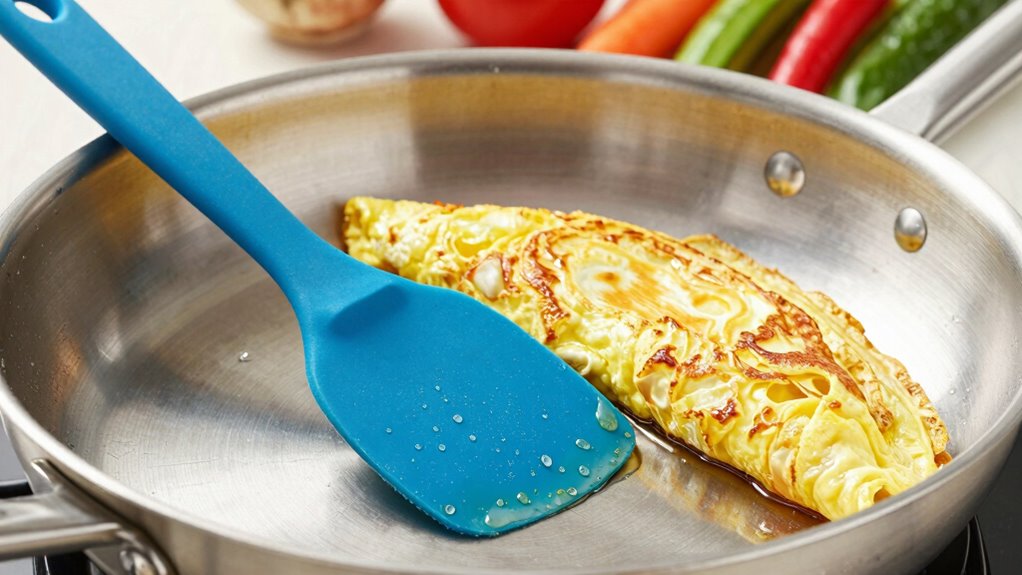
Heating oil or fat properly is essential to prevent food from sticking and guarantee even cooking. First, always heat your pan over medium heat before adding oil. Once warm, add enough oil to coat the bottom evenly. To ensure ideal results, follow these steps:
- Test the heat by sprinkling a few drops of water; if they sizzle immediately, the oil is ready.
- Adjust the temperature if the oil begins to smoke—this indicates overheating.
- Use silicone utensils to stir or flip food gently, helping distribute heat and prevent sticking.
Seasoning techniques, like warming the pan with a bit of oil before cooking, also help create a natural non-stick surface. Proper heating and handling of oil are key to cooking food smoothly without sticking. Additionally, understanding how to manage heat levels and prevent overheating can prolong your cookware’s life and ensure consistent results. Being aware of auditory cues can also help monitor oil temperature without needing to touch or see it directly.
Choosing the Right Fat
Choosing the right fat can make a significant difference in how well your food releases from the pan and cooks evenly. Different types of fats have unique properties that influence non-stick performance and health implications. For example, some oils withstand higher temperatures without breaking down, making them better for searing, while others add flavor or nutrients. Selecting fats like avocado or refined oils can reduce health risks associated with saturated fats, but moderation remains key. Use the table below to understand the best fats for various cooking methods:
| Type of Fat | Best Use & Health Implications |
|---|---|
| Olive Oil | Medium heat; rich in monounsaturated fats |
| Butter | Low to medium heat; adds flavor |
| Coconut Oil | High heat; contains saturated fats |
Choose wisely to improve non-stick results and support your health.
Optimal Cooking Temperatures
To prevent your food from sticking and to guarantee even cooking, it’s vital to heat your fats to the appropriate temperature before adding ingredients. Proper heating ensures your seasoning techniques work effectively and prevents burning or sticking, especially with different cookware materials. Use these guidelines:
- Medium heat for delicate fats like butter or olive oil, ideal for gentle cooking.
- Moderate-high heat for most oils like canola or vegetable, perfect for stir-frying.
- High heat for resilient fats like peanut or sesame oil, suitable for searing or frying.
Always preheat your pan first, then add fats, allowing them to reach the right temperature. This approach helps maintain non-stick qualities, especially when using cookware materials like non-stick or cast iron, enhancing your cooking results. Ensuring the correct cooking temperature can significantly improve the effectiveness of your fats and cookware. Proper temperature control is essential for non-stick effectiveness, especially when working with different fats and cookware types. Additionally, using a magnifying lamp can help you observe the precise temperature and ensure consistent heating. Being aware of the smoke point of your fats can also prevent burning and preserve flavor. Recognizing the thermal properties of your fats allows you to select the best fats for specific cooking methods, improving overall results.
Simple Techniques to Keep Food From Sticking While Cooking
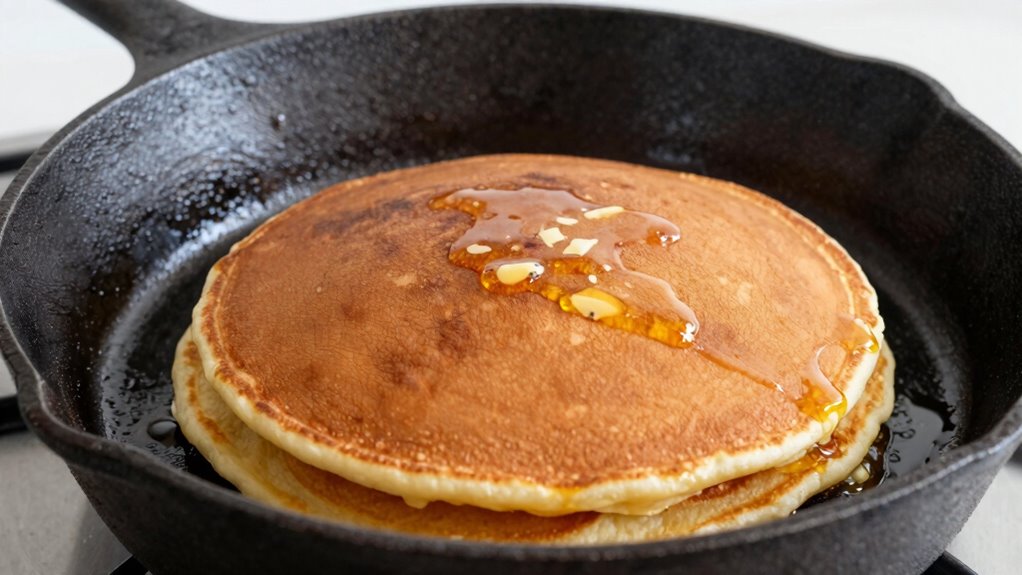
One of the simplest ways to prevent food from sticking is to guarantee your cookware is properly prepared before adding ingredients. Start with seasoning techniques that build a natural non-stick surface, especially if you’re using cast iron or carbon steel pans. Properly seasoned cookware develops a smooth, durable coating that minimizes sticking. Additionally, understanding cookware materials is essential—non-stick pans are designed to prevent food from adhering, while stainless steel or cast iron benefit from preheating and oiling. Always heat your pan thoroughly before adding food, and avoid overcrowding, which can cause uneven cooking and sticking. Using the right seasoning methods and choosing suitable cookware materials creates an ideal cooking environment, helping your food slide right off with less effort.
Troubleshooting Common Sticking Problems and How to Fix Them
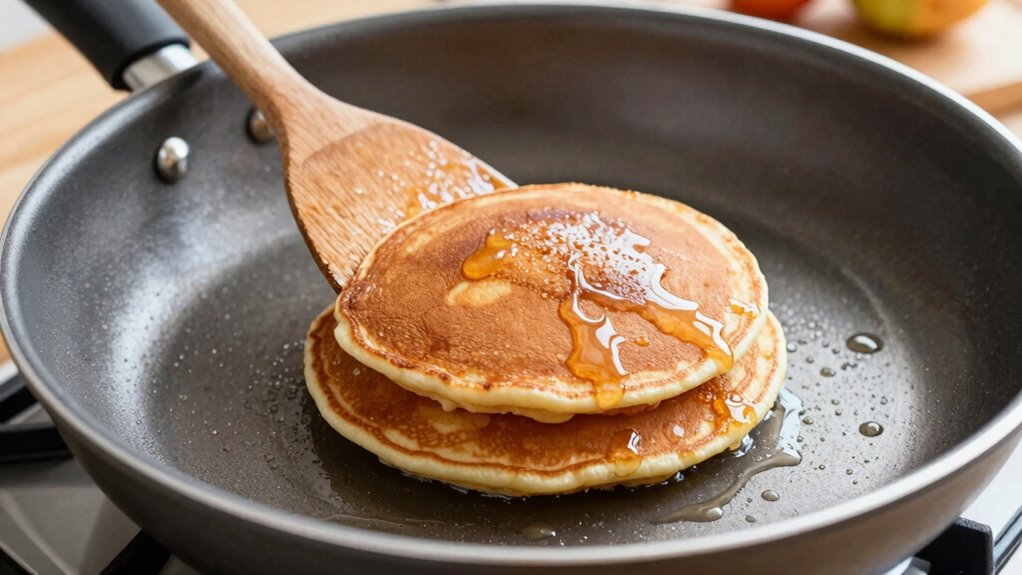
When food sticks to your pan despite your efforts, it’s often a sign that something in the cooking process needs adjusting. First, check your seasoning techniques; inadequate seasoning can cause sticking, especially with certain cookware materials like cast iron or stainless steel. Second, consider your cookware material—some surfaces require more preheating or oil. Third, verify you’re using the right amount of fat; too little can lead to sticking, while too much can cause food to slip. To fix this, preheat your pan properly, apply a thin layer of oil, and season your cookware regularly. Adjusting these factors can considerably improve non-stick performance, preventing food from sticking and ensuring your dishes turn out perfectly.
Maintaining Your Cookware for Long-Lasting Non-Stick Performance

Properly maintaining your cookware is essential to preserving its non-stick surface over time. Regularly seasoning cookware creates a protective layer that enhances non-stick performance and extends its lifespan. After each use, wash gently and avoid abrasive scrubbers. Store your cookware properly to prevent scratches; use soft cloths or stack with paper towels between pans. Follow these storage tips to keep surfaces smooth and intact. Additionally, periodically re-season your cookware by applying a thin layer of oil and heating it. This helps maintain its non-stick qualities. Proper maintenance minimizes sticking, reduces the need for harsh cleaning, and keeps your cookware performing like new longer. Effective maintenance techniques are key to ensuring your cookware stays in top condition for years to come.
Frequently Asked Questions
Can I Use Metal Utensils on Non-Stick Pans Without Damaging the Coating?
You shouldn’t use metal utensils on non-stick pans because metal utensil risks damage to the non-stick coating. Metal can scratch or chip the surface, reducing its durability and making it more prone to sticking and deterioration. To preserve the non-stick coating’s longevity, opt for silicone, wood, or plastic utensils. This simple switch helps maintain your pan’s performance and extends its lifespan, preventing unnecessary scratches and damage.
How Often Should I Replace My Non-Stick Cookware?
You should replace your non-stick cookware every 3 to 5 years. Studies show that after this period, coating durability declines markedly, risking flakes in your food. Proper care extends its lifespan, but wear and tear from frequent use and cleaning diminish its effectiveness. By replacing it timely, you guarantee ideal performance and safety, maintaining the integrity of your meals and avoiding ingestion of deteriorated coating particles.
Are Ceramic Non-Stick Pans Better Than Traditional Non-Stick Options?
Ceramic non-stick pans are generally better than traditional options because of their ceramic durability, which tends to resist scratches and high temperatures better. They often offer longer non-stick longevity if cared for properly, avoiding metal utensils and harsh cleaning. While they may be more delicate initially, they can outperform traditional non-stick pans in durability and non-stick performance over time, making them a worthwhile investment for healthy, easy cooking.
Does Dishwasher Cleaning Affect the Non-Stick Surface Quality?
Dishwasher cleaning effects can be harsh, like a storm on delicate non-stick surfaces. Over time, the cleaning impact from dishwasher detergents and high heat can wear down the coating, making food stick more often. To preserve your non-stick pan’s quality, hand wash it gently and avoid abrasive scrubbers. This careful approach keeps the non-stick surface intact, ensuring your cooking remains smooth and your food releases effortlessly.
What Are Eco-Friendly Alternatives to Traditional Non-Stick Coatings?
You can opt for eco-friendly coatings like ceramic or seasoned cast iron, which don’t contain harmful chemicals. Silicone alternatives, such as silicone-free baking mats, also offer a non-stick surface without environmental concerns. These options are durable, safe, and better for the planet. By choosing eco-friendly coatings, you reduce chemical exposure and support sustainable practices, making your cooking healthier for both you and the environment.
Conclusion
With the right care and technique, your pan becomes a trusted partner in the kitchen, smoothly guiding your meals from stovetop to plate. Imagine each ingredient dancing effortlessly, unburdened by stubborn sticking, as if the surface whispers, “I’ve got you.” When you understand the science and maintain your cookware well, cooking becomes a seamless flow—a melody of flavor and precision. Embrace these tips, and let your culinary journey glide effortlessly forward.
Halloween Picks
halloween
As an affiliate, we earn on qualifying purchases.