
Frozen fries come in different shapes and textures that impact cooking times. Shoestring fries cook fastest because they are thin and crispy, usually taking about 15-20 minutes in the oven or 3-4 minutes frying. Wedges are thicker and need longer, around 20-25 minutes in the oven or 5-6 minutes frying. Crinkle cuts with ridges take a bit more time to crisp up. Understanding these differences helps you cook perfect fries every time; explore further tips to master them.

Get kitchen gear delivered free — and shop member deals
- Fast, free delivery on millions of items
- Access to Prime Big Deal Days deals on October 6–7
- Prime Video, Amazon Music and more included
Key Takeaways
- Shoestring fries cook faster due to their thin, uniform shape, typically taking 15-20 minutes at 425°F in the oven.
- Wedges, being thicker and chunkier, require longer cooking times of 20-25 minutes to become crispy through baking.
- Crinkle-cut fries have ridges that increase surface area, extending cooking time to around 20-25 minutes for even crispiness.
- Frying and air frying times vary by shape, with shoestrings cooking in about 3-4 minutes, wedges 5-6 minutes, and crinkle cuts 4-5 minutes.
- Proper storage and even spacing during cooking help ensure consistent timing and optimal crispness across all fry types.
As an affiliate, we earn on qualifying purchases.
What Are the Different Shapes and Textures of Frozen Fries?
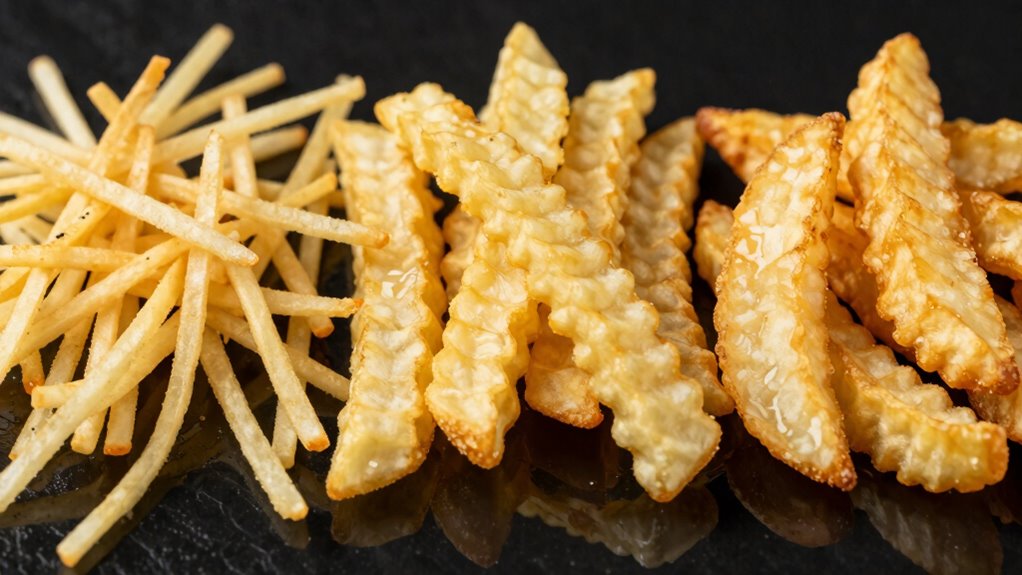
Frozen fries come in an array of shapes and textures, catering to different preferences and cooking methods. Whether you prefer thin shoestrings, thick-cut wedges, or crinkled fries, each shape offers a unique eating experience. The shape also influences seasoning options, as some textures hold seasoning better or distribute flavor differently. To keep your frozen fries fresh, follow proper storage tips by keeping them in an airtight container or freezer bag, preventing freezer burn and moisture buildup. The right storage guarantees they stay crispy and flavorful once cooked. Selecting the shape that suits your taste and knowing how to store them properly helps you enjoy perfectly crispy fries every time, no matter which style you choose. Additionally, understanding how shape and texture influence cooking times can help you achieve optimal crispiness and flavor in your preferred style. It’s also helpful to consider the material and coating of the fries, as these factors can impact browning and crispiness during cooking. Proper freezer storage techniques are essential to maintain quality and extend shelf life, ensuring each batch cooks up just right. For example, seasoning retention varies depending on the fry’s surface area and texture, affecting how well flavors adhere during cooking.
As an affiliate, we earn on qualifying purchases.
How Do Thickness and Shape of Frozen Fries Impact Cooking Times?
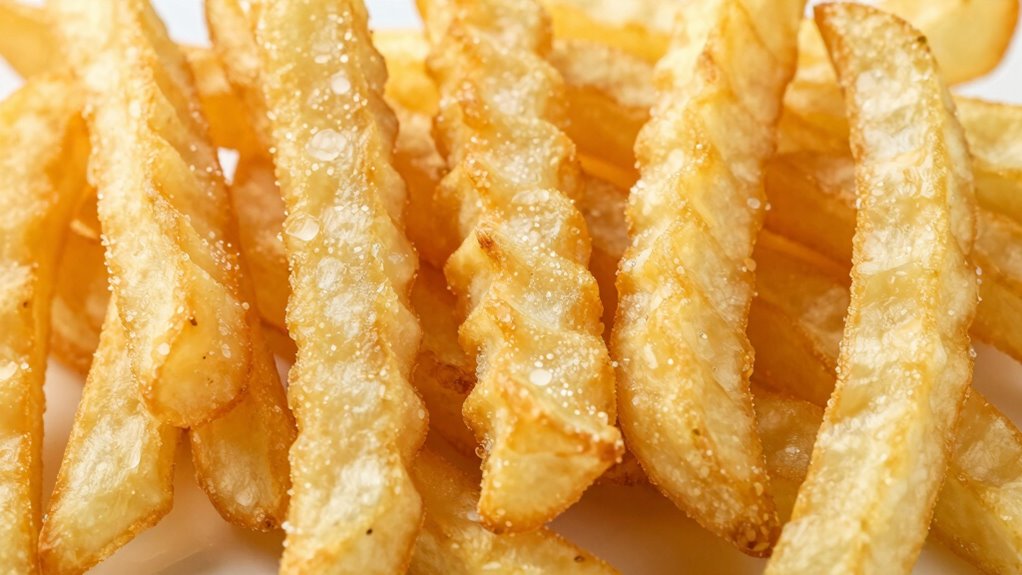
The thickness and shape of fries directly influence how long they take to cook. Thicker fries, like wedges, need more time to become crisp, while thinner styles, such as shoestrings, cook faster. The shape also plays a role: flat, wide fries heat evenly, reducing cooking time, whereas crinkle cuts may take longer due to their ridges. Proper storage methods preserve fry quality and seasoning, ensuring even cooking. Keep in mind, thicker fries often require longer baking or frying, but they absorb less oil. Seasoning adheres better when fries are cooked uniformly. Additionally, frying temperature can significantly affect cooking times and final texture. Here’s a quick comparison:
| Shape | Typical Cooking Time | Impact on Cooking |
|---|---|---|
| Shoestring | Shorter | Cooks quickly, crispy texture |
| Wedges | Longer | Requires more time for even crispness |
As an affiliate, we earn on qualifying purchases.
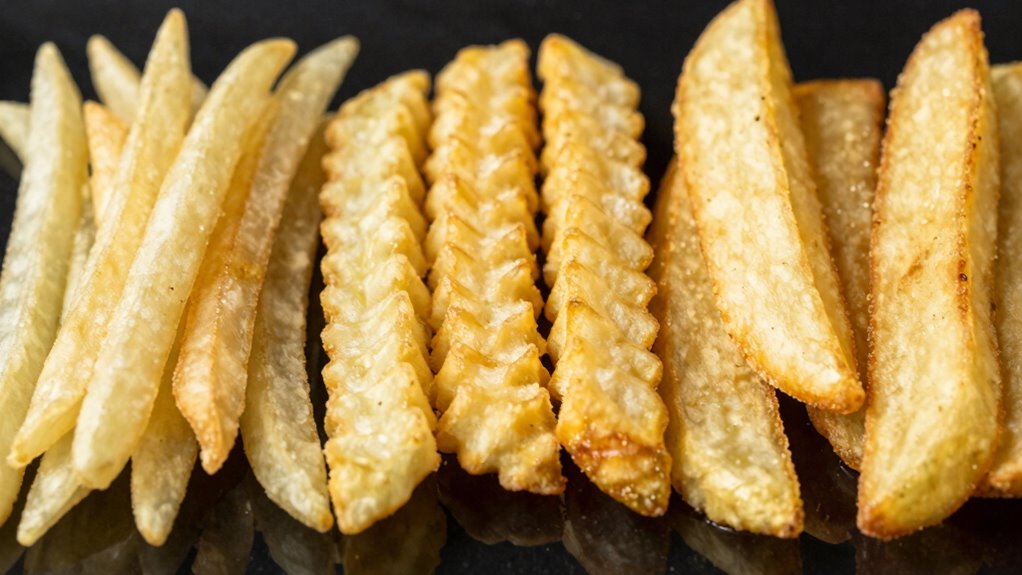
How Do Shoestring, Crinkle, and Wedge Fries Differ in Shape and Texture?
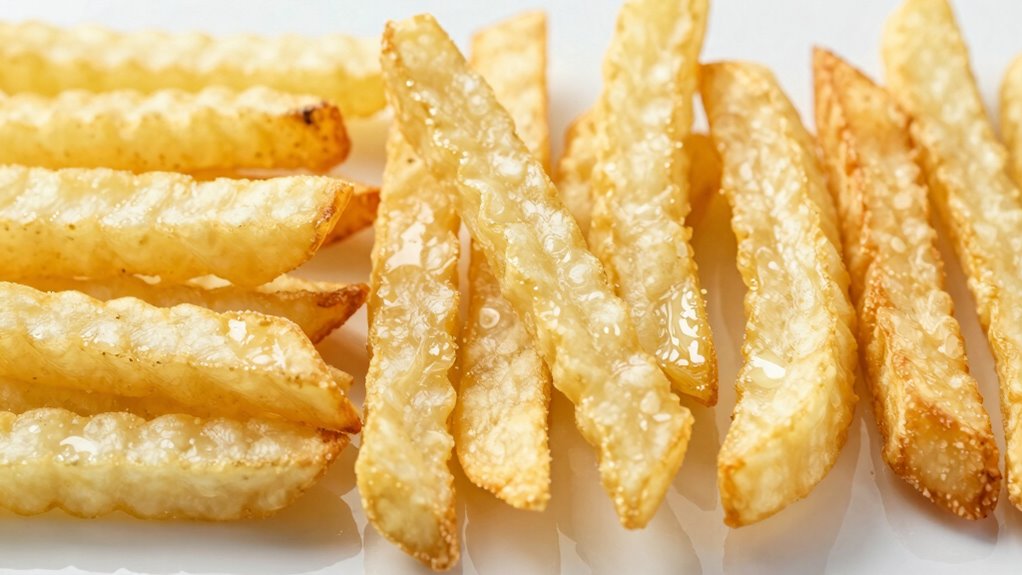
You’ll notice that shoestring, crinkle, and wedge fries each have unique shapes and textures. These differences influence how they cook and how crispy or tender they become. Understanding these variations helps you choose the right fry for your preferred crunch and flavor. For example, the piercing care and hygiene of the fries can impact their overall texture and flavor. Additionally, shape and size are key factors in determining cooking time and final crispiness, affecting your overall eating experience. Consistent exfoliation with the right type of fry can also enhance the enjoyment of your meal by ensuring even cooking and optimal texture. Recognizing how risk management strategies impact the cooking process can help in selecting the perfect fry to match your taste preferences.
Shape Variations
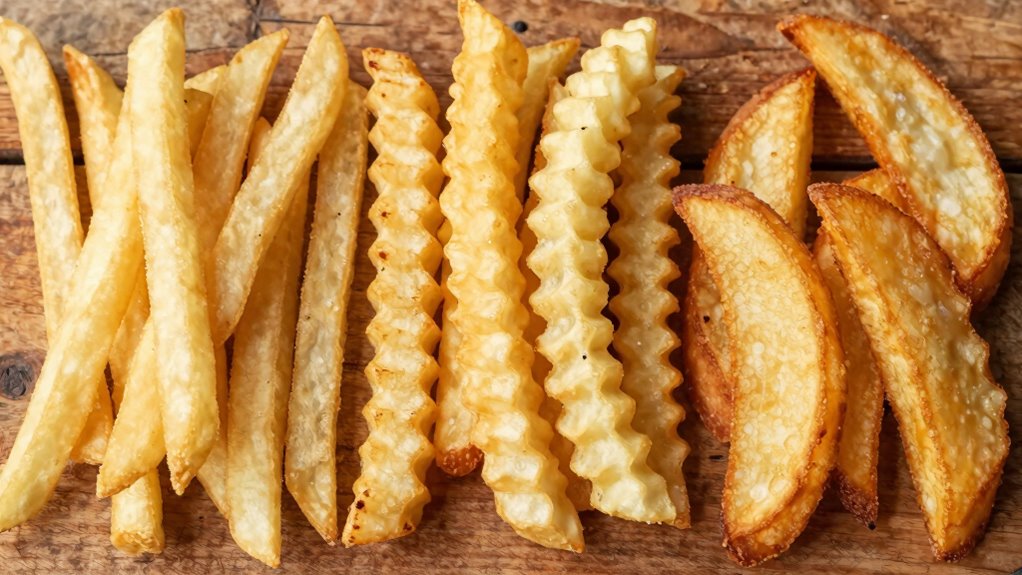
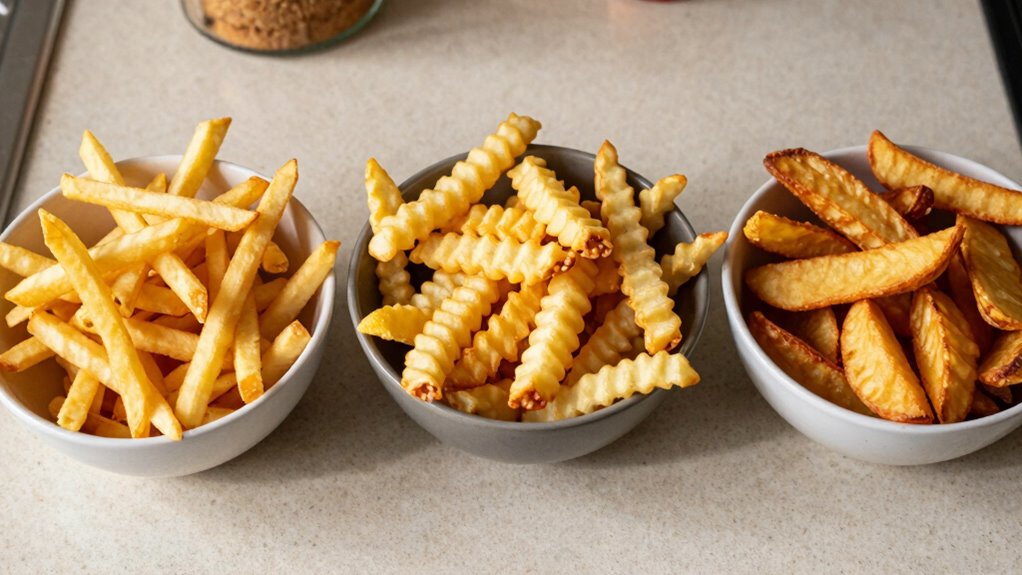
How do shoestring, crinkle, and wedge fries differ in shape and texture? Shoestring fries are thin, long, and narrow, offering a uniform, crisp bite. Crinkle fries have a wavy, ridged shape that provides more surface area for seasoning variations and key flavorings. Wedges are thick, chunky, and wedge-shaped, giving a hearty bite and often a more substantial texture. The shape influences packaging differences: shoestrings are packed tightly in small bags, crinkle cuts often come in larger bags to contain the ridges, and wedges are usually sold in bulk or larger portions. These shape variations impact not only how they’re seasoned but also how they’re presented, affecting both convenience and flavor absorption. Each shape offers a unique eating experience rooted in its distinct form.
Texture Differences
Shape plays a significant role in determining the texture of fries, and each variation offers a distinct crunch and mouthfeel. Shoestring fries are thin, resulting in a crispy exterior and a light, airy inside. Crinkle fries have ridges, which create a more substantial crunch and a chewy bite. Wedge fries are thicker, offering a hearty texture with a crispy outside and fluffy interior. These shape differences influence seasoning options; thinner fries absorb spices more quickly, while thicker ones hold seasonings better. Storage tips also matter—store fries in an airtight container to maintain crispness and prevent sogginess. Your choice of shape impacts not just appearance but also how the fries feel and taste with each bite, making texture a key factor in selecting your preferred type. Additionally, cooking techniques such as frying time and temperature further affect the final texture of each fry shape.
Cooking Impact
The shape of each fry type considerably influences how it cooks and develops its final texture. Shoestring fries, with their thin profile, cook quickly, resulting in a crispy exterior and a tender inside. Crinkle fries, thanks to their ridges, hold seasoning options better and offer a satisfying crunch. Wedges, being thicker and chunkier, take longer to cook but deliver a hearty, fluffy interior. Proper storage tips ensure they stay crispy; keep them in an airtight container away from moisture. Additionally, selecting the appropriate cooking method can enhance each fry’s texture and flavor. Here’s a quick comparison:
| Fry Type | Cooking Impact | Best Seasoning Options |
|---|---|---|
| Shoestring | Quick, crispy, tender inside | Paprika, garlic powder |
| Crinkle | Evenly crispy, holds seasoning well | Salt, pepper, herbs |
| Wedges | Longer cook, fluffy interior | Cajun, rosemary, parmesan |
Each shape impacts flavor and texture, shaping your perfect fry experience. To maximize their potential, understanding the cooking techniques suitable for each type can make a significant difference in the final result. Moreover, paying attention to frying temperature is crucial for achieving the desired crispiness without burning the fries.
As an affiliate, we earn on qualifying purchases.
What Are the Best Cooking Times for Shoestring, Crinkle, and Wedge Fries (Baking, Frying, Air Frying)?
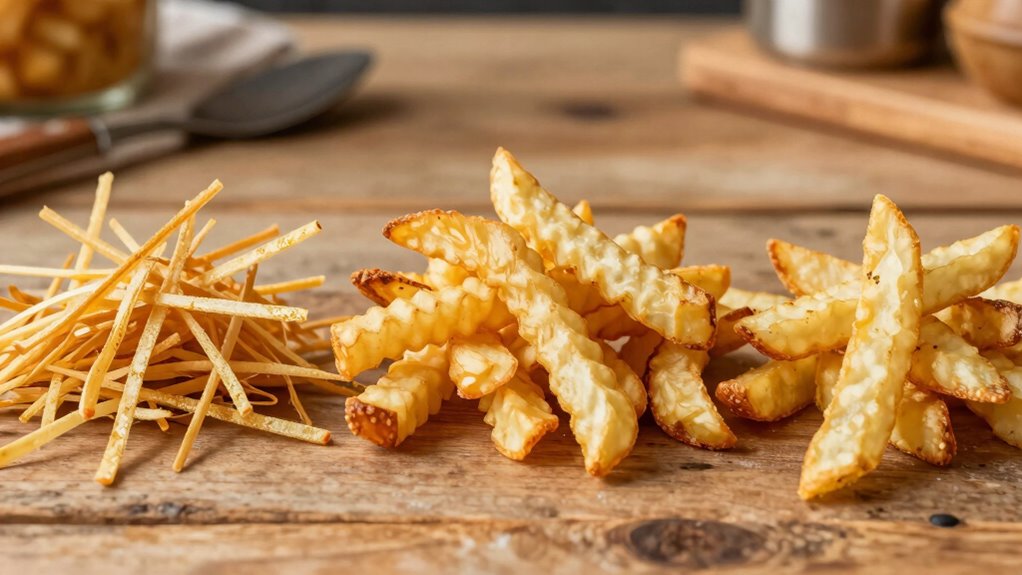
To get perfect fries, you need to know the right cooking times for each type and method. Whether baking, frying, or air frying, the times vary depending on the fry’s shape and thickness. Let’s explore the ideal durations to guarantee crispy, delicious results every time.
Optimal Baking Durations
Finding the perfect cooking time for frozen fries depends on the type and the method you choose. For baking, shoestring fries usually take 15-20 minutes at 425°F, while crinkle and wedge fries need about 20-25 minutes. To achieve crispy results, toss your fries with seasoning techniques before baking, ensuring even coverage. Proper storage best practices also matter; keep fries in an airtight container to prevent freezer burn, which can affect texture and cooking times. Check your fries halfway through to prevent overcooking, and adjust the time based on your oven’s performance. Remember, thinner fries cook faster, so monitor their progress closely. Consistent baking times help you achieve the perfect crunch and flavor every time.
Frying and Air Frying Times
Frying and air frying are quick, convenient methods that can deliver crispy fries in just minutes, but cooking times vary depending on fry type and appliance. For shoestring fries, aim for 3-4 minutes in hot oil or 10-15 minutes in an air fryer at 400°F. Crinkle-cut fries typically take about 4-5 minutes frying or 12-18 minutes air frying. Wedge fries need slightly longer—around 5-6 minutes frying or 15-20 minutes air frying at 400°F. To enhance flavor, experiment with seasoning options like garlic powder, paprika, or seasoned salt before cooking. Incorporating attention to detail and proper seasoning can elevate the flavor profile of your fries. After frying or air frying, store leftovers properly using airtight containers and follow storage tips to maintain freshness. Proper storage helps preserve the quality and longevity of your fries. Adjust cooking times based on your appliance and preferred crispiness for perfect results every time. Incorporating cooking time adjustments can help achieve your desired level of crispiness and ensure evenly cooked fries. Remember that frying times can also be affected by the thickness of the fries and the initial temperature of the oil or air fryer, so monitoring during cooking is recommended.
Tips for Achieving Crispy, Delicious Frozen Fries Every Time
Getting crispy, delicious frozen fries every time is all about proper preparation and cooking techniques. First, make sure you store your fries properly—keep them in an airtight container to prevent freezer burn. When ready to cook, toss your fries in your favorite seasoning options before baking or frying for added flavor. For extra crispiness, avoid overcrowding the pan, which traps moisture. Use a preheated oven or air fryer and flip the fries halfway through cooking. Here’s a quick comparison to help:
| Technique | Tip |
|---|---|
| Seasoning options | Use salt, paprika, garlic powder, or spice blends for flavor. |
| Storage tips | Keep in airtight containers to maintain texture. |
| Cooking method | Preheat and avoid overcrowding for crispiness. |
Follow these tips for fries that are perfectly crispy every time.
Common Mistakes When Cooking Frozen Fries and How to Fix Them
While following the right preparation and cooking techniques helps guarantee crispy fries, many people still encounter common mistakes that can spoil the results. One mistake is overloading the baking sheet, which causes fries to steam instead of crisp. To fix this, cook in a single layer and avoid overcrowding. Another error is neglecting seasoning tips; adding salt or spices before cooking enhances flavor, so don’t skip this step. Proper storage best practices are also essential—keep fries in an airtight container in the freezer to prevent freezer burn and moisture absorption, which can lead to soggy fries. Also, avoid thawing before cooking, as this can affect texture. Using a high-quality airless sprayer ensures even coating and better results when applying seasonings or oils to fries. Paying attention to these common mistakes and fixes will help you achieve consistently crispy, flavorful fries every time. Additionally, understanding the storage tips can prolong freshness and maintain optimal texture for your frozen fries. Proper freezer organization can also make it easier to keep track of your frozen foods, and selecting the right electric dirt bike horsepower can enhance your off-road experience if you decide to venture outdoors. Furthermore, being aware of encryption solutions for digital security can help protect your personal data when managing online recipes or cooking resources.
Frequently Asked Questions
Can Different Brands of Frozen Fries Have Varying Cooking Times?
Yes, different brands of frozen fries can have varying cooking times due to brand variations in thickness, ingredients, and processing. You should always check the package instructions because some brands might require a shorter or longer cooking time for ideal crispiness. Keep an eye on the fries as they cook, and adjust the time if needed, since brand differences can impact how quickly they reach your preferred texture.
How Does the Type of Oil Used Affect Fry Crispiness?
Using the right oil can make your fries insanely crispy! Different oil types, like canola, vegetable, or peanut oil, influence fry texture by their smoke points and fat composition. For example, oils with higher smoke points, such as peanut oil, help achieve a crunchier exterior without burning. So, choose your oil wisely to elevate your fry game and get that perfect, crispy finish every time.
Is There a Recommended Order for Adding Seasonings During Cooking?
You should add seasonings during different stages of cooking for better flavor layering. Start with light seasoning before frying to enhance the base flavor, then add more salt or spices immediately after removing the fries from the oil for a fresh burst of taste. This method guarantees your seasoning application maximizes flavor absorption and creates a well-rounded, delicious fry experience. Timing is key to achieving perfect flavor layering.
Do Frozen Fries Lose Quality if They Are Thawed Before Cooking?
Thawing frozen fries can turn them into a soggy mess, like a pancake on a rainy day, and definitely impacts their quality. When you thaw, the fries lose some of their crispness and texture, making it harder to achieve that perfect crunch. To preserve their quality, it’s best to cook them straight from frozen. Thawing effects usually mean less flavor and a soggy outcome, so skip that step for the best results.
How Do Altitude and Humidity Influence Cooking Times for Frozen Fries?
Altitude effects can cause frozen fries to take longer to cook because the lower atmospheric pressure diminishes boiling points, making heat transfer less efficient. High humidity impacts cooking times by adding moisture to the environment, which can slow down crisping and browning. To compensate, you may need to extend cooking times or adjust temperature settings. Keep an eye on your fries to ensure they reach the desired texture and don’t undercook.
Conclusion
Think of cooking frozen fries like tuning a perfect guitar string—you want just the right balance for that crispy, golden finish. Whether you prefer shoestring, crinkle, or wedges, knowing their shape and texture helps you time everything perfectly. With a little practice, you’ll turn your frozen fries into a restaurant-quality treat every time. So, get ready to master the art of crispy perfection—your taste buds will thank you.
Evergreen bestsellers Picks
bestsellers
As an affiliate, we earn on qualifying purchases.