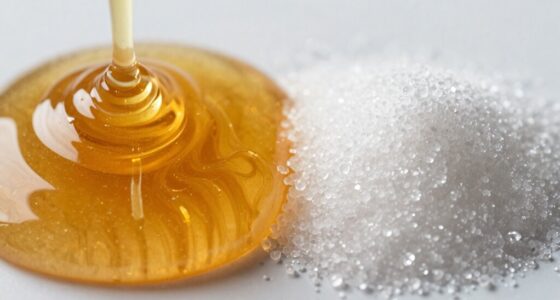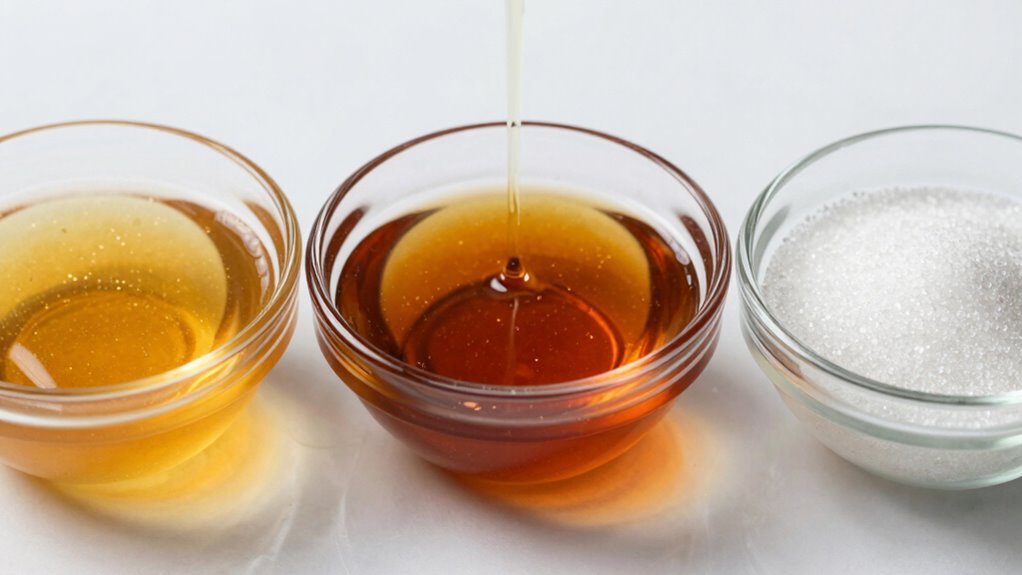

When swapping honey, maple syrup, or sugar in recipes, you’ll notice changes in flavor, texture, and moisture. Honey and maple syrup add more moisture and can make baked goods tender and sticky, while sugar provides sweetness with less moisture. You’ll need to reduce liquids accordingly and adjust for flavor profiles. Keep in mind caramelization and browning differences; for more tips on successful swaps, explore the details ahead.

Get kitchen gear delivered free with Prime
- Fast, free delivery on millions of items
- Prime Video, Amazon Music and more included
- Member-only deals all year
Key Takeaways
- Substituting honey or maple syrup for sugar requires reducing liquids by ¼ cup per cup of sweetener used.
- Honey and maple are sweeter than sugar; adjust the quantity accordingly to prevent overly sweet results.
- Honey adds moisture and a floral flavor, while maple syrup contributes caramel notes; choose based on desired taste.
- Both liquid sweeteners influence browning and caramelization, affecting the color and texture of baked goods.
- Proper substitution involves balancing sweetness, moisture, and flavor to maintain the recipe’s original integrity.
As an affiliate, we earn on qualifying purchases.
What Are the Differences in Flavor and Composition Between Honey, Maple Syrup, and Sugar?

Honey, maple syrup, and sugar each bring unique flavors and compositions to your cooking. Honey offers a rich, floral sweetness with complex flavor profiles that vary by type, and it contains natural enzymes, antioxidants, and small amounts of vitamins, making its nutritional differences notable. Honey’s viscosity and moisture content also influence how it interacts with other ingredients during baking or cooking ingredient interactions, affecting texture and consistency. Additionally, honey’s natural enzymes can aid in fermentation processes, enhancing certain recipes. The presence of natural sugars in honey can also impact browning and caramelization during cooking. The sugar composition of each sweetener influences their sweetness levels and how they behave in different recipes, which is crucial for achieving the desired results. Maple syrup provides a distinct, caramel-like taste and is rich in minerals like manganese and zinc, adding to its nutritional appeal. Granulated sugar, on the other hand, is pure sucrose with a clean, straightforward sweetness and minimal nutrients. These differences influence how each sweetener interacts with ingredients, affecting both flavor and health benefits. Understanding these distinctions helps you choose the right sweetener for your recipes, aligning flavor profiles and nutritional considerations with your culinary goals. Sweetener properties play a crucial role in how each ingredient behaves during cooking and baking.
As an affiliate, we earn on qualifying purchases.
How Do Honey and Maple Syrup Affect Recipe Texture and Consistency?
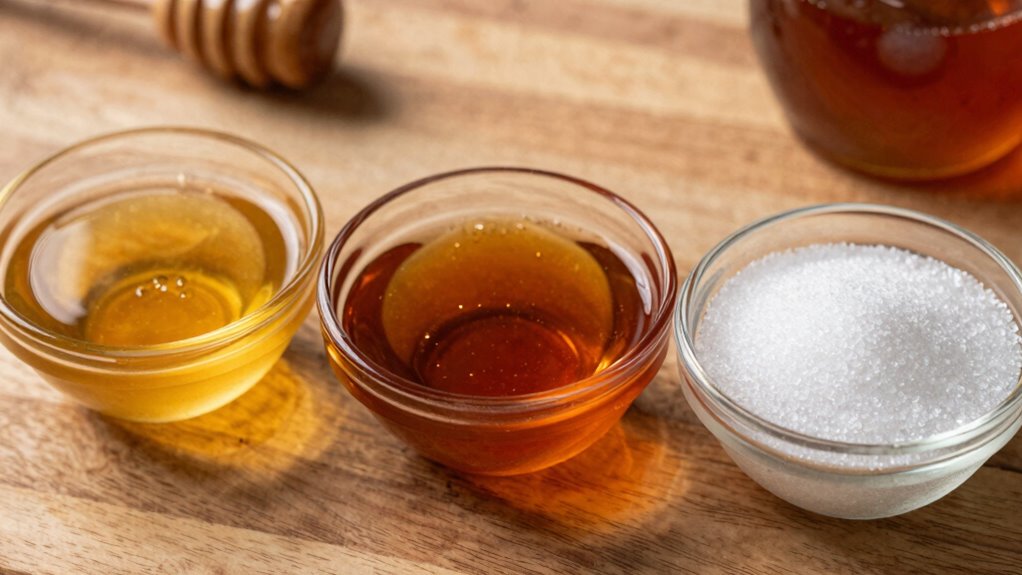
Both honey and maple syrup considerably influence the texture and consistency of your recipes, but they do so in different ways. Honey adds moisture and creates a smooth, silky texture, often making baked goods more tender. Maple syrup, with its thinner consistency, can make batters more fluid, affecting the overall structure. These sweeteners cause noticeable consistency changes, especially in baked items like cookies, cakes, or bread.
- Feel the rich, sticky texture that honey imparts, elevating your dish’s mouthfeel.
- Experience the lighter, more liquid quality of maple syrup, which can loosen batter consistency.
- Notice how these changes can make your baked goods more moist, tender, or spreadable, transforming your final product’s texture impact.
sugar replacement baking ingredients
As an affiliate, we earn on qualifying purchases.
As an affiliate, we earn on qualifying purchases.
How to Adjust Your Recipes When Substituting Honey or Maple for Sugar?
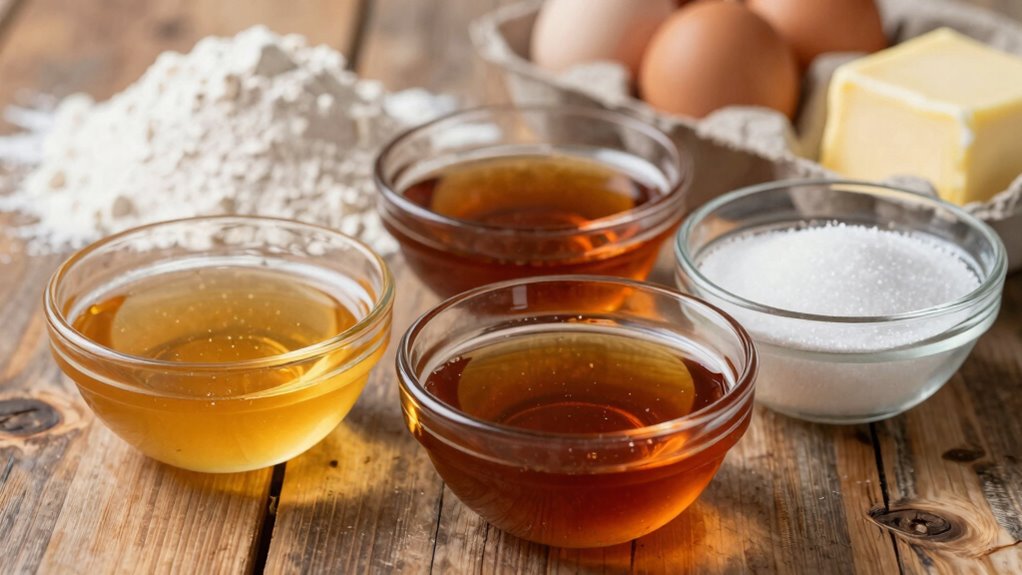
When substituting honey or maple syrup for sugar, you need to modify your recipe to account for their moisture content and sweetness levels. Honey and maple are sweeter than sugar, so use less—generally about ¾ cup of honey or maple for every cup of sugar. Because they add extra liquid, reduce other liquids in your recipe by about ¼ cup per cup of sweetener to maintain the right texture. Consider calorie differences: honey and maple have slightly more calories than sugar, but they also come with antioxidants and nutrients, which might influence health considerations. Keep in mind that using these natural sweeteners can slightly alter the flavor profile, so adjust seasonings accordingly. Proper adjustments ensure your baked goods stay moist, flavorful, and balanced. Additionally, incorporating smart kitchen appliances such as digital scales or smart mixers can help achieve precise measurements and consistent results when experimenting with natural sweeteners. Being aware of sweetener characteristics can aid in selecting the best substitute for your specific recipe and desired outcome. For example, understanding the temperature sensitivity of honey, which can cause over-browning, should be considered when baking. Incorporating innovative cooking techniques like air fryer methods can also help you optimize the texture of baked goods made with natural sweeteners, ensuring they turn out just as appealing.
As an affiliate, we earn on qualifying purchases.
Which Sweetener Works Best for Baking, Cooking, or Drizzling?
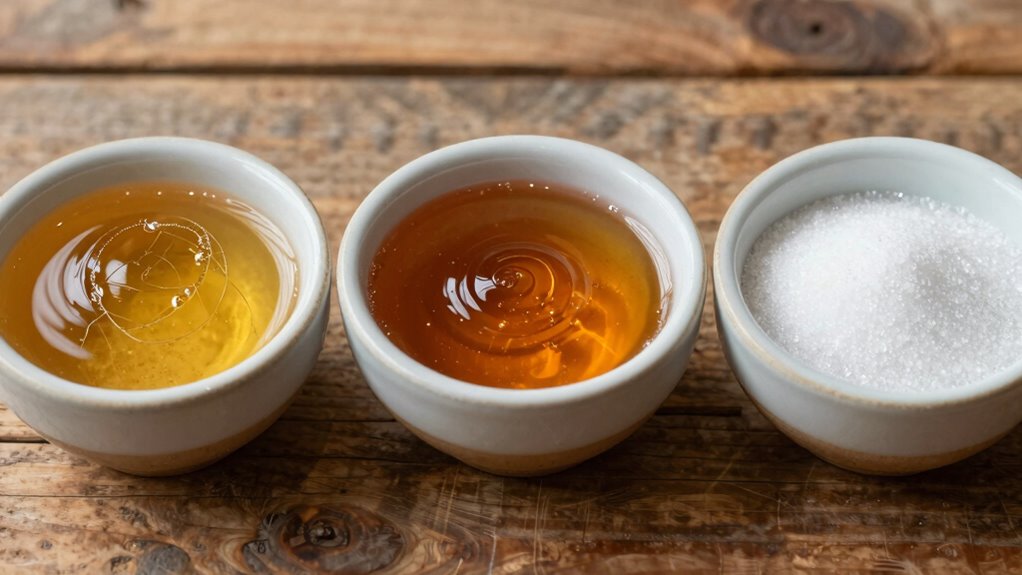
Are certain sweeteners better suited for baking, cooking, or drizzling? Absolutely. Different sweetener types bring distinct flavor profiles and textures, making some ideal for specific uses. For baking, choose honey or maple for moisture and rich flavor. Cooking benefits from sugar’s neutrality and stability. Drizzling, however, calls for honey or maple to add a glossy finish and depth. Consider these points:
- Honey adds a floral sweetness, perfect for glazes and dressings.
- Maple offers a warm, caramel-like flavor, great for pancakes or desserts.
- Sugar provides a neutral, consistent sweetness, ideal for baking and sauces.
Your choice depends on the flavor profile you want and the texture needed. By selecting the right sweetener type for each task, you enhance your recipes and delight your senses.
How to Properly Substitute One Sweetener for Another in Your Recipes?
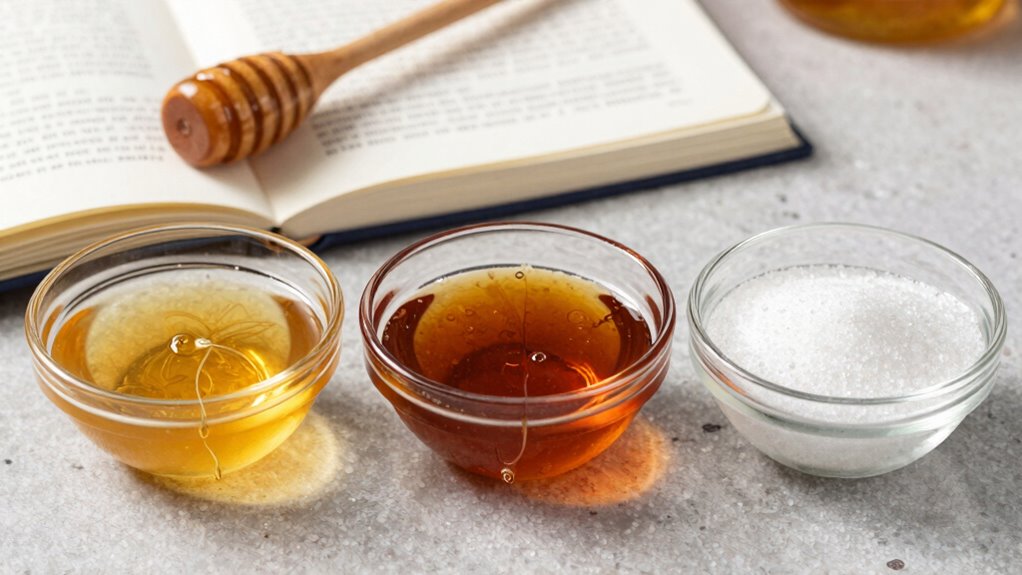
Substituting one sweetener for another in your recipes isn’t as simple as swapping equal amounts. Different sweeteners have unique flavor profiles and properties that affect the final dish. For effective sweetener swaps, consider the sweetness level and moisture content of each option. For example, honey is sweeter and adds moisture, so reduce other liquids slightly. Maple syrup has a distinctive flavor that can alter your dish’s taste, so match it with recipes that complement its richness. When replacing sugar with liquid sweeteners, adjust the recipe’s liquids accordingly. Keep in mind that some sweeteners caramelize differently or affect browning. Understanding these differences helps you maintain the desired texture and flavor, ensuring your recipe turns out just right with the new sweetener. Additionally, gelato quality can be influenced by the type of sweetener used, impacting creaminess and consistency. It’s also helpful to consider the availability and cost of different sweeteners, especially if you plan to use them regularly in your cooking.
Frequently Asked Questions
How Do Different Sweeteners Impact Calorie Content and Nutritional Value?
Different sweeteners impact calorie content and nutritional value markedly. Honey and maple syrup generally have more calories than sugar, but they also contain antioxidants and minerals, offering nutritional benefits. Sugar has fewer nutrients but provides quick energy with fewer calories. When comparing calorie content, honey and maple are higher, but their nutritional differences include beneficial compounds. You should consider both calorie comparison and nutritional value when choosing your sweetener for healthier cooking.
Can Honey or Maple Syrup Be Used as Sugar Substitutes in Beverages?
Yes, you can use honey or maple syrup as sugar substitutes in beverages, adding natural sweetness and flavor enhancement. Like a golden drizzle, honey brings a rich, floral note, while maple syrup offers a warm, caramel hue. Both naturally sweeteners dissolve easily, blending smoothly into drinks. They not only sweeten but also infuse your beverages with unique, wholesome flavors, making each sip more delightful and satisfying.
Are There Any Health Benefits Associated With Choosing Honey or Maple Syrup?
Choosing honey or maple syrup offers health benefits like natural antioxidants and anti-inflammatory properties. These sweeteners contain compounds that may boost your immune system and reduce inflammation. Unlike refined sugar, they provide some nutrients and antioxidants that support overall health. By making the switch, you can enjoy a more natural, flavorful sweetness while potentially benefiting from their anti-inflammatory effects and antioxidant content, contributing to better wellness.
How Long Do Honey and Maple Syrup Last Compared to Regular Sugar?
You might worry about storage duration, but honey and maple syrup last longer than regular sugar. Honey’s shelf stability can stretch indefinitely if kept in a cool, airtight container, thanks to its natural preservatives. Maple syrup stays fresh for about a year unopened, but once opened, it’s best to consume within six months. Regular sugar remains stable for years, but honey and maple require proper storage to maximize their shelf life.
Do Different Types of Honey or Maple Syrup Alter the Flavor Profile of Dishes?
Yes, different types of honey and maple syrup can substantially alter the flavor profile of your dishes. You’ll notice flavor nuances based on the variety, like floral or smoky notes, which add depth and complexity. Their culinary versatility shines through as you adapt recipes—light honey for delicate desserts or robust maple syrup for hearty marinades—allowing you to customize flavors and enhance your cooking creatively.
Conclusion
Choosing the right sweetener transforms your culinary creations, just like a skilled alchemist from ages past turning base metals into gold. Whether you opt for honey’s floral notes, maple’s rich earthiness, or classic sugar’s neutrality, understanding their quirks guarantees your dishes turn out perfect. So, don’t be daunted—embrace these swaps and craft your kitchen magic with confidence. After all, every great chef’s secret lies in knowing which sweetener best whispers to their recipe’s soul.
Fall Picks
fall essentials
As an affiliate, we earn on qualifying purchases.