
TL;DR

Get kitchen gear delivered free with Prime
- Fast, free delivery on millions of items
- Prime Video, Amazon Music and more included
- Member-only deals all year
The USDA’s Food Safety and Inspection Service plans to add environmental surface swabs to its inspections of ready-to-eat deli meat processors. The nationwide rollout is scheduled to begin in January 2027 and continue through March; results from the earlier pilot have not been published.
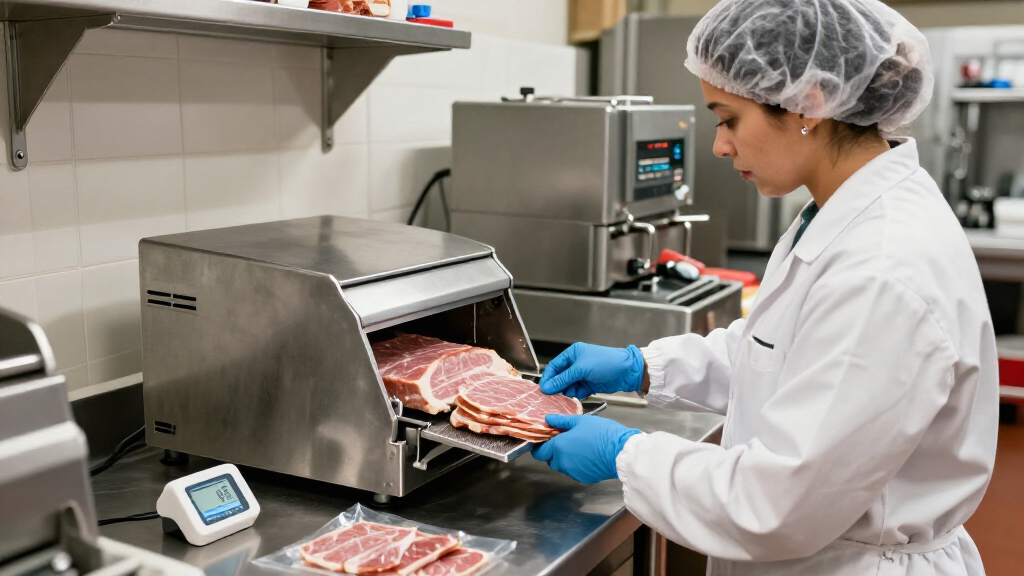
The U.S. Department of Agriculture’s Food Safety and Inspection Service plans to expand Listeria testing at ready-to-eat deli meat processors by adding regular swabs of equipment and other surfaces to existing product sampling. FSIS says it will phase in the nationwide program across nine districts from January through March 2027, adding environmental checks intended to help identify contamination sites and evaluate sanitation.
Under the new program, inspectors will collect four environmental swabs when they collect ready-to-eat product samples under the existing program. The swabs will cover two food-contact surfaces and two non-food-contact surfaces, and each will be tested for Listeria monocytogenes and other Listeria species. FSIS plans to train inspectors and supervisors during the phased rollout.
If a sample detects Listeria monocytogenes, the agency will conduct whole genome sequencing (WGS) and compare the result with reported illnesses or historical test results. The sequencing can help assess whether a finding is genetically related to other available results; the source material does not specify what action follows each possible comparison.
The new sampling builds on a pilot conducted in the FSIS districts covering Alameda, Chicago and Raleigh. Pilot results have not been published, according to the report. Previously, environmental sampling was generally conducted through specialized activities at irregular intervals. Under the new approach, in-plant inspectors will collect a smaller number of environmental samples more regularly.
More Regular Checks for Listeria
The change gives FSIS a more regular way to look for Listeria on surfaces in plants that make foods ready to eat, rather than relying only on product testing or environmental sampling carried out at irregular intervals. The agency says the added data can help identify potential harborage sites—places where bacteria may persist—and assess whether sanitation measures are effective at individual establishments.
For processors, the program means preparing for additional sampling and scrutiny of environmental monitoring and corrective-action practices. FSIS recommends that establishments review their monitoring results, root-cause investigations and corrective actions, and consider any updates or self-evaluations before enhanced sampling begins. Companies may also need to be ready to interpret WGS findings.
The program also has a broader public-health purpose: FSIS says results may offer insight into Listeria trends across the industry. That is an intended use, not a reported outcome. The extent to which the data will detect problems earlier or change food-safety results will depend on sampling, follow-up and corrective measures.
As an affiliate, we earn on qualifying purchases.
Oversight After the 2024 Outbreak
FSIS is introducing the program as part of broader changes to its oversight of Listeria in ready-to-eat facilities after the deadly 2024 outbreak traced to Boar’s Head deli meat. A review of records cited in the source report found a history of food-safety failures at the company’s Jarrett, Virginia, production facility, with violations recorded by inspectors that had not been resolved.
The planned environmental sampling is a change in how routinely inspectors collect surface samples. FSIS already has an existing program for taking product samples, while specialized environmental sampling has generally happened at irregular intervals. The expansion adds scheduled surface swabs alongside product sampling; it does not replace the existing product-sampling program, according to the report.
““Broader sampling and more data ultimately means safer food.””
— Food Safety and Inspection Service
As an affiliate, we earn on qualifying purchases.
Pilot Findings and Follow-Up
The pilot’s results have not been published, so the available report does not show how often its sampling found Listeria or what corrective actions followed. FSIS has also not provided, in the source material, a detailed sampling schedule for each district or a public timetable for releasing results from the nationwide program.
It is not yet clear how inspectors will respond to different kinds of positive environmental findings, how findings will be shared with the public, or how the agency will measure whether the added testing improves sanitation or reduces risk. The report also does not specify how many establishments will be sampled or how frequently individual plants will receive swabs.
As an affiliate, we earn on qualifying purchases.
Nine-District Rollout Begins in 2027
FSIS plans to phase in the program across its nine districts from January through March 2027. Training for inspection personnel and supervisors is part of that implementation. Establishments producing ready-to-eat products under FSIS jurisdiction are expected to review their environmental monitoring programs, previous findings, corrective-action and root-cause practices, and ability to assess WGS results before the enhanced sampling starts.
The next public indicators will include whether FSIS publishes the pilot findings, how the rollout proceeds across districts and what the agency reports from the added sampling. Until those details are available, the program’s planned scope and schedule are clear, but its results and effects remain unknown.
As an affiliate, we earn on qualifying purchases.
Key Questions
What is changing in USDA inspections of deli meat processors?
FSIS plans to add four environmental swabs to existing product sampling: two from food-contact surfaces and two from non-food-contact surfaces. Each will be tested for Listeria monocytogenes and other Listeria species.
When does the nationwide program begin?
FSIS plans a phased rollout across its nine districts from January through March 2027. The source report does not give specific start dates for each district.
What happens if inspectors find Listeria monocytogenes?
FSIS says it will perform whole genome sequencing on a Listeria monocytogenes finding and compare it with reported illnesses or historical results. The source material does not describe a complete response protocol for every possible finding.
Have the pilot program results been released?
No. The pilot took place in the Alameda, Chicago and Raleigh districts, but its results have not been published, according to the report.
What should processors do before the rollout?
FSIS recommends reviewing environmental monitoring records, corrective actions and root-cause investigations, considering program updates or self-evaluations, and checking that staff can assess WGS results.
Source: rss
Halloween Picks
halloween
As an affiliate, we earn on qualifying purchases.